Our verdict
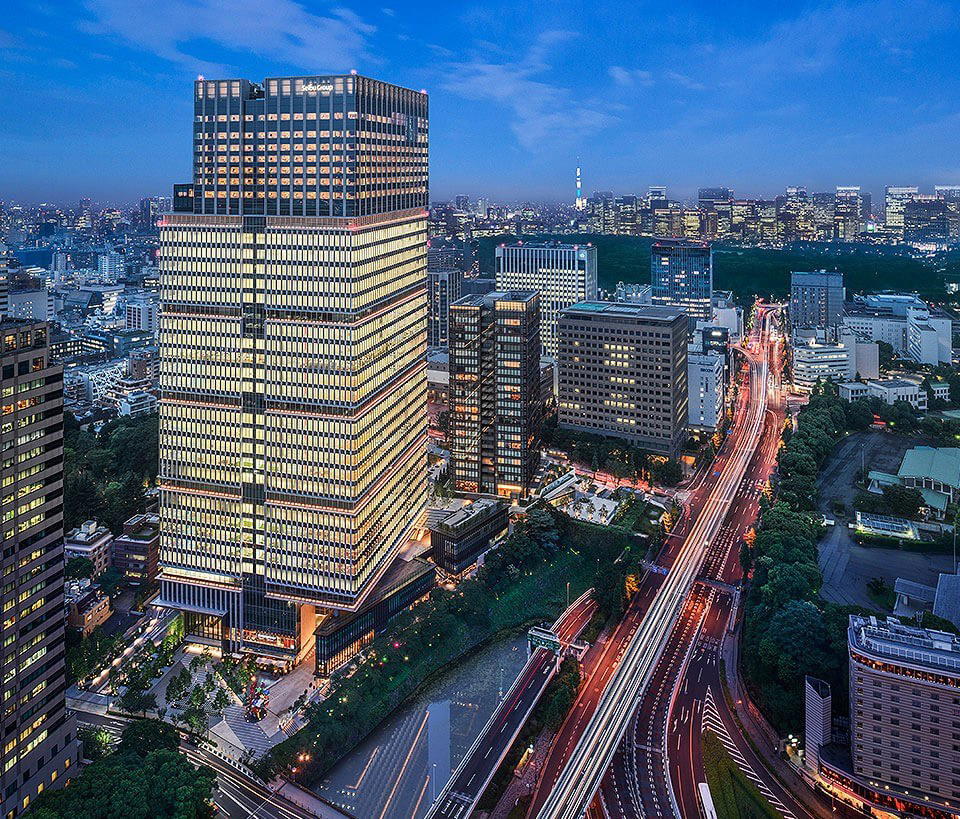
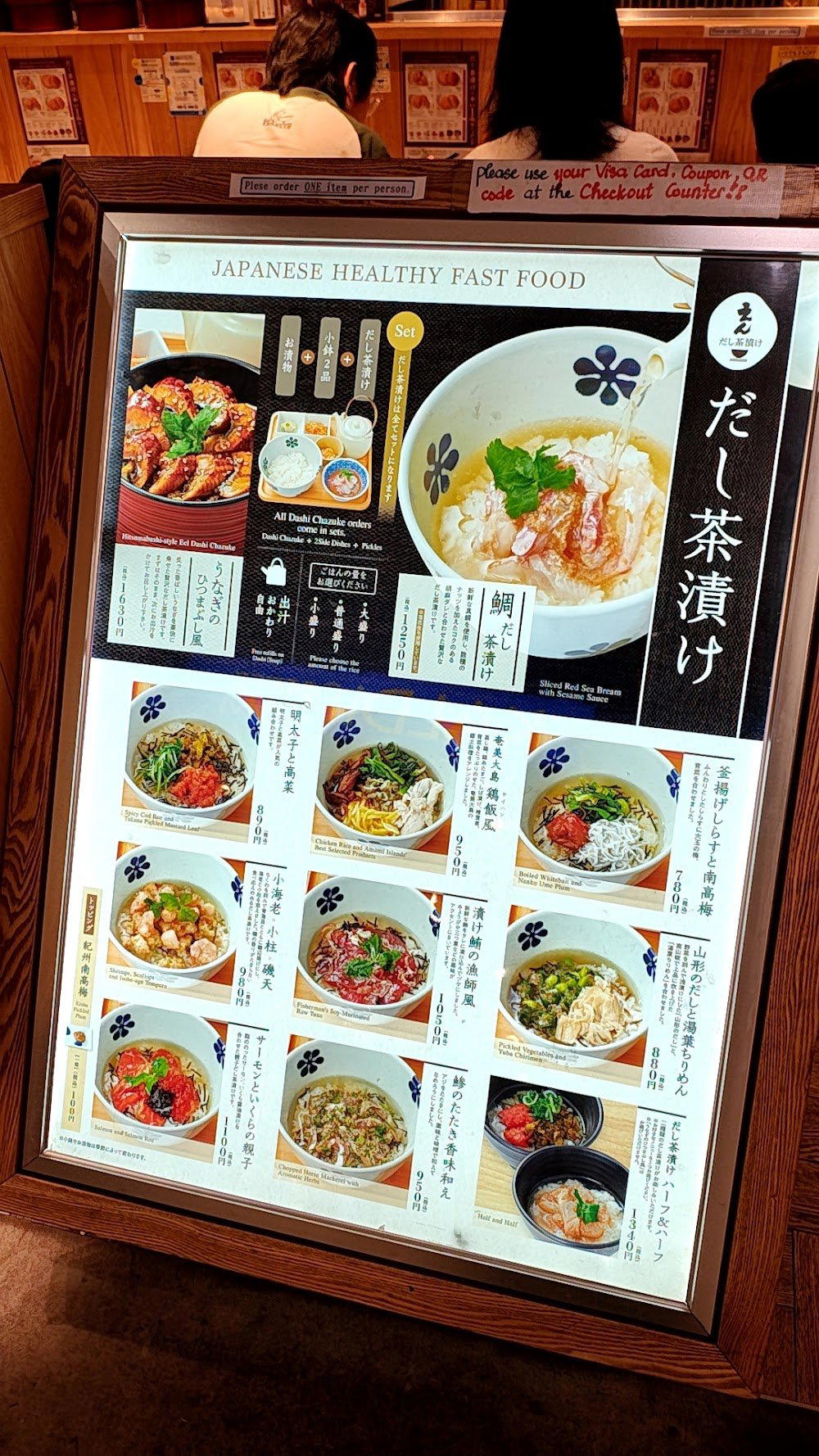
En Dashi Ochazuke at Lumine Shinjuku B2F brings the quietly restorative tradition of ochazuke into a department-store basement dining format, where dashi quality and ingredient sourcing define the experience rather than theatrical presentation. It sits within a category of Japanese everyday-comfort restaurants that prize technique over spectacle, occupying Shinjuku's busiest retail complex directly above the station concourse.

Pearl is the En Primeur Club membership app, where members save venues, book tables and use the concierge.
Dashi as the Organizing Principle
Japan's department-store basement floors, the depachika, have long operated as the country's most demanding food retail proving grounds. The B2F of Lumine Shinjuku, built directly above one of the world's busiest rail junctions, draws a crowd that moves with purpose and eats with expectation. It is inside this context that En Dashi Ochazuke has carved a specific position: a restaurant anchored entirely around dashi, the foundational stock that underpins nearly every serious Japanese kitchen, and ochazuke, the restorative practice of pouring tea or broth over rice.
Ochazuke is one of those preparations that reveals more about a kitchen's philosophy than any composed dish. There is nowhere to hide poor dashi behind sauce or seasoning. The quality of the kombu, the precision of the katsuobushi extraction, the temperature at which the broth meets the rice, these are the signals that separate a competent bowl from a considered one. Restaurants that choose to build an entire menu around this format are making an explicit claim about technique over complexity.
The Shinjuku Station Dining Context
Shinjuku Station's retail ecosystem supports an extraordinary range of dining registers. Above ground, the west exit towers host expense-account restaurants and hotel dining rooms comparable in price and formality to Tokyo's top-tier tables. Facilities like RyuGin and Sézanne operate at a ¥¥¥¥ register where kaiseki precision and French technique command international attention. Below ground, across the Lumine complex, the register shifts entirely: the audience is commuters, shoppers, and workers in the surrounding office blocks, and the expectation is high-quality Japanese food delivered at a pace that fits a midday or post-work slot.
En Dashi Ochazuke sits in that lower register not as a compromise but as a deliberate specialization. The depachika dining format carries its own discipline. Rents are high, foot traffic is relentless, and the customer base is knowledgeable. Cheap dashi and indifferent rice would not survive the commercial pressure of Lumine B2F. The format selects for quality through its own brutal economics.
For visitors already exploring Tokyo's wider dining scene through our full Tokyo restaurants guide, En Dashi Ochazuke represents the other end of the spectrum from the city's Michelin-decorated counter restaurants, not inferior, but operating with a fundamentally different contract with the diner.
What the Format Signals About Japanese Drinking and Eating Culture
The editorial angle assigned to this piece asks us to consider curation and depth, the lens usually applied to wine lists, and there is a useful parallel. A serious ochazuke restaurant applies the same logic to its dashi repertoire that a thoughtful sommelier applies to a cellar: sourcing provenance matters, different bases suit different dishes, and the house's selection communicates something about its priorities. A restaurant offering multiple dashi styles, kombu, shiitake, chicken, or blended varieties, is making curatorial decisions analogous to a wine list that moves deliberately between regions and producers rather than defaulting to the most recognizable labels.
Tea selection carries a parallel weight. In traditional ochazuke, the liquid poured over the rice is brewed green tea, most commonly sencha or hojicha. The temperature, steeping time, and tea origin affect the outcome as materially as a broth choice would. A restaurant treating this seriously enough to specify its tea sourcing is operating in the same register as a Tokyo bar that names its water source or a ramen house that discusses its mineral content on the menu. This attention to liquid character is a marker of category seriousness across Japanese food culture, and it is worth reading as such rather than as a quirk.
Comparing the Immediate Category
The depachika and station-adjacent dining category in Tokyo skews heavily toward ramen, soba, tempura, and set-meal formats. Ochazuke specialists are rarer. Most Japanese diners encounter ochazuke as a home preparation or as the closing course at a kaiseki meal, not as the organizing concept of a restaurant visit. A venue that premises its entire operation on this format occupies a narrower niche and attracts a customer who knows what they are choosing.
For reference against Tokyo's broader dining range across price points:
| Venue | Category | Price Range | Format |
|---|---|---|---|
| En Dashi Ochazuke Lumine Shinjuku | Japanese comfort / ochazuke | ¥ (estimated depachika register) | Rice and broth bowls, station-adjacent |
| Harutaka | Sushi | ¥¥¥¥ | Omakase counter |
| L'Effervescence | French | ¥¥¥¥ | Tasting menu |
| Crony | Innovative French | ¥¥¥¥ | Counter tasting menu |
| RyuGin | Kaiseki | ¥¥¥¥ | Kaiseki |
The contrast is instructive. Tokyo's premium dining tier concentrates around counter formats with extended sequences of small courses. En Dashi Ochazuke operates on an entirely different logic: single-bowl focus, fast table turn, accessible pricing. Neither model is superior, they answer different questions about why someone is eating and what they expect the experience to deliver.
Planning a Visit
Lumine Shinjuku 1 is located directly above the south exit of Shinjuku Station on the JR lines. The B2F dining floor is accessible via escalator from the station concourse and from street level. The location places it among the most transit-convenient restaurant addresses in the city, useful context for anyone structuring a day across multiple neighbourhoods. Lunch hours at depachika restaurants in this building typically align with peak commuter patterns, meaning midday and early evening are the highest-traffic windows.
Walk-in dining is standard practice at most Lumine B2F restaurants given the high foot-traffic retail model, but this should be verified directly with the venue before visiting during peak periods.
Visitors interested in the ochazuke and dashi tradition beyond Tokyo can find analogous comfort-register precision at restaurants across Japan's major cities. Our coverage includes HAJIME in Osaka (at a very different price point), Gion Sasaki in Kyoto, akordu in Nara, Goh in Fukuoka, Abon in Ashiya, affetto akita in Akita, Aji Arai in Oita, Ajidocoro in Yubari District, Akakichi in Imabari, and aki nagao in Sapporo. For international comparison on the theme of deeply sourced comfort formats, Le Bernardin in New York City and Lazy Bear in San Francisco each demonstrate how single-focus format discipline translates across culinary traditions.
Frequently asked questions
Where do I go for En Dashi Ochazuke Lumine Shinjuku?
En Dashi Ochazuke Lumine Shinjuku is located at Japan, 〒160-0023 Tokyo, Shinjuku City, Nishishinjuku, 1 Chome−1−5 ルミネ新宿1 B2F, Tokyo.
Is En Dashi Ochazuke Lumine Shinjuku a good option for a solo meal near Shinjuku Station?
Counter-format ochazuke specialists in Tokyo's depachika tier are structured precisely for solo diners: a single bowl, a focused menu, and a quick but considered meal. The B2F location inside Lumine Shinjuku 1 puts it seconds from the JR south exit, making it a functional and specific choice in a station dining ecosystem that otherwise skews toward ramen, soba, and set-meal chains. For a traveller wanting one meal that represents a distinctly Japanese eating format, ochazuke with dashi-as-broth is a more considered order than the surrounding competition.
What's the best thing to order at En Dashi Ochazuke Lumine Shinjuku?
Ochazuke is the organizing principle of the entire menu, with dashi rather than plain green tea serving as the pouring liquid. The specialist focus means the ochazuke bowls are the reason to visit, topping combinations vary, but the dashi base is the kitchen's core credential. Given the format, ordering anything else misses the point of the counter entirely.
Do they take walk-ins at En Dashi Ochazuke Lumine Shinjuku?
The venue is located on the B2F dining floor of Lumine Shinjuku 1, directly above Shinjuku Station's south exit on the JR lines, a high-footfall location where counter seating and queue systems are the norm rather than advance reservations. Walk-in access is typical for depachika dining floors of this type, though peak lunch hours and weekend evenings at Shinjuku Station generate genuine queues. Arriving early or during off-peak hours is the practical approach.
Same-City Peers
A quick peer reference to anchor this venue in its category.
| Venue | Cuisine | Price | Awards | Notes |
|---|---|---|---|---|
| En Dashi Ochazuke Lumine ShinjukuThis venue (the venue you are viewing) | Dashi Ochazuke | $10–20 | Not listed | Not listed |
| Harutaka | Edo-Style Omakase Sushi | $200–300 | 3 Michelin Stars · World's 50 Best #76 | Sushi |
| L'Effervescence | Modern French with Japanese Influences | $200–300 | 3 Michelin Stars · World's 50 Best #69 | French |
| RyuGin | Modern Kaiseki | $500+ | 3 Michelin Stars · World's 50 Best #41 | Kaiseki, Japanese |
| Crony | Modern French with Japanese Influences | $150–200 | 2 Michelin Stars · World's 50 Best #34 | Innovative, French |
| Den | Modern Japanese Kaiseki | $150–200 | 2 Michelin Stars · World's 50 Best #51 | Innovative, Japanese |