Our verdict
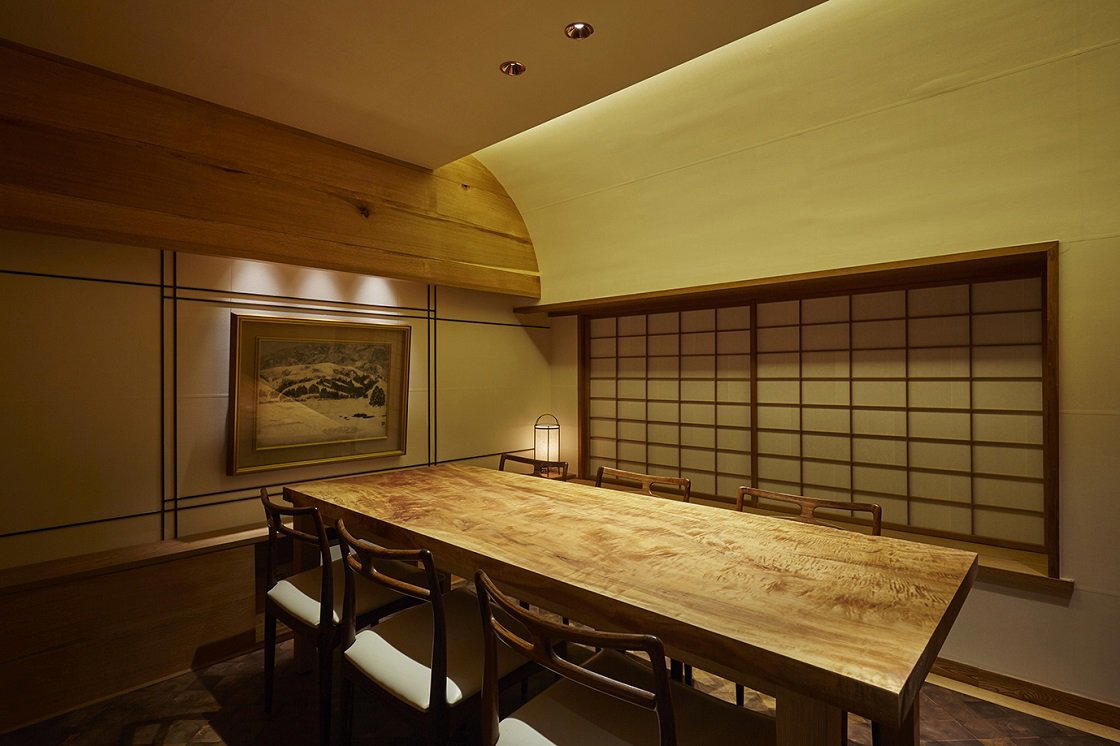
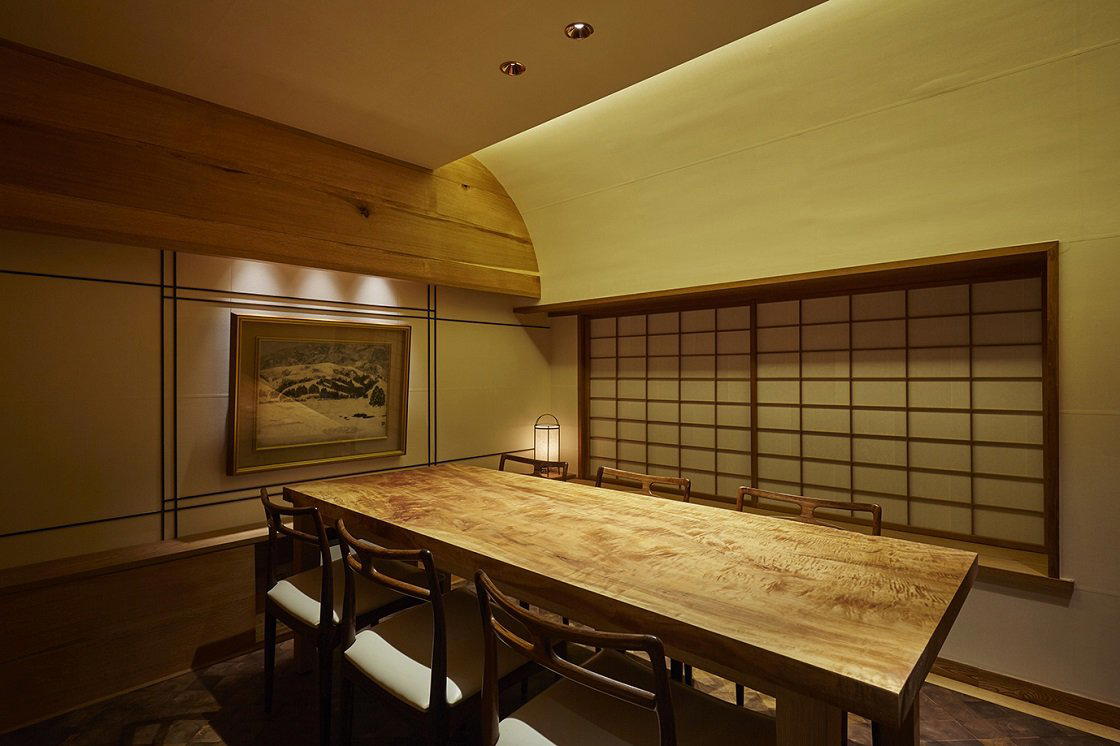
Elegant counter dining; seasonal fish aged to peak.

Pearl is the En Primeur Club membership app — saves, bookings, and concierge access live there. Same editors, same standards.
Motoyama Nakamachi and the Quiet End of Kobe's Dining Map
Higashinada Ward sits at the eastern edge of Kobe, where the city's density gradually softens into residential streets and the kind of neighbourhood that locals use rather than tourists discover. Motoyama Nakamachi, the specific address of this address, occupies that register: a 3-chome block that is neither the port-adjacent glamour of Kitano nor the concentrated restaurant corridor of Sannomiya. Dining here is not incidental to a sightseeing route. It is a deliberate journey eastward, which means the room, whenever you arrive, is likely to hold people who meant to come.
That geographic remove has a culinary logic behind it. Kobe's most-discussed dining is often concentrated further west, where venues like Aragawa and Ash Restaurant serve a clientele that overlaps with the city's international hotel belt. Higashinada, by contrast, draws a more locally rooted crowd, and restaurants in this district tend to price and operate accordingly, without the tourist-economy premium that inflates menus near Kobe Harborland. Whether that distinction holds at this particular address is something only the room itself can confirm, but the neighbourhood's general pattern runs that way.
What the Address Tells You About Kobe's Dining Geography
Kobe occupies an unusual position in the Kansai dining conversation. It is close enough to Osaka and Kyoto to be overshadowed in international coverage, yet it maintains its own distinct culinary identity, shaped by a longer history of foreign trade and a beef tradition that predates modern food tourism. Venues like Ca Sento represent one thread of that cosmopolitan inheritance, bringing Spanish technique into the local conversation. The kaiseki and beef-focused spectrum, represented locally by places such as Uemura and Setsugekka, marks another. A restaurant at a Higashinada address sits somewhere adjacent to all of this, potentially drawing on the city's ingredient access, its port-history pantry, and its beef supply, while operating outside the zones where those associations are most commercially exploited.
For context on how Kobe's scene relates to the wider Kansai region, HAJIME in Osaka and Gion Sasaki in Kyoto define the upper register of the corridor, both carrying Michelin recognition and national reputations that shape what serious diners expect from the area. Kobe's own answer to that tier has historically been concentrated in the Kitanozaka stretch, where Italian-influenced venues like Kitanozaka Kinoshita operate alongside the beef institutions. Motoyama Nakamachi represents a different kind of claim: quieter, less legible to the tourist circuit, more dependent on local knowledge for its audience.
Reading the Room Without a Menu in Advance
That level of opacity is itself a data point. In Japan's dining culture, venues that do not maintain an active web presence or English-facing booking interface often belong to one of two categories: establishments so embedded in local routine that outside visibility is irrelevant to their operation, or newer openings still finding their footing before broader recognition arrives. Either reading places a premium on local intelligence over online research.
Peer restaurants in Kobe's mid-to-upper tier, such as Fushin and fuxing, maintain enough of a public profile to allow advance planning through conventional channels. A venue without that presence requires a different approach: a call through the hotel concierge, a Japanese-language introduction through a trusted local contact, or the kind of walk-in patience that suits an unhurried afternoon in a residential ward. That friction is not necessarily a negative signal. Japan's dining culture has always made room for the restaurant that relies on reputation transmitted person to person rather than platform to platform.
For comparable experiences in the region where local-knowledge navigation is part of the proposition, akordu in Nara and Abon in Ashiya both occupy that quieter, less-indexed tier of the Kansai dining circuit. Further afield, Goh in Fukuoka demonstrates how a chef-driven address can carry serious credibility well outside the main Tokyo-Osaka corridor without a heavy digital footprint. The pattern is consistent across Japan's regional dining: depth of craft and neighbourhood rootedness often move in inverse proportion to international SEO.
Placing This Address in the Broader Japanese Context
Japan's regional dining has been reshaping its geography over the past decade, as recognition from the Michelin Guide's regional editions, the Asia's 50 Best expansions, and domestic food media has drawn attention to addresses far outside Tokyo and Osaka. Venues like Harutaka in Tokyo set a benchmark for what intimate, counter-format precision dining looks like at the highest level. What differs in cities like Kobe is the absence of that benchmark pressure, which can produce either complacency or a freedom from performance that allows a more honest kind of cooking to develop. Higashinada, as a ward, is unlikely to be chasing Michelin stars. Whether that reads as limitation or relief depends entirely on what you are looking for when you make the eastward journey.
Across Japan's prefectural cities, similar dynamics play out: affetto akita in Akita, Aji Arai in Oita, Ajidocoro in Yubari District, and Akakichi in Imabari all represent the kind of regional address that rewards the traveller willing to extend their itinerary beyond the major urban clusters. The common thread is that neighbourhood specificity, not destination fame, drives the experience. The same logic applies in Motoyama Nakamachi. For those planning a Japan trip around serious eating, Le Bernardin in New York City and Lazy Bear in San Francisco provide useful international reference points for how dedicated restaurant travel works at its most deliberate, even if the format and cuisine at a Kobe neighbourhood address would differ considerably.
Planning Your Visit
The address, 3 Chome-3-6 Motoyama Nakamachi, Higashinada Ward, sits on the eastern side of Kobe and is accessible via the Hankyu Kobe Line or the JR Shinkansen corridor, with Motoyamadai area served by local connections. For the full picture of what Kobe's dining scene offers across price tiers and neighbourhood zones, our full Kobe restaurants guide maps the circuit from port-adjacent institutions to quieter residential addresses like this one.
Frequently asked questions
What's 鮨 çç²'s location?
鮨 çç² is located at 3 Chome-3-6 Motoyama Nakamachi, Higashinada Ward, Kobe, Hyogo 658-0016, Japan, Kobe.
What do regulars order at 鮨 笹吟?
In Kobe's embedded neighbourhood sushi counters, the format is typically chef-led, meaning the kitchen dictates the progression rather than the diner selecting à la carte. Arriving without expectations and without a fixed order in mind is, in practical terms, the appropriate approach here.
How far ahead should I plan for 鮨 çç²?
Reservations are recommended for 鮨 çç² in Kobe. Confirm current policy via the venue's official channels.
How far ahead should I plan for 鮨 笹吟?
Kobe's residential counter restaurants in wards like Higashinada tend to operate on repeat-customer cycles, where walk-in availability is limited and advance contact through a local intermediary or hotel concierge often produces better results than direct outreach. Given the address sits well outside Kobe's central dining corridors, planning at least several weeks ahead is a reasonable baseline.
The Essentials
| Venue | Cuisine | Price | Awards | Notes |
|---|---|---|---|---|
| 鮨 çç²This venue (the venue you are viewing) | Not listed | Not listed | Not listed | Not listed |
| Ca Sento | Modern Spanish with Japanese Ingredients | $150–200 | Tabelog Bronze #39 | Spanish |
| Kitanozaka Kinoshita | Seasonal Italian Tasting Menu | $150–200 | La Liste Top Restaurants | Italian |
| Setsugekka | Kobe Beef Teppanyaki | $100–150 | Not listed | Beef Dishes |
| Sushi Ueda | Traditional Omakase Sushi | $300–500 | Tabelog Bronze #494 | Sushi |
| Uemura | Modern Kaiseki | $200–300 | La Liste Top Restaurants · Tabelog Bronze #496 | Kaiseki |
Continue exploring