


1 Michelin Key · Tatler Listed in Best Hotels Asia-Pacific
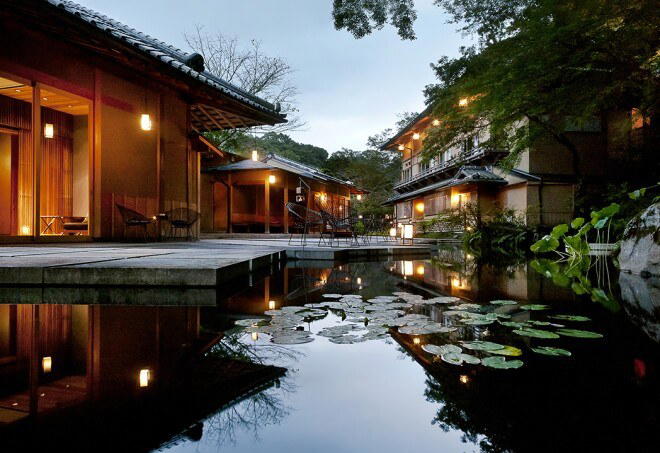
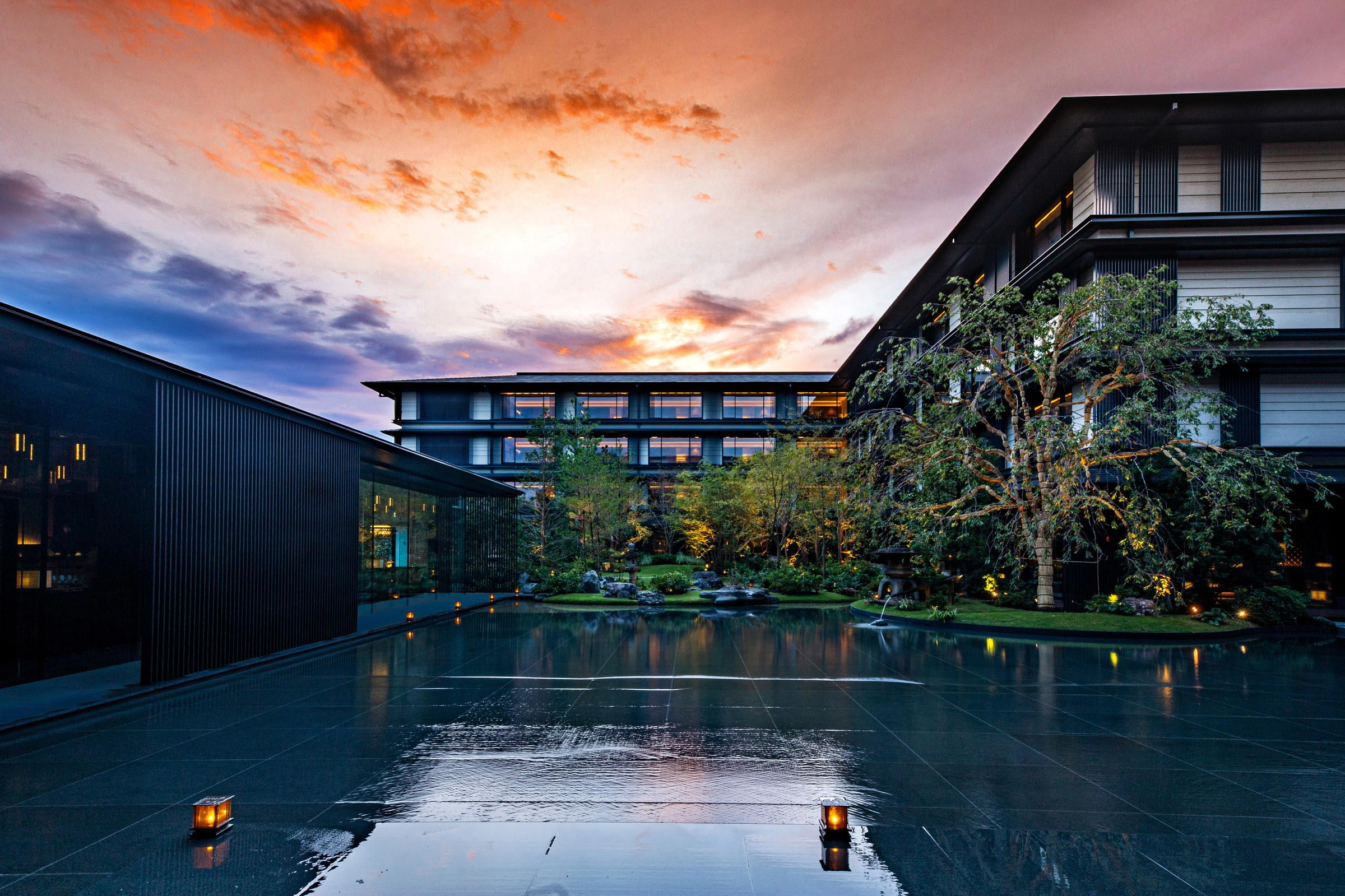
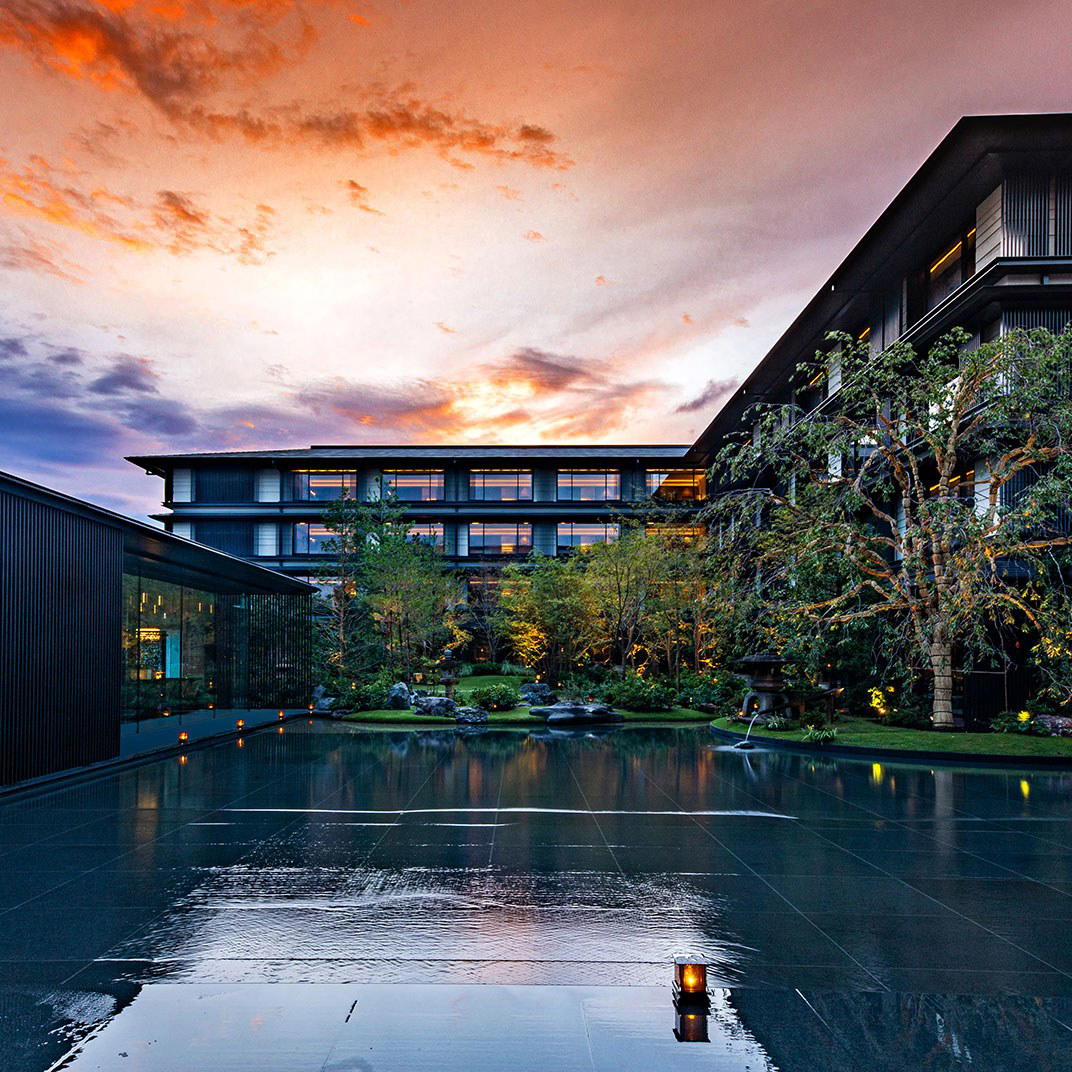
Hoshinoya Kyoto sits 15 minutes upriver from Arashiyama by traditional wooden boat, occupying 25 rooms across a cluster of contemporary Japanese buildings on the Katsura River. The property earns its place in Tatler Asia-Pacific's Best Hotels list through a disciplined ryokan-to-modern translation: cypress soaking tubs, tatami floors, and a kaiseki kitchen anchored in hyper-local seasonal sourcing. Pricing is on request only.

Pearl is the En Primeur Club membership app — saves, bookings, and concierge access live there. Same editors, same standards.
- Address
- 11-2 Arashiyama Genrokuzanchō, Nishikyo Ward, Kyoto, 616-0007
- Phone
- +81 50-3134-8091
- Website
- hoshinoya.com
- Directions
- Get directions
The River as Threshold
Most Kyoto hotels greet guests at a lobby door. Hoshinoya Kyoto greets them at a wooden boat. The 15-minute journey up the Katsura River from the Arashiyama district is not decorative theatre — it is the hotel's first and most deliberate architectural move. By the time the boat docks, the city's foot traffic and taxi ranks feel like a different world, and that sense of deliberate separation shapes everything that follows across the property's 25 rooms.
The Arashiyama district already occupies a specific tier within Kyoto's lodging geography. Properties here compete less on proximity to the central city grid and more on depth of natural setting, access to the Sagano bamboo grove and the UNESCO World Heritage temples of Tenryu-ji, and the cultural weight of an area that has attracted artists and aristocrats since the Heian period. Hoshinoya Kyoto, appearing on Tatler Asia-Pacific's Leading Hotels 2025 list alongside a small cohort of Japanese properties that bridge ryokan tradition and contemporary design, positions itself at the intersection of those values.
Architecture as Argument
Japan's luxury ryokan sector has split across two broad approaches. One school holds strictly to Edo-period aesthetics: sliding shoji screens in natural wood tones, minimal colour, and a deliberate austerity that reads as heritage fidelity. The other interprets the ryokan framework through a modern design lens, retaining the structural logic — low furniture, tatami floors, futon bedding, communal bathing culture, while updating palette, proportion, and material choices. Hoshinoya Kyoto belongs clearly to the second school. The buildings are low-profile and unmistakably Japanese in silhouette, but the interiors arrive in modern colours and graphic patterns that update ryokan convention rather than replicate it.
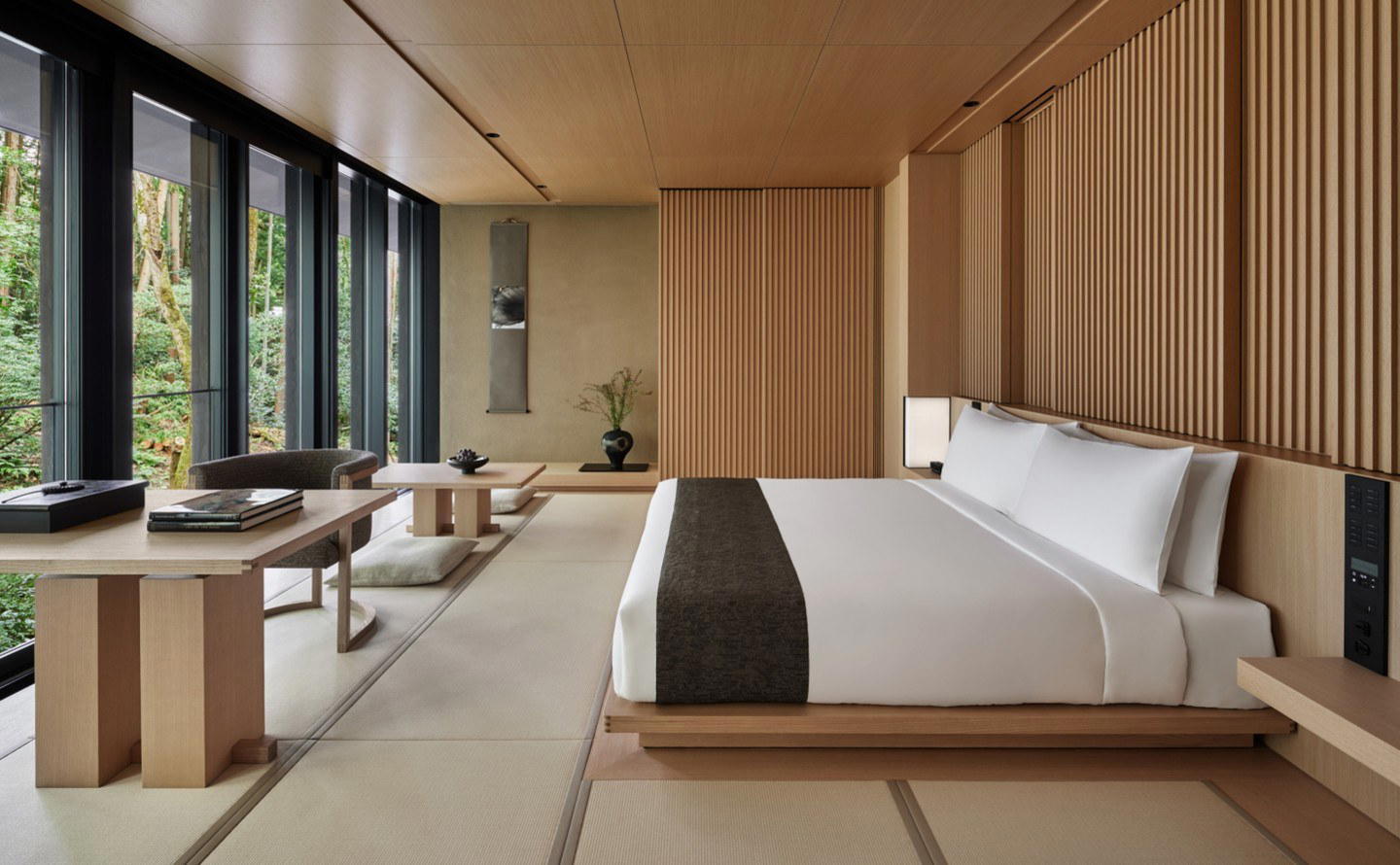
The rooms forgo televisions. In a category where high-specification entertainment systems have become a standard credential of luxury, that omission is a position. The payoff is floor-to-ceiling windows that frame either the river or the bamboo forest depending on room orientation, and cypress soaking tubs that function as the centrepiece amenity rather than an afterthought. For comparison, properties like Aman Kyoto and Park Hyatt Kyoto each make different bets on how much modern technology integrates with traditional Japanese spatial thinking. Hoshinoya Kyoto's answer is among the more austere.
The Kitchen as Cultural Document
The editorial angle that leading unlocks Hoshinoya Kyoto is not the rooms or the boat arrival, it is the kitchen. Kyoto's culinary heritage is among the most codified in Japan. Kyo-ryori, the city's indigenous cuisine tradition, draws on centuries of Buddhist vegetarian cooking (shojin-ryori), imperial court cuisine (yusoku-ryori), and the kaiseki format that evolved from the tea ceremony and became Japan's most disciplined multi-course structure. A hotel restaurant operating in Arashiyama is not simply serving dinner; it is entering a long conversation about what Kyoto food means and how it should be handled.
Property's restaurant approaches that conversation through a menu built on hyper-local, hyper-seasonal ingredients, with chef Ichiro Kubota applying technique drawn from international training to a framework that remains rooted in Kyoto's culinary logic. That pairing, global technical reference applied to local seasonal material, is a recognizable move among Japan's better hotel kitchens, but the specificity of Kyoto's ingredient culture makes the sourcing question here more pointed than in most cities. The Katsura River basin and the Tamba highlands north of the city produce vegetables, tofu, and yu (hot water) that have defined Kyoto cooking for centuries. A kitchen that sources from that geography is making a claim about authenticity that a kitchen importing premium ingredients from elsewhere cannot replicate.
Kaiseki's structure, a sequence of small courses, each calibrated to season, technique, and visual presentation, means the menu architecture itself carries meaning. The order of courses (soup, sashimi, simmered dish, grilled dish, rice) reflects a logic developed across centuries of Japanese culinary refinement. When a hotel kitchen works within that structure while adapting it to contemporary techniques and international influences, the result is a menu that reads as both document and dialogue. For guests whose primary reference for kaiseki is a Kyoto specialist restaurant rather than a hotel kitchen, that context matters when setting expectations.
Cultural Programming and the Ryokan Contract
The ryokan model carries an implicit contract: the property does not simply accommodate guests, it orients them within a cultural practice. Hoshinoya Kyoto's programming reflects that obligation through ikebana flower arranging, Zen meditation sessions, traditional craft workshops, and seasonal experiences tied to the Arashiyama calendar, cherry blossom in spring, maple foliage in autumn. Spa treatments are administered in-room rather than in a dedicated facility, which keeps the spatial experience consistent with the property's stripped-back approach.
The property's Arashiyama location also serves as a direct conduit to Tenryu-ji, one of Kyoto's most significant Rinzai Zen temples, and the Sagano bamboo grove, both within walking distance of the dock. That proximity is practical intelligence for guests planning temple circuits: Hoshinoya Kyoto functions as a cultural base with less logistical friction than city-centre properties for western Kyoto itineraries. Properties in Higashiyama or central Kyoto, including HOTEL THE MITSUI KYOTO, SOWAKA, The Shinmonzen, and Four Seasons Hotel Kyoto, offer closer access to the eastern temple districts but require longer transit to reach Arashiyama.
Where Hoshinoya Kyoto Sits in the Wider Hoshino Portfolio
Hoshino Resorts group operates Hoshinoya properties across Japan at markedly different scales and settings. The Tokyo property occupies a skyscraper in the Otemachi financial district, a deliberately urban inversion of the ryokan format. Hoshinoya Kyoto, at 25 rooms on a riverbank, sits at the opposite pole of that portfolio: small, embedded in landscape, and dependent on natural setting for its primary appeal rather than metropolitan access. That contrast is worth understanding before booking. Guests who respond to the brand through its Tokyo presence may find the Kyoto property more demanding in its removal from city infrastructure.
For ryokan travel elsewhere in Japan, useful reference points include Gora Kadan in Hakone, Asaba in Izu, Nishimuraya Honkan in Kinosaki-cho, and Zaborin in Hokkaido, each of which represents a different calibration of the same traditional-to-contemporary spectrum. ENOWA Yufu in Yufu and Fufu Kawaguchiko offer additional data points on how contemporary Japanese resort design handles natural landscape settings.
Planning a Stay
Pricing is available on request only, which places Hoshinoya Kyoto in the segment of Japanese luxury accommodation where rates are not published and inquiry is the first step. The property's 25-room count means availability is constrained, particularly during cherry blossom season (late March to mid-April) and autumn foliage season (November), when Arashiyama draws significant visitor volume. Guests combining Kyoto with other Japanese destinations should note the regional alternatives: Amanemu in Mie, Benesse House in Naoshima, and Sekitei in Hatsukaichi-shi each anchor different itinerary logics across western and central Japan. For the full picture of Kyoto dining and accommodation options, see our full Kyoto guide. Additional context on how Hoshinoya Kyoto compares to design-forward Kyoto alternatives including Ace Hotel Kyoto and Dusit Thani Kyoto is worth reviewing before committing to an Arashiyama location over a more central address.
At-a-Glance Comparison
Comparable venues nearby, for context on price, style, and recognition.
| Venue | Cuisine | Price | Awards | Notes |
|---|---|---|---|---|
| Hoshinoya KyotoThis venue — the venue you are viewing | luxury hybrid ryokan blending traditional Japanese architecture with modern comforts | $750–1,000 | 1 Michelin Key · Tatler Listed in Best Hotels Asia-Pacific | Not listed |
| Banyan Tree Higashiyama Kyoto | Contemporary Japanese luxury ryokan with natural hot springs | Not listed | 1 Michelin Key · Mr & Mrs Smith Seal of Approval | Higashiyama |
| Six Senses Kyoto | Modern luxury ryokan-inspired with Heian period reinterpretations and Tale of Genji folklore. | $1,000–1,500 | 1 Michelin Key · Mr & Mrs Smith Seal of Approval | Higashiyama |
| Suiran, a Luxury Collection Hotel, Kyoto | Traditional Japanese luxury ryokan blended with modern amenities | Not listed | 1 Michelin Key · La Liste Top Hotels | Ukyō |
| The Hotel Seiryu Kyoto Kiyomizu | Renovated historic school building blending Japanese heritage with contemporary luxury | Not listed | 1 Michelin Key · La Liste Top Hotels | Higashiyama |
| ROKU KYOTO, LXR Hotels & Resorts | Mountain resort blending Japanese artisanship with modern luxury | Not listed | 1 Michelin Key · La Liste Top Hotels | Kita |
Recognition history
Dated appearances from independent guides and award organizations, with the underlying list record or original source where available.
Michelin 1 Key
Michelin
Robb Report The 50 Greatest Luxury Hotels on Earth #33
Robb Report
Tatler Listed in Best Hotels Asia-Pacific
Tatler
Full recognition history (4 entries)
Michelin 1 Key
Michelin
Continue exploring
More in Kyoto
Hotels in Kyoto
Browse all →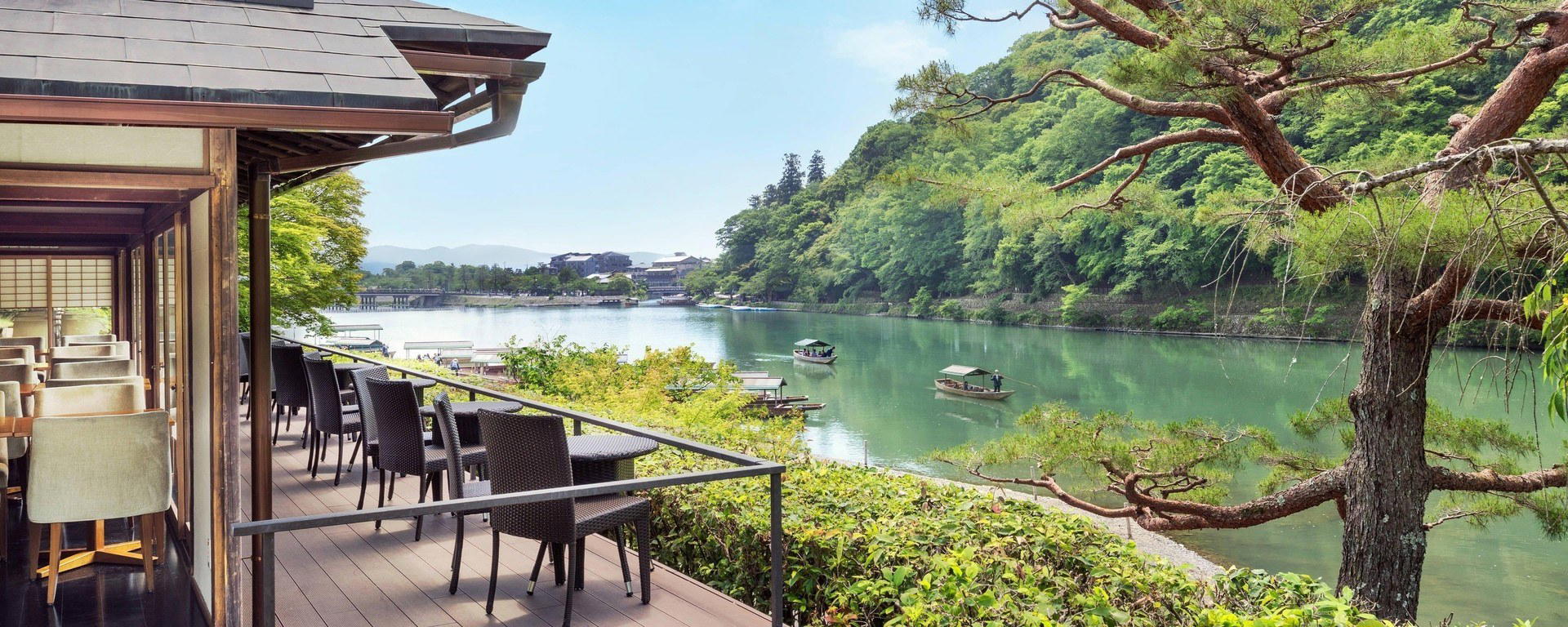
Bars in Kyoto
Browse all →
Restaurants in Kyoto
Browse all →
Wineries in Kyoto
Browse all →
Details
- Quiet
- Elegant
- Scenic
- Sophisticated
- Intimate
- Minimalist
- Honeymoon
- Romantic Getaway
- Wellness Retreat
- Anniversary
- Weekend Escape
- Historic Building
- Panoramic View
- Private Dining
- Garden
- Wi Fi
- Spa
- Room Service
- Concierge
- Restaurant
- Pool
- Garden
- Mountain
- Wheelchair Accessible
Serene and elegant with natural light filtering through shoji screens, minimalist Zen-inspired interiors using calm natural colors, and contemplative gardens creating a peaceful, immersive Japanese retreat atmosphere.