Our verdict
Located steps from Uozu Station in Toyama Prefecture, 太助鮨 sits within a coastal city whose cold Sea of Japan waters produce some of Hokuriku's most sought-after seafood. The restaurant occupies a neighbourhood where ingredient provenance is the primary measure of quality. For travellers moving through this undervisited stretch of the Japan Sea coast, it represents a direct encounter with the region's fishing heritage.

Pearl is the En Primeur Club membership app — saves, bookings, and concierge access live there. Same editors, same standards.
- Address
- 10-14 Ekimae Shinmachi, Uozu, Toyama 937-0051, Japan
- Phone
- +81765247357
- Directions
- Get directions
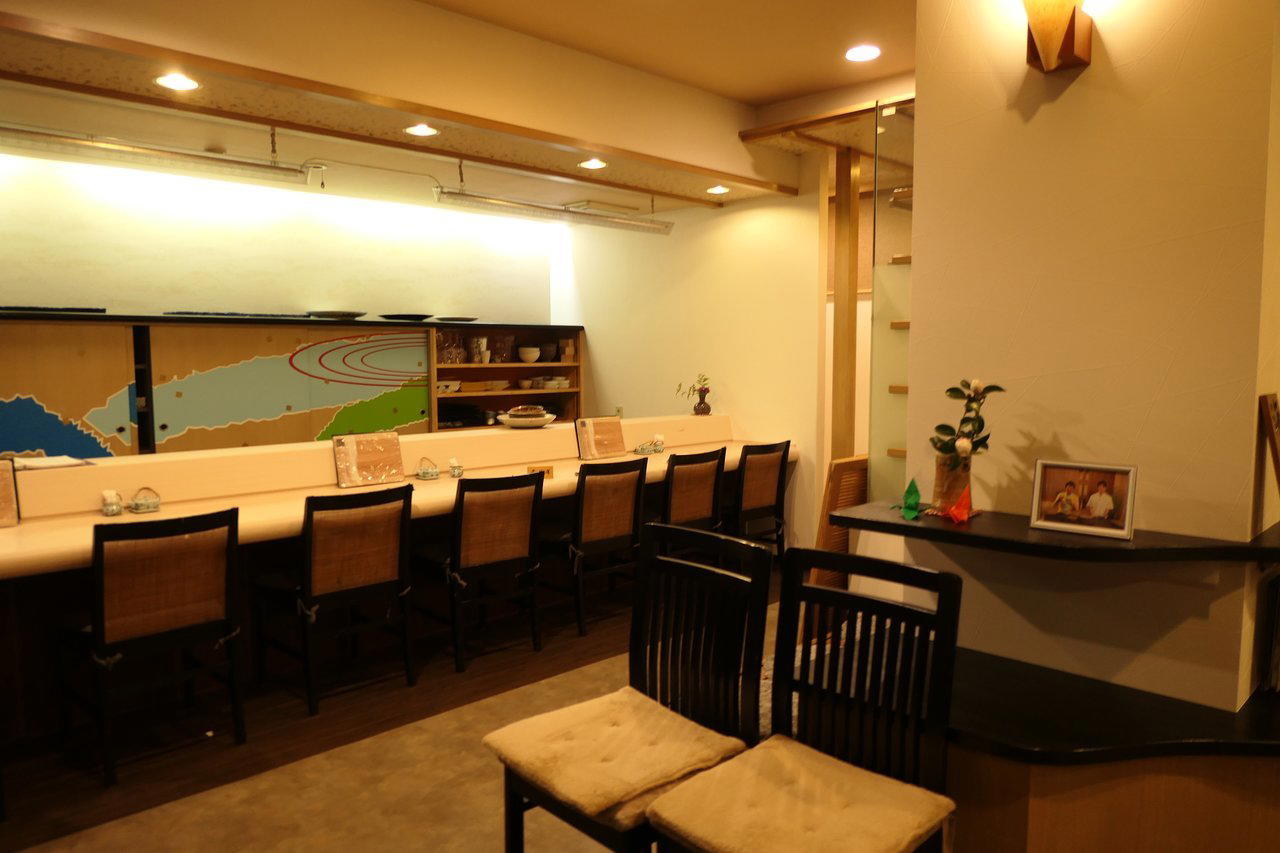
Where the Sea of Japan Sets the Standard
Toyama Bay has a reputation among Japanese seafood specialists that rarely reaches international travel coverage. The bay's unusual topography — a dramatic underwater valley dropping to over 1,000 metres within a few kilometres of shore — creates cold, nutrient-rich upwellings that concentrate marine life with unusual density. Uozu, positioned on the bay's eastern shore, has been a fishing port for centuries, and its name itself translates roughly as "fish harbour." The city's restaurant culture is built almost entirely around this proximity to the source. Venues like 魚大将 and ボケリア draw from the same coastal supply chain that defines the town's culinary identity.
太助鮨 sits at 10-14 Ekimae Shinmachi, a few minutes from Uozu Station on the Ainokaze Toyama Railway line, a position that makes it accessible to travellers connecting from Toyama City or arriving via the Hokuriku Shinkansen corridor. The station-adjacent address places it squarely in the practical centre of a small city where most serious dining concentrates near the port or transit points. This is not a neighbourhood that rewards elaborate detours; the logic is simpler. You arrive in Uozu, you eat what the bay provides, and the restaurant is a direct expression of that contract between place and plate.
Hokuriku's Ingredient Geography
The Hokuriku region, comprising Toyama, Ishikawa, and Fukui prefectures, functions as one of Japan's most coherent seafood-producing zones. Toyama Bay in particular delivers a list of marine species that holds specific prestige within Japanese cuisine: firefly squid (hotaru-ika), white shrimp (shiro-ebi), yellowtail (buri), and the bay's cold-water crab runs all carry enough seasonal cachet to attract specialist buyers from Osaka and Tokyo. Chefs at recognised venues like Gion Sasaki in Kyoto and Harutaka in Tokyo source from comparable coastal supply networks, where the argument for quality rests on water temperature, fishing method, and speed from net to kitchen rather than on kitchen technique alone.
In this context, a sushiya in Uozu is operating at the source rather than downstream. The ingredient advantage available to a restaurant in this city is not replicated in Tokyo or Kyoto no matter the budget, because the degradation window for Toyama Bay species is short and the freshest expressions travel poorly. Comparable sourcing dynamics apply to places like 一本木 川島製 in Nanao along the Noto Peninsula, another Hokuriku coastal town where proximity to fishing grounds defines what the kitchen can offer. For context on how destination dining operates across Japan's coastal regions, our full Uozu restaurants guide maps the broader picture.
The Sushi Format in a Fishing Port Context
Japan's sushi tradition bifurcates broadly between counter-led omakase formats in urban centres and more informal, ingredient-forward approaches in coastal production towns. The latter tend to prioritise the fish itself over elaborate knife work or rice temperature theatre, partly because the ingredient quality makes elaboration redundant and partly because the clientele, often including local fishermen, buyers, and families, has no patience for ceremonial pacing. This does not mean technical standards are lower; it means the hierarchy of values is different. At highly awarded urban counters like HAJIME in Osaka or Goh in Fukuoka, the chef's intervention and the dining format carry significant weight in the overall evaluation. In a port-town sushiya, the fish makes the case and the restaurant's job is largely not to interfere with it.
This format distinction matters for calibrating expectations. Travellers arriving from Tokyo's high-end omakase circuit or from internationally recognised kaiseki dining will encounter a different register, less performative, more direct. The comparison is not about ranking; it is about recognising that coastal Japan produces a category of seafood restaurant that has no equivalent further inland, regardless of price or Michelin status. For a sense of how that contrast plays out across Japan's broader fine dining geography, venues like akordu in Nara and Atomix in New York City represent the opposite pole of the spectrum, maximally curated, technique-driven formats that treat sourcing as one variable among many.
Seasonal Timing and the Bay's Calendar
Toyama Bay's seafood offer is sharply seasonal. Hotaru-ika (firefly squid) run from March through June and are harvested nightly in the bay using traditional fixed-net methods; the spectacle of bioluminescent squid near Uozu's shore draws visitors specifically in April and May. Shiro-ebi (white shrimp), sometimes described as Toyama's signature ingredient, peaks through spring and early summer. Winter brings buri (yellowtail) and zuwaigani (snow crab), both of which carry significant prestige in Hokuriku cuisine and command corresponding price premiums at restaurants across the region. Timing a visit to Uozu around these seasonal peaks is the most direct way to encounter the bay's ingredient calendar at its most concentrated. Restaurants in the 湖畔荘 in Takashima and 庭羽屋 in Nishikawa Machi traditions operate under similarly seasonal constraints across Japan's coastal and lake regions.
For visitors planning around the firefly squid season specifically, April is the most reliable window, the harvest is active, the weather on the Sea of Japan coast is mild enough for comfortable travel, and the regional ingredient supply is at its most varied. The Hokuriku Shinkansen connects Tokyo to Toyama in under two hours, and Uozu is a further 30 minutes by local rail. Most travellers combine it with Kanazawa, which lies roughly an hour west and carries its own well-documented seafood restaurant culture centred on Omicho Market.
Planning a Visit
太助鮨 is located at 10-14 Ekimae Shinmachi, Uozu, Toyama 937-0051. Given Uozu's small scale, walk-in availability at neighbourhood sushi restaurants is more common than at comparable urban counters, though this cannot be confirmed without direct contact. For travellers already in Toyama Prefecture or making the Hokuriku circuit, the detour to Uozu requires minimal additional logistics and delivers an encounter with the bay's seafood that the prefecture's larger city restaurants cannot fully replicate. For broader context on seafood-driven dining across Japan's coastal regions, Le Bernardin in New York City and bodai represent how serious seafood restaurants in different global contexts build their menus around comparable sourcing disciplines. Regional peers worth considering within Japan include Birdland in Sakai, Bistro Ange in Toyohashi, and Blue Ocean Steak in Nakagami District, each operating within local ingredient economies that define their menus as much as any kitchen decision. For the full picture of what Uozu offers, 北の大地乃 in Sapporo provides a useful northern parallel for how Japan's cold-water coastal cities build their restaurant identities around marine geography.
Frequently asked questions
Is 太助鮨 child-friendly?
Sushi restaurants in fishing-port towns like Uozu typically operate in compact spaces oriented toward adult diners, so it is worth confirming directly before visiting with young children. The address is 10-14 Ekimae Shinmachi, Uozu, Toyama.
Where is 太å©é®¨ located?
太å©é®¨ is located at î10-14 Ekimae Shinmachi, Uozu, Toyama 937-0051, Japan, Uozu.
Can I walk in to 太å©é®¨?
Reservations are recommended for 太å©é®¨ in Uozu. Confirm current policy via the venue's official channels.
What's the overall feel of 太助鮨?
Based on its location in Uozu — a working fishing port on Toyama Bay — 太助鮨 fits the Hokuriku model of ingredient-forward, unfussy seafood dining rather than the formal counter theatre of Tokyo omakase. The setting at Ekimae Shinmachi places it close to the station, suggesting a neighbourhood-rooted character. Expect the emphasis to fall on what came off the boats rather than on ceremony.
Side-by-Side Snapshot
| Venue | Cuisine | Price | Awards | Notes |
|---|---|---|---|---|
| 太å©é®¨This venue — the venue you are viewing | Japanese Kaiseki | Not listed | Not listed | Not listed |
| HAJIME | Avant-Garde Japanese Fine Dining | $300–500 | 3 Michelin Stars · World's 50 Best #83 | French, Innovative |
| Harutaka | Edo-Style Omakase Sushi | $200–300 | 3 Michelin Stars · World's 50 Best #76 | Sushi |
| L'Effervescence | Modern French with Japanese Influences | $200–300 | 3 Michelin Stars · World's 50 Best #69 | French |
| RyuGin | Modern Kaiseki | $500+ | 3 Michelin Stars · World's 50 Best #41 | Kaiseki, Japanese |
| Crony | Modern French with Japanese Influences | $150–200 | 2 Michelin Stars · World's 50 Best #34 | Innovative, French |
Continue exploring
More in Uozu
Restaurants in Uozu
Browse all →
Hotels in Uozu
Browse all →


Wineries in Uozu
Browse all →
Details
- Special Occasion
- Standalone
- Sake Program
- Local Sourcing