Our verdict
In Kyoto's Kamigyo district, 和食晴ル occupies a quieter tier of the city's washoku scene, distinct from the formal kaiseki circuit yet operating with comparable seriousness. The address on Higashi-Imakojicho places it among neighbourhood restaurants that earn repeat business through consistency rather than ceremony, a pattern that defines a particular strand of Kyoto dining culture.

Pearl is the En Primeur Club membership app, where members save venues, book tables and use the concierge.
The menu
What to order
- 晴ル風鯖寿司
- 和牛すき焼き
The Quiet End of the Street
Kamigyo-ku sits north of Kyoto's most-trafficked cultural corridor, where the density of heritage sites thins and the dining room stops performing for tourists. In this part of the city, restaurants tend to build their clientele slowly, through word passed between regulars rather than through guidebook placement. The address on Higashi-Imakojicho, a residential stretch in the 602-8387 postal district, places 和食晴ル inside that pattern. The neighbourhood is not a dining destination in the way Gion or Higashiyama is. It is somewhere people eat because they live nearby, or because someone who does told them to go.
That distinction matters when reading Kyoto's broader dining structure. The city's most-discussed Japanese restaurants, Gion Sasaki, Hyotei, Kikunoi Honten, and Mizai, operate in the formal kaiseki tier, priced at ¥¥¥¥ and oriented toward a combination of local connoisseurs and well-briefed visitors. Below that tier, and occasionally alongside it in terms of seriousness, sits a stratum of washoku restaurants that work without the same infrastructure of PR, awards cycles, and international press. 和食晴ル appears to occupy that second space: a place where the food is the primary claim, not the setting or the status.
What Keeps Regulars Returning
The sociology of repeat dining in Kyoto's neighbourhood restaurants follows a recognisable logic. A first visit is usually prompted by a recommendation; a second visit confirms whether the cooking holds up outside the novelty of discovery; a third visit means something more specific has been earned. For restaurants in residential districts like Kamigyo, regulars are not just the revenue base, they are the editorial filter. Dishes that do not land disappear. The ones that survive successive seasons accumulate a kind of informal authority.
In Kyoto's washoku tradition, that survival process is particularly stringent. The city's culinary culture places high weight on restraint, on ingredient sourcing from the Nishiki market and surrounding Kyoto prefecture, and on seasonal honesty. A restaurant in this tradition that develops a loyal neighbourhood following has, by implication, demonstrated cooking that holds up to repeated scrutiny from an informed local audience, a standard that formal review cycles do not always replicate. The contrast is instructive when comparing Kyoto's washoku tier with contemporaries elsewhere in Japan: restaurants like Goh in Fukuoka or akordu in Nara operate in distinct regional registers, but the underlying dynamic, building a stable audience through consistency, is shared.
What the address and neighbourhood context suggest is a restaurant functioning within Kyoto's washoku continuum rather than against it: cooking that references the same seasonal calendar, the same preference for clarity over complexity, that defines the broader tradition from Isshisoden Nakamura downward through the city's dining register.
Placing 和食晴ル in the Kyoto Dining Hierarchy
Kyoto's dining culture stratifies more visibly than most Japanese cities. At the formal end, multi-course kaiseki at ¥¥¥¥ restaurants like Gion Sasaki or Ifuki represents both a culinary standard and a social ritual. Further down the price register, Chinese and Italian restaurants, cenci at ¥¥¥, Kyo Seika at ¥¥¥, compete on different terms entirely, often drawing younger urban diners who want quality without the full kaiseki apparatus.
The washoku middle, serious Japanese cooking that is not kaiseki in the strict ceremonial sense, is arguably the most interesting stratum in Kyoto right now, and the least documented in international press. These are restaurants where the chef's relationship to Kyoto's ingredient network matters more than Michelin annotation, where the menu changes weekly rather than seasonally, and where the dining room is sized for a neighbourhood audience rather than a reservation-driven visitor economy. That is the competitive set in which 和食晴ル appears to operate, based on its location in Kamigyo-ku and its residential address.
For comparison outside Kyoto, the dynamic echoes in restaurants like Harutaka in Tokyo, a restaurant that built its reputation through consistent technique and a loyal return clientele before the awards recognition arrived, and in the model of specialist neighbourhood dining seen at venues across Japan, from 一本木 石川製 in Nanao to 夕月亭 in Sapporo. In each case, the restaurant's relationship to its local audience precedes and often outlasts its relationship to national or international recognition.
Planning a Visit
Kamigyo-ku is accessible from central Kyoto by bus or on foot from the Karasuma Oike or Imadegawa subway stations. The residential character of the neighbourhood means fewer surrounding distractions and no significant pre-dinner bar scene in the immediate vicinity; visitors arriving from out of town are better served planning the evening around the meal itself. The full Kyoto restaurants guide provides broader context for building an itinerary across the city's dining tiers.
For those with an interest in how Japanese fine dining operates across different city registers, the contrast with HAJIME in Osaka, a restaurant operating at the extreme formal end of the Japanese fine dining spectrum, is instructive. At the opposite pole, more casual Japanese dining structures appear in markets like Birdland in Sakai. 和食晴ル sits between those registers, in the space where neighbourhood loyalty and culinary seriousness coexist without one overriding the other.
Additional context on how Japanese culinary discipline translates to Western fine dining contexts can be found at Atomix in New York City and Le Bernardin in New York City, where the relationship between technique, regulars, and long-term reputation follows comparable patterns across a very different cultural setting. Regional Japanese comparisons with different culinary traditions appear at Bistro Ange in Toyohashi, 湖畔荘 in Takashima, and 羽根屋 in Nishikawa Machi.
Is 和食晴ル the kind of restaurant that requires local knowledge to find?
The Kamigyo-ku address on Higashi-Imakojicho is a residential street rather than a recognisable dining corridor, which means the restaurant does not benefit from the casual discovery traffic that benefits venues in Gion or near Nishiki Market. Visitors without a local connection or prior research are unlikely to arrive by chance. That dynamic is consistent with a particular model of Kyoto dining, low profile externally, well-regarded internally, that parallels the approach of other neighbourhood-anchored restaurants across Japan, from 一本木 石川製 in Nanao to 夕月亭 in Sapporo.
A Tight Comparison
Comparable venues nearby, for context on price, style, and recognition.
| Venue | Cuisine | Price | Awards | Notes |
|---|---|---|---|---|
| 和食晴ルThis venue (the venue you are viewing) | Kyoto Kappo Izakaya | $50–100 | Not listed | Not listed |
| 京é½åå åµå±±æ¬åº | Traditional Kyoto Kaiseki | Not listed | Not listed | Ukyō, Traditional Kyoto Kaiseki |
| Yoshokudo Suzuki | Yoshoku (Japanese-style Western) counter restaurant | $50–100 | Tabelog 100 #15 | Nakagyō, Yoshoku (Japanese-style Western) counter restaurant |
| Morita Ya JR kyoto isetan ten | Traditional Kyoto beef sukiyaki & shabu-shabu | $50–100 | Tabelog 100 #4 | Shimogyō, Traditional Kyoto beef sukiyaki & shabu-shabu |
| Tempura Kawatatsu | Kyoto-style Tempura & Wine Pairing | $50–100 | Tabelog 100 #68 | Minami, Kyoto-style Tempura & Wine Pairing |
| Morita Ya Shijo inokuma honten | Traditional Wagyu Sukiyaki & Shabu-Shabu | $50–100 | Tabelog 100 #75 | Shimogyō, Traditional Wagyu Sukiyaki & Shabu-Shabu |
Continue exploring
More in Kyoto
Restaurants in Kyoto
All restaurants in Kyoto →
Bars in Kyoto
All bars in Kyoto →
Hotels in Kyoto
All hotels in Kyoto →
Wineries in Kyoto
Browse all →
Details
- Cozy
- Elegant
- Intimate
- Sophisticated
- Date Night
- Solo
- Special Occasion
- Chefs Counter
- Open Kitchen
- Sake Program
- A La Carte
- Small Plates
- Sake
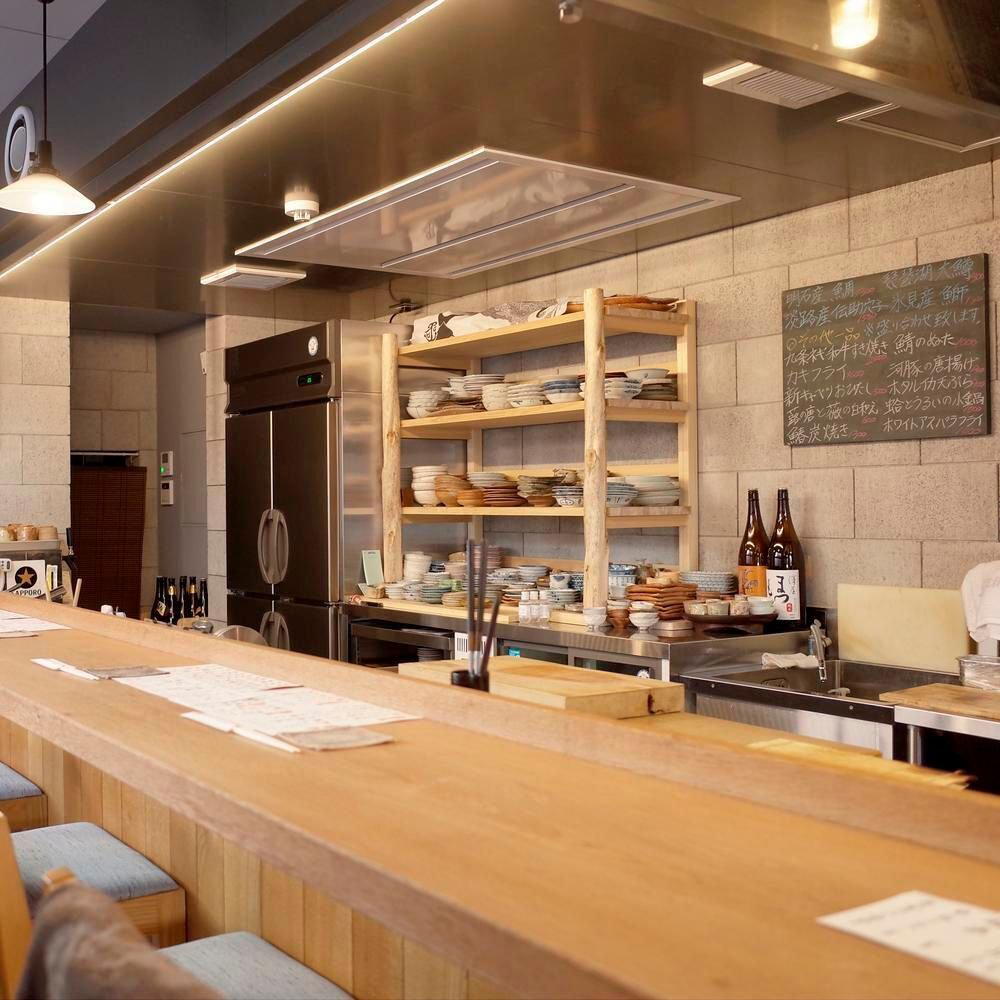
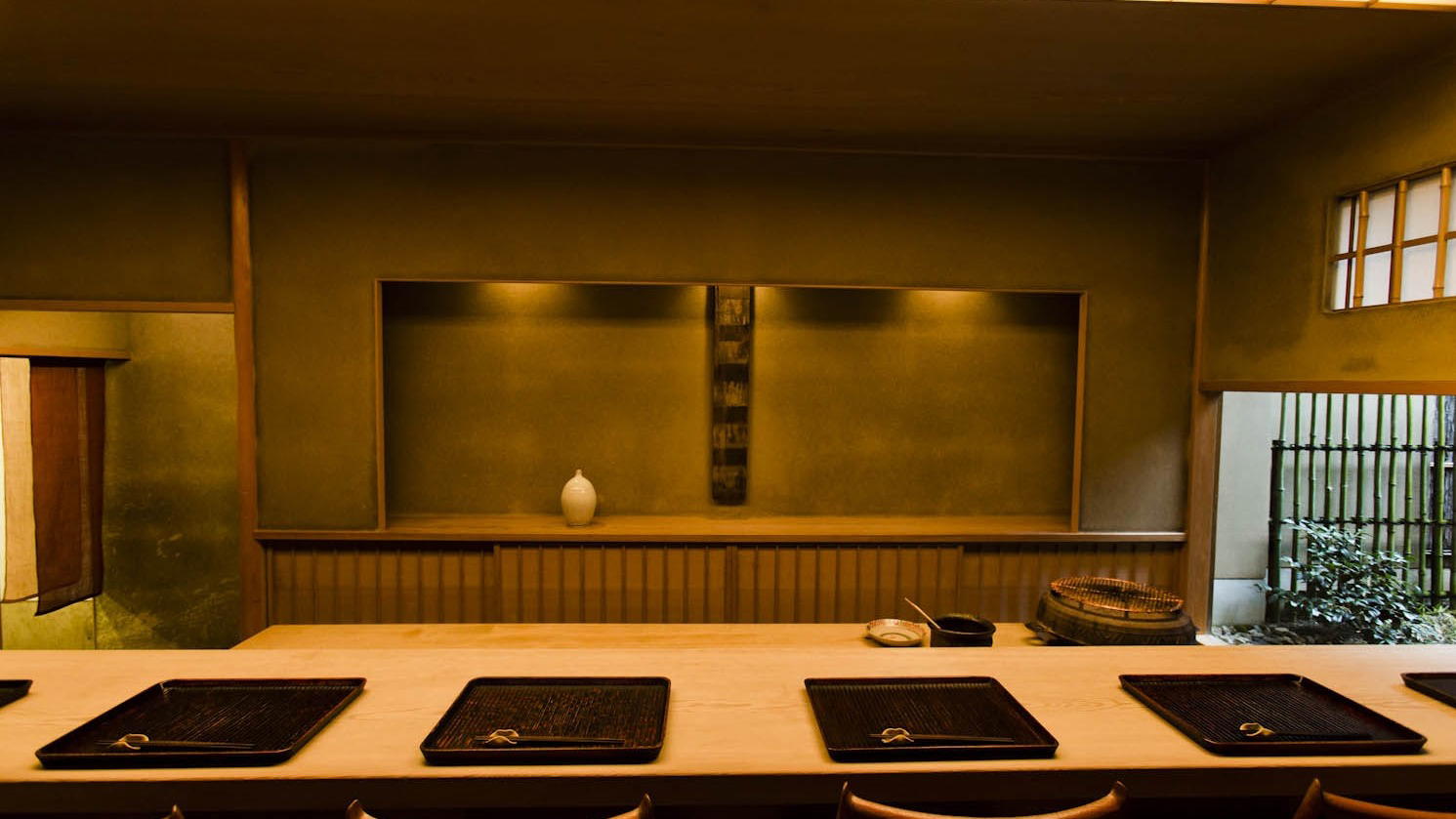
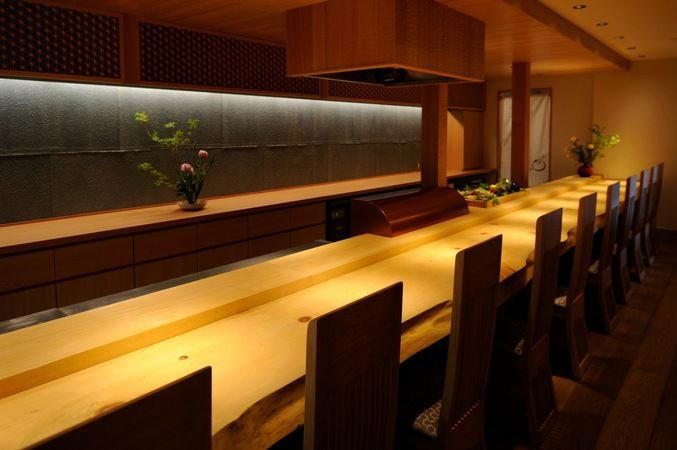
Relaxed yet elegant counter seating with beautiful chef craftsmanship visible, shoulder-free atmosphere.