Our verdict
Torisho Ishii Hina represents Osaka's specialist yakitori tradition at a focused, counter-led format where the city's appetite for precision over spectacle is most legible. The restaurant sits within a broader shift in Japanese poultry cookery toward single-subject menus and sourcing transparency. Booking ahead is advisable given the concentrated seat count typical of this format.

Pearl is the En Primeur Club membership app — saves, bookings, and concierge access live there. Same editors, same standards.
- Address
- Osaka, Japan
- Directions
- Get directions
The menu
What to order
- Tsukune
- Tebasaki
- Negima
Counter Culture: Osaka's Yakitori Scene and Where Torisho Ishii Hina Fits
Japan's yakitori tradition has moved through several distinct phases over the past two decades. What began as a predominantly after-work, high-volume category, associated with dense smoke and cheap cold beer, has fragmented into something more stratified. At the upper end, a cohort of counter-led specialists has emerged across Osaka, Tokyo, and Kyoto, operating with the same sourcing discipline and format restraint you would find at a kaiseki house or an omakase sushi counter. Birdland in Sakai is one signal of how seriously this region treats poultry cookery as a distinct culinary category. Torisho Ishii Hina belongs to that same current: a Osaka address where the subject is chicken, handled with the kind of focused attention that turns a single ingredient into a full editorial argument.
The broader Osaka dining scene has long operated on a different register from Tokyo. Where Tokyo's restaurant culture rewards formality and occasion, Osaka's historically prized directness, value density, and technical confidence at mid-register price points. But the last decade has pushed a slice of that market sharply upward. HAJIME and Fujiya 1935 now compete against international benchmarks at the ¥¥¥¥ tier. Meanwhile, Taian and Kashiwaya Osaka Senriyama have anchored the ¥¥¥ Japanese and kaiseki tier with consistent critical recognition. Into this layered market, specialist single-subject concepts like yakitori counters have found room to operate with genuine authority, rather than functioning as gap-fillers between izakaya and haute cuisine.
The Evolution of Focused Poultry Cookery in Japan
The shift in how Japan's serious dining culture treats yakitori mirrors a wider pattern visible in premium food cities globally: the single-subject restaurant, once read as a limitation, is now read as a statement of confidence. A counter that commits entirely to chicken, the sourcing chain behind it, and the incremental craft decisions involved in grilling offal, thigh, breast, and skin at different intensities is making an argument about depth over breadth. Harutaka in Tokyo demonstrates how a tightly scoped format and rigorous sourcing can generate sustained recognition at the highest levels. Gion Sasaki in Kyoto shows how a Japanese kitchen can absorb and refine a culinary tradition without diluting its identity. The same logic applies to poultry specialists: the question is never just what is on the skewer, but what decisions were made before the grill was lit.
Torisho Ishii Hina reads as a product of this evolution. The name itself signals a lineage or house identity, a common marker in Japanese specialty restaurants that wish to communicate continuity and a specific school of practice, rather than a single chef's personal moment. In the yakitori category, naming conventions tend to matter: they suggest a method has been codified, practiced over time, and is being transmitted rather than invented fresh each service. That's a different kind of credential than a headline chef's name above the door.
Osaka as a Testing Ground for Specialty Formats
Osaka's restaurant market is dense enough to sustain specialty formats but practical enough to discipline them. A concept that cannot convert repeat local visitors alongside tourist traffic will not last long in this city. This gives successful specialty counters in Osaka a particular durability signal: survival here implies both quality and operational legibility. For reference, La Cime has demonstrated that Osaka can sustain a French counter at ¥¥¥¥ with full critical recognition; the city is not merely a proving ground for Japanese formats but a genuine multi-register dining market.
Beyond Osaka, the Kansai region supports a network of serious specialty restaurants worth orienting around. akordu in Nara operates a precision-led format in a city better known for temples than dining ambition. Further afield, Goh in Fukuoka has built recognition in a city with its own strong food identity. Japan's specialist restaurant culture is not confined to the Michelin-heavy corridors of Tokyo and Kyoto; it runs through secondary cities and regional towns, with addresses like a specialist counter in Nanao, a focused kitchen in Takashima, and a serious dining room in Nishikawa Machi all pointing to the same national pattern of culinary seriousness distributed across geography.
What the Format Implies About the Experience
Counter-led yakitori at the specialist level operates on a rhythm the room dictates. Skewers arrive in sequence determined by the kitchen, not the guest. Pacing is deliberate. The experience is closer to omakase than to an a la carte grill session, and that distinction matters for how you approach a booking. You are not there to order what you want; you are there to follow a sequence someone else has composed. This format demands a certain attentiveness from the diner, and rewards it.
For international comparison, this format discipline is not unlike what Atomix in New York City or Le Bernardin in New York City bring to their respective categories: a kitchen that has made decisions so the guest doesn't have to, and trusts that commitment to be its own persuasion. The single-subject counter is a high-conviction format. It doesn't work if the conviction isn't there. That yakitori specialists at this tier have sustained their position in competitive Japanese markets is evidence the conviction, where present, is grounded in real craft. For context on the broader Osaka dining ecosystem, the full Osaka restaurants guide maps where poultry specialists sit within the city's wider dining hierarchy.
The further regional comparisons, including a northern specialist in Sapporo and Bistro Ange in Toyohashi, reinforce the point that Japan's serious restaurant culture runs on distributed conviction rather than a single capital's gravitational pull. Torisho Ishii Hina sits within that network.
Planning Your Visit
Osaka's specialist counters at this level typically require advance booking; walk-in availability at serious yakitori houses is limited by seat count, which at the counter format rarely exceeds a dozen covers. Visiting on a weekday evening generally offers a smoother booking window than Friday or Saturday. The wider area around Osaka is well-connected by rail, making it direct to combine a visit with time in Kyoto or Nara on the same trip. As with most focused Japanese counter experiences, arriving on time and allowing the kitchen to set the pace will give you the version of the meal the restaurant was designed to deliver.
Frequently asked questions
Is Torisho Ishii Hina child-friendly?
Counter-format yakitori specialists in Osaka are generally oriented toward adult diners. The tasting sequence format, where the kitchen controls pacing and progression, does not lend itself to flexible ordering or extended wait tolerance. Families with young children will find more accommodating formats elsewhere in the city.
What kind of setting is Torisho Ishii Hina?
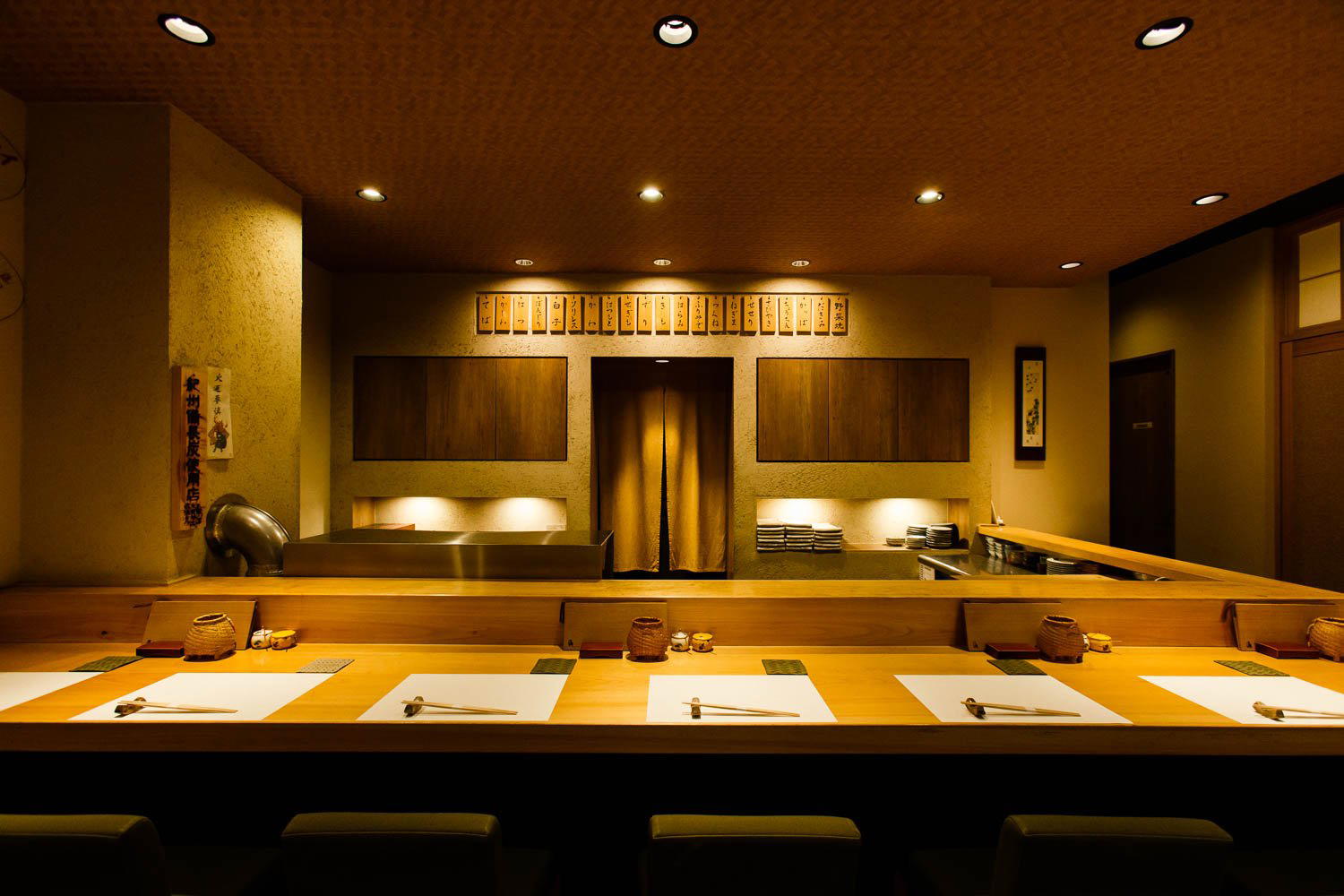
Torisho Ishii Hina operates in the specialist counter format common to serious yakitori houses across Osaka and Tokyo. Expect a compact room where proximity to the grill is part of the experience, not incidental to it. This is a focused, kitchen-forward environment rather than a large communal dining room.
How does Torisho Ishii Hina compare to other yakitori specialists in Osaka?
Osaka's poultry specialist category sits within a national movement that has repositioned yakitori from casual after-work dining into a focused, single-subject format with chef-led progression. Torisho Ishii Hina operates within that tradition in Osaka, a city whose restaurant market tests specialty concepts against repeat local demand rather than tourist volume alone. For context, the city's serious grill counters are increasingly assessed alongside Tokyo's established yakitori names.
What should I eat at Torisho Ishii Hina?
At a specialist yakitori counter in Osaka, the kitchen sets the order of skewers rather than the guest selecting à la carte. Follow the full omakase progression; deviating from it works against how the format is designed. The sequence is the meal.
Do I need a reservation for Torisho Ishii Hina?
Yes. Specialist yakitori counters in Osaka operate with a limited number of seats, and walk-in availability is not reliable at this format level. Book in advance through the venue directly or via a concierge service familiar with Osaka's counter dining scene.
Awards and Standing
| Venue | Cuisine | Price | Awards | Notes |
|---|---|---|---|---|
| Torisho Ishii HinaThis venue — the venue you are viewing | Modern Yakitori Omakase | $100–150 | Not listed | Not listed |
| HAJIME | Avant-Garde Japanese Fine Dining | $300–500 | 3 Michelin Stars · World's 50 Best #83 | French, Innovative |
| La Cime | Modern French with Japanese Ingredients | $150–200 | 2 Michelin Stars · World's 50 Best #13 | French |
| Kashiwaya Osaka Senriyama | Seasonal Kaiseki Omakase | $200–300 | 3 Michelin Stars · La Liste Top Restaurants | Japanese |
| Taian | Traditional Japanese Kaiseki Omakase | $150–200 | 3 Michelin Stars · La Liste Top Restaurants | Kaiseki, Japanese |
| Fujiya 1935 | Modern Japanese with European influences | $100–150 | 2 Michelin Stars · La Liste Top Restaurants | Innovative |
Continue exploring
More in Osaka
Restaurants in Osaka
Browse all →




Bars in Osaka
Browse all →


Hotels in Osaka
Browse all →




Wineries in Osaka
Browse all →
Details
- Intimate
- Cozy
- Elegant
- Modern
- Date Night
- Special Occasion
- Chefs Counter
- Open Kitchen
- Sake Program
- Local Sourcing
- Omakase
- Counter Dining
Tranquil and comfortable atmosphere blending modern wooden interiors with a cozy counter seating experience.