Our verdict
オチガビ sits in Yoichi District, Hokkaido, a region where apple orchards, cold-water fisheries, and a continental climate have quietly shaped one of Japan's most distinctive agricultural identities. The restaurant draws directly from that local production base, placing it inside a growing tier of Hokkaido venues where provenance and place are the organising principle of the menu.

Pearl is the En Primeur Club membership app, where members save venues, book tables and use the concierge.
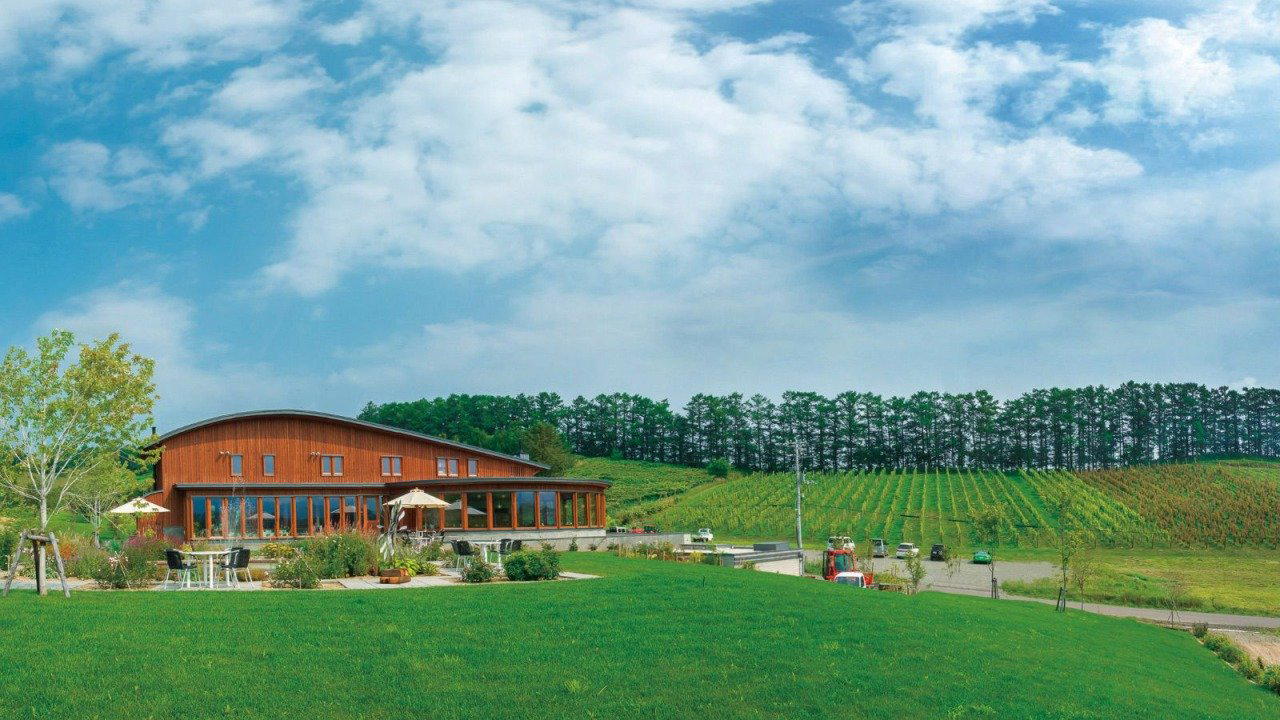
Where Hokkaido's Agricultural Identity Meets the Plate
The road into Yoichi's Yamadacho district passes through apple orchards before it reaches much else. This is Hokkaido's fruit belt, a stretch of the Shakotan Peninsula's eastern flank where cold winters and warm, dry summers produce conditions closer to northern France or the Yakima Valley than to the humid archipelago to the south. The landscape here is agricultural in the most literal sense: productive, purposeful, and largely indifferent to the dining tourism that has reshaped other parts of Japan's culinary map. オチガビ, at 635 Yamadacho, sits inside that agricultural reality rather than at a remove from it. That positioning is the starting point for understanding what the restaurant is and why it matters to the broader Hokkaido dining story.
Hokkaido as a Sourcing Argument
Japan's serious restaurant culture has long organised itself around proximity to exceptional ingredients. The kaiseki tradition in Kyoto, exemplified by venues like Gion Sasaki in Kyoto, treats seasonal local produce as the grammar of the menu. In Nara, akordu in Nara frames that same sourcing instinct through a European lens. What Hokkaido offers, and what distinguishes it from most Japanese prefectures, is an unusually broad agricultural base compressed into a relatively young food culture. The island was not systematically farmed until the Meiji era, which means its food traditions lack the centuries of institutional weight that define Kyoto or Osaka cuisine. The upside is flexibility: Hokkaido kitchens can define their own sourcing logic without being accountable to a canonical tradition.
Yoichi, specifically, operates at the intersection of several Hokkaido strengths. Cold-water fishing grounds run off the Shakotan Peninsula. Apple and grape cultivation has expanded significantly over the past two decades, driven partly by climate change pushing viable viticulture northward. Dairy farming on the surrounding plains produces milk with fat content that diverges noticeably from Honshu equivalents. A restaurant rooted in this district has access to a sourcing palette that would interest any serious kitchen, but also faces the logistical reality of operating far from the infrastructure of Sapporo or the international recognition of Tokyo's dining circuit.
The Regional Tier That Yoichi Belongs To
Within Hokkaido, Sapporo anchors the high-end restaurant tier. Venues like 夕仙乃山乃in Sapporo occupy that urban fine-dining position. Yoichi represents a different category: destination dining that requires deliberate travel, where the journey and the agricultural context are part of the value. This model has precedent across Japan. In Fukuoka, Goh in Fukuoka operates with that same logic of regional specificity as editorial point of view. In Nanao on the Noto Peninsula, 三本木石川製 in Nanao draws visitors into a coastal agricultural context that Tokyo restaurants cannot replicate. オチガビ belongs to this cohort of regionally embedded venues where the address is itself an argument.
The comparison set outside Hokkaido stretches to venues where terroir-driven sourcing defines the proposition. HAJIME in Osaka and Harutaka in Tokyo represent the urban end of Japan's premium dining tier. What Yoichi-based restaurants offer is the opposite of that urban concentration: singular sourcing conditions that cannot be imported into a city kitchen, however accomplished.
Ingredient Provenance as Editorial Principle
The most coherent regional restaurants treat sourcing not as a marketing layer but as a constraint that shapes the menu's structure. In Hokkaido, that means working with what the season and the district produce, including periods when the apple harvest defines the kitchen's options and periods when cold-water fish dominate the available supply. This seasonal pressure is more pronounced in Yoichi than in a Sapporo venue with access to broader distribution networks. It imposes a discipline that, when executed well, produces menus that read as genuinely local rather than aspirationally local.
That distinction matters increasingly across Japan's serious dining scene. At Le Bernardin in New York City or Atomix in New York City, sourcing decisions operate at a global scale with logistics to match. A venue in Yamadacho operates under different constraints entirely, and the menu that results is shaped by those constraints in ways that urban fine dining rarely is. Visitors expecting the production values of a Tokyo counter will find a different register; visitors seeking cooking that couldn't exist anywhere else are more likely to be satisfied.
Planning a Visit to Yoichi
Yoichi District sits roughly 40 kilometres west of Sapporo by road, accessible via the JR Hakodate Main Line from Sapporo Station to Yoichi Station. The journey takes approximately one hour by local train. Driving from Sapporo via the Hokkaido Expressway reduces that to 40-45 minutes in moderate traffic, which makes a day trip feasible, though the agricultural character of the district rewards an overnight stay in the area. The address at 635 Yamadacho places オチガビ in a semi-rural setting outside the town centre; private transport or a local taxi from Yoichi Station is the practical approach for the final leg. Given the limited available data on current hours, booking windows, and pricing, direct contact with the venue before visiting is advisable. Visitors familiar with Japan's regional restaurant model will recognise that reservation policies at destination-tier venues in rural Hokkaido often differ from those at comparable urban restaurants. Checking current availability through local listings or via our full Yoichi District restaurants guide is a useful first step.
For those building a broader Hokkaido itinerary, 余市サグラ provides a reference point for the district's dining range. Further afield in the region, 湖畔庵 in Takashima and 羽根屋 in Nishikawa Machi represent the northern Japan regional dining tier that shares many of the same sourcing principles. For contrast across Japan's regional spectrum, Birdland in Sakai, Bistro Ange in Toyohashi, Blue Ocean Steak in Nakagami District, bodai in 那智勝浦町, and Cafe Naoshima Konichiwa in Naoshima each illustrate how Japan's serious regional dining scene distributes across the archipelago.
Frequently asked questions
What part of town is オチガビ in?
オチガビ is located at 635 Yamadacho, Yoichi, Yoichi District, Hokkaido 046-0012, Japan, Yoichi District.
How does オチガビ's location in Yoichi's orchard district shape the experience compared to Sapporo restaurants?
オチガビ is addressed at 635 Yamadacho, placing it inside Yoichi's agricultural corridor rather than within Sapporo's urban restaurant tier. Where a Sapporo venue sources regionally as a positioning choice, a Yoichi restaurant is embedded in that sourcing geography by default, orchards and farms are neighbours, not suppliers at a distance. That physical relationship between kitchen and land is the primary distinction from Hokkaido's city-based dining.
What do people recommend at オチガビ?
オチガビ sits in Yamadacho, Yoichi's fruit-belt corridor, where apple orchards and local agriculture shape what reaches the kitchen. Guests consistently point to dishes that foreground Hokkaido's seasonal produce rather than imported ingredients. Because the menu follows regional availability, what draws the most attention shifts by season.
How hard is it to get a table at オチガビ?
Yoichi District is not a casual dining destination, it draws deliberate visitors willing to travel roughly 40 kilometres from Sapporo by road or JR Hakodate Main Line. That self-selecting audience means reservations can move quickly, particularly during Hokkaido's summer and autumn harvest windows. Booking ahead is advisable rather than treating it as a walk-in option.
What's the defining dish or idea at オチガビ?
The organising principle at オチガビ is proximity: the restaurant sits inside Yoichi's agricultural zone at 635 Yamadacho, where orchards and farms are the immediate context rather than a supply chain abstraction. That sourcing constraint, rather than any single dish, is what gives the menu its coherence. The kitchen's output is essentially an argument for Hokkaido's ingredient identity.
Can オチガビ handle vegetarian requests?
Hokkaido's agricultural output includes dairy, root vegetables, brassicas, and orchard fruit alongside its seafood and lamb, giving a kitchen in Yamadacho genuine vegetable-forward material to work with. Contacting the venue directly before arrival is the reliable approach.
Is eating at オチガビ worth the cost?
Yoichi is a deliberate journey from Sapporo, the JR Hakodate Main Line covers the 40-kilometre distance, but the district draws visitors who treat the trip as part of the experience rather than an inconvenience. For a restaurant operating inside Hokkaido's fruit and farming belt at 635 Yamadacho, the value question depends on how much weight you place on ingredient provenance versus urban convenience.
Comparison Snapshot
Comparable venues nearby, for context on price, style, and recognition.
| Venue | Cuisine | Price | Awards | Notes |
|---|---|---|---|---|
| オチガビThis venue (the venue you are viewing) | French Winery Restaurant | $30–50 | Not listed | Not listed |
| 余市サグラ | Modern Italian-Japanese Auberge | Not listed | Not listed | 登町 |
| Yoichi Sagra | Chinese | Not listed | Tabelog Silver #112 | Yoichi |
| Terrace Restaurant Umi no Hoshi (Sea Star) (テラスレストラン 海の星) | French Fine Dining with Seasonal Seto Inland Sea Ingredients | Not listed | Not listed | Naoshima-cho, Kagawa-gun |
| レ カネキヨ ビストロノミーフランセーズ | Bistronomie Française | $50–100 | Not listed | Nishi |
| タテオカ タケシ | One Michelin-Star French with Hokkaido Seasonal Tempura | Not listed | Not listed | Chūō |
Continue exploring
More in Yoichi
Restaurants in Yoichi
All restaurants in Yoichi →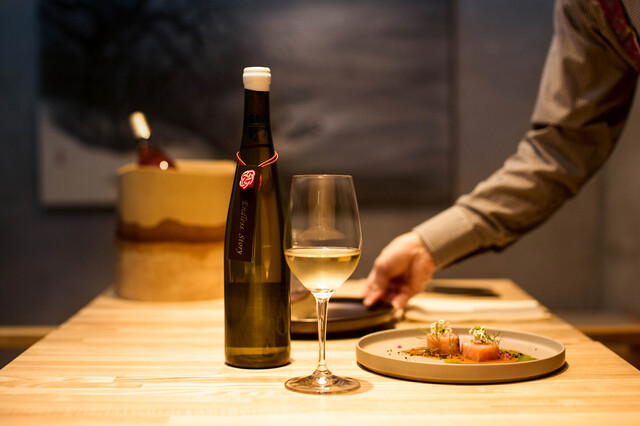

Hotels in Yoichi
Browse all →
Wineries in Yoichi
All wineries in Yoichi →
Details
- Scenic
- Cozy
- Date Night
- Special Occasion
- Open Kitchen
- Sake Program
- Local Sourcing
- Vineyard
- Mountain
- A La Carte
- Set Menu
- Wine
Current opening hours
- Monday
- 11 AM–5 PM
- Tuesday
- 11 AM–5 PM
- Wednesday
- 11 AM–5 PM
- Thursday
- 11 AM–5 PM
- Friday
- 11 AM–5 PM
- Saturday
- 11 AM–5 PM
- Sunday
- 11 AM–5 PM
Hours can change for holidays and private events. Hours as of .
High-ceilinged open space with large screens displaying seasonal vineyard, forest, and mountain scenery, creating a relaxing natural atmosphere.