
1 Michelin Key
Muwa Niseko earned a 2024 Michelin Key at a nightly rate from $222 across 113 rooms, positioning it among Hokkaido's Michelin-recognised ski properties alongside the Ritz-Carlton Reserve and Park Hyatt Hanazono. The ski-in/ski-out address on the Hirafu slope, full kitchens, in-room laundry, and a pair of onsen including an infinity pool framing Mt. Yotei make extended stays practical and compelling.

Pearl is the En Primeur Club membership app — saves, bookings, and concierge access live there. Same editors, same standards.
- Address
- 3-chōme-10-1 Nisekohirafu 1 Jō, Kutchan, Abuta District, Hokkaido 044-0080
- Phone
- +81 136-23-0955
- Website
- muwaniseko.com
- Directions
- Get directions
Where Hokkaido Winter Meets a Specific Kind of Quiet
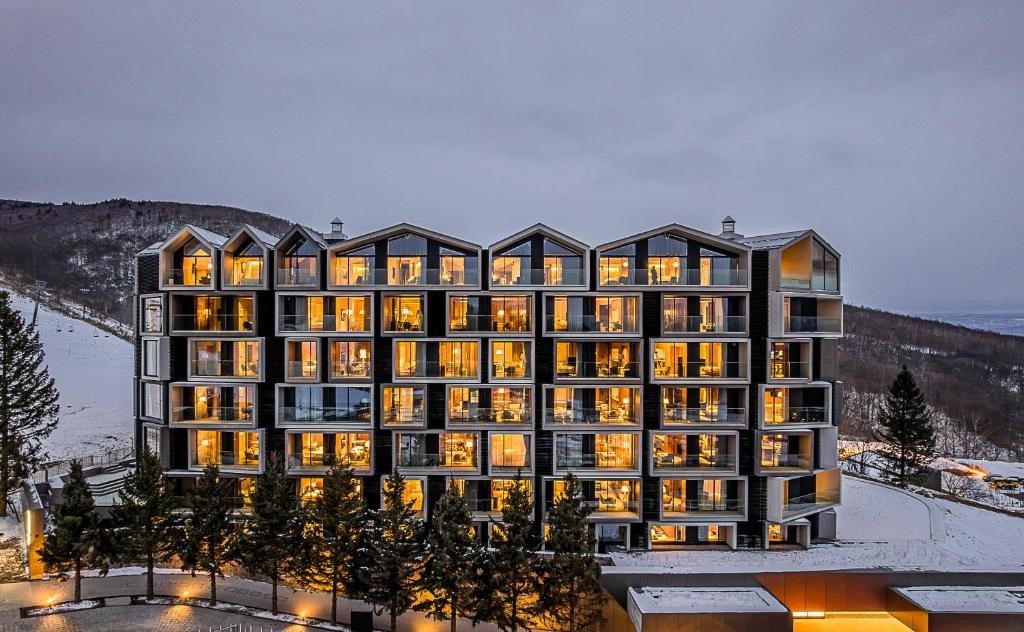
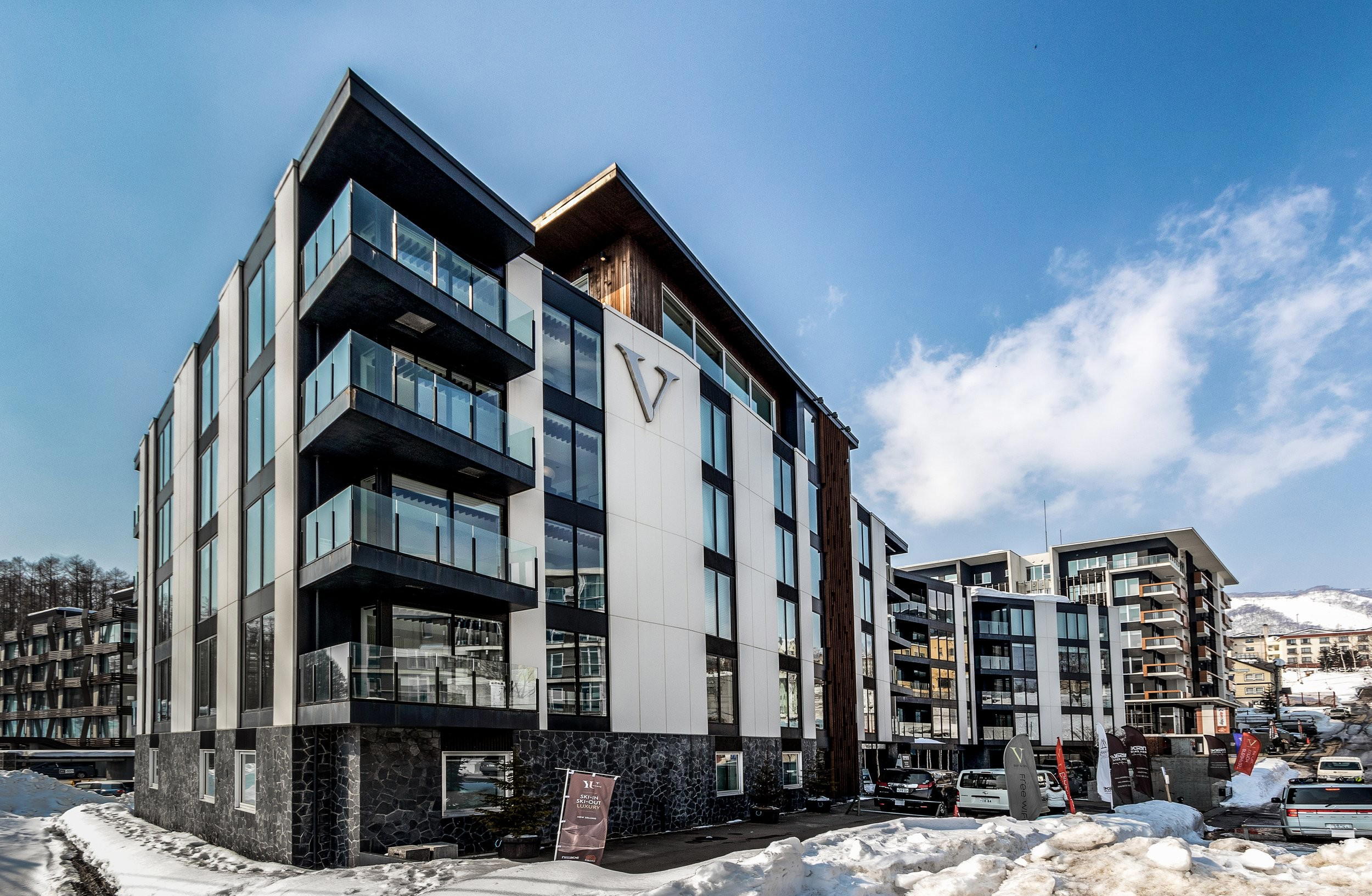
Arriving at Muwa Niseko in Hirafu, the first thing you register is not the mountain. It is the absence of noise. The Niseko region sits in a competitive bracket of ski-resort accommodation that ranges from branded international towers to austere ryokan retreats, and within that range, a distinct tier has emerged: properties that treat stillness as an amenity. Muwa Niseko occupies that tier. Its 113 rooms are configured vertically, stacked in a form that reads from the outside like modernist building blocks, each volume offset from the next. The geometry is not incidental — it reflects Hokkaido's broader shift toward architecture that takes its cues from alpine tradition without replicating Swiss or Austrian templates wholesale.
Inside, the material palette runs to blonde timber, abstracted headboards, and geometric light fixtures, a coherent design language that avoids the over-styled maximalism that characterises some newer Niseko openings. The feeling is closer to considered restraint than to austerity. Full kitchens and in-room laundry in many configurations mean the property functions for stays measured in weeks, not nights, which changes how guests relate to the space. You are not passing through. You are settling in.
The Niseko Competitive Set — and Where Muwa Sits
Niseko has, over the past decade, become Japan's most internationally contested ski destination. The Hirafu and Hanazono zones in particular draw operators who see Hokkaido's powder accumulation, among the highest recorded dry-snow volumes anywhere in the Northern Hemisphere, as the underlying asset around which to build high-tariff accommodation. The result is a market that now includes full-service Ritz-Carlton Reserve positioning at Higashiyama Niseko Village, a Ritz-Carlton Reserve, design-led residential formats at Setsu Niseko, the internationally branded scale of Park Hyatt Niseko Hanazono, and volume-oriented options at Hilton Niseko Village. Ki Niseko and The Green Leaf Niseko Village occupy different positions on the price and style spectrum again.
It implies that the guest experience, across accommodation quality, service approach, and overall environment, meets a threshold that the guide's inspectors consider noteworthy. For Niseko, where the bar for accommodation has risen steadily, it places Muwa in a credible mid-to-upper bracket without claiming the Reserve-level pricing of some peers.
Service Architecture in a Ski-Resort Context
Ski-resort service cultures tend toward one of two models. The first is high-visibility hospitality: concierge desks, ski valets, boot rooms with heated racks, and a general choreography of assistance that makes every transition between room and mountain feel attended. The second model is the facilitative approach, where infrastructure does the heavy lifting and staff appear precisely when needed rather than as a constant presence. Muwa Niseko's ski-in/ski-out configuration puts the second model within reach. The property's layout means that the mountain is not something you commute to, it is something you step onto. That proximity changes the texture of service demands. Guests are not waiting for shuttles or queuing for lifts at a base lodge some distance from their room. The service layer becomes about calibration: knowing when to be present and when to stay back.
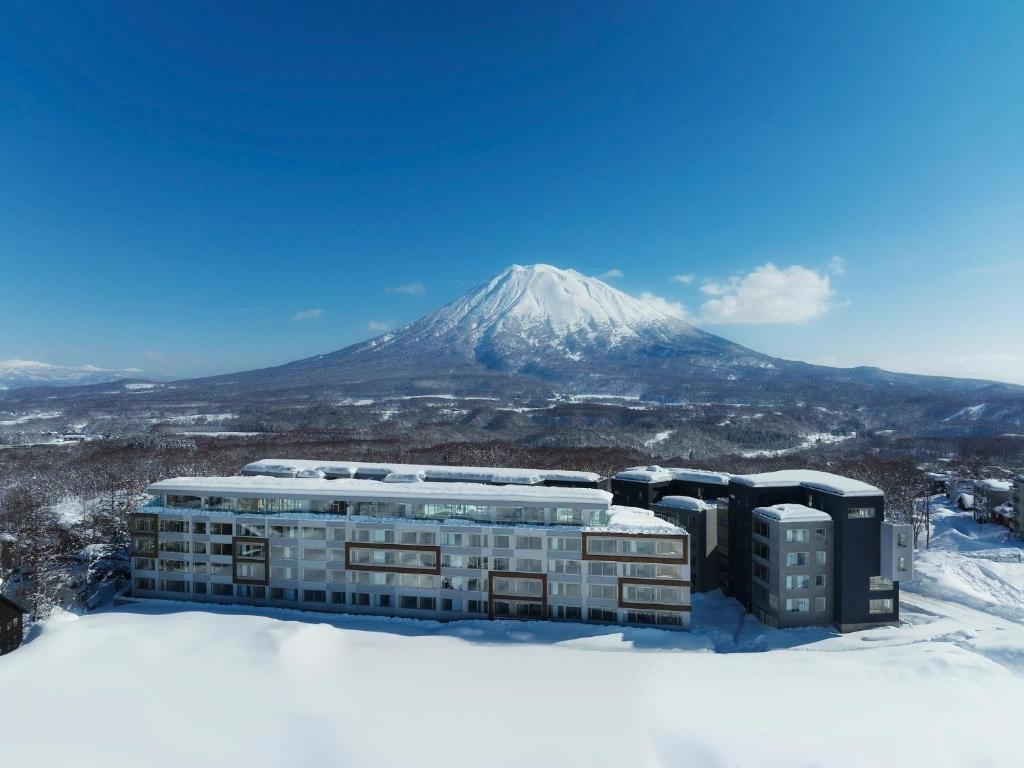
The two onsen on property anchor the non-skiing portion of the guest experience. One operates as an infinity format with sightlines toward Mt. Yotei, the dormant stratovolcano that provides Niseko's visual backdrop to the south. In Japan's broader onsen culture, which spans destinations from the hot spring inns of Gora Kadan in Hakone to the mineral-rich baths of Asaba in Izu, the onsen is not an amenity that sits alongside the accommodation. It is structurally part of why you choose the property. At Muwa, having two onsen options within a ski-resort context positions the property toward the full-spectrum Hokkaido experience: powder access by day, thermal recovery by evening.
What Michelin's 1 Key Means in Practice
Michelin introduced its hotel Key system as a parallel to the star system for restaurants, with Keys awarded based on inspector assessment of the overall stay. In the Japanese accommodation context, properties that carry similar recognition include resort hotels of distinct character, among them Zaborin in Kutchan, which is Muwa's immediate geographic neighbour and occupies a different architectural and pricing register, and national properties like ENOWA Yufu in Yufu or Fufu Kawaguchiko in Fujikawaguchiko. Across that group, the common thread is a considered relationship between property design, local environment, and the guest experience, something Muwa's architecture and onsen programme reflect.
Elsewhere in Japan, the hotels that consistently earn Michelin recognition share a tendency toward specificity: a particular relationship to their natural or cultural setting, a design sensibility that references local material culture, and a service model calibrated to the property's scale. Nishimuraya Honkan in Kinosaki-cho, Benesse House in Naoshima, and Amanemu in Mie each occupy distinct categories, but they share that orientation. Muwa's 113 rooms make it larger than most intimate ryokan-adjacent properties, which means the operational challenge is maintaining the feel of consideration at scale.
Planning a Stay: Timing, Access, and Configuration
Niseko's ski season runs broadly from late November through late March, with peak powder conditions typically arriving in January and February. The Hirafu zone, where Muwa Niseko is located at 3-chōme-10-1 Nisekohirafu 1 Jo, Kutchan, Abuta District, is the most developed and internationally connected part of the resort area, with direct access to the Grand Hirafu ski area. New Chitose Airport in Sapporo serves as the main arrival point, with transfer times to Niseko running approximately two hours by highway bus or private transfer. Rail options exist via Kutchan Station, though road transfer is the more common choice for visitors arriving with equipment.
At a starting rate of around USD 222, Muwa sits below the ceiling of the Niseko market but above the midrange volume hotels. The full-kitchen and in-room laundry configurations in select rooms position the property for travellers on extended trips, where the economics of self-catering make a difference and the daily rhythm benefits from having proper residential infrastructure. For broader Japan planning, Niseko works well as part of a Hokkaido itinerary that includes Sapporo, or as a standalone winter destination before or after visits to properties in other regions such as Fufu Nikko, Halekulani Okinawa, or HOTEL THE MITSUI KYOTO in Kyoto. For full regional context, see our full Niseko restaurants and hotels guide.
For travellers building itineraries that extend beyond Japan, Muwa's service model and design approach represent a particular kind of mountain hospitality that invites comparison with properties outside the ski-resort category, including Aman New York or Bvlgari Hotel Tokyo in terms of the broader premium-design accommodation conversation, even if the category and context differ substantially.
Category Peers
| Venue | Price | Awards |
|---|---|---|
| Muwa NisekoThis venue — the venue you are viewing | Not listed | 1 Michelin Key |
| Higashiyama Niseko Village, a Ritz-Carlton Reserve | $300–500 | 1 Michelin Key · La Liste Top Hotels |
| Park Hyatt Niseko Hanazono | Not listed | 1 Michelin Key · Star Wine List |
| Setsu Niseko | Not listed | 1 Michelin Key |
| Hilton Niseko Village | $200–300 | Not listed |
Recognition history
Dated appearances from independent guides and award organizations, with the underlying list record or original source where available.
Michelin 1 Key
Michelin
Full recognition history (3 entries)
Michelin 1 Key
Michelin
Michelin 1 Key
Michelin
Continue exploring
More in Niseko
Hotels in Niseko
Browse all →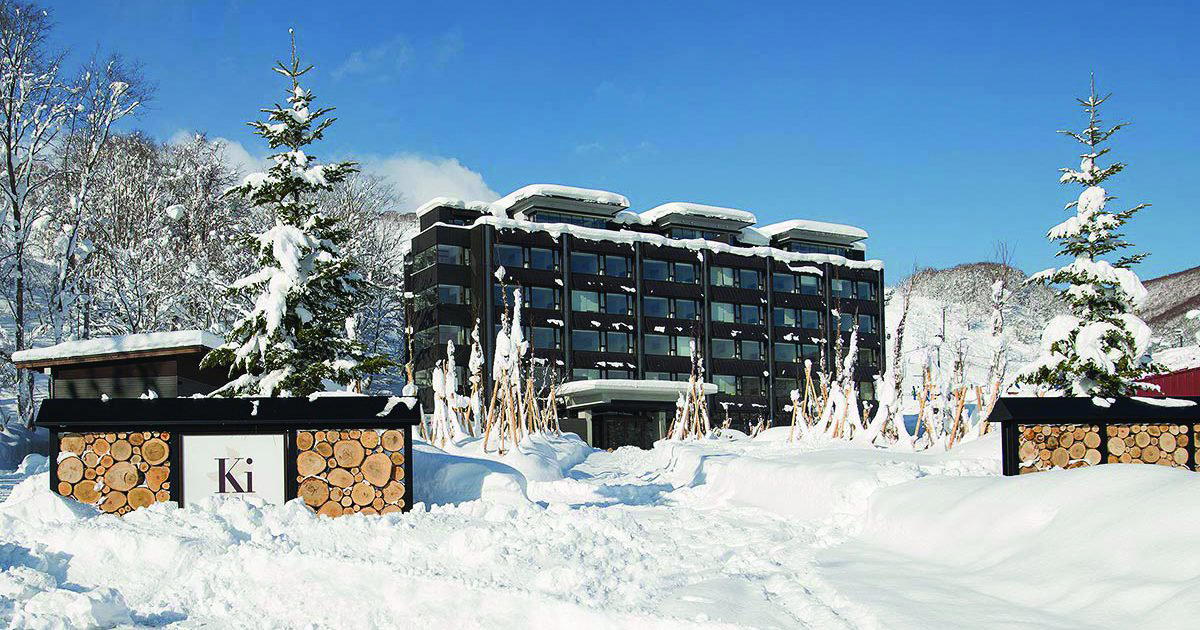
Restaurants in Niseko
Browse all →
Wineries in Niseko
Browse all →
Details
- Modern
- Minimalist
- Elegant
- Quiet
- Scenic
- Romantic Getaway
- Wellness Retreat
- Family Vacation
- Group Retreat
- Ski In Ski Out
- Panoramic View
- Private Villa
- Wi Fi
- Spa
- Pool
- Room Service
- Concierge
- Valet Parking
- Mountain
- Wheelchair Accessible
Calming minimalist design with neutral tones, wood and glass partitions creating spacious light-filled rooms, focused on relaxation and wellness.