
Ice cream Parlor Misono places Otaru’s dessert culture in a compact kissa setting rather than the spectacle-driven side of Hokkaido sweets. Its Tabelog 100 Ice cream / Gelato 2023 selection, 28-seat room, take-out option, and low-price bracket make it a useful stop for travellers reading the city through dairy, rail-station convenience, and old-school café habits.
Pearl is the En Primeur Club membership app — saves, bookings, and concierge access live there. Same editors, same standards.
- Address
- 2 Chome-12-15 Inaho, Otaru, Hokkaido 047-0032, Japan
- Phone
- +81 134-22-9043
- Website
- misono-ice.com
 Saves & bookings on Pearl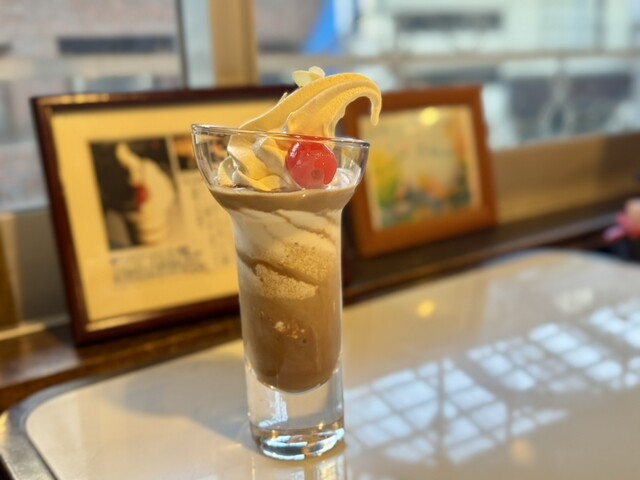
Otaru’s food identity is usually read through seafood counters, canal-side grills, and the cold-water abundance of Hokkaido. The quieter thread is dairy: milk, cream, soft-serve, gelato, and old kissa rooms where dessert is treated as part of daily life rather than a plated performance. Ice cream Parlor Misono belongs to that second map of the city, a compact 28-seat café format near Otaru Station, with take-out service for travellers who want the city’s sweet side without turning it into a long sit-down meal.
That matters because Hokkaido dairy is not a decorative regional label. The prefecture supplies much of Japan’s milk, and dessert shops here are judged against a local expectation for clean cream flavor, restrained sweetness, and cold-weather practicality. Otaru adds its own rhythm: visitors often move between fish markets, canal walks, glass shops, and station-area cafés in short bursts. A dessert counter in Inaho needs to be useful as much as charming, and this one sits in the casual bracket rather than the luxury-dessert category.
Hokkaido dairy culture, read through an old café format
Japan’s serious ice cream and gelato scene has widened beyond tourist soft-serve, with Tabelog’s category lists giving dessert specialists the same kind of comparative visibility long reserved for sushi, ramen, and French dining. Selection for Tabelog 100 Ice cream / Gelato 2023 places this Otaru shop inside that national conversation, not merely inside a local snack circuit. The recognition is a useful trust signal because it compares dessert specialists by category, rather than measuring them against full restaurants with unrelated service formats.
The menu category is broad enough to matter: gelato, ice cream, café, and kissa. That last term carries weight in Japan. A kissa is not a third-wave coffee bar or a patisserie salon; it is a familiar café room where seating, sweets, light meals, and regular local use often overlap. In Otaru, that makes the format a counterpoint to destination seafood dining at places such as Minshuku Aotsuka Shokudo or Otaru Seafood Donburi Restaurant "Shinkai". Those restaurants explain the port. A dairy-focused café explains a different Hokkaido economy: pasture, milk, cold storage, and the Japanese habit of folding sweets into everyday urban routines.
The scale also affects expectations. Twenty-eight seats means the room operates closer to a small neighborhood café than a high-capacity tourist hall. Take-out service keeps the experience flexible, especially in a city where weather and walking routes often decide the pace of eating. The better comparison is not a multi-course dessert restaurant; it is the compact specialist shop that earns its place through category focus, price accessibility, and repeatable execution.
Where it fits in an Otaru eating day
Otaru rewards sequencing. A seafood lunch, a ramen stop, and a sweet break can all sit within the same day without feeling forced. For travellers building a practical food route, the city’s heavier bowls and noodle shops provide the savory anchors: Ramen Mikan, Ramen Shodai Otaru honten, and Shirokuma Shokudo sit in a different part of the appetite. Ice cream works here as a palate reset rather than a grand finale.
The seasonal note is also revealing. Autumn-to-spring nabeyaki udon appears alongside the dessert identity, which says something about the kissa tradition in northern Japan: a café can be both a cold-sweets address and a place for warmth when the weather turns. That duality is more interesting than a narrow product pitch. It locates the shop in Otaru’s lived dining pattern, where winter travel, family use, and casual seating matter as much as the product category listed on an awards page.
For families, the format is easy to read. Children are welcomed, private rooms are not part of the proposition, and the service style is casual. For couples or solo travellers, the appeal is efficiency: a small room, station-area convenience, and a dessert category with national recognition. In a city with stronger public associations around sushi and seafood, this is a useful reminder that Hokkaido’s dairy reputation deserves a separate stop.
Use it as a dessert marker, then keep exploring Otaru
The editorial case for Ice cream Parlor Misono is not that every Otaru itinerary should bend around it. The case is sharper: when a city is famous for fish, glass, snow, and canals, a recognized ice cream and gelato café gives travellers another way to understand Hokkaido ingredients. It is a low-commitment stop with enough category credibility to justify attention, especially for readers who care where a region’s food identity comes from.
Build the rest of the city around contrast. For broader planning, start with Our full Otaru restaurants guide, then match the food day to lodging through Our full Otaru hotels guide. Drinking options, regional excursions, and activity planning sit separately in Our full Otaru bars guide, Our full Otaru wineries guide, and Our full Otaru experiences guide.
Readers comparing Japanese dining styles beyond Hokkaido can place this kind of casual specialist format against more meal-driven addresses such as -Grilled beef Sukiyaki- KAMAKURA TANUKIAN 鎌倉 たぬき庵 in Kamakura,. 鮪と炭火焼き うお炭 秋葉原店 in Tokyo,.cafe in Osaka,.know in Kumamoto, (Shoku) Vietnam in Kawasaki, and [Curry Senmon Ten] Maruyama Kyoju. in Sapporo. For a transpacific contrast in Japanese-influenced casual dining and drinking, Jōdo Saké Bar in Los Angeles and Onigiri Time in Pasadena show how different the category becomes once it leaves its local ingredient base.
A Quick Peer Check
Comparable venues by cuisine and price in the same metro.
| Venue | Cuisine | Price | Awards | Notes |
|---|---|---|---|---|
| Ice cream Parlor MisonoThis venue — the venue you are viewing | Historic Japanese ice cream & parfait parlor | $ | , | |
| Yamanaka Bokujou Otaru ten | Hokkaido dairy & soft-serve shop | $ | , | .null |
| Ramen Mikan | Classic Hokkaido ramen shop | $ | , | Minami Otaru |
| かまわぬ | Seafood Izakaya | $$ | , | Hana no Sono |
| Shirokuma Shokudo | Cozy Hokkaido izakaya & cafeteria | $$ | , | Ironai |
| オタル ダイニング ノーネーム | Otaru Yoshoku (Japanese Western Cuisine) | $$ | , | Shinonomecho |
Continue exploring
More in Otaru
Restaurants in Otaru
Browse all →
Bars in Otaru
Browse all →
Hotels in Otaru
Browse all →



Wineries in Otaru
Browse all →
At a Glance
- Classic
- Cozy
- Iconic
- Whimsical
- Hidden Gem
- Casual Hangout
- Family
- Solo
- After Work
- Late Night
- Historic Building
- Standalone
- Design Destination
A small retro café with a nostalgic Taisho-era atmosphere: simple counter and table seating, warm and relaxed, evoking a classic Japanese kissaten more than a modern dessert shop, popular with families and tourists seeking a vintage local experience.[1][3][7][11][13]