Our verdict
Coco Hana sits in Kyoto's Kita Ward, close to the temple precincts of Kinugasa, where the neighbourhood's quieter rhythms shape the dining experience as much as anything on the table.

Pearl is the En Primeur Club membership app — saves, bookings, and concierge access live there. Same editors, same standards.
- Address
- Japan, 〒603-8375 Kyoto, Kita Ward, Kinugasa Tenjinmoricho, 31−16
- Phone
- +81752051688
- Hours
- Mon–Tue 11 AM–9 PMWed–Thu ClosedFri–Sun 11 AM–9 PM
- Website
- cocohana-kyoto.net
- Directions
- Get directions
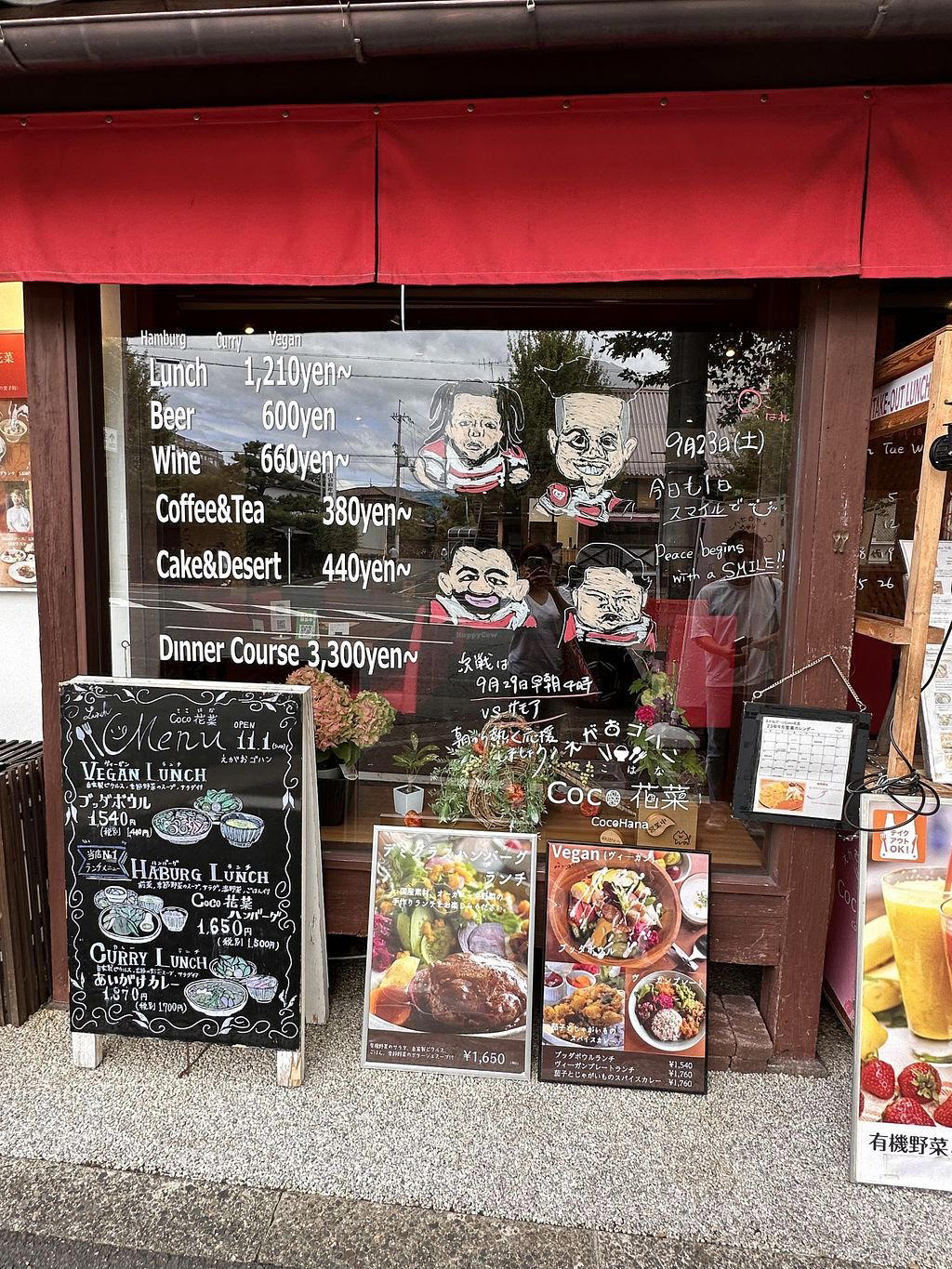
The menu
What to order
- Hamburger Steak with Demi-glace Sauce
- Buddha Bowl
- Japanese Beef Steak
Kinugasa and the Quieter Side of Kyoto Dining
Most visitors to Kyoto organise their meals around Gion, Pontocho, or the restaurant corridors that shadow the Kamo River. Kita Ward operates on a different frequency. The district stretches north and west toward the mountains, bracketed by temple complexes including Ryoanji and Kinkakuji, and the neighbourhoods within it carry the kind of residential calm that more central Kyoto has progressively traded away for foot traffic. Dining in this part of the city tends to reflect local life rather than tourist cycles, and that fact alone shapes expectations before anyone sits down.
Coco Hana is located in Kinugasa Tenjinmoricho, a quiet residential address within this wider Kita Ward stretch. The name of the street references Tenjin, a Shinto deity associated with scholarship and plum blossoms, and that layering of history into the built fabric of the neighbourhood is typical of the area. Arriving here from central Kyoto by bus or taxi makes the distance tangible: the crowds that compress around Gion's preserved machiya frontages simply do not follow you this far north.
What Kita Ward Signals About a Restaurant's Position
In Kyoto, location functions as a form of editorial statement. The high-density kaiseki corridor, where venues like Gion Sasaki, Hyotei, Kikunoi Honten, and Mizai operate, is legible and well-mapped by international critics. A venue outside that corridor, in a district where the primary foot traffic is residents rather than travellers, is usually making one of two calculations: either it serves a loyal local clientele that does not require tourist visibility, or it is positioning against a different kind of customer, one who seeks out addresses deliberately rather than stumbling across them.
Venues in this structural position often sit closer to neighbourhood restaurants in their operational logic than to the Michelin-tracked kaiseki houses that define Kyoto's international dining reputation. Peer comparisons elsewhere in the Kansai region include spots like Abon in Ashiya, which similarly occupies a residential-adjacent position away from the primary dining density of its city, and draws a deliberately specific clientele as a result. In Nara, akordu demonstrates how a non-central address can carry significant critical weight when the format and cooking are clearly differentiated.
The Limits of the Public Record
This creates a particular situation for anyone trying to plan a visit. Unlike the heavily documented kaiseki institutions, where pricing tiers, seasonal menu structures, and booking windows are well established through years of critical coverage, Coco Hana requires direct engagement to confirm even foundational logistics.
That opacity is not necessarily a warning sign in Kyoto's dining culture. Some of the city's most serious cooking happens in places that have never sought press coverage, operating on word-of-mouth referrals and a regular customer base that handles reservations through personal connections rather than booking platforms. The parallel exists in other parts of Japan's dining scene: consider how Harutaka in Tokyo or Goh in Fukuoka built substantial reputations before their details became widely indexed. Sparse documentation in regional Japanese dining is sometimes a function of the venue's intentional relationship with publicity rather than a reflection of quality.
For context on how Kyoto's documented dining scene maps across price points and formats, the EP Club Kyoto restaurants guide covers the full range, from Isshisoden Nakamura to more accessible neighbourhood addresses. Broader Japan reference points include HAJIME in Osaka and, for those who place Japanese dining in international context, Le Bernardin in New York City and Lazy Bear in San Francisco illustrate how tasting-format precision reads differently outside Japan.
Planning a Visit to Kinugasa
Getting to Kita Ward from central Kyoto typically involves a bus ride from Kyoto Station or the Karasuma subway line to the Kinkakuji area, followed by a short walk into the residential streets. Journey times from central Kyoto run between twenty and thirty-five minutes depending on origin point and time of day, with bus lines 12, 59, and 204 serving the Kinugasa area. Morning and late afternoon services can be crowded on weekends, particularly in autumn and spring when the temple precincts draw significant visitor numbers.
Visiting the area without a confirmed reservation or confirmed opening status carries real risk of a wasted trip.
For those planning a wider Kita Ward afternoon, the temple circuit from Ryoanji to Kinkakuji to Ninnaji is one of Kyoto's more coherent half-day routes, and lunch or dinner in the surrounding neighbourhood afterwards fits naturally within that itinerary. The restaurant density in this part of the city is lower than in Gion or Nishiki, so having a backup option identified before arriving is practical advice regardless of the venue in question.
Comparable destinations at various points across Japan's quieter dining registers include affetto akita in Akita, aki nagao in Sapporo, Aji Arai in Oita, Ajidocoro in Yubari District, and Akakichi in Imabari, each of which operates in a regional context where local customer relationships define the offer more than international visibility does.
Frequently asked questions
Where is Coco Hana located?
Coco Hana is located at Japan, 〒603-8375 Kyoto, Kita Ward, Kinugasa Tenjinmoricho, 31−16, Kyoto.
Where exactly is Coco Hana located in Kyoto, and what is nearby?
Coco Hana sits in Kinugasa Tenjinmoricho, Kita Ward, Kyoto — a residential area most visitors associate with Kinkakuji (the Golden Pavilion), which is within walking distance. The Kita Ward location puts it roughly 20–30 minutes from Kyoto Station by bus on the 101 or 205 routes, making it a practical stop when visiting the northwest temple circuit rather than a standalone destination from central Kyoto.
What should I eat at Coco Hana?
The specific menu at Coco Hana has not been confirmed through a verifiable public record at this time. Given the venue's location in Kinugasa, Kita Ward — well outside Kyoto's kaiseki-heavy Gion and Pontocho corridors — it is worth contacting the restaurant directly or checking local Japanese dining platforms for current offerings before visiting.
Do they take walk-ins at Coco Hana?
Walk-in policy at Coco Hana has not been confirmed in any verified source. Restaurants in Kita Ward's quieter residential pockets tend to operate on smaller capacities than those in central Kyoto, which often means seats are limited. Reaching out ahead of any visit is advisable.
What's Coco Hana best at?
What the address in Kinugasa, Kita Ward does signal is a positioning away from tourist-facing dining — a choice that in Kyoto typically reflects a local-first focus rather than a destination-dining model.
Do they accommodate allergies at Coco Hana?
No allergy or dietary accommodation policy for Coco Hana appears in the verified public record.
Is a meal at Coco Hana worth the investment?
Cuisine and Awards Snapshot
Comparable venues nearby, for context on price, style, and recognition.
| Venue | Cuisine | Price | Awards | Notes |
|---|---|---|---|---|
| Coco HanaThis venue — the venue you are viewing | Modern Japanese Organic Cafe | $20–30 | Not listed | Not listed |
| Tasuki Pass The Baton | Traditional Japanese Tea Room & Kakigori | $10–20 | Not listed | Gion |
| Zen Kasho In Kyoto muromachi honten | Traditional Japanese sweets & matcha cafe | $10–20 | Tabelog 100 #53 | Nakagyō |
| Sake Dokoro Terayama | Kyoto Izakaya & Sake Bar | $50–100 | Tabelog 100 #18 | Shimogyō |
| Ryuhei Soba | Traditional Kyoto soba and Japanese cuisine | $10–20 | Tabelog 100 #16 | Nishikyō |
| Kyoto Tsurara | Modern Japanese Kakigori | $1–10 | Not listed | Nakagyo Ward, Nijo Area |