
Michelin Plate
Our verdict
Spanish cuisine in Kyoto operates as a small, deliberate counterpoint to the city's kaiseki dominance. CLIMA, holding a Michelin Plate recognition since 2024, sits in the mid-price tier of Sakyo Ward's dining scene. It offers European technique in a city where that positioning remains genuinely uncommon.

Pearl is the En Primeur Club membership app — saves, bookings, and concierge access live there. Same editors, same standards.
- Address
- 22ー1 Shimogamo Umenokicho, Sakyo Ward, Kyoto, 606-0851, Japan
- Phone
- +81 75-708-3948
- Hours
- Mon 12–2 PM, 6–9 PMTue ClosedWed–Thu 12–2 PM, 6–9 PMFri 6–9 PMSat–Sun 12–2 PM, 6–10 PM
- Website
- yoyaku.tabelog.com
- Directions
- Get directions
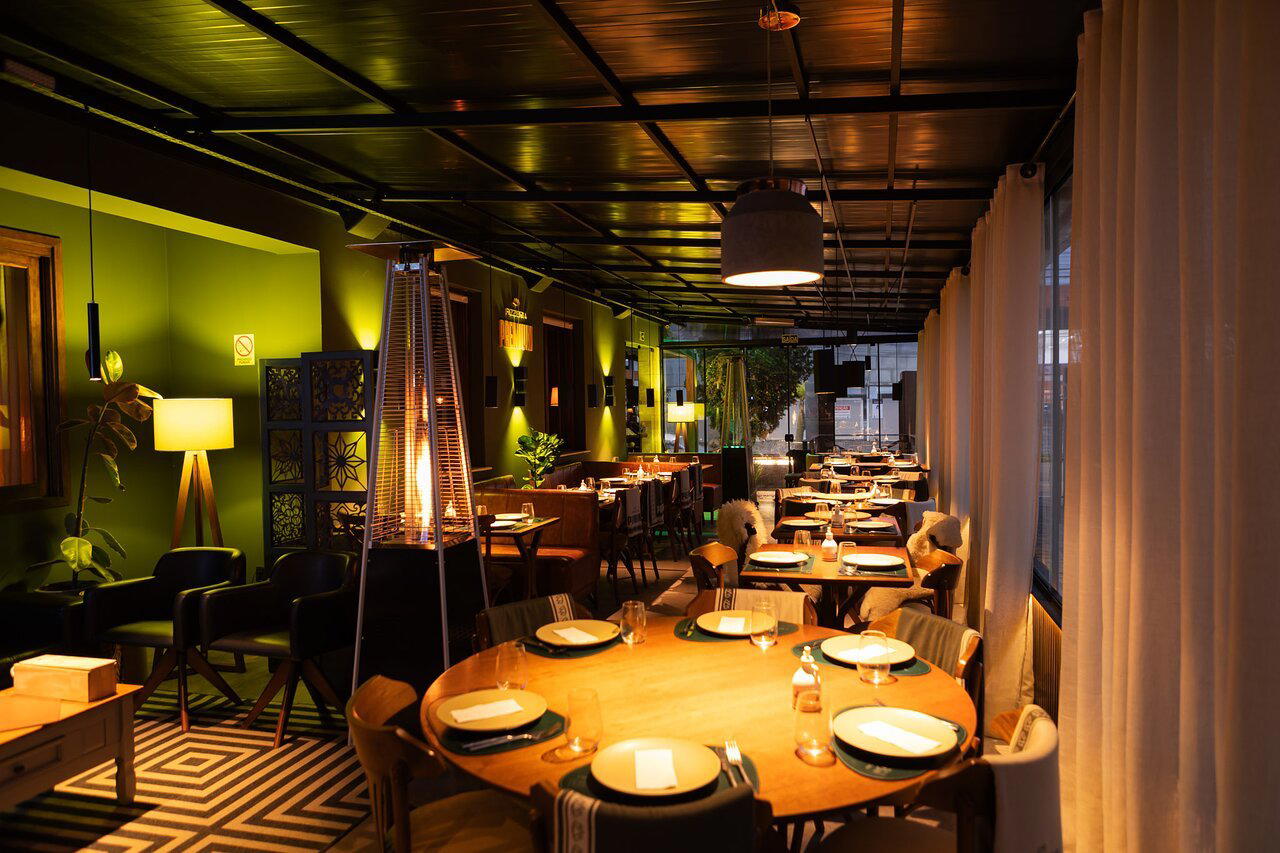
Spanish Cooking in a City Built Around Something Else
Kyoto's dining identity is so thoroughly organised around kaiseki that restaurants operating outside that tradition tend to read as either anomalies or corrections. The kaiseki houses at the top of the market — Gion Sasaki, Hyotei, and Kikunoi Honten — set a seasonal, ingredient-first standard that the entire city seems to calibrate against. Into that environment, a Spanish restaurant carrying a Michelin Plate reads as a deliberate choice rather than an accident of geography. The Plate designation, awarded by the 2024 Guide, signals that Michelin's inspectors consider the cooking at CLIMA worth recommending, a meaningful threshold in a city where the inspector-to-restaurant ratio is among the highest of any dining destination in the world.
CLIMA sits at 22-1 Shimogamo Umenokicho, in Sakyo Ward, a district that sits north of Kyoto's central core and carries a residential, less tourist-trafficked character compared to Gion or the historic centre. The address positions the restaurant in a neighbourhood associated more with Kyoto University's academic community and the Shimogamo Shrine corridor than with the high-traffic kaiseki circuit. For non-Japanese cuisine operating at a mid-price point, that location is telling: it suggests a local clientele, return visitors, and a dining room sustained by something other than hotel concierge referrals.
What Spanish Cooking Looks Like When It Evolves Towards Kyoto
Spain's influence on fine dining in Japan is longer-standing than the current moment suggests. The Basque and Catalan movements that reshaped European cooking from the 1990s onward had direct transmission into Japanese kitchens, and several of Japan's most discussed restaurants now operate in frameworks that owe a clear debt to Spanish technique even when they do not describe themselves that way. HAJIME in Osaka and ZURRIOLA in Tokyo represent different points on that continuum, the former absorbed the influence into something almost unclassifiable, the latter holds its Basque identity with considerable precision. akordu in Nara, situated in a similar secondary-city context to CLIMA, shows how Spanish cooking can find footing in historic Japanese cities where European cuisine rarely anchors itself.
What tends to happen when Spanish restaurants operate seriously in Japan is a gradual recalibration of the source material. Seasonal Japanese produce enters the mise en place because it is simply better than imports. Local fish, mountain vegetables, and regional cured products start to inform dishes that might have begun with a Catalan or Andalusian reference point. The result is not fusion in the loose, hybridised sense, it is European discipline applied to Japanese ingredients, a practice with enough precedent across the country that it constitutes its own recognisable register. CLIMA's Michelin Plate suggests the kitchen is operating with enough consistency and craft to earn that recognition within this broader pattern.
Positioning in Kyoto's Mid-Price Market
The ¥¥ price designation places CLIMA in a different competitive bracket from the kaiseki establishments that define the city's premium dining ceiling. Mizai and Isshisoden Nakamura operate in the upper tiers of the Japanese dining tradition; their pricing and format are structured around long, multi-course experiences that require significant time and expenditure. CLIMA's mid-range price point positions it as an accessible entry for diners who want something European in execution but are not committing to a four-hour kaiseki progression.
That price tier in Kyoto is contested. The city's mid-market has expanded as international visitors have returned in volume post-2023, and restaurants with a European foundation, Italian, French, Spanish, have found increased traction with visitors seeking familiarity alongside cultural context.
The Evolution from Novelty to Local Fixture
Spanish cuisine in Japanese cities often starts as a novelty proposition, the regional specificity of the food (Basque pintxos, paella theatrics, charcuterie-led openings) providing enough differentiation to generate early interest. What separates restaurants that endure from those that do not is the transition away from the novelty frame toward something that functions as a genuine neighbourhood fixture. This is a harder evolution than it sounds in a city like Kyoto, where dining habits are conservative, repeat clientele is essential, and the competition from deeply embedded Japanese dining traditions is structural rather than merely commercial.
Sakyo Ward's character, academic, residential, less reliant on tourist throughput, accelerates that transition for CLIMA. A dining room that needed to survive on visitor novelty alone would face a harder road in this part of the city than it would in Gion or near Nishiki Market. The Michelin Plate, arriving in 2024, functions here less as a launch signal and more as confirmation of an establishment that has already found its footing in the local dining ecology. The designation is notable precisely because it is not a starred restaurant claiming attention, it is a mid-market European restaurant earning recognition in one of the world's most demanding culinary cities.
How CLIMA Fits Into Japan's Wider Spanish Dining Scene
Comparing CLIMA against Spanish restaurants elsewhere in Japan clarifies its positioning. ZURRIOLA in Tokyo operates at a different price point and with a degree of visibility that a Kyoto neighbourhood address does not generate. Arco by Paco Pérez in Gdańsk represents the international Spanish fine-dining model at its most structurally formal. CLIMA, by contrast, fits into the pattern of serious Spanish cooking operating outside the capital in a compressed, committed format, closer in spirit to 6 in Okinawa or Goh in Fukuoka, restaurants in regional cities that sustain international culinary ambition without the infrastructure of a major metropolitan market. For Spanish cooking specifically, the Kyoto context adds a layer of discipline, the city's ingredient standards and seasonality culture set a high bar that the kitchen has evidently chosen to meet rather than sidestep.
Planning a Visit
CLIMA is located in Sakyo Ward, reachable by the Kyoto city bus network or a short taxi ride from central Kyoto. Visitors planning a broader Kyoto stay should consult our full Kyoto restaurants guide and our full Kyoto hotels guide for context on where the restaurant sits within the city's wider dining geography. Those interested in drinking and nightlife in the city will find relevant recommendations in our Kyoto bars guide, while regional wine and sake resources appear in our Kyoto wineries guide. For cultural programming beyond the table, our Kyoto experiences guide covers the city's broader offer. The ¥¥ price designation makes this accessible as a standalone dinner without the advanced planning required by the city's starred kaiseki houses, though booking ahead is advisable given the small reviewer base and likely limited capacity. Comparable Spanish-inflected restaurants in Tokyo and Yokohama may provide pricing benchmarks for travellers calibrating expectations across the region.
Frequently asked questions
Is CLIMA okay with children?
At the ¥¥ price point, CLIMA sits below Kyoto's formal kaiseki tier, which typically demands adult-oriented silence and ritual pacing. Spanish dining culture is generally more relaxed in format than multi-course kaiseki, which works in favour of families with older children. That said, Sakyo Ward restaurants tend to attract a quieter neighbourhood crowd rather than a casual family-dining one.
What's the overall feel of CLIMA?
The ¥¥ pricing and Michelin Plate recognition for 2024 position CLIMA as a serious mid-range destination rather than a casual drop-in. Sakyo Ward is a residential, low-key part of Kyoto, removed from the tourist density of Gion or Higashiyama, which shapes the pace and tone of most restaurants in the area. Spanish cuisine in this context reads as considered and ingredient-focused rather than theatrical.
Is CLIMA award-winning?
CLIMA has received recognition including: Michelin Plate (2024).
What's the signature dish at CLIMA?
The Michelin Plate designation awarded in 2024 signals food worth attention without pointing to a single defining preparation.
What's the price range at CLIMA?
Pricing at CLIMA is listed as ¥¥.
What part of town is CLIMA in?
CLIMA is located at 22ー1 Shimogamo Umenokicho, Sakyo Ward, Kyoto, 606-0851, Japan, Kyoto.
Credentials Lens
Comparable venues nearby, for context on price, style, and recognition.
| Venue | Cuisine | Price | Awards | Notes |
|---|---|---|---|---|
| CLIMAThis venue — the venue you are viewing | Wood-Fired Spanish | $50–100 | Michelin Plate | Not listed |
| Raiz | Modern Spanish | $30–50 | Michelin Plate · Tabelog 100 #81 | Kita |
| Keri | Kamo-ryori (Duck Specialties) | $150–200 | Michelin Plate | Higashiyama |
| Benoit | Modern French Bistro | $50–100 | Michelin Plate | Higashiyama |
| Cainoya | Modern Japanese-Western Fusion | Not listed | Tabelog 100 #45 | Ukyō |
| Gion Rohan | Creative Seasonal Japanese Izakaya | $50–100 | Michelin Plate · Tabelog 100 #5 | Higashiyama |
Recognition history
Dated appearances from independent guides and award organizations, with the underlying list record or original source where available.
Michelin Plate
Michelin
Continue exploring
More in Kyoto
Restaurants in Kyoto
Browse all →
Bars in Kyoto
Browse all →
Hotels in Kyoto
Browse all →
Wineries in Kyoto
Browse all →
Details
- Intimate
- Elegant
- Relaxed
- Date Night
- Special Occasion
- Open Kitchen
- Sake Program
- A La Carte
- Wine
Current opening hours
- Monday
- 12–2 PM, 6–9 PM
- Tuesday
- Closed
- Wednesday
- 12–2 PM, 6–9 PM
- Thursday
- 12–2 PM, 6–9 PM
- Friday
- 6–9 PM
- Saturday
- 12–2 PM, 6–10 PM
- Sunday
- 12–2 PM, 6–10 PM
Hours can change for holidays and private events. Last verified .
Sophisticated and calm semi-basement space with stylish, relaxing atmosphere, open kitchen, and smoky wood-fired aromas.