

Tabelog 100 #45
Our verdict
In Ukyo Ward, away from Kyoto's tourist circuits, Cainoya applies Italian technique to Japanese ingredients under chef Takayoshi Shiozawa. The restaurant has appeared on Opinionated About Dining's Japan rankings in three consecutive years, moving from Highly Recommended in 2023 to #233 in 2024 and #259 in 2025. It occupies a niche that few Kyoto restaurants attempt: European structure, local produce, no kaiseki safety net.

Pearl is the En Primeur Club membership app, where members save venues, book tables and use the concierge.
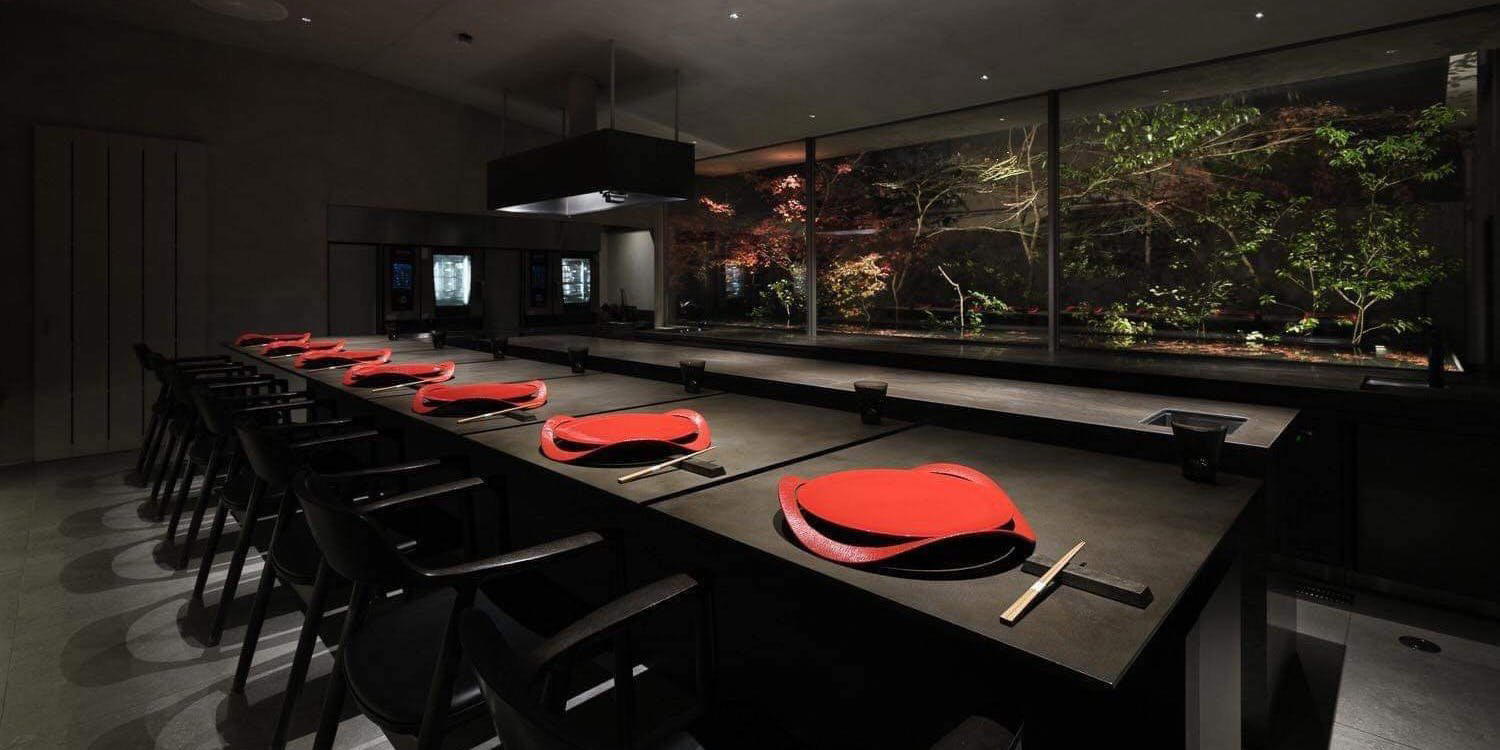
A Different Kind of Kyoto Table
Most visitors arriving in Kyoto for the first time orient themselves quickly around the kaiseki tradition. The city's restaurant hierarchy is, in many ways, inseparable from that form: the tightly sequenced courses, the seasonal grammar, the lacquerware and silence. What Cainoya does, from an address in Ukyo Ward that sits well outside the main tourist and dining corridors, is refuse that gravitational pull entirely. The cuisine here is Italian in structure and European in reference, filtered through Japanese ingredients and the sensibility of a kitchen that has absorbed both traditions without defaulting to either.
Ukyo Ward occupies the western fringe of the city, a quieter residential stretch that most diners pass through rather than stop in. That geography matters. Restaurants in this part of Kyoto are not propped up by foot traffic or the visibility of a Gion address. The clientele here is deliberate, people who made the decision in advance, often returning visitors who have already worked through the kaiseki circuit and are looking for something structurally different.
The Space Between Two Culinary Traditions
Japan has a long-established category of Italian-inflected cooking that goes well beyond pasta on a Western menu. At its most considered, as at HAJIME in Osaka, European technique becomes a frame for deeply Japanese thinking about produce, texture, and restraint. Cainoya operates in that same conceptual register. Chef Takayoshi Shiozawa's kitchen works with Italian structural logic, the progression of a meal, the primacy of the sauce, the role of pasta and grain, but the sourcing and sensibility are rooted in the region.
This is not the fusion category as it existed twenty years ago, where novelty was the point. The approach here is closer to what you find at akordu in Nara, another restaurant in the Kansai region that works through a European lens without the self-conscious signalling of cross-cultural borrowing. The food earns its coherence not through concept but through execution.
What Keeps Regulars Coming Back
Opinionated About Dining, which tracks restaurant quality through a peer-review network of serious eaters rather than institutional guides, has listed Cainoya in its Japan rankings for three consecutive years. It entered at Highly Recommended in 2023, rose to #233 in 2024, and appears at #259 in 2025 on the Leading Restaurants in Japan list. That trajectory, and the consistency of the recognition across multiple annual cycles, is exactly the kind of signal that tends to correlate with a loyal, repeat-heavy clientele rather than a venue riding a single moment of visibility.
Regulars at restaurants like this are not returning for novelty. They return because the kitchen has reached a point where the cooking is reliable in its ambition, where you can trust the ingredient sourcing, the pacing of the meal, and the decisions the chef makes about when to push and when to hold back. That trust takes time to build and is harder to maintain than a single strong review cycle. The OAD consistency suggests Cainoya has built it.
For comparison, the Kyoto Italian scene is not large. Gion Sasaki, Hyotei, Kikunoi Honten, Mizai, and Isshisoden Nakamura anchor the kaiseki tier. The city's Michelin-recognised Italian presence, represented by cenci at one star, operates in the ¥¥¥ bracket. Cainoya occupies a separate position: OAD-tracked rather than Michelin-starred, Italian rather than Japanese, located away from the established dining districts.
Booking and Getting There
Cainoya is at 17-3 Hanazonotsuchidocho in Ukyo Ward, a part of the city that requires intention to reach. The address is not walkable from central Kyoto's main accommodation clusters, and visitors coming from Tokyo via shinkansen, or from Osaka, will need either a local train connection or a taxi from Kyoto Station. The additional logistical step is, in practice, a filter: the dining room attracts people who planned the visit rather than people who happened to pass by.
Given the restaurant's OAD profile and its pattern of sustained recognition, reservations are advisable well in advance. Spontaneous visits are unlikely to succeed at this tier of recognised cooking anywhere in Japan, the same planning discipline that applies at Harutaka in Tokyo or Atomix in New York City applies here. Phone and website details are not publicly listed in standard directories, which points toward a booking system that operates through direct contact or reservation platforms; confirming the current method before travel is worthwhile.
Kyoto's restaurant scene rewards patience with logistics. Visitors who invest the planning time, in both reservations and travel within the city, access a tier of cooking that the more accessible parts of the dining scene don't reach. For the full picture of what the city offers across cuisine types, neighbourhoods, and price points, the EP Club Kyoto restaurants guide maps the range. For accommodation near Ukyo Ward or elsewhere in the city, the Kyoto hotels guide covers the relevant options. The bars guide, wineries guide, and experiences guide complete the picture for a longer stay.
Further afield, the restaurant sits within a broader cluster of serious Italian-influenced cooking across Japan's major cities. 6 in Okinawa represents another geographic edge-case: a kitchen operating outside the major dining centres that has attracted sustained critical attention. The pattern across these venues is consistent, deliberate locations, small audiences, and recognition that comes through community networks rather than mass-market guides.
Frequently asked questions
Who is the chef or culinary lead at Cainoya?
The chef associated with Cainoya is Takayoshi Shiozawa.
What should I eat at Cainoya?
Chef Takayoshi Shiozawa works within Italian structural logic, think courses organised around pasta, protein, and antipasto rhythms, but sources ingredients from the Japanese context surrounding the Ukyo Ward kitchen. The menu changes with the season, and no specific dishes are confirmed in advance. OAD's consecutive rankings from 2023 through 2025 reflect consistency rather than novelty, so the format itself is the draw rather than any single dish.
Where is Cainoya in Kyoto?
Cainoya is located at 17-3 Hanazonotsuchidocho, Ukyo Ward, Kyoto, 616-8025, Japan, Kyoto.
What kind of recognition has Cainoya received?
Cainoya has received recognition including: Opinionated About Dining Top Restaurants in Japan Ranked #259 (2025); Opinionated About Dining Top Restaurants in Japan Ranked #233 (2024); Opinionated About Dining Top Restaurants in Japan Highly Recommended (2023).
Can I walk in to Cainoya?
Walk-ins are unlikely to succeed. Cainoya has appeared on Opinionated About Dining's Japan list three consecutive years, ranking #233 in 2024 and #259 in 2025, which places it firmly in the tier of restaurants where seats are allocated well in advance. The Ukyo Ward address also sits outside central Kyoto, meaning an unplanned visit carries both the risk of no availability and a wasted journey, advance reservation is the practical approach.
A Quick Peer Check
A small set of peers for context, based on recorded venue fields.
| Venue | Cuisine | Price | Awards | Notes |
|---|---|---|---|---|
| CainoyaThis venue (the venue you are viewing) | Modern Japanese-Western Fusion | Not listed | Tabelog 100 #45 | Not listed |
| Gion Sasaki | Modern Kaiseki | $300–500 | 3 Michelin Stars · La Liste Top Restaurants | Kaiseki, Japanese |
| cenci | Innovative Italian-Japanese Fusion | $100–150 | 1 Michelin Star · World's 50 Best #76 | Italian |
| Ifuki | Sumibi Kappo Kaiseki | $200–300 | 2 Michelin Stars · La Liste Top Restaurants | Kaiseki |
| Kyokaiseki Kichisen | Kyoto Kaiseki | $200–300 | 2 Michelin Stars · La Liste Top Restaurants | Japanese |
| Kyo Seika | Modern Chinese Fine Dining | $150–200 | 1 Michelin Star · Tabelog Bronze #216 | Chinese |
Recognition history
Dated appearances from independent guides and award organizations, with the underlying list record or original source where available.
Opinionated About Dining Top Restaurants in Japan Recommended
Opinionated About Dining
Tabelog 100 #45 · No. 45
Tabelog · Tabelog 100 - Innovative / Creative cuisine - 2025
Full recognition history (5 entries)
Opinionated About Dining Top Restaurants in Japan Ranked #259
Opinionated About Dining
Opinionated About Dining Top Restaurants in Japan Ranked #233
Opinionated About Dining
Opinionated About Dining Top Restaurants in Japan Highly Recommended
Opinionated About Dining
Continue exploring
More in Kyoto
Restaurants in Kyoto
All restaurants in Kyoto →
Bars in Kyoto
All bars in Kyoto →
Hotels in Kyoto
All hotels in Kyoto →
Wineries in Kyoto
Browse all →
Details
- Sophisticated
- Elegant
- Modern
- Special Occasion
- Sake Program
- Tasting Menu
- Wine
Current opening hours
- Monday
- Closed
- Tuesday
- Closed
- Wednesday
- 6:30–10 PM
- Thursday
- 6:30–10 PM
- Friday
- 6:30–8 PM
- Saturday
- 6:30–10 PM
- Sunday
- 6:30–10 PM
Hours can change for holidays and private events. Hours as of .
Sophisticated and intimate atmosphere expressing Japan through dishes, ambiance, and tableware in a 13-seat space.