
Michelin Plate
Our verdict
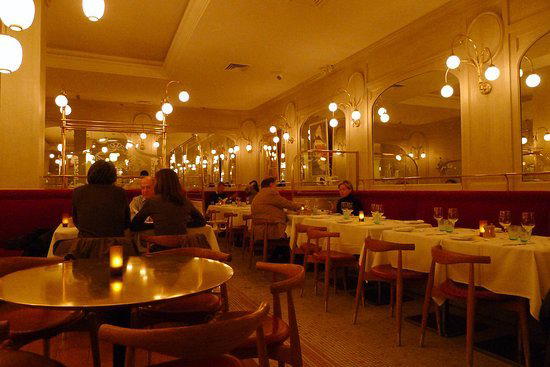
Inside The Hotel Seiryu in Higashiyama, Benoit brings Alain Ducasse's Paris bistro formula to Kyoto with little concession to its surroundings. Framed mirrors, red velvet banquettes, oak panelling, and a working fireplace set a resolutely old-world tone, while the menu works through cassoulet, pâté en croûte, and rum baba with the confidence of a house that has no interest in reinventing itself. Priced at ¥¥¥, it sits at a mid-premium level for the city.

Pearl is the En Primeur Club membership app, where members save venues, book tables and use the concierge.
The menu
What to order
- Traditional Millefeuille
- Profiteroles
- Cassoulet Benoit-style
A Parisian Dining Room Transplanted to Higashiyama
Walk into Benoit inside The Hotel Seiryu and the first thing that registers is the deliberate refusal to acknowledge Japan. Framed mirrors line the walls, oak panelling runs floor to ceiling, and red velvet banquettes anchor each table in the kind of unhurried, settled comfort that Parisian bistros have been perfecting for well over a century. In the front salon, two wingback chairs face a working fireplace, a configuration that signals exactly how this room expects you to end your meal: slowly, with a madeleine in hand. The visual grammar is Old World to the point of being programmatic, and that is precisely the point.
Kyoto already houses a concentration of French-influenced dining that few Japanese cities outside Tokyo can match. Hiramatsu Kodaiji applies classical French technique with local seasonal produce, while Droit and la bûche each represent the newer generation of French-influenced cooking that has absorbed Kyoto's ingredient culture. Benoit sits apart from all of them. It is not interested in synthesis. Its reference points are Paris, its format is the classic bistro, and its authority comes from the Alain Ducasse organisation, which has operated the original Benoit on the Rue Saint-Martin since acquiring it in 2005. What arrives in Kyoto is a franchise of an institution, not an interpretation of one.
The Ritual of the Bistro Meal
The French bistro meal follows a particular cadence that distinguishes it from the tasting-menu format dominating much of Kyoto's upper-tier dining. There is no fixed progression, no theatrical reveal between courses, no sense that the kitchen is narrating a story. The choice is yours, the pacing is yours, and the dishes arrive as they have always arrived: straightforwardly, with the confidence of something that does not need explanation.
At Benoit, that rhythm is intact. The menu works through cassoulet, pâté en croûte, and foie de veau, dishes whose credentials lie in their fidelity to tradition rather than any seasonal reinvention. This is bistro cooking in its documentary sense: recipes with a long track record, executed without apology. In a city where kaiseki disciplines Kyoto diners into a hyper-seasonal, multi-course structure, the bistro's alternative logic, choose what you want, eat at your own pace, stay as long as you like, carries its own appeal.
The dessert sequence deserves particular attention. Traditional French sweets are the closing argument of the bistro meal, and the rum baba here is reported to make that argument well: a fluffy brioche served with lightly sweetened whipped cream and a generous pour of rum. The madeleine, served in the salon by the fireplace, functions less as a dessert item and more as a cue to linger. Both are deliberate choices that reflect the bistro's understanding of hospitality as something extended rather than concluded.
Where It Sits in Kyoto's Dining Picture
Kyoto's restaurant scene at the ¥¥¥ tier is genuinely competitive. Kaiseki houses at that price point, including anpeiji, and European-influenced options like La Biographie··· give diners a range of formats.
The comparison set for Benoit is not the kaiseki houses that dominate the city's upper tier. Gion Sasaki at ¥¥¥¥ and Ifuki at ¥¥¥¥ operate in a different category of ambition and price. The more useful comparisons are with other mid-premium European options in the city, where Benoit's institutional backing and the recognisability of its format give it a specific kind of authority. Elsewhere in Japan, French dining at this level has found serious footholds: L'Effervescence in Tokyo represents the ambitious, produce-driven end of the French spectrum, while HAJIME in Osaka pushes into haute cuisine territory. Benoit makes no claim to either direction. Its ambition is custodial rather than creative: to maintain a format with integrity.
For those interested in how French technique has been absorbed and transformed elsewhere in the Kansai region, akordu in Nara is worth the short trip. Further afield, Goh in Fukuoka, 1000 in Yokohama, and 6 in Okinawa each offer distinct takes on European-influenced fine dining across the country. For the purist end of classical French cooking in a European context, Hotel de Ville Crissier in Crissier remains the benchmark. And Harutaka in Tokyo shows what a counter-format Japanese institution looks like at the top of its category, offering a useful contrast to the bistro's open, unhurried model.
The Hotel Seiryu Setting
The Higashiyama ward, where The Hotel Seiryu occupies a converted Meiji-era school building near Kiyomizudera, is one of the most historically saturated neighbourhoods in Kyoto. Stone-paved lanes, machiya shopfronts, and the near-constant proximity of temple grounds give the area a density of traditional reference that makes Benoit's interior feel like a deliberate counterpoint rather than a casual choice. Whether that contrast reads as jarring or refreshing depends on what you're looking for, but it is not accidental. The hotel's position in the address, Kiyomizu, 2 Chome, puts guests within walking distance of Kiyomizudera itself, which means the French dining room exists inside one of the most visited tourist corridors in Japan.
For planning beyond the meal, our full Kyoto hotels guide covers the city's accommodation range in detail. Our full Kyoto bars guide and our full Kyoto wineries guide are useful for rounding out an evening. For broader orientation across the city's dining options, our full Kyoto restaurants guide covers the full range from kaiseki to European, and our full Kyoto experiences guide maps the cultural programming available across the city's distinct neighbourhoods.
Benoit is priced at ¥¥¥, placing it in the mid-premium bracket for Kyoto. Reservations are handled through The Hotel Seiryu. The fireplace salon seats a small number of guests and the specific chairs by the fire are not reservable in the conventional sense, so arriving early for an evening sitting is the practical route if that particular spot matters to you.
Frequently asked questions
Is Benoit good for families?
At ¥¥¥ pricing, Benoit is positioned toward adult dining rather than casual family meals. The bistro pacing is unhurried, the fireplace setting formal by Kyoto standards, and the menu, built around cassoulet, pâté en croûte, and foie de veau, skews toward guests already familiar with classical French bistro cooking.
What kind of setting is Benoit?
Benoit occupies a room inside The Hotel Seiryu, a converted Meiji-era school building near Kiyomizudera in Higashiyama. The interior is deliberately Old World: framed mirrors, oak-panelled walls, red velvet banquettes, and a working fireplace flanked by two red wingback chairs, the kind of room that makes no concession to its Japanese surroundings.
Is Benoit award-winning?
Benoit has received recognition including: This Alain Ducasse bistro, housed in the venerable La Côte Basque space, may have been renovated in recent years, but it remains decidedly Old World in look, feel and taste. The setting remains a sight to behold, with its abundant framed mi….
What do people recommend at Benoit?
The menu runs classical French bistro: cassoulet, pâté en croûte, and foie de veau are the anchors. Desserts draw consistent attention, particularly the rum baba, a fluffy brioche served with lightly sweetened whipped cream and a generous pour of rum. Madeleines by the fireplace at the end of the meal have become something of a house ritual.
Is Benoit expensive?
Pricing at Benoit is listed as ¥¥¥.
Quick Comparison
Comparable venues nearby, for context on price, style, and recognition.
| Venue | Cuisine | Price | Awards | Notes |
|---|---|---|---|---|
| BenoitThis venue (the venue you are viewing) | Modern French Bistro | $50–100 | Michelin Plate | Not listed |
| le 14e | French Steak Bistro | $50–100 | Michelin Plate | Kamigyō |
| middle | Modern French with Middle Eastern & South American Influences | $50–100 | Michelin Plate · Tabelog Bronze #268 | Sakyō |
| Muni | French-Japanese Fusion | $50–100 | We're Smart World 2 Radishes | Ukyō |
| L'Oiseau Bleu | Vegan French Bakery | Not listed | Not listed | Kita-ku |
| Totoyoshi | Seafood Kappo | Not listed | Michelin Plate | Nakagyō |
Recognition history
Dated appearances from independent guides and award organizations, with the underlying list record or original source where available.
Michelin Plate
Michelin
Full recognition history (2 entries)
Michelin Plate
Michelin
Continue exploring
More in Kyoto
Restaurants in Kyoto
All restaurants in Kyoto →
Bars in Kyoto
All bars in Kyoto →

Hotels in Kyoto
All hotels in Kyoto →
Wineries in Kyoto
Browse all →
Details
- Elegant
- Classic
- Sophisticated
- Cozy
- Date Night
- Special Occasion
- Hotel Restaurant
- Open Kitchen
- Extensive Wine List
- Sake Program
- Garden
- Mountain
- Prix Fixe
- Vegetarian Friendly
Current opening hours
- Monday
- 11:30 AM–10 PM
- Tuesday
- 11:30 AM–10 PM
- Wednesday
- 11:30 AM–10 PM
- Thursday
- 11:30 AM–10 PM
- Friday
- 11:30 AM–10 PM
- Saturday
- 11:30 AM–10 PM
- Sunday
- 11:30 AM–10 PM
Hours can change for holidays and private events. Hours as of .
Bright and luxurious with floor-to-ceiling glass walls allowing ample sunlight, antique French furniture, red sofas, and a harmonious fusion of modern and classic Parisian bistro style.