Our verdict
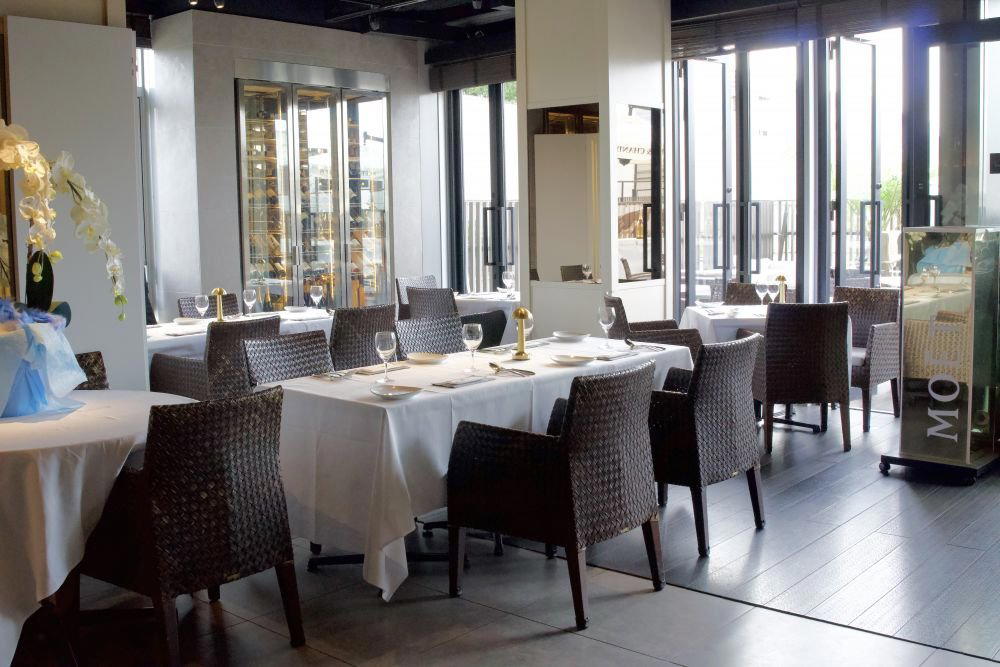
In Jingumae, Shibuya, Casita occupies a corner of Tokyo's dining scene where regulars return not for spectacle but for continuity. The restaurant sits within a neighbourhood that has become a proving ground for intimate, format-driven dining, placing it alongside the city's smaller, identity-led houses rather than its high-volume destination addresses.

Pearl is the En Primeur Club membership app, where members save venues, book tables and use the concierge.
What Draws People Back to Jingumae
The stretch of Jingumae in Shibuya-ku that runs south from Omotesando has quietly accumulated a particular kind of restaurant over the past decade: small, considered, and resistant to easy categorisation. These are not the Ginza omakase counters that attract international itinerary-builders, nor the Roppongi flagships that operate on prestige and footfall. They occupy a middle register, neighbourhood in geography, disciplined in execution, and they sustain themselves on repeat custom rather than first-time discovery. Casita, located on a narrow block in 5-chome Jingumae, belongs to this cohort.
Tokyo's dining culture has long rewarded loyalty over novelty. The city's most durable restaurants, from the kaiseki houses of Minami-Aoyama to the French-inflected counters that have proliferated in the back streets behind Omotesando, earn their standing through consistency across dozens of visits, not through a single transcendent meal. In that context, the regulars' relationship with a room like Casita's is itself a form of editorial endorsement, more telling than any single-night review.
The Jingumae Dining Register
Jingumae's restaurant character has shifted noticeably since the mid-2010s. The area was once primarily associated with fashion retail and the daytime economy of Harajuku and Omotesando. What emerged alongside it, gradually, without announcement, was a concentration of intimate dining rooms that drew on both Japanese precision and international technique. This pattern mirrors what happened in comparable urban neighbourhoods globally: areas of high pedestrian density and design-aware demographics tend to attract operators who trade on craft rather than volume.
Within Tokyo's broader dining hierarchy, the neighbourhood now sits in a tier below the most-decorated addresses. Harutaka in Ginza and RyuGin in Roppongi represent the upper bracket of that hierarchy, Michelin-starred, internationally profiled, priced accordingly. The French houses, including L'Effervescence and Sézanne, operate in a similar register. What the Jingumae tier offers is something adjacent but distinct: lower ambient formality, higher reliance on returning guests, and a format that rewards familiarity over ceremony.
The Logic of the Regular
In cities where restaurant density is high enough to generate genuine competition, regulars are not passive participants. They are the mechanism by which a restaurant calibrates itself. They notice when the room's pacing has tightened, when a dish has shifted, when the seasonal logic of a menu has become more or less coherent. Restaurants that attract loyal repeat visitors over extended periods are, in effect, running a continuous quality audit conducted by the people most invested in the outcome.
This is particularly true in Tokyo, where the guest-house relationship carries cultural weight beyond what a Western dining context typically implies. The Japanese concept of nじゅうなじみ, the regular, the familiar face, shapes how some restaurants in this city structure service and even menus. An unwritten offering for known guests is not unusual; it is, in many smaller Tokyo houses, the norm. The written menu functions as an introduction for newcomers. What develops over time, through repeated visits, is a different kind of access.
Among Tokyo's format-driven contemporaries, Crony in Minami-Aoyama has built a recognisable version of this dynamic within its innovative French framework, a room where the guest list skews toward industry insiders and returning visitors who know the kitchen's tendencies. Casita's position in Jingumae suggests a similar operating logic, even if the specifics of its format remain less publicly documented.
Placing Casita in Japan's Broader Dining Map
Understanding any Tokyo restaurant requires some sense of what surrounds it nationally. Japan's regional dining scene is genuinely distributed, not everything of significance is concentrated in the capital. HAJIME in Osaka operates at a level that draws guests from Tokyo and abroad. Gion Sasaki in Kyoto represents the kaiseki tradition at a seriousness that the capital's equivalents openly respect. Smaller cities contribute meaningfully: Goh in Fukuoka, akordu in Nara, Abon in Ashiya, and addresses as geographically dispersed as affetto akita in Akita, Aji Arai in Oita, Ajidocoro in Yubari District, Akakichi in Imabari, and aki nagao in Sapporo have all demonstrated that the country's dining ambition is not a Tokyo monopoly.
Against that national backdrop, a Jingumae address like Casita's functions as a neighbourhood anchor rather than a destination-category play. It is the kind of place that appears in conversations among Tokyo residents before it appears in international travel lists, if it appears in those lists at all. That sequencing is itself a signal about who the primary guest is.
What the International Comparison Reveals
The format of the intimate, regulars-driven urban restaurant is not specific to Japan. Le Bernardin in New York City and Lazy Bear in San Francisco each, in different ways, demonstrate how a restaurant's identity can stabilise around a loyal core guest rather than around external recognition cycles. The mechanisms differ, Le Bernardin operates at a scale and formality that Lazy Bear does not, and neither maps cleanly onto a small Tokyo room, but the underlying principle holds: repeat guests are a form of institutional memory that published reviews cannot replicate.
For visitors to Tokyo arriving with international dining experience as context, the Jingumae tier offers a corrective to the assumption that the city's most interesting rooms are always the most decorated ones. Some of the more durable dining experiences in Tokyo operate without sustained international press attention, sustained instead by the habits of a steady, knowledgeable local guest base. Our full Tokyo restaurants guide maps that broader picture across neighbourhoods and price points.
Know Before You Go
- Location: 5-chome 51-8 Jingumae, Shibuya, Tokyo 150-0001
- Nearest station: Omotesando or Meiji-Jingumae (multiple lines), both within walking distance of the 5-chome Jingumae block
- Pricing: Not publicly disclosed; the Jingumae neighbourhood bracket generally spans mid-range to high-end, depending on format
- Language: English-language booking or communication may require assistance; a hotel concierge or translation service is advisable for non-Japanese speakers
- Dress: No published dress code; the neighbourhood's general register tends toward smart-casual
Frequently asked questions
What is the signature dish at Casita?
The restaurant's position in Jingumae, within a neighbourhood associated with carefully composed, format-driven dining, suggests a kitchen working with seasonal precision rather than a fixed showpiece dish. For current menu information, direct contact with the restaurant is the appropriate route.
Is Casita reservation-only?
Booking policies at Casita have not been publicly detailed. In Tokyo's higher-end dining tier, which spans addresses from Ginza omakase counters to French-inflected rooms in Aoyama, reservation-only operation is the standard rather than the exception. Walk-in availability at a room of this character and neighbourhood is unlikely; advance contact is advisable.
What is the defining dish or idea at Casita?
What is observable from context is that restaurants in this part of Jingumae tend to organise around a coherent culinary point of view rather than around a single showpiece item. The dining idea, whatever it is, appears to sustain a regular clientele rather than rotate around seasonal novelty alone.
Is Casita allergy-friendly?
No allergy or dietary accommodation policies are listed in publicly available information for Casita. Phone and website details are not currently on record. For guests with specific dietary requirements, the recommended approach is to contact the restaurant directly in advance, in Tokyo, this is most reliably done through a Japanese-speaking intermediary or hotel concierge.
Is Casita overpriced or worth the spend?
Pricing at Casita has not been publicly disclosed, which makes a direct value assessment impossible from available data. As a reference point, the Jingumae neighbourhood bracket for serious dining sits broadly below Ginza's top-tier omakase prices, addresses like Harutaka or RyuGin, but above casual neighbourhood pricing. A restaurant that sustains repeat visits from a loyal local clientele typically earns that loyalty through a value proposition that holds across multiple visits, not just a single occasion.
How does Casita compare to other intimate dining rooms in Tokyo's Aoyama-Jingumae corridor?
The Aoyama-Jingumae corridor has produced a recognisable cluster of small, format-conscious restaurants that position themselves between the high-formality Michelin tier and casual neighbourhood dining. Within that cluster, differentiation tends to come from cuisine focus, counter size, and the depth of the regular-guest relationship rather than from awards or press profile. Casita's Jingumae address places it inside this grouping; how it distinguishes itself within it is leading assessed through the dining experience itself rather than through publicly available data, which remains limited.
Compact Comparison
Comparable venues nearby, for context on price, style, and recognition.
| Venue | Cuisine | Price | Awards | Notes |
|---|---|---|---|---|
| CasitaThis venue (the venue you are viewing) | Modern Italian with Japanese Influences | $100–150 | Not listed | Not listed |
| K+ | Modern Italian Fine Dining | $100–150 | Tabelog 100 #49 | Minato, Modern Italian Fine Dining |
| Orlando | Italian enoteca & restaurant | Not listed | Tabelog 100 #38 | Meguro, Italian enoteca & restaurant |
| ristorante scintilla | Modern Italian Fine Dining | $100–150 | Tabelog 100 #7 | Meguro, Modern Italian Fine Dining |
| Angelo | Seasonal Italian Omakase | $50–100 | Michelin Plate | Shinagawa, Casual Italian Pasta |
| SAVOY Tomato to chiizu ten | Wood-fired Neapolitan-style pizza | $50–100 | Tabelog 100 #30 | Minato, Wood-fired Neapolitan-style pizza |
Continue exploring
More in Tokyo
Restaurants in Tokyo
All restaurants in Tokyo →


Bars in Tokyo
All bars in Tokyo →




Details
- Elegant
- Romantic
- Cozy
- Sophisticated
- Date Night
- Special Occasion
- Terrace
- Sake Program
- Extensive Wine List
- A La Carte
- Sake Program
- Vegetarian Friendly
Current opening hours
- Monday
- 12–3 PM, 5–10 PM
- Tuesday
- 12–3 PM, 5–10 PM
- Wednesday
- 12–3 PM, 5–10 PM
- Thursday
- 12–3 PM, 5–10 PM
- Friday
- 12–3 PM, 5–10 PM
- Saturday
- 12–3 PM, 5–10 PM
- Sunday
- 12–3 PM, 5–10 PM
Hours can change for holidays and private events. Last verified .
Warm and elegant atmosphere with wonderful staff service and terrace seating when weather permits.