
Tokyo’s Italian scene has moved well beyond red-sauce nostalgia, and ristorante scintilla belongs to the smaller Naka-Meguro tier where Italian technique meets Japanese meal pacing. Its Tabelog Italian TOKYO 100 selections in 2023 and 2025 place it among the city’s more closely watched Italian rooms, with fish, wine service, and a reservation-led format shaping the experience.
Pearl is the En Primeur Club membership app — saves, bookings, and concierge access live there. Same editors, same standards.
- Address
- 東京都目黒区上目黒2-44-9 クレストモア B1F
- Phone
- +81364524395
- Website
- thegardennakameguro.jp
- Directions
- Get directions
 Saves & bookings on Pearl
Approach Naka-Meguro from the station and the dining mood shifts quickly: canal-side cafés and casual counters give way to quieter backstreets, where smaller rooms trade street-level theatre for controlled pacing. For contemporary Italian dining in Tokyo, that matters. The meal is less rustic abundance than sequence, restraint, and timing, with each course holding its place in a larger rhythm.
ristorante scintilla fits that pattern. Listed as Italian, wine bar, and innovative, it reflects Tokyo’s current appetite more than any single label can. Italian restaurants here often compete not by reproducing regional orthodoxy, but by adapting Italian structure to Japanese produce, service discipline, and a tasting-menu sensibility familiar from sushi counters and kappo rooms. The public emphasis on fish and wine places this restaurant in a precise bracket: not a trattoria, not a grand dining room, and not fusion shorthand, but a compact Italian format shaped by Tokyo’s preference for detail.
Naka-Meguro Italian dining, measured by pace rather than theatre
Naka-Meguro suits this style. It is central enough to draw serious diners, without Ginza’s ceremonial pressure or Marunouchi’s hotel-dining formality. The neighbourhood’s stronger restaurants often feel residential in scale, using small rooms, controlled seating, and wine-led pacing to create intimacy without performance.
That scale is part of the ritual. In Tokyo, Italian dining at this level often borrows from Japanese ideas of progression: a beginning that calibrates the palate, a middle built around seasonal ingredients, and a finish that avoids excess. The cooking may use Italian grammar, but service expectations are local. Dishes should arrive in a logical sequence, wine should support rather than dominate, and the room should feel composed rather than loud.
The Tabelog Italian TOKYO 100 selections in 2023 and 2025 are useful signals because Italian cooking in Tokyo is crowded. Inclusion does not make a restaurant interchangeable with luxury hotel Italian or old-school pasta houses; it marks a narrower peer group that Japanese diners return to for precision, atmosphere, and consistency. In Naka-Meguro, comparable decisions might include French at Icaro, sushi at UDATSU SUSHI, or meat-focused dining around Wagyu beef Yakiniku Beef Kitchen Nakameguro, but the Italian table has a different social register: slower, wine-aware, and more dependent on pacing than spectacle.
The ritual: fish, wine, and controlled Italian structure
The public categories tell the story. “Italian” provides the spine, “wine bar” makes drinking central, and “innovative” allows for Tokyo’s habit of refining foreign cuisines through local technique and ingredients. The noted focus on fish is especially telling. Tokyo Italian restaurants that lead with seafood sit closer to the Japanese dining calendar, where seasonality is read through texture, temperature, and portion size as much as sauce or abundance.
This is where the experience separates from casual Italian dining. A fish-led Italian meal in Tokyo rarely depends on the heavy markers that define Italian food abroad. The discipline is proportion: acidity for lift, fat held in check, and wine service that moves between seafood and richer courses without flattening the meal. A sommelier presence strengthens that format, especially where guests move through several smaller courses rather than choosing one bottle for pasta and mains.
The private-room option also changes the use case. Tokyo diners often separate restaurants by occasion with more precision than visitors expect: counter for concentration, table dining for conversation, private rooms for family or business meals needing discretion. This is not just ambience. The ritual changes by room: a small group can treat the meal as a quiet celebration, while business diners can use the course structure to pace conversation without constant decisions.
For readers mapping Tokyo dining beyond Naka-Meguro, the contrast helps. Akihabara’s casual seafood-and-grill energy at . 鮪と炭火焼き うお炭 秋葉原店, Shinjuku’s compact dining density around 12/10 Shinjuku ten, and Kagurazaka’s grill traditions at 124. KAGURAZAKA (Yakitori) show different Tokyo rituals. Even casual addresses such as 2D Cafe or curry specialists like 3 Chome no Curry Ya San remind us that the city’s dining culture is not one hierarchy, but formats with different rules.
Who this table suits in Tokyo's Italian scene
This is stronger for diners who enjoy Italian grammar but want Tokyo discipline around timing, quiet service, and ingredient focus. It is less suited to anyone seeking a spontaneous bowl of pasta or a high-noise room built around turnover. The smarter comparison is with other compact, reservation-led restaurants where pleasure comes from sequence: how the table settles, how wine is introduced, and how the kitchen moves from lighter preparations to deeper flavours.
There is also practical etiquette embedded in the format. Restaurants built around set pacing and ingredient planning expect diners to state allergies and dislikes before the meal, not at the table. That is common in Tokyo’s smaller dining rooms because late changes disrupt both the kitchen and the rhythm of service for the whole room. For visitors used to flexible à la carte systems, this cultural adjustment separates a smooth Tokyo dinner from an awkward one.
Within a broader itinerary, ristorante scintilla works as the Naka-Meguro Italian anchor rather than the city’s only serious meal. Pair it with sushi, yakitori, curry, or contemporary casual dining elsewhere and Tokyo’s shape becomes clearer. For broader planning, compare it with Our full Tokyo restaurants guide, then build the rest of the trip through Our full Tokyo hotels guide, Our full Tokyo bars guide, Our full Tokyo wineries guide, and Our full Tokyo experiences guide. Travellers extending the comparison across Japan and beyond can also read against -Grilled beef Sukiyaki- KAMAKURA TANUKIAN 鎌倉 たぬき庵 in Kamakura.cafe in Osaka.know in Kumamoto, (Shoku) Vietnam in Kawasaki, [Curry Senmon Ten] Maruyama Kyoju. in Sapporo, [ki:] in Kyoto, Jōdo Saké Bar in Los Angeles, and Onigiri Time in Pasadena.
At a Glance
Comparable venues to anchor price and recognition.
| Venue | Cuisine | Price | Notes |
|---|---|---|---|
| ristorante scintillaThis venue — the venue you are viewing | Meguro, Modern Italian Fine Dining | $$$ | Not listed |
| Partenope (パルテノペ) | Ebisu, Authentic Neapolitan Pizza | $$$ | Not listed |
| エリオ・ロカンダ・イタリアーナ | Not listed | $$$ | Chiyoda, Authentic Southern Italian Trattoria |
| Casita | Not listed | $$$ | Minato, Modern Italian with Japanese Influences |
| luogo | Not listed | $$$ | Meguro, Innovative Japanese-inflected Italian |
| Vincero | Not listed | $$$ | Shinjuku, Regional Italian with Japanese Influences |
Recognition history
Dated appearances from independent guides and award organizations, with the underlying list record or original source where available.
Tabelog 100 #7 · No. 7
Tabelog · Tabelog 100 - Italian - TOKYO - 2025













At a Glance
- Modern
- Elegant
- Intimate
- Sophisticated
- Minimalist
- Date Night
- Business Dinner
- Special Occasion
- Celebration
- Private Event
- Private Dining
- Design Destination
- Standalone
- Extensive Wine List
- Natural Wine
- Sommelier Led
- Local Sourcing
- Natural Wine
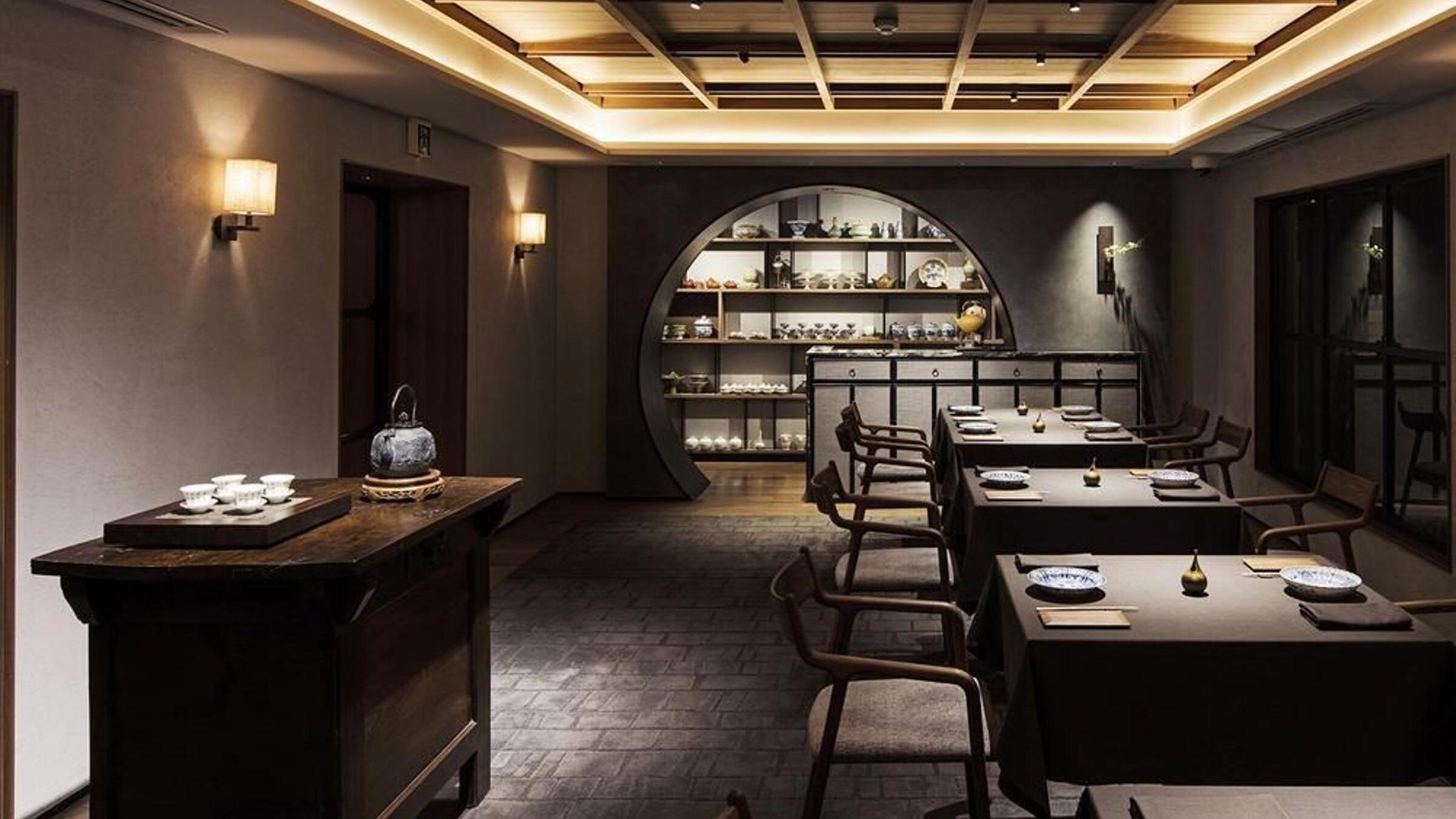
A chic, blue‑grey, minimalist basement dining room with restrained visual stimuli, creating a calm, intimate atmosphere where soft lighting and refined table settings keep the focus on the multi-course Italian tasting menus and wine pairings.