
Our verdict
Bistrot Dia occupies basement level at Roppongi Hills, where chef Daisuke Fujinaga brings a Franco-Japanese sensibility to the sushi counter format. Recommended by Opinionated About Dining in 2023, it sits in a tier of Tokyo sushi that prioritises craft credentials over ceremony. The address places it among some of the city's most competitive fine-dining real estate.

Pearl is the En Primeur Club membership app, where members save venues, book tables and use the concierge.
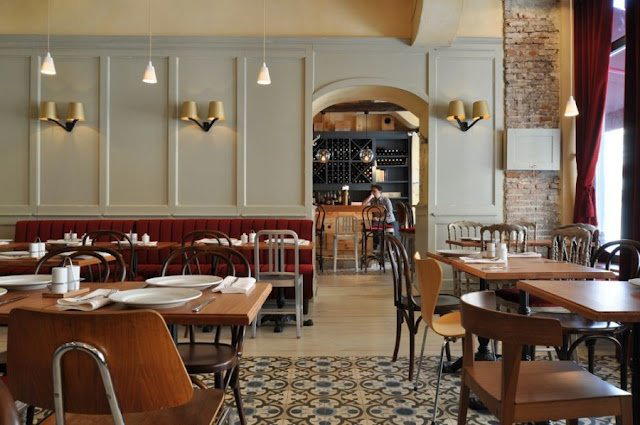
Below Street Level in Roppongi: A Counter That Earns Its Place
Descending into basement level at Roppongi Hills, you leave the tower's retail and gallery energy behind and enter the quieter register that Tokyo's serious dining rooms tend to inhabit. Bistrot Dia, under chef Daisuke Fujinaga, holds a position in this field that the 2023 Opinionated About Dining recommendation formalises, a recognition that rewards consistent craft rather than media profile.
The Shokunin Tradition and What It Demands
Tokyo's omakase culture is inseparable from the shokunin model: a discipline of training so intensive, and over so long a period, that the chef's technical range eventually disappears into apparent effortlessness. The logic runs counter to most Western kitchen advancement. Where a French cook might gain autonomy within a few years, a sushi shokunin typically spends the first years learning rice alone, its temperature, its seasoning, its behaviour across different fish, before progressing to knife work and then to the full counter sequence. By the time a chef operates their own room, the decisions being made in real time are the product of a decade or more of repetition at close range to a master.
This lineage structure shapes how Tokyo's sushi counters relate to each other. Sushi Kanesaka and Harutaka sit at the apex of this system, their three Michelin stars partly a reflection of the master-student chains they anchor. Below that tier, a second cohort of counters, OAD-recommended, critically tracked, often run by chefs who passed through those leading rooms, operates with comparable technical rigour at a slightly different altitude. Bistrot Dia reads as part of that second cohort: a room where the credentials are verifiable without the full ceremony of the Michelin three-star experience.
The Franco-Japanese Register and What It Signals
The name Bistrot Dia is worth pausing on. In Tokyo's sushi world, a French-inflected name attached to a sushi counter is not mere branding, it usually signals a specific culinary positioning, one that draws on both Edomae technique and French kitchen sensibility. This cross-disciplinary approach has precedent in Tokyo's fine-dining culture, where chefs trained in both traditions have produced some of the city's most discussed tasting menus. The distinction matters because it signals what the counter is not: it is not operating in the strict Edomae-only tradition exemplified by counters such as Edomae Sushi Hanabusa or Sukiyabashi Jiro Roppongiten. The positioning gives Fujinaga room to work with different ingredient and preparation frameworks while staying anchored to the counter format and its inherent discipline.
HAJIME in Osaka and akordu in Nara both demonstrate how deeply French technical vocabulary has been absorbed into Japanese fine dining, each in a different regional register. Bistrot Dia applies a version of that synthesis specifically to the sushi counter, a narrower and more technically demanding canvas.
OAD Recognition and What It Represents
The Opinionated About Dining recommendation, issued in 2023, places Bistrot Dia inside a curated set that OAD's crowdsourced critic model identifies as worth tracking. OAD's methodology, which aggregates assessments from a defined panel of frequent diners and critics rather than anonymous restaurant-goers, tends to surface rooms that the broader Michelin and 50 Best systems have not yet formalised. For a counter operating in a neighbourhood already saturated with Michelin-starred addresses, an OAD mention functions as a signal that the food quality has been registered by people with direct comparison across the tier.
Counters at comparable recognition levels in Tokyo, Hiroo Ishizaka is one reference point, often occupy a zone where the experience rivals the three-star tier on substance while remaining slightly more accessible on advance booking and atmosphere formality. Whether Bistrot Dia sits at exactly that register is a question that visits answer. The OAD signal says it is worth asking.
Roppongi Hills as a Dining Address
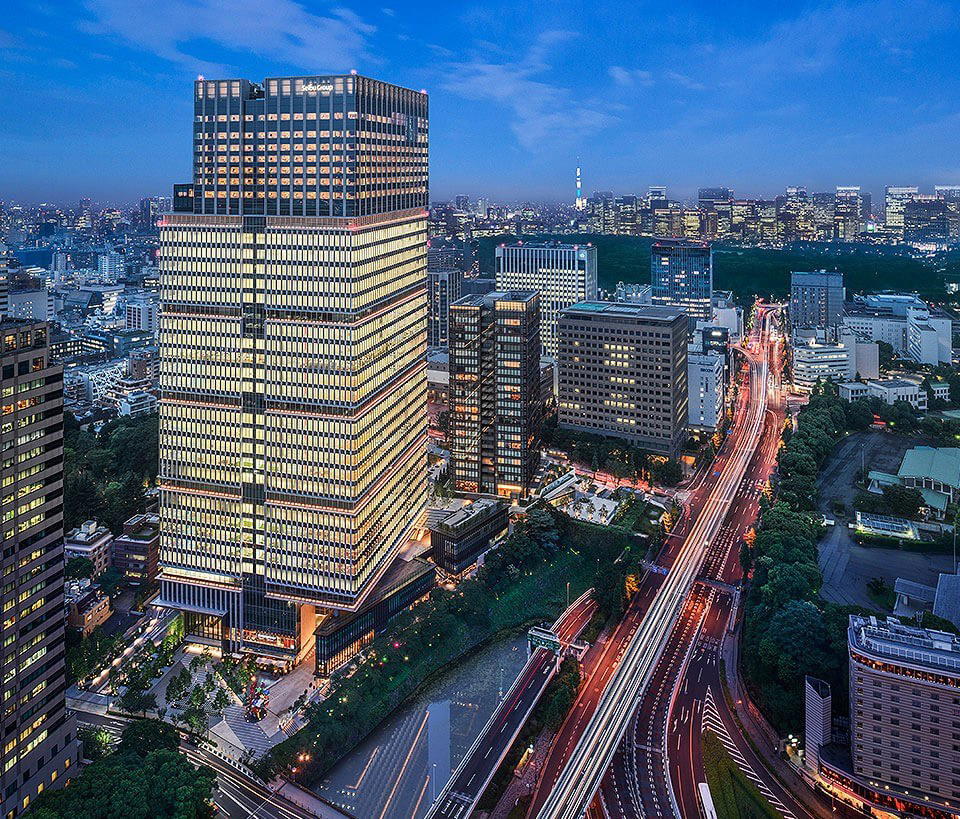
Roppongi Hills, the Mori Building complex that opened in 2003, has operated as a reliable concentration point for premium dining in a part of the city that already had strong restaurant density. The basement and lower-floor positions within the complex house a cluster of counters and dining rooms that benefit from the foot traffic of a destination address without the full tourist volume that Ginza brings. For serious diners, the complex is more useful as a navigation tool, a known address in a neighbourhood that can be confusing to approach from the street, than as a brand endorsement.
The broader Roppongi dining picture connects to the wider Tokyo premium scene that EP Club covers across categories. If your itinerary extends to accommodation or other categories, and our full Tokyo experiences guide.
Sushi Across Japan and the Region
Tokyo remains the reference point for omakase sushi, but the format has travelled. Sushi Shikon in Hong Kong and Shoukouwa in Singapore both operate under Michelin recognition and demonstrate that the counter discipline exports successfully when the sourcing and training lineage follow. Within Japan, the broader fine-dining geography includes strong regional programmes: Gion Sasaki in Kyoto, Goh in Fukuoka, 1000 in Yokohama, and 6 in Okinawa each anchor the premium tier in their respective cities. Bistrot Dia operates in the most competitive of those cities, which sets a high baseline for what the OAD recognition implies. For Tokyo wineries information.
Know Before You Go
- Address: 6 Chome-10-1 Roppongi, Minato City, Tokyo, Roppongi Hills Hillside B1F
- Recognition: Opinionated About Dining Recommended, 2023
- Price range: Not published, contact directly for current pricing
- Booking: No booking method confirmed in available data; approach via the venue directly or through a hotel concierge familiar with the Roppongi Hills complex
- Hours: Not published, verify before visiting
- Getting there: Roppongi Station (Hibiya Line, Oedo Line) is the most direct approach; the Hills complex is a short walk from either exit
Frequently asked questions
Has Bistrot Dia won any awards?
Bistrot Dia has received recognition including: Opinionated About Dining Top Restaurants in Japan Recommended (2023).
Where exactly is Bistrot Dia?
Bistrot Dia is located at Japan, 〒106-0032 Tokyo, Minato City, Roppongi, 6 Chome−10−1 六本木ヒルズ ヒルサイド B1F, Tokyo.
What's the must-try dish at Bistrot Dia?
Bistrot Dia operates on an omakase format, meaning the sequence is set by chef Daisuke Fujinaga according to season and supply, there is no à la carte selection to single out. The OAD's 2023 recommendation signals that the kitchen's overall execution is what warrants attention, not any one item in isolation. Arrive expecting the chef's full progression rather than a highlight dish.
Who runs the kitchen at Bistrot Dia?
The chef associated with Bistrot Dia is Daisuke Fujinaga.
What's the best way to book Bistrot Dia?
In Tokyo, OAD-listed counters at Roppongi Hills typically require reservations made by phone or through a hotel concierge, often weeks in advance. A concierge at a Minato City property is the most reliable route if you are visiting from outside Japan.
The Essentials
Comparable venues nearby, for context on price, style, and recognition.
| Venue | Cuisine | Price | Awards | Notes |
|---|---|---|---|---|
| Bistrot DiaThis venue (the venue you are viewing) | Japanese Kobe Beef Teppanyaki | $150–200 | Not listed | Not listed |
| Iruka Tokyo Roppongi | Modern Ramen | $20–30 | Michelin Bib Gourmand · Tabelog 100 #94 | Roppongi, Modern Ramen |
| Imakatsu (六本木 イマカツ) | Premium Tonkatsu | $20–30 | Not listed | Roppongi, Premium Tonkatsu |
| Eiki | Traditional Yakitori Omakase | $150–200 | Tabelog Bronze #59 | Shibuya, Traditional Yakitori Omakase |
| sumiyaki kadota or yourisu zuki | Charcoal-grilled Japanese diner & motsunabe | $50–100 | Tabelog 100 #25 | Shibuya, Charcoal-grilled Japanese diner & motsunabe |
| Pretty Pork Factory & Katsu Puripo | Pork-focused Japanese shabu-shabu, samgyeopsal & tonkatsu | $50–100 | Tabelog 100 #80 | Shibuya, Pork-focused Japanese shabu-shabu, samgyeopsal & tonkatsu |
Recognition history
Dated appearances from independent guides and award organizations, with the underlying list record or original source where available.
Opinionated About Dining Top Restaurants in Japan Recommended
Opinionated About Dining
Continue exploring
More in Tokyo
Restaurants in Tokyo
All restaurants in Tokyo →


Bars in Tokyo
All bars in Tokyo →




Details
- Elegant
- Solo
- Family
- Business Dinner
- Open Kitchen
- Sake Program
- A La Carte
- Counter Dining
- Sake Program
Current opening hours
- Monday
- 11 AM–9:30 PM
- Tuesday
- 11 AM–9:30 PM
- Wednesday
- 11 AM–9:30 PM
- Thursday
- 11 AM–9:30 PM
- Friday
- 11 AM–9:30 PM
- Saturday
- 11 AM–9:30 PM
- Sunday
- 11 AM–9:30 PM
Hours can change for holidays and private events. Hours as of .
Sophisticated counter seating with focus on chef performance.