A kaiseki-leaning kappo counter in Hiroshima's Naka-ku district, Takotsubo sits within the city's quieter fine-dining tier, where ingredient provenance and seasonal discipline define the offer. The address on Horikawa-cho places it close to the urban core without the tourist-circuit visibility of the city's okonomiyaki belt. Expect the measured pacing and produce-led cooking that characterises Japan's regional kappo tradition at its most focused.
 Discover on Pearl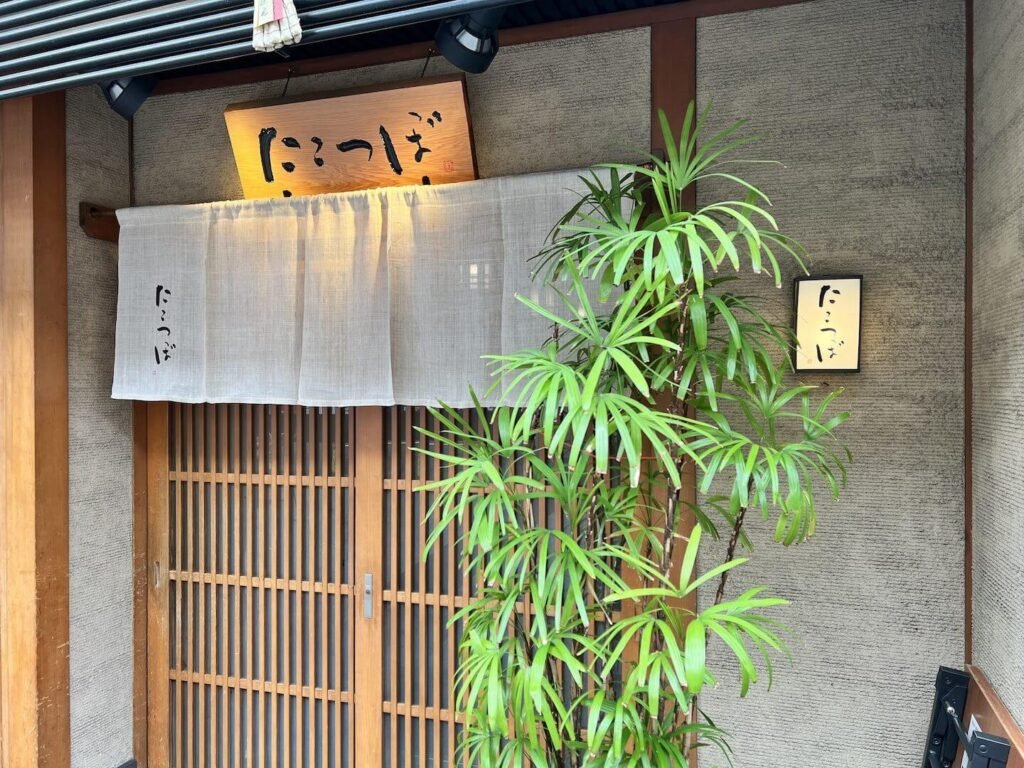
Hiroshima's Kappo Register and Where Takotsubo Sits Within It
Japan's kappo dining format occupies a distinct position between the formality of full kaiseki and the comparative casualness of izakaya. At a kappo counter, the chef works in open view, courses arrive in a rhythm calibrated to the kitchen's pace, and the ingredient is the argument. Hiroshima has its own version of this tradition, one shaped by Seto Inland Sea proximity, mountain-side agricultural hinterlands, and a civic culture that tends to favour craft without excess ceremony. Takotsubo, at 4-18 Horikawa-cho in Naka-ku, sits within that city-specific register. The address is not a destination strip in the tourist sense — it is the kind of Hiroshima block where locals eat seriously, and where the absence of English signage is a reasonable proxy for the kitchen's intended audience.
For context on where kappo sits in the wider regional hierarchy, Hiroshima's most visible fine-dining traffic tends toward okonomiyaki specialists and seafood-forward kaiseki houses drawing on the prefecture's oyster culture. The kappo tier is smaller, less publicised, and disproportionately reliant on word of mouth and repeat custom. That context matters when assessing a counter like Takotsubo: it operates in a format where the room itself sends signals before a single dish appears. For the broader range of what Hiroshima's dining scene offers, our full 広島市 restaurants guide maps the city's options across price points and styles.
The shortlist, unlocked.
Hard-to-book tables, cellar releases, and concierge-planned trips.
Get Exclusive Access →Ingredient Logic in a Sea-and-Mountain Prefecture
Hiroshima Prefecture's geography is unusually generous for a kitchen committed to local sourcing. The Seto Inland Sea to the south produces oysters that hold national standing, along with sea bream, octopus, and small bivalves that cycle through the seasons with reliable specificity. The mountainous interior of the prefecture and the Chugoku range to the north supply wild vegetables, mushrooms, river fish, and the kind of agricultural produce that defines Hiroshima's less-celebrated but substantive farm economy. A kappo counter in this city, at its most disciplined, reads those two supply lines simultaneously and builds its menu around what each season makes available at the intersection.
The kappo format's structural advantage is that it allows the kitchen to adjust course by course rather than committing to a fixed menu weeks in advance. That flexibility is most meaningful when sourcing is genuinely seasonal rather than nominally so. Japan's broader fine-dining culture has spent the past decade becoming more explicit about provenance — a trend visible at venues from Gion Sasaki in Kyoto to Goh in Fukuoka , and regional kappo counters in cities like Hiroshima have historically embodied that approach before it became a talking point at the leading end of the national market.
Octopus, suggested by the venue name itself (takotsubo refers to the traditional clay pots used to trap octopus, a practice embedded in Seto Inland Sea fishing culture), signals an alignment with local maritime tradition rather than the generic seafood-forward positioning of a hotel restaurant. Whether that etymological connection translates directly into a signature preparation is not something the available record confirms, but the naming choice is not incidental in a Japanese dining context, where the language a kitchen uses to identify itself carries deliberate weight.
Reading the Room: What a Horikawa-cho Address Implies
Naka-ku is Hiroshima's central ward, containing the city's commercial and transit core, and Horikawa-cho sits within the network of streets that support both neighbourhood dining and the kind of counter that rewards a deliberate visit. This is not the Peace Memorial Park tourist circuit, nor is it the after-dark entertainment strip of Nagarekawa. It is a working urban block where a kappo counter can operate without the foot-traffic economics that force compromises in sourcing and pacing.
The physical environment of a Japanese kappo counter at this price tier and city level tends toward the spare: hinoki wood surfaces, ceramic ware selected counter by counter rather than by a procurement team, lighting calibrated to the food rather than to Instagram geometry. None of that is confirmed by the available record for Takotsubo specifically, but those are the conditions that define the format's standard expression in a city like Hiroshima, and they are worth naming as the frame against which the actual experience should be read. For reference on how similar restraint operates at a higher price tier, Harutaka in Tokyo and akordu in Nara demonstrate how counter-format dining can carry significant editorial weight without relying on room scale or decor excess.
Hiroshima in the Context of Japan's Regional Fine Dining
Japan's regional dining scene has gained meaningful international attention in the past several years, partly through the Michelin Guide's expansion beyond Tokyo and Kyoto, and partly through the growing appetite among serious food travellers for cities that operate outside the headline itinerary. Hiroshima fits that profile: it has historic and cultural weight, a Shinkansen connection that makes it accessible from Osaka in under 90 minutes, and a dining culture that runs deeper than its tourist-facing offer suggests. Venues like Denko Sekka have put parts of the city's food culture on broader radar, but the kappo tier remains comparatively under-reported in English-language dining coverage.
That under-reporting creates a specific kind of reader opportunity. At the level of city-scale dining comparisons, Hiroshima's fine-dining density is lower than Osaka or Fukuoka, but the quality ceiling in its specialist formats is not dramatically lower. HAJIME in Osaka represents the upper bracket of what Japan's regional cities can produce at the innovative end; Hiroshima's kappo counters occupy a different but related niche, one defined by restraint and seasonal specificity rather than technical ambition at that level. For readers who have already covered Tokyo's counter scene, including venues like Harutaka, Hiroshima's quieter tier offers a useful recalibration of expectations.
Planning a Visit
Takotsubo is located at 4-18 Horikawa-cho, Naka-ku, Hiroshima (730-0033). No phone number, website, or booking system is confirmed in the available record, which suggests , consistent with many Japanese kappo counters at this level , that reservations may be made through direct contact at the counter or through a hotel concierge with local connections. Visitors to Hiroshima arriving by Shinkansen should note that Hiroshima Station is served by the San'yo Shinkansen line, with frequent connections from Shin-Osaka (roughly 85 minutes on the Nozomi). The Horikawa-cho address is reachable by tram from the station, keeping access practical without a taxi requirement. No confirmed hours or pricing are available; given the format and location, confirming availability before travel is advisable.
Frequently Asked Questions
- Is Takotsubo (割烹 たこつぼ) child-friendly?
- Kappo counters in Japan typically operate as adult dining environments, structured around extended multi-course pacing and counter seating that does not accommodate young children easily. Hiroshima has more casual family-appropriate options across its dining range; at the price point and format implied by a kappo counter in Naka-ku, an adult or older-teenager audience is the reasonable assumption.
- What kind of setting is Takotsubo (割烹 たこつぼ)?
- The venue is a kappo-format counter in Hiroshima's Naka-ku district, a style that sits between the ceremonial structure of kaiseki and the informality of izakaya. In a city where fine dining is shaped by Seto Inland Sea seafood and mountain-prefecture produce, a kappo counter at this address aligns with the quieter, more local tier of serious eating , not a tourist-facing format, and not a hotel restaurant. No awards are confirmed in the available record.
- What's the signature dish at Takotsubo (割烹 たこつぼ)?
- No specific dishes are confirmed in the available record. The venue name references takotsubo, the traditional clay pots used in Seto Inland Sea octopus fishing, which signals a connection to local maritime sourcing. In kappo cooking generally, the menu reflects what the season and the morning's market make available, so no fixed signature in the Western sense should be expected. Comparable counter-format venues like Gion Sasaki in Kyoto demonstrate how the kappo tradition foregrounds provenance over dish repetition.
- Should I book Takotsubo (割烹 たこつぼ) in advance?
- No booking system is confirmed in the available record, but kappo counters at this level in Japanese cities typically operate on reservation only, with limited seats and no walk-in capacity. Arranging contact through a hotel concierge is the most reliable approach if direct contact proves difficult. Given the format, planning at least several days ahead is the lower-risk approach, particularly around public holidays or the autumn and spring dining peaks.
- What makes Takotsubo (割烹 たこつぼ) worth seeking out?
- The combination of Hiroshima's specific ingredient geography , Seto Inland Sea seafood, Chugoku mountain produce , and the kappo format's structural commitment to seasonal responsiveness creates a dining context that is not replicated in the city's more visible tourist-facing tier. For readers familiar with counter dining at venues like Atomix in New York City or Le Bernardin in New York City, the kappo register represents a different set of priorities: producer relationships over technique display, and seasonal constraint over menu ambition.
- What does the name Takotsubo tell you about the restaurant's culinary orientation?
- Takotsubo (たこつぼ) refers specifically to the clay or ceramic pots traditionally lowered to the seabed in Seto Inland Sea fishing to trap octopus , a practice tied to the coastal communities of Hiroshima and surrounding prefectures. Naming a kappo counter after that implement is a statement of regional culinary identity rather than a decorative choice. In a dining culture where naming conventions carry precise meaning, the reference positions the kitchen within Hiroshima's maritime food tradition rather than within the generic Japanese fine-dining vocabulary shared across city capitals.
In Context: Similar Options
These are the closest comparables we have in our database for quick context.
| Venue | Cuisine | Price | Awards | Notes |
|---|---|---|---|---|
| Takotsubo (割烹 たこつぼ) | This venue | |||
| HAJIME | French, Innovative | ¥¥¥¥ | Michelin 3 Star | French, Innovative, ¥¥¥¥ |
| Harutaka | Sushi | ¥¥¥¥ | Michelin 3 Star | Sushi, ¥¥¥¥ |
| L'Effervescence | French | ¥¥¥¥ | Michelin 3 Star | French, ¥¥¥¥ |
| RyuGin | Kaiseki, Japanese | ¥¥¥¥ | Michelin 3 Star | Kaiseki, Japanese, ¥¥¥¥ |
| Crony | Innovative, French | ¥¥¥¥ | Michelin 2 Star | Innovative, French, ¥¥¥¥ |
Need a table?
Our members enjoy priority alerts and concierge-led booking support for the world's most difficult tables.
Get Exclusive AccessThe shortlist, unlocked.
Hard-to-book tables, cellar releases, and concierge-planned trips.
Get Exclusive Access →