
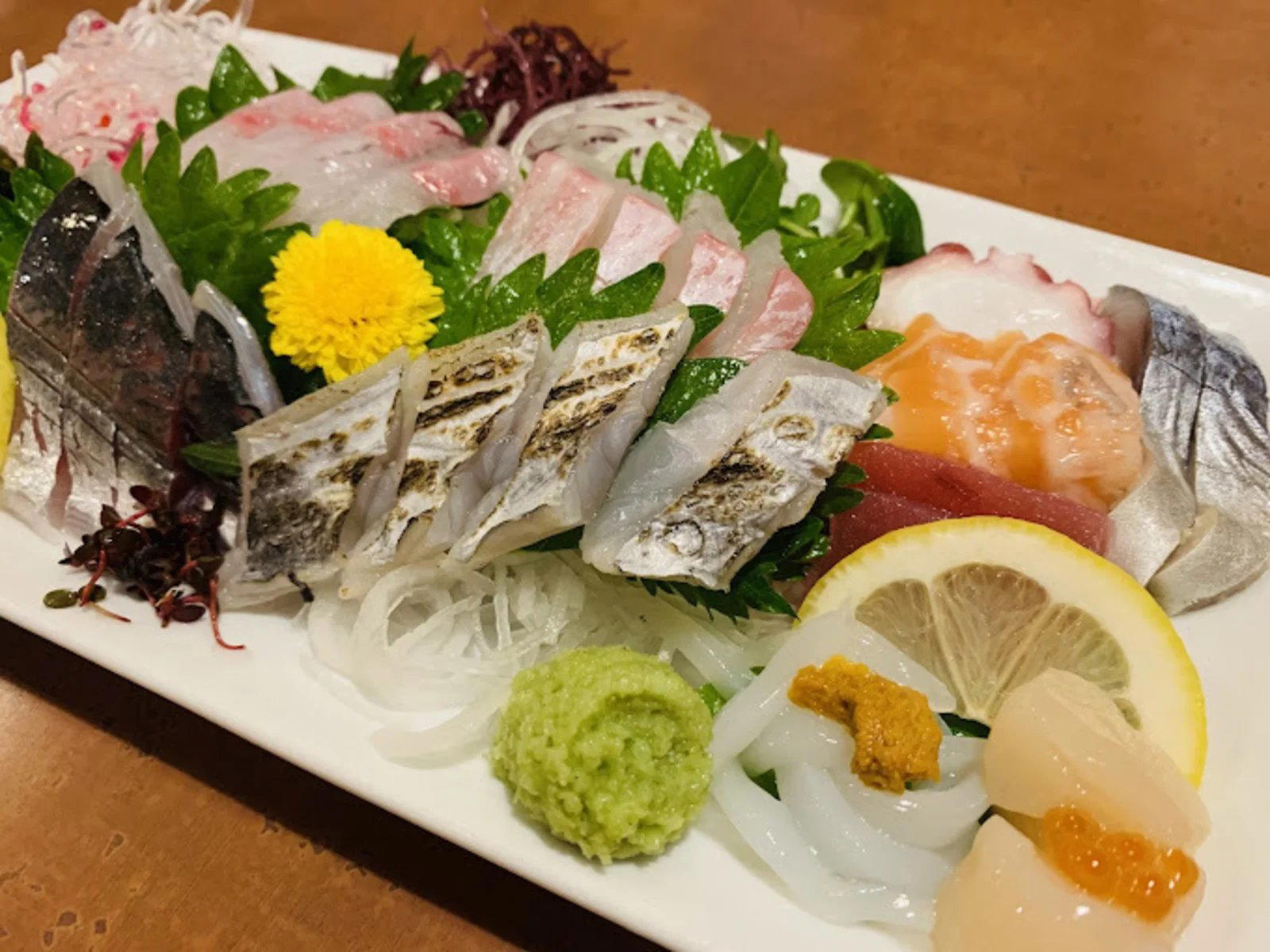
Shusai Takenoshita is a compact Hiroshima izakaya in Tatemachi, selected for Tabelog 100 Izakaya WEST in 2025, 2024, and 2022. The appeal is cultural as much as culinary: fish-led Japanese cooking, sake and shochu, and a small-room format that sits closer to serious dining than casual tavern shorthand.
Pearl is the En Primeur Club membership app — saves, bookings, and concierge access live there. Same editors, same standards.
- Address
- 3-23 Tatemachi, Naka Ward, Hiroshima, 730-0032, Japan
- Phone
- +81 82-247-1986
- Website
- tabelog.com
 Saves & bookings on Pearl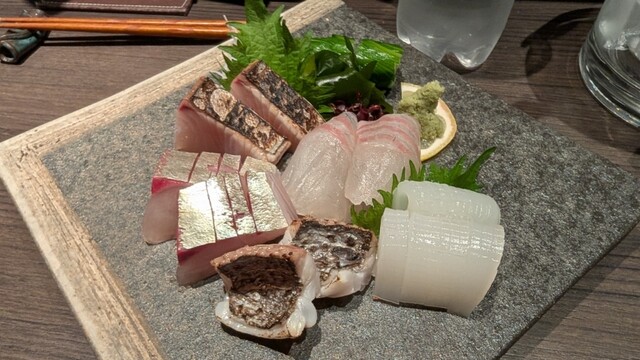
The room belongs to a specific Japanese dining grammar: low-volume, close-set, evening-focused, and built around the conversation between fish, sake, and the pace of a small izakaya. In Hiroshima, that format carries extra weight. This is a port city with oyster bars, okonomiyaki counters, department-store dining floors, bakery culture, and hotel restaurants all competing for attention, yet the serious izakaya remains one of the clearest ways to read local appetite. Shusai Takenoshita sits in that tradition rather than outside it.
The distinction matters because “izakaya” is often flattened in English into a drinking spot with snacks. In Japan, the category ranges from inexpensive after-work rooms to chef-led counters where seafood, regional produce, and sake are handled with the seriousness of a kappo meal. Tabelog’s 100 Izakaya WEST selection in 2025, with earlier selections in 2024 and 2022, places this restaurant in the latter conversation: not formal kaiseki, not a free-for-all tavern, but a compact dining room where the drinking culture is inseparable from the cooking.
Hiroshima's izakaya culture, viewed through fish and sake
Hiroshima’s food identity often gets exported through okonomiyaki and oysters, but its everyday dining culture is broader and less slogan-ready. The city’s central wards are full of small second-floor rooms, counter-led kitchens, and restaurants where seafood sets the pace of the evening. That context explains why a fish-focused izakaya can feel more locally revealing than a grand dining room: the format encourages sequence, repetition, and pairing rather than a single set-piece dish.
Here, the published category signals are precise enough to matter: izakaya, seafood, and Japanese cuisine, with drinks spanning sake, shochu, and wine. That combination puts the restaurant in a different lane from casual beer-and-fry operations. The emphasis is on food that can carry alcohol without becoming secondary to it, and on drinks that belong to the meal rather than a separate bar program. For travelers used to Tokyo’s high-polish omakase counters, Hiroshima’s small izakaya tier can feel less theatrical and more practical. The achievement is measured in restraint, sourcing, and rhythm.
The Tatemachi area strengthens that reading. Central Hiroshima compresses shopping streets, tram stops, office blocks, and small dining rooms into a walkable evening circuit. Nearby, ANDERSEN reflects another side of the city’s food identity, one tied to bakery culture and European influence, while Akai (Creative Cuisine) represents the more contemporary chef-driven register. The point is not that these rooms compete directly. It is that Hiroshima rewards diners who look past a single signature dish and treat the city as a set of overlapping formats.
A small-room format with serious selection signals
Tabelog’s Hyakumeiten lists are useful because they reward category strength rather than only luxury cues. Selection for Izakaya WEST says something different from a Michelin star or hotel-restaurant award: it points to consistency inside a vernacular form. Shusai Takenoshita has appeared in that selection across multiple years, which gives the listing more weight than a single-cycle mention. In a category crowded with local regulars and price-sensitive drinking rooms, repeat recognition suggests a stable reputation among diners who know the format.
The restaurant’s scale also shapes the experience. A small izakaya is not merely an intimate version of a larger restaurant; it changes the operating logic. Tables turn with less elasticity, the room has fewer ways to absorb late arrivals, and the kitchen’s pacing becomes part of the meal. That is why this kind of place often suits pairs or small groups better than celebratory parties. It also explains why the category can be difficult for visitors: the pleasures are cumulative, not always obvious from a menu translation or a photograph.
Within Hiroshima, that seriousness occupies a middle ground. It is more food-driven than a casual standing bar and less ceremony-heavy than a tasting-menu restaurant. Compared with ANDERSEN, where the dining identity is broader and more daytime-accessible, this is an evening izakaya proposition. Compared with an inexpensive okonomiyaki stop such as Okonomiyaki Junior, it asks the diner to commit to a fuller sit-down rhythm. That difference is not hierarchy; it is use case. Hiroshima is better when those categories are kept distinct.
Where it fits in a Hiroshima dining plan
The restaurant makes the most sense for travelers who want a Japanese evening built around seafood and drinks rather than a checklist meal. It is also a corrective to the idea that Hiroshima dining begins and ends with teppan counters. The city’s better small izakaya rooms show how local dining culture works after office hours: fish, sake, shochu, quiet pacing, and a room where the cooking has enough discipline to support a long evening without turning formal.
For a broader itinerary, pair this kind of dinner with other Hiroshima registers rather than trying to rank them against one another. Bishu Bikou Hamai points toward another local dining route, while CHILAN and Butter Cake no Nagasaki Do broaden the map beyond the dinner table. For citywide planning, use Our full Hiroshima restaurants guide, then layer in Our full Hiroshima hotels guide, Our full Hiroshima bars guide, Our full Hiroshima wineries guide, and Our full Hiroshima experiences guide for the rest of the trip.
Readers building a wider Japan file can also compare how regional casual formats travel: -Grilled beef Sukiyaki- KAMAKURA TANUKIAN 鎌倉 たぬき庵 in Kamakura,. 鮪と炭火焼き うお炭 秋葉原店 in Tokyo,.cafe in Osaka,.know in Kumamoto, (Shoku) Vietnam in Kawasaki, and [Curry Senmon Ten] Maruyama Kyoju. in Sapporo each show a different relationship between everyday food and place. Outside Japan, Jōdo Saké Bar in Los Angeles and Onigiri Time in Pasadena underline how Japanese formats change once they enter a diaspora dining context.
The editorial call is simple: Shusai Takenoshita is for diners who value the izakaya as a serious cultural form, not as a pre-dinner stop. Its recognition, fish-led category, and small-room scale make it a strong read on Hiroshima’s quieter dining strengths, especially for travelers willing to let the evening unfold through Japanese drinks and seafood rather than through spectacle.
Price Lens
Side-by-side context: comparable cuisine and price.
| Venue | Cuisine | Price | Awards | Notes |
|---|---|---|---|---|
| Shusai TakenoshitaThis venue — the venue you are viewing | $$$ | , | ||
| Takanobashi Kiyotan | $$$ | Naka, Traditional Japanese Izakaya with Omakase | ||
| Shunrai | Naka, Teppanyaki Steak & Seafood | $$$ | , | |
| ハナワイン | Naka, Japanese Wine Bar | $$ | , | |
| Tyra Restaurant | Naka, Cafe with Japanese fusion | $$ | , | |
| Chisou Sottakuito (馳走啐啄一十) | Fujimicho, Naka Ward, Kaiseki | $$$$ | , |
Continue exploring
More in Hiroshima
Restaurants in Hiroshima
Browse all →
Bars in Hiroshima
Browse all →
At a Glance
- Cozy
- Intimate
- Hidden Gem
- Classic
- Sophisticated
- Date Night
- Casual Hangout
- After Work
- Solo
- Special Occasion
- Standalone
- Sake Program
- Local Sourcing
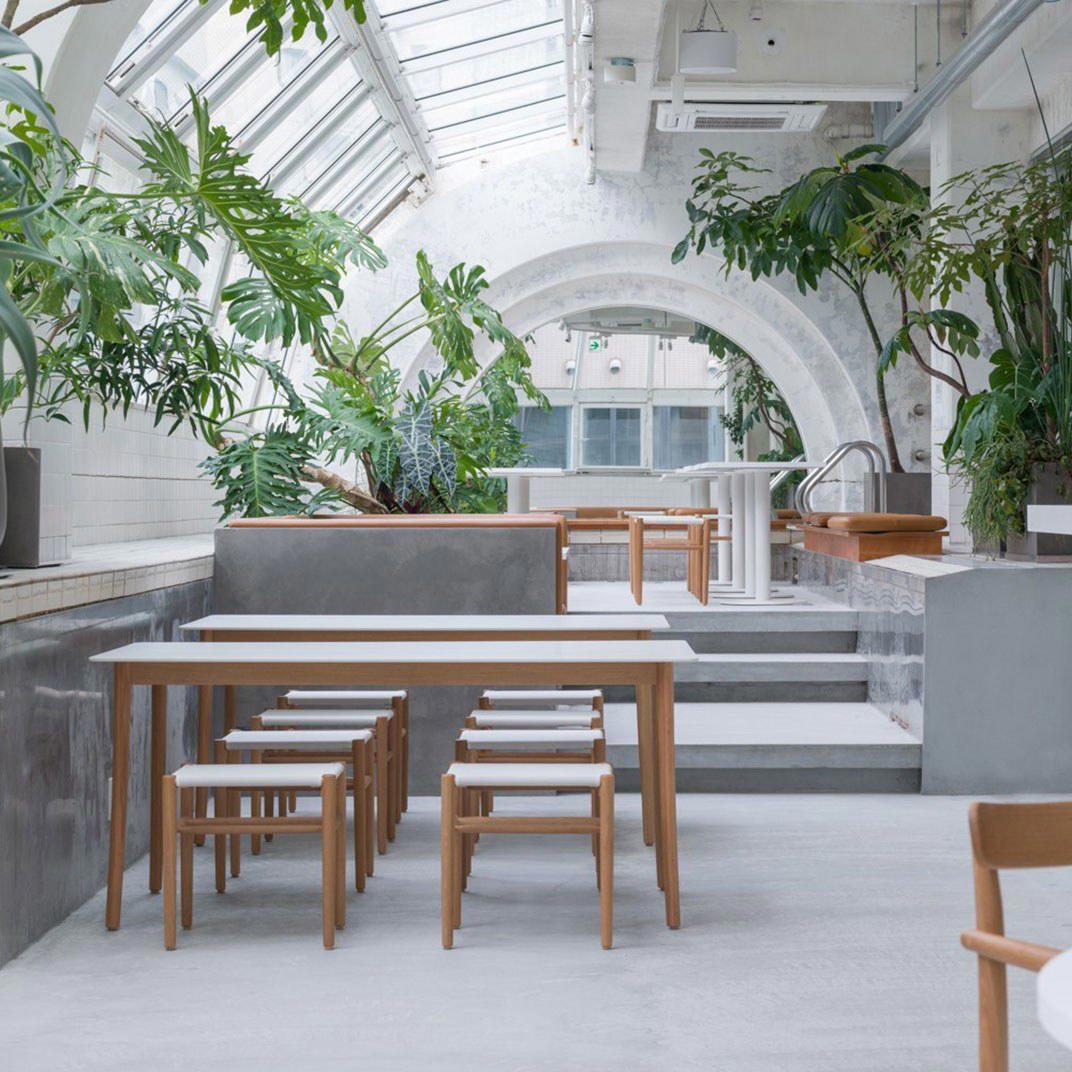
Small, non‑smoking second‑floor izakaya with a stylish yet relaxed and calm atmosphere, limited counter and table seating, and a quiet hideout feel suited to dates and small groups of friends.