
Michelin Bib Gourmand
Our verdict
A Michelin Bib Gourmand French restaurant in Kyoto's Shimogyo Ward, Asperge Blanche strips traditional French cooking to its essentials, with Bincho charcoal threading through the kitchen even into the bread. The antiques-accented interior, assembled from flea market finds, creates a setting that feels closer to a Lyonnaise bouchon than a contemporary Franco-Japanese fusion address. Spring brings white asparagus, the dish the name promises.

Pearl is the En Primeur Club membership app, where members save venues, book tables and use the concierge.
The menu
What to order
- Sakura Sea Bass
- Miso Glazed Duck Breast
A Different Kind of French in Kyoto
Kyoto's restaurant scene has long attracted Western chefs drawn to the city's ingredient culture, its seasonal discipline, and its artisan networks. Most arrive and pivot: they fold dashi into their sauces, reframe their menus around kaiseki's seasonal logic, and market the resulting fusion as a natural dialogue between two traditions. Asperge Blanche, in Shimogyo Ward, takes the opposite approach. Chef Éric Bouchenoire cooks traditional French cuisine here, arrangements stripped to their essentials so that the flavours of the ingredients carry the work. There is no visible negotiation with local culinary forms. The restraint is of a specifically French variety.
That position is increasingly rare in a city where French restaurants tend to occupy one of two poles: the high-format Franco-Japanese tasting menu at the ¥¥¥¥ tier, or the casual neighbourhood bistro. Asperge Blanche sits at ¥¥¥ pricing, an accessible mid-tier confirmed by its 2025 Michelin Bib Gourmand recognition, which the guide awards to restaurants offering notably good cooking at moderate prices. For context, the Bib Gourmand designation places it in a different bracket from Kyoto's starred French addresses while drawing a clear distinction from the city's more casual Western options. The rating is not a consolation prize; it reflects a specific editorial judgment about value-to-quality ratio that many diners find more useful than a star count alone.
The Room Itself
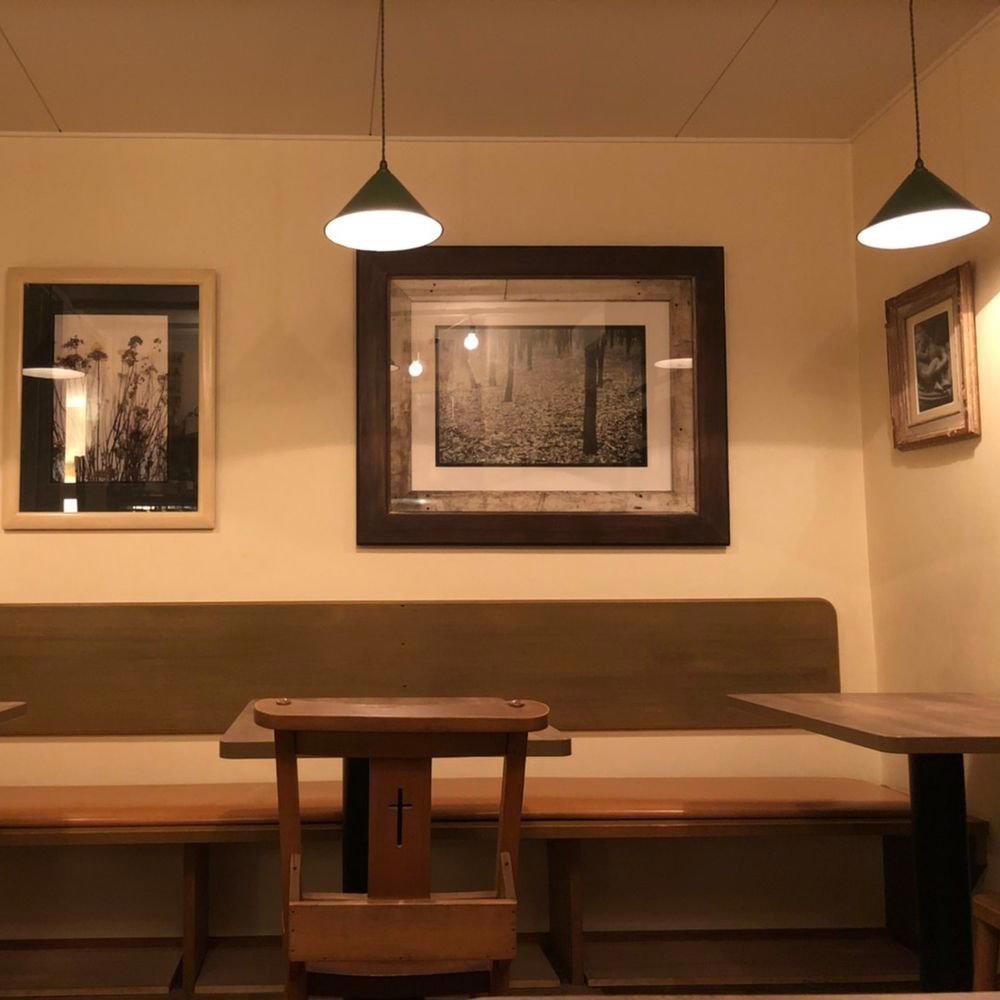
White is the keynote of the interior, which is accented with antiques sourced from flea markets rather than commissioned from a design firm. The effect is accumulative rather than curated: sundries collected over time, arranged with enough care to feel intentional without feeling staged. A pendant light provides warm, concentrated illumination, the kind that makes a small room feel settled rather than dim. In a city where restaurant interiors often signal either traditional Japanese restraint or contemporary European minimalism, the Asperge Blanche room occupies an older European register, closer in spirit to the kind of address you find in Lyon's back streets or in Paris's less-fashionable arrondissements than to the design-forward French restaurants that have opened in Kyoto and Tokyo over the past decade.
The name itself encodes the kitchen's priorities. Asperge blanche is French for white asparagus, and the spring speciality needs no further advertisement once you know the translation. White asparagus has a different cultural weight in France than the green variety that dominates in Japan and the United States: it is a marker of seasonal seriousness, of cooking that pauses and reorganises around one ingredient when the calendar demands it. A kitchen that names itself after a seasonal ingredient is making a statement about how it thinks time and produce relate to each other.
Technique and the Bincho Factor
The detail that distinguishes Bouchenoire's approach from standard French-in-Japan execution is the use of Bincho charcoal. In Kyoto, Binchotan charcoal is associated primarily with yakitori and kaiseki grilling traditions. Its use in a French kitchen is less common and carries different implications: Bincho burns hotter and cleaner than most Western charcoal, produces minimal smoke, and holds its temperature with unusual consistency. Baking bread with it rather than in a conventional deck oven changes the crust formation and the internal temperature profile. It is a technical choice, not a gesture toward local colour. The fact that the chef's use of Bincho extends into the bread rather than only into the main courses suggests it is structurally embedded in the kitchen's method, not deployed for effect.
Traditional French technique anchored to exceptional raw ingredients, applied with minimal intervention, is the logic that runs through France's highest-regarded regional restaurants. The same logic appears in the Michelin notes for Asperge Blanche: stripped arrangements, ingredient-forward flavour, Bincho as a tool rather than a narrative device. For comparison, L'Effervescence in Tokyo operates at a starred level with a more explicitly Japanese-informed seasonal framework, while Hotel de Ville Crissier in Crissier represents the French tradition at its most formally classical. Asperge Blanche sits between those registers: formally French, locally grounded in ingredient sourcing and technique, without announcing that tension as its subject.
Kyoto's French Restaurant Tier
Among Kyoto's French addresses at the mid-to-upper mid tier, Asperge Blanche occupies a distinct position. Droit and la bûche offer points of comparison within the city's French offering, while La Biographie takes a more contemporary approach to the French-in-Kyoto premise. anpeiji and Hiramatsu Kodaiji represent higher-format French dining at the ¥¥¥¥ level, where the pricing structure and tasting menu formats are closer to Kyoto's kaiseki tier than to the accessible mid-range. The Bib Gourmand at Asperge Blanche positions it as the option for a diner who wants serious French cooking without the formality or the price commitment that the starred addresses require.
For those building a wider Japan itinerary around serious cooking, the range of approaches to French cuisine across the country is worth noting. HAJIME in Osaka operates at the three-star level with a deeply considered ecological framework. akordu in Nara brings a Basque perspective to Yamato ingredients. The broader EP Club coverage of Japan's restaurant scene extends to Harutaka in Tokyo, Goh in Fukuoka, 1000 in Yokohama, and 6 in Okinawa.
Planning a Visit
Asperge Blanche is located at 313-2 Yokosuwancho in Shimogyo Ward, Kyoto, placing it in the southern central section of the city, accessible from Kyoto Station. The ¥¥ price designation indicates a mid-range spend per head by Kyoto standards, making advance planning more important for a sought-after Bib Gourmand address than the price point might suggest. Spring visits align with the white asparagus season that the restaurant's name foregrounds, and that timing is worth factoring into any Kyoto itinerary built around seasonal produce.
For a full picture of what Kyoto offers across dining, drinking, and accommodation, see our full Kyoto restaurants guide, our full Kyoto hotels guide, our full Kyoto bars guide, our full Kyoto wineries guide, and our full Kyoto experiences guide.
Frequently asked questions
What price level is Asperge Blanche?
Pricing at Asperge Blanche is listed as ¥¥.
What's Asperge Blanche's location?
Asperge Blanche is located at 313-2 Yokosuwancho, Shimogyo Ward, Kyoto, 600-8179, Japan, Kyoto.
A Credentials Check
| Venue | Cuisine | Price | Awards | Notes |
|---|---|---|---|---|
| Asperge BlancheThis venue (the venue you are viewing) | French Bistro with Japanese Influences | $50–100 | Michelin Bib Gourmand | Not listed |
| Gion Sasaki | Modern Kaiseki | $300–500 | 3 Michelin Stars · La Liste Top Restaurants | Kaiseki, Japanese |
| cenci | Innovative Italian-Japanese Fusion | $100–150 | 1 Michelin Star · World's 50 Best #76 | Italian |
| Ifuki | Sumibi Kappo Kaiseki | $200–300 | 2 Michelin Stars · La Liste Top Restaurants | Kaiseki |
| Kyokaiseki Kichisen | Kyoto Kaiseki | $200–300 | 2 Michelin Stars · La Liste Top Restaurants | Japanese |
| Kyo Seika | Modern Chinese Fine Dining | $150–200 | 1 Michelin Star · Tabelog Bronze #216 | Chinese |
Recognition history
Dated appearances from independent guides and award organizations, with the underlying list record or original source where available.
Michelin Bib Gourmand
Michelin
Full recognition history (3 entries)
Michelin Bib Gourmand
Michelin
Michelin Bib Gourmand
Michelin
Continue exploring
More in Kyoto
Restaurants in Kyoto
All restaurants in Kyoto →
Bars in Kyoto
All bars in Kyoto →
Hotels in Kyoto
All hotels in Kyoto →
Wineries in Kyoto
Browse all →
Details
- Cozy
- Intimate
- Elegant
- Classic
- Date Night
- Special Occasion
- Open Kitchen
- Sake Program
- Local Sourcing
- Organic
- Prix Fixe
- Set Menu
- Wine
Current opening hours
- Monday
- 6–10 PM
- Tuesday
- Closed
- Wednesday
- 6–10 PM
- Thursday
- 6–10 PM
- Friday
- 6–10 PM
- Saturday
- 6–10 PM
- Sunday
- 6–10 PM
Hours can change for holidays and private events. Hours as of .
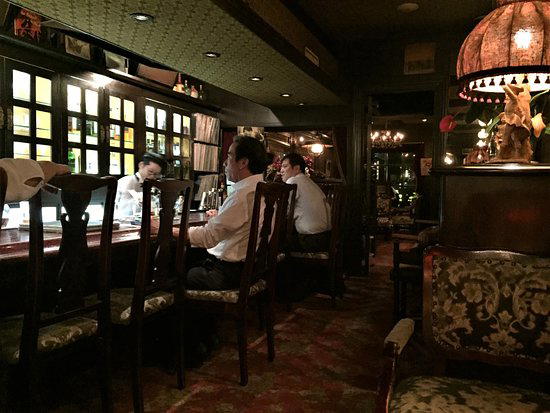
Warm glow from pendant lights in an antiques-accented interior evoking a Parisian bistro with cozy, quaint charm.