

A Michelin-starred French restaurant in Kyoto's Kamigyo Ward, La Biographie··· structures its tasting menu as a narrative arc, amuse-bouche built on five flavours, roast wagyu in clear beef-jus sauce, and a Japanese close through soba. The kitchen's light-touch approach and zero-waste vegetable soup signal a kitchen thinking beyond technique toward meaning. Rated 4.5 on Google from early reviewers.
Pearl is the En Primeur Club membership app — saves, bookings, and concierge access live there. Same editors, same standards.
- Address
- Japan, 〒602-8163 Kyoto, Kamigyo Ward, Tanakacho, 422-1 セントガーデン 1F
- Phone
- +81 75-823-6005
- Website
- la-biographie.info
- Directions
- Get directions
 Saves & bookings on Pearl
A French Table That Reads Like a Story
Kamigyo Ward sits north of Kyoto's tourist core, where the density of machiya townhouses and neighbourhood shrines keeps things quieter than Gion or the station district. Walking toward La Biographie···, you pass the kind of low-rise residential blocks that suggest a restaurant found here by intention rather than convenience. The entrance, inside a building called Saint Garden on Tanakacho street, is low-key against its surroundings. This is not the Kyoto of lantern-lit alleys designed for photography. It is the Kyoto of considered, local decisions, a setting that primes a particular kind of diner before the first course arrives.
That context matters because the meal inside operates on a similar logic: nothing announces itself loudly, and the sequence of dishes rewards attention paid over time.
How the Menu Unfolds
French tasting menus in Japan have developed a distinct grammar over the past two decades. The leading examples do not simply replicate a Parisian model; they absorb Japanese seasonality, material restraint, and a sense of progression borrowed partly from kaiseki. La Biographie··· holds a Michelin star, placing it in a competitive tier that includes fellow one-star French and European tables in Kyoto such as Droit and la bûche. Within that field, the kitchen here has staked a specific position: light in technique, deliberate in sequence, and structured around the idea that a meal should accumulate meaning as it moves forward.
The amuse-bouche sets the terms early. Five flavours are the stated theme, arriving as a medley of finger foods with a playful register that signals the kitchen is not interested in solemnity for its own sake. In French fine dining broadly, the amuse-bouche functions as an overture, a compressed statement of what is to come. Here, the five-flavour frame draws on a concept present across East Asian culinary thought: sweet, sour, salty, bitter, and umami as a complete map of taste. Using that structure at the opening of a French meal is a small but legible editorial act.
The wagyu course that follows demonstrates what the kitchen means by its light approach. Roast wagyu arrives in a clear sauce built from beef juices, a preparation that prioritises transparency over reduction, allowing the meat's own character to read cleanly. In a city where Kyoto beef and premium wagyu appear on many high-end menus, the choice to work with restraint rather than richness is a meaningful one. Compare this to the more intensified French-Japanese beef preparations at restaurants like HAJIME in Osaka, where the kitchen builds complexity through layered technique. La Biographie··· moves in the opposite direction: reduction of interference rather than accumulation of it.
The Close: Where Japan Re-enters
One of the structural questions any French restaurant operating in Japan must answer is how the meal ends. A classical French progression would close with cheese, then a sweet course. Several Kyoto French tables leave the Japanese context behind once the amuse-bouche is past. La Biographie··· makes a different choice: the meal concludes with soba.
This is not a garnish or a fusion gesture. Soba as a closing course connects to a Japanese tradition of ending a meal with something clean, grain-based, and settling. The specific preparation described in the kitchen's documentation adds another dimension: a soup made from vegetable cut ends is poured into the bowl. The technique converts byproduct into broth, adding depth while eliminating waste. As a piece of culinary logic, it is compact: the zero-waste impulse produces a more interesting dish, not a lesser one. This kind of outcome, where a sustainability instinct and a flavour decision converge, is increasingly common among France's restraint-led kitchens and among the more thoughtful Japanese-French tables. The kitchen at the restaurant appears to have arrived at it through its own reasoning.
For context on how other Japanese cities handle the French-Japanese close, L'Effervescence in Tokyo has long structured its menus around a zero-waste philosophy that similarly treats the final courses as a philosophical statement rather than a formality. The comparison is instructive: these are not isolated instincts but part of a broader shift in how serious French kitchens in Japan conceptualise the end of a meal.
Kyoto's French Tier in 2024
Kyoto's Michelin-starred French scene is smaller and more coherent than Tokyo's. Where Tokyo has dozens of French tables spread across multiple price points and styles, Kyoto's French restaurants tend to cluster at the summit end of the price tier, operating as serious destination dining rather than neighbourhood options. The restaurant, at the ¥¥¥¥ price level, positions itself alongside the city's kaiseki tables in terms of commitment and investment required from the diner. It is a direct peer of anpeiji and MOKO in terms of the tier it occupies.
The Michelin star is especially recent public credential attached to the restaurant. For comparison, the kaiseki tables in Gion and Higashiyama accumulate reviews at a faster rate simply due to footfall patterns. Restaurants in residential wards tend to build their audiences more slowly and through more targeted channels.
For those calibrating Kyoto French against broader Japan, akordu in Nara represents a similar impulse of European technique rooted in Japanese materials and sensibility, while Goh in Fukuoka demonstrates how that conversation plays out in a different regional context. Outside Japan, Hotel de Ville Crissier in Crissier remains a reference point for what formal French tasting menus look like at their most rigorous, against which Japanese adaptations can be measured.
Kyoto's full dining picture extends well beyond French. For kaiseki and Japanese formats, Hiramatsu Kodaiji offers French-Japanese fusion at a different register, and the city's wider restaurant scene is covered in our full Kyoto restaurants guide.
Know Before You Go
- Address: Tanakacho 422-1, Saint Garden 1F, Kamigyo Ward, Kyoto 602-8163
- Cuisine: French tasting menu with Japanese close
- Price level: ¥¥¥¥
- Recognition: Michelin 1 Star (2024) 5 / 5 (47 reviews)
- Booking: Reservation essential
- Getting there: Kamigyo Ward is north of the Imperial Palace grounds
- Leading timing: As a tasting-menu format, allow a full evening; seasonal changes to the menu are likely, so proximity to seasonal transitions (spring, autumn) may yield particularly compositionally varied meals
Peers in This Market
Comparable venues nearby, for context on price, style, and recognition.
| Venue | Cuisine | Price | Notes |
|---|---|---|---|
| La Biographie···This venue — the venue you are viewing | Modern French with Japanese Influences | $$$$ | Not listed |
| Doppo | Modern Kaiseki | $$$$ | Kita |
| Noguchi Tsunagu | Modern Kaiseki | $$$$ | Higashiyama |
| Jean-Georges at The Shinmonzen | Contemporary French-Asian Fusion | $$$$ | Higashiyama |
| Tozentei | Traditional Kyoto Kaiseki | $$$$ | Kita |
| Gosho Iwasaki | Michelin-Starred Kyoto Kaiseki | $$$$ | Nakagyō |
Recognition history
Dated appearances from independent guides and award organizations, with the underlying list record or original source where available.
Michelin 1 Star
Michelin
Tabelog 100 #76 · No. 76
Tabelog · Tabelog 100 - French - WEST - 2025
Michelin 1 Star
Michelin
Continue exploring
More in Kyoto
Restaurants in Kyoto
Browse all →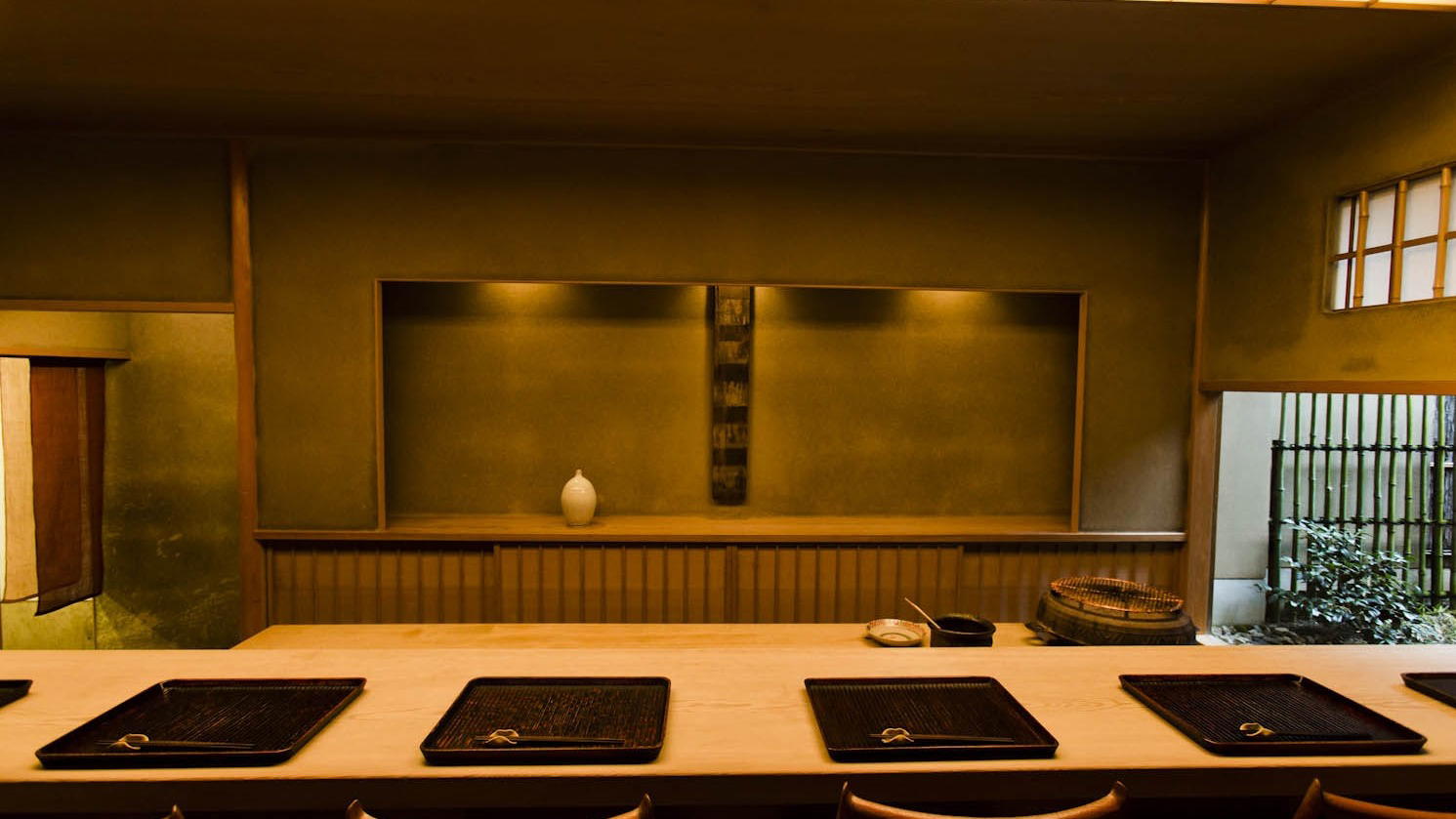
Bars in Kyoto
Browse all →
Hotels in Kyoto
Browse all →
Wineries in Kyoto
Browse all →
At a Glance
- Elegant
- Sophisticated
- Intimate
- Classic
- Date Night
- Special Occasion
- Chefs Counter
- Open Kitchen
- Sake Program
- Local Sourcing
- Garden
Current opening hours
- Monday
- 12–2 PM, 6–9 PM
- Tuesday
- 12–2 PM, 6–9 PM
- Wednesday
- 12–2 PM, 6–9 PM
- Thursday
- 12–2 PM, 6–9 PM
- Friday
- 12–2 PM, 6–9 PM
- Saturday
- 12–2 PM, 6–9 PM
- Sunday
- 12–2 PM, 6–9 PM
Hours can change for holidays and private events. Last verified .
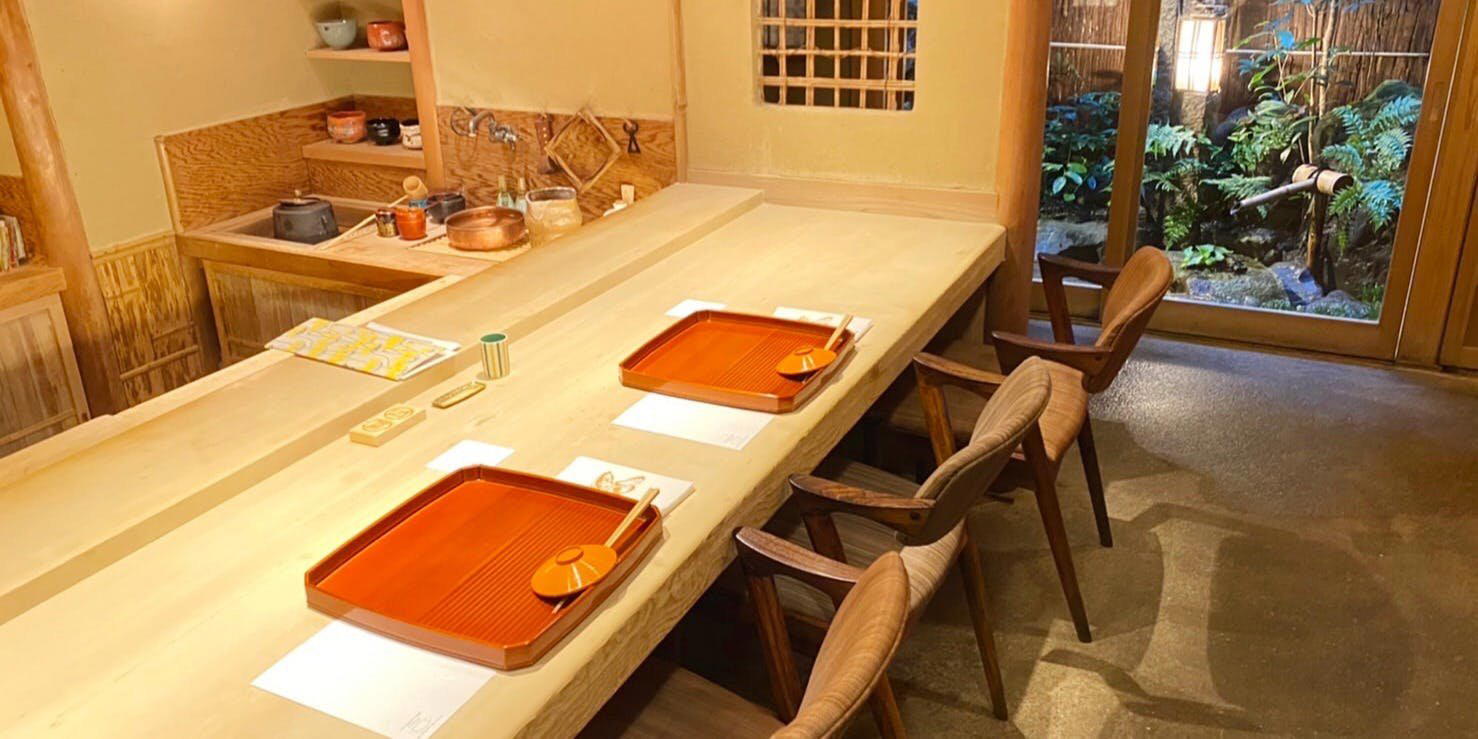
Simple, stylish L-shaped counter surrounding a clean open kitchen with wooden elements, creating an elegant and focused atmosphere.