Michelin Bib Gourmand
Our verdict
A Michelin Bib Gourmand holder in Shimogyo Ward, DEUX FILLES applies classical French technique to Kyoto's vegetable-forward produce culture. Owner-chef Daisuke Iwata sources from markets in Kameoka and Kamigamo, composing plates built around déclinaison, a single ingredient rendered as sauté, sauce, and powder within one dish. The 30-vegetable salad remains the anchor of a menu priced accessibly for its technical ambition.

Pearl is the En Primeur Club membership app, where members save venues, book tables and use the concierge.
Where Kyoto's Produce Culture Meets French Discipline
Shimogyo Ward sits south of the central tourist corridor, a district of narrow residential streets and low-profile shopfronts where the city's daily rhythm is easier to read than in Gion or Higashiyama. It is the kind of neighbourhood where a chef-owner makes a considered choice to settle: rents are lower, foot traffic is local, and the clientele that finds you tends to come deliberately. DEUX FILLES occupies this register, a small French address on Ayazaimokucho that draws diners from across the city rather than capturing passing trade.
The broader context matters here. Kyoto's Western restaurant scene has developed in a specific direction over the past decade, shaped partly by the city's exceptional vegetable supply and partly by a generation of chefs who trained in French or Italian kitchens and returned with technique intact but a desire to reframe it through local materials. That trajectory sits at the centre of what makes DEUX FILLES legible as a Kyoto restaurant rather than simply a French one.
The Logic of Déclinaison in a Vegetable-Rich City
Classical French cooking has always been ingredient-centred in theory, but the specific technique of déclinaison, taking a single ingredient and presenting it simultaneously as sauté, sauce, and powder within a single dish, tends to appear most meaningfully where the ingredient itself is strong enough to sustain the multiplied attention. In Kyoto, that condition is easily met. The city's vegetable culture, sustained by specialist growers in areas like Kameoka and Kamigamo, produces material with enough depth of flavour to reward rather than merely survive that kind of technical interrogation.
Owner-chef Daisuke Iwata applies the déclinaison approach at DEUX FILLES in a way that the Michelin inspectors have recognised in consecutive years, awarding Bib Gourmand status in both 2024 and 2025. The Bib Gourmand designation, awarded for cooking of notable quality at moderate prices, positions DEUX FILLES in a specific tier of Kyoto's Western dining: technically serious but financially accessible, which in this city, where kaiseki can reach ¥¥¥¥ and multi-starred French rooms like Hiramatsu Kodaiji occupy the high end, constitutes a meaningful distinction.
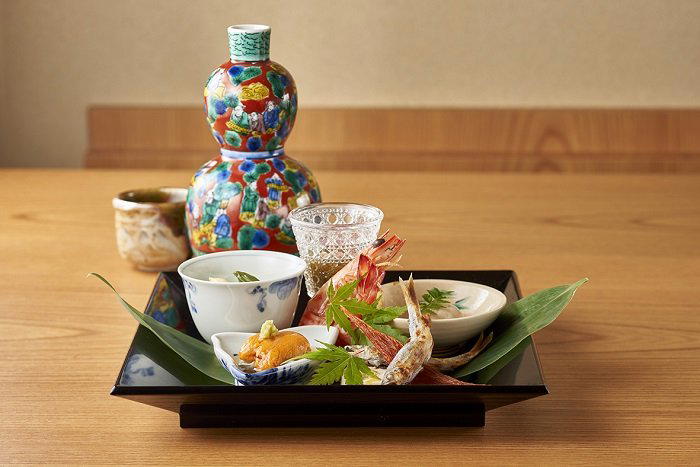
The white plate as compositional canvas is a deliberate formal choice, one familiar from French nouvelle cuisine but applied here with a different governing logic. Rather than minimalism for visual effect, the restraint of the plate serves to focus attention on chromatic variety, vegetables sourced personally by Iwata providing the colour rather than any decorative flourish. The 30-variety salad that has become a signature of the restaurant demonstrates this clearly: it is not a salad in the casual sense but a structured argument about what Kyoto's growing regions can produce across a season.
Tension and Synthesis: Modern French in Kyoto
The tension between classical French technique and contemporary re-framing is not unique to DEUX FILLES. Across Japan, a number of French-trained chefs have spent the past two decades working through the question of how a European culinary grammar applies when the primary materials are Japanese. L'Effervescence in Tokyo operates at a higher price tier and with a different scale of ambition, but navigates adjacent conceptual territory. HAJIME in Osaka represents a more radical formal departure from French tradition, while Kyoto's own Droit and la bûche work in broadly overlapping territory.
At ¥¥, it operates below the threshold where the French-in-Kyoto question typically gets discussed by critics. That pricing decision implies something about format and portion logic: the generous vegetable portions noted in the restaurant's own framing are not incidental but structural, a way of making the technical programme financially viable without reducing it. Feeding people well at moderate cost while maintaining the integrity of a French-trained approach is harder than it sounds in a city where premium ingredients command premium prices at the wholesale level.
For broader comparison, La Biographie and anpeiji also work in Kyoto's Western dining space, each with their own relationship to local produce and French or European frameworks. The city's appetite for this kind of cooking, European in method, Kyoto in material, has proven durable, sustained by a local dining culture that appreciates formal precision without requiring it to come at high-end pricing.
Placing DEUX FILLES in Kyoto's Wider Dining Context
Kyoto's dining identity is shaped primarily by kaiseki: the city has more Michelin-starred kaiseki rooms per capita than anywhere else in Japan, and the kaiseki logic of seasonality, restraint, and local produce has long set the benchmark against which other cuisines in the city are implicitly measured. That Western chefs here have absorbed and responded to that logic, rather than operating in parallel to it, is visible in how French restaurants in Kyoto tend to foreground vegetables and seasonal produce in ways that French restaurants in Tokyo or Osaka do not always prioritise to the same degree.
DEUX FILLES fits that Kyoto-specific pattern directly. The emphasis on personally sourced vegetables from named growing districts, the seasonal responsiveness implied by a menu that changes with what Iwata finds at market, and the structural use of local produce as the compositional core rather than as garnish, these are choices shaped by the city's dominant culinary tradition as much as by any French technical framework. The result is a restaurant that reads as genuinely local despite its European genre, which is no small thing in a city where authenticity is a high bar.
For comparison, the kaiseki rooms that define Kyoto's high end, including Hiramatsu Kodaiji at the premium tier, operate on a different economic model entirely. DEUX FILLES does not compete with them directly; it occupies a different value register while drawing on the same ingredient culture. The Bib Gourmand from Michelin across consecutive years signals that this positioning is understood and appreciated by the guide's assessors, who tend to weight accessible pricing alongside cooking quality in awarding that specific designation.
Further afield, the broader Japan French dining scene includes addresses like akordu in Nara, which works European technique against a different regional produce palette, and Goh in Fukuoka, where the relationship between Japanese ingredients and Western frameworks takes yet another form. Each of these represents a distinct answer to the same underlying question. DEUX FILLES' answer is Kyoto-specific: generous, vegetable-led, technically grounded, and priced to be used regularly rather than reserved for occasions.
Planning a Visit
The restaurant sits at 199-2 Ayazaimokucho in Shimogyo Ward, a walkable distance from central Kyoto's main transport connections. At ¥¥ pricing, DEUX FILLES falls well within reach for most itineraries, and the Bib Gourmand recognition means tables are in demand: booking ahead is advisable, particularly for weekend evenings. Hours and booking method are not published centrally, so contacting the restaurant directly or arriving in person to enquire is the practical approach. Given the scale typical of Shimogyo neighbourhood addresses, the room is likely small enough that walk-in availability at peak times is limited. For broader Kyoto planning, the full Kyoto restaurants guide, hotels guide, bars guide, wineries guide, and experiences guide cover the wider city in detail. Those extending the French dining thread beyond Kyoto might consider Hotel de Ville Crissier in Crissier for a point of classical European comparison, or 1000 in Yokohama and 6 in Okinawa for how different Japanese cities approach similarly ambitious formats at accessible price points. Harutaka in Tokyo represents a different genre entirely but occupies a comparably precise relationship between technique and Japanese material.
Frequently asked questions
Is DEUX FILLES a family-friendly restaurant?
The ¥¥ pricing makes DEUX FILLES accessible by Kyoto dining standards, which works in favour of families watching spend. Iwata's vegetable-centred plates, including a salad built from 30 varieties sourced around Kameoka and Kamigamo, tend to appeal broadly across age groups. That said, the Bib Gourmand recognition signals a considered dining room rather than a casual drop-in, so very young children may find the pace slow.
How would you describe the vibe at DEUX FILLES?
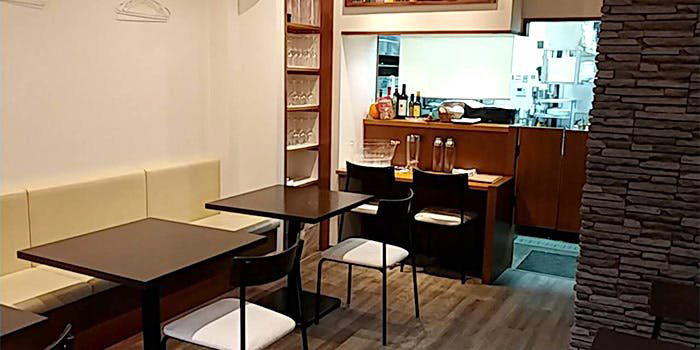
Think neighbourhood French rather than formal gastronomy: a Shimogyo Ward address in a district of low-profile shopfronts, ¥¥ pricing, and cooking built around the seasonal produce Daisuke Iwata selects himself at local markets. The Michelin Bib Gourmand, held in both 2024 and 2025, confirms the kitchen's seriousness without the stiffness of a starred room.
Is DEUX FILLES award-winning?
DEUX FILLES has received recognition including: Owner-chef Daisuke Iwata bills his fare as ‘modern French’. His purpose in using generous portions of vegetables is to showcase the bounty of Kyoto. The salad with 30 kinds of vegetables is a perennial favourite. Selecting a white plate as ….
What do regulars order at DEUX FILLES?
The salad featuring 30 kinds of vegetables is documented as a perennial favourite, drawing on produce Iwata sources personally from Kameoka and Kamigamo. The kitchen's signature approach, déclinaison, takes a single ingredient and presents it simultaneously as sauté, sauce, and powder in one dish, and that technique appears across the menu as a recurring draw for returning guests.
What cuisine category does DEUX FILLES fall under?
What price level is DEUX FILLES?
Pricing at DEUX FILLES is listed as ¥¥.
Cuisine Lens
| Venue | Cuisine | Price | Awards | Notes |
|---|---|---|---|---|
| DEUX FILLESThis venue (the venue you are viewing) | Modern French with Kyoto Vegetables | $50–100 | Michelin Bib Gourmand | Not listed |
| Gion Sasaki | Modern Kaiseki | $300–500 | 3 Michelin Stars · La Liste Top Restaurants | Kaiseki, Japanese |
| cenci | Innovative Italian-Japanese Fusion | $100–150 | 1 Michelin Star · World's 50 Best #76 | Italian |
| Ifuki | Sumibi Kappo Kaiseki | $200–300 | 2 Michelin Stars · La Liste Top Restaurants | Kaiseki |
| Kyokaiseki Kichisen | Kyoto Kaiseki | $200–300 | 2 Michelin Stars · La Liste Top Restaurants | Japanese |
| Kyo Seika | Modern Chinese Fine Dining | $150–200 | 1 Michelin Star · Tabelog Bronze #216 | Chinese |
Recognition history
Dated appearances from independent guides and award organizations, with the underlying list record or original source where available.
Michelin Bib Gourmand
Michelin
Full recognition history (3 entries)
Michelin Bib Gourmand
Michelin
Michelin Bib Gourmand
Michelin