
A Michelin one-star French restaurant in Kyoto's Fushimi Ward, anpeiji applies southern French technique to high-quality Japanese ingredients, with a distinctive preference for olive oil over butter that defines the kitchen's lighter register. Edible flowers, citrus, and seasonal herbs mark the plating.
Pearl is the En Primeur Club membership app — saves, bookings, and concierge access live there. Same editors, same standards.
- Address
- 56 Nakajimahinokamicho, Fushimi Ward, Kyoto, 612-8465, Japan
- Phone
- +81 50-1807-4044
- Website
- anpeiji.com
- Directions
- Get directions
 Saves & bookings on Pearl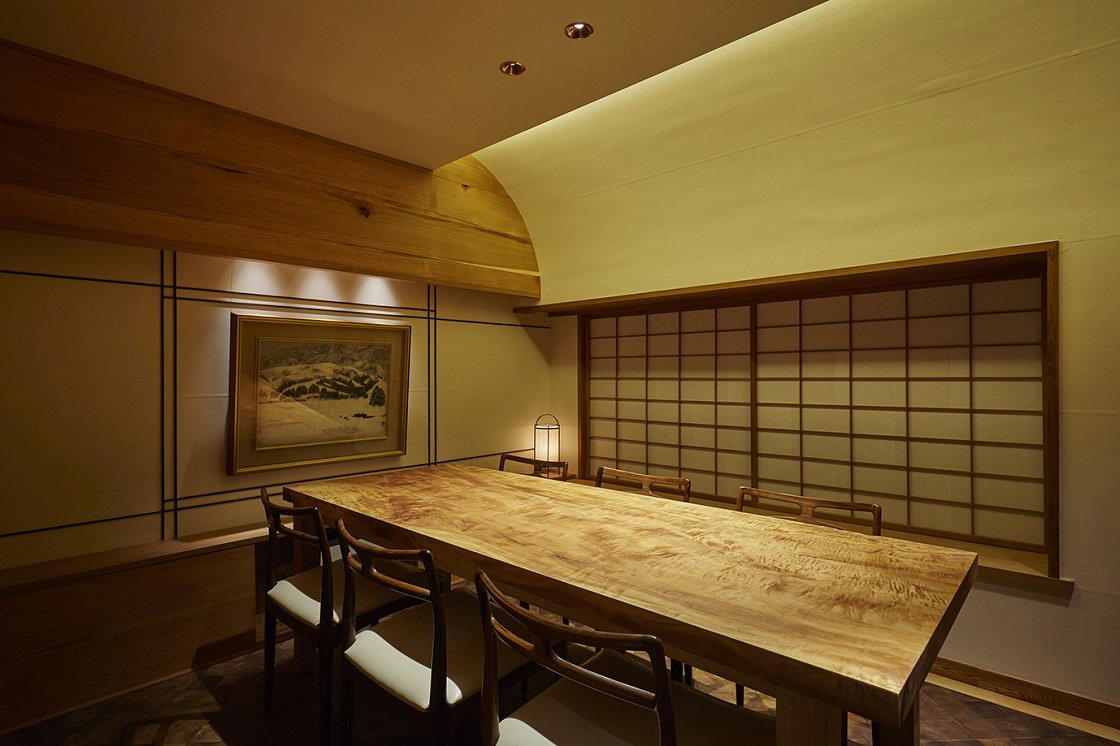
Southern France, Reinterpreted Through a Kyoto Lens
French cooking in Japan has followed two broad trajectories since the cuisine took root here in the postwar decades. One strand chases classical formality: heavy reductions, cream-based sauces, European produce imported at considerable expense. The other strand treats French technique as a framework, subordinating it to the quality of what the local market offers on any given morning. Fushimi Ward's anpeiji belongs firmly to the second tradition, and within that tradition it occupies a position made more coherent by the chef's specific southern French training.
The Provence and Languedoc coast runs on olive oil rather than butter, on the bright acids of citrus and tomato rather than the softening weight of cream. That preference has a logic beyond geography: it keeps fish flavours cleaner, lets vegetable textures speak, and allows the primary ingredient to remain the subject of the plate rather than being submerged in sauce. When that sensibility meets Kyoto's supplier ecosystem, a city whose proximity to the sea at Obama Bay and whose centuries of vegetable cultivation have made its produce market among the more varied in Japan, the result is a cooking register that has genuine coherence rather than novelty value.
Anpeiji earned a Michelin star in 2024, placing it in a growing cohort of Kyoto restaurants where European technique is applied with enough seriousness and local grounding to merit that recognition. For context, the one-star tier in Kyoto is competitive: la bûche and La Biographie··· occupy similar French-in-Kyoto territory at comparable price points, while MOKO and Droit represent adjacent creative European approaches. Anpeiji distinguishes itself through the specificity of its southern French reference point rather than a generalised French-Japanese fusion framing.
The Market Relationship and What It Produces on the Plate
The kitchen's emphasis on high-quality Japanese ingredients points to a sourcing approach where seasonal availability shapes the menu rather than a fixed programme designed months in advance. This is the structural reality behind French cooking that prioritises Japanese produce: the chef cannot simply order European staples as defaults. The menu is, in effect, a document of what the market could offer when it was written.
That dependency is also an advantage. Kyoto's kyo yasai tradition, the heritage vegetables cultivated in the city's surrounding districts, including kujo negi, Kamo eggplant, and Mizuno kabu, provides raw material with a depth of flavour that has accumulated over generations of selective cultivation. When these ingredients meet a kitchen that reaches for citrus and herbs rather than cream to finish a dish, the vegetable's character remains legible on the plate. Edible flowers and herbs function here not as decoration but as flavour signals, adding acidity or sweetness in the same role that a squeeze of lemon or a scatter of fresh thyme might play in a Provençal kitchen.
The plating aesthetic follows from the cooking philosophy. Colour is handled with precision: the described presentations are brilliantly coloured, which in practice reflects what happens when you build a plate around intact vegetables, fresh herbs, and citrus preparations rather than brown reductions and pale cream sauces. It is also a logical response to Kyoto's visual culture, where the relationship between season and colour is taken seriously across food, textiles, ceramics, and garden design.
Where Anpeiji Sits in Kyoto's French Dining Scene
Kyoto is not the first city that comes to mind for French cooking in Japan, that distinction typically goes to Tokyo, where French restaurants have accumulated Michelin density comparable to Paris. But Kyoto has a quieter, more ingredient-driven French scene that reflects the city's broader relationship with food: premium produce, restrained preparation, and an audience that reads seasonality without being told.
The city's French restaurants tend to lack the grand-room formality of Tokyo's upper-end French tables. Hiramatsu Kodaiji represents one end of that spectrum, bringing an established French group's format into a heritage Kyoto setting. Anpeiji in Fushimi operates at a different register: a neighbourhood location, a ¥¥¥ price tier that positions it as a serious but not extravagant commitment, and a cooking style that draws on a specific regional French tradition rather than the canon as a whole.
For diners moving across Japan's French dining scene more broadly, useful comparisons sit outside Kyoto. L'Effervescence in Tokyo represents the Tokyo end of the ingredient-driven French spectrum, operating at a higher price and award tier. HAJIME in Osaka takes French technique into a more conceptual register. Anpeiji's comparable set is closer to akordu in Nara, another regional Japanese city where European training is applied to local produce with genuine commitment, or to Hotel de Ville Crissier in Crissier as a reference point for what southern French classical discipline looks like at its most rigorous.
Getting There and Planning Your Visit
Anpeiji sits in Fushimi Ward at 56 Nakajimahinokamicho, a location that places it in the southern reaches of Kyoto, away from the central Gion and Higashiyama restaurant cluster where most visitors concentrate. Fushimi is more typically associated with sake brewing and the Fushimi Inari shrine than with fine dining, which means the restaurant draws a local and destination-specific crowd rather than passing tourist trade. This affects the atmosphere: it skews quieter, more deliberate, and more repeat-visitor-oriented than restaurants positioned near major sightseeing routes.
A review volume of 79 is modest for a Michelin-starred restaurant, which reinforces the sense that this is a venue operating somewhat outside the main tourist circuit despite its award recognition. Reservations would be advisable before travelling to Fushimi specifically for a meal here; the combination of limited seating implied by the review volume and the 2024 Michelin star means availability will not be casual. Confirming current reservation methods before visiting is the practical step.
The ¥¥¥ price tier places anpeiji in the mid-to-upper range for Kyoto dining without reaching the ¥¥¥¥ tier where kaiseki stalwarts like Goh in Fukuoka's category peers or Kyoto's own Gion Sasaki and Ifuki operate. It is a meaningful financial commitment but not a once-in-a-decade reservation in the way that the city's three-star kaiseki houses are. For visitors building a Kyoto itinerary around food, pairing anpeiji with a kaiseki experience gives a useful cross-genre picture of how Kyoto's ingredient culture translates across different culinary frameworks.
For restaurants in nearby cities, see 1000 in Yokohama and 6 in Okinawa for contrasting approaches to refined dining elsewhere in Japan. Harutaka in Tokyo provides another benchmark for the kind of focused, ingredient-led precision that anpeiji applies to a French context.
Price and Positioning
Comparable venues nearby, for context on price, style, and recognition.
| Venue | Cuisine | Price | Awards | Notes |
|---|---|---|---|---|
| anpeijiThis venue — the venue you are viewing | French | $$$$ | Michelin 1 Star | Not listed |
| La Biographie··· | Not listed | $$$$ | Michelin 1 Star | Kamigyō, Modern French with Japanese Influences |
| NAKATSUKA | Nakagyō, Contemporary French Omakase | $$$$ | Michelin 1 Star | Not listed |
| Kyoryori Fujimoto | Nakagyō, Traditional Kyoto Kaiseki | $$$$ | Michelin 1 Star | Not listed |
| Noguchi Tsunagu | Higashiyama, Modern Kaiseki | $$$$ | Michelin 1 Star | Not listed |
| Mirei | Nakagyō, Modern Kyoto Kaiseki A La Carte | $$$$ | Michelin 1 Star | Not listed |
Recognition history
Dated appearances from independent guides and award organizations, with the underlying list record or original source where available.
Michelin 1 Star
Michelin
Michelin 1 Star
Michelin
Continue exploring
More in Kyoto
Restaurants in Kyoto
Browse all →
Bars in Kyoto
Browse all →
Hotels in Kyoto
Browse all →
Wineries in Kyoto
Browse all →
At a Glance
- Elegant
- Intimate
- Sophisticated
- Cozy
- Special Occasion
- Date Night
- Celebration
- Open Kitchen
- Sake Program
- Local Sourcing
Current opening hours
- Monday
- 12–3 p.m., 6–10 p.m.
- Tuesday
- 12–3 p.m., 6–10 p.m.
- Wednesday
- Closed
- Thursday
- Closed
- Friday
- 12–3 p.m., 6–10 p.m.
- Saturday
- 12–3 p.m., 6–10 p.m.
- Sunday
- 12–3 p.m., 6–10 p.m.
Hours can change for holidays and private events. Last verified .
Unpretentious yet sophisticated atmosphere with modern clean design, open kitchen, warm hospitality, and calm private rooms.