Our verdict
Located in Nagoya's Higashi Ward, 茶亭 香楽 occupies a quieter register of the city's dining scene, the kind of address that rewards research over impulse. Visitors planning ahead will find the neighbourhood context and local dining patterns worth understanding before they go.

Pearl is the En Primeur Club membership app, where members save venues, book tables and use the concierge.
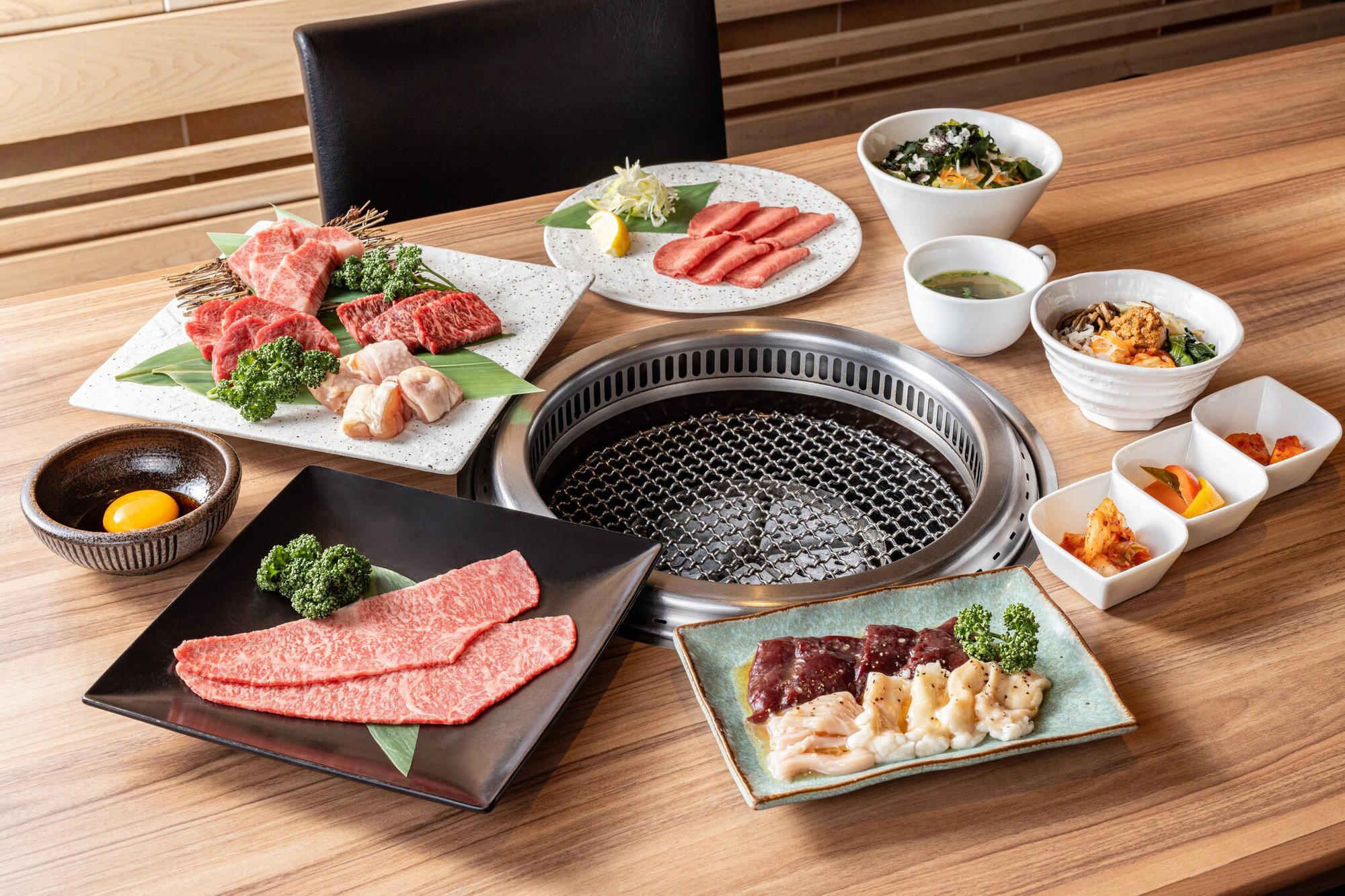
Higashi Ward and the Discipline of the Understated
Nagoya's Higashi Ward operates at a different frequency from the city's commercial centre around Sakae and Fushimi. The streets around Chikaramachi carry the texture of an older residential city: narrower, quieter, with the occasional noren curtain visible through a ground-floor window that signals a working kitchen rather than a storefront. This is the context in which 茶亭 香楽 exists. The address, 3 Chome-3 Chikaramachi, places it within a district where establishments tend not to advertise, where the assumption is that guests arrive already knowing what they are looking for.
That model is not unusual in Japan's mid-size cities. While Tokyo's reservation infrastructure has become increasingly navigable through platforms like Tableall or Omakase, and while Kyoto's leading rooms operate on waiting lists that are openly managed, Nagoya retains pockets of the older approach: venues with no website, no listed phone number in English-language directories, and no social presence, where the path to a table runs through local knowledge or persistent enquiry. 茶亭 香楽 fits that pattern precisely. For the visitor oriented to ease, this is a complication. For the visitor who has spent time understanding how Nagoya's dining culture actually works, it reads as a signal.
How Nagoya Approaches Dining Differently
Nagoya has a complicated relationship with national dining recognition. The city's food culture is genuinely distinct, anchored by hitsumabushi eel, miso-braised dishes, kishimen flat noodles, and a breakfast culture (morning sets in kissaten coffee shops) that has no real equivalent elsewhere in Japan, yet it has historically generated fewer Michelin stars per capita than Tokyo, Osaka, or Kyoto. That gap has narrowed in recent years, with the Michelin Guide covering Aichi Prefecture and surfacing both long-established kaiseki rooms and more specialist addresses. But it means that a significant tier of Nagoya dining operates outside formal award frameworks without that being a comment on quality.
Within that context, the tea-house register that 茶亭 香楽's name evokes carries its own cultural logic. The character 茶亭 (chatei) designates a space oriented around tea, often in a garden or traditional architectural setting, where the pace of service and the relationship between food and environment take precedence over menu ambition. These spaces exist in a tradition that predates restaurant culture as a western concept, and they are more common in cities with a preserved historical character, Kyoto and Kanazawa most obviously, but Nagoya has its own strain, quieter and less frequently discussed in travel writing. For comparable experiences in the broader region, Gion Sasaki in Kyoto represents the more celebrated end of traditional Japanese dining, while akordu in Nara shows how a different kind of deliberate, unhurried dining can function in a city that tourists pass through rather than stay in.
The Booking Problem, And Why It Matters Here
The editorial angle on 茶亭 香楽 is, candidly, the booking itself. That places it in a specific category of Japanese dining address: discoverable by those who engage with local-language sources, Japanese dining forums, or the kind of concierge relationships that actually matter in this country.
For travellers familiar with how this works at venues like Harutaka in Tokyo or destination-format rooms such as HAJIME in Osaka, the dynamic is recognisable: some of Japan's most carefully considered dining exists almost entirely outside the infrastructure that international visitors rely on. The gap between what is bookable through an app and what is actually worth eating in this country remains wider than most planning guides acknowledge.
Practically, the approach for 茶亭 香楽 should involve either Japanese-language enquiry through local directories, assistance from a hotel concierge with genuine Nagoya connections (not just a tourist hotel with a concierge desk), or the kind of introduction that comes from local contacts. Planning a trip to Nagoya and hoping to fit this in as a last-minute addition is unlikely to work. The lead time question is not about weeks or months in the conventional sense; it is about whether you have the right channel to make contact at all.
For context on what patient pre-planning unlocks in Japan more broadly, the kaiseki rooms of Goh in Fukuoka and the regional specialists at 一本木 古川製 in Nanao operate on similar assumptions about guest commitment. The reward structure is consistent: rooms that are difficult to access tend to be staffed by people who have made a decision not to optimise for volume.
Situating 茶亭 香楽 in Nagoya's Wider Scene
Nagoya's dining range is broader than its international profile suggests. The city has strong representation across traditional Japanese formats and increasingly confident Italian and French kitchens. Atsuta Horaiken (あつた蓬莱軒 本店) remains the reference point for hitsumabushi, operating with the kind of institutional authority that comes from generations of single-dish focus. At the other end of the format spectrum, Bacio, Chez Kobe, Cucina Italiana Gallura, and cucina Wada indicate the city's appetite for European cooking done with Japanese precision. The full picture of how these restaurants connect is covered in our full Nagoya restaurants guide.
Within that range, the chatei tradition that 茶亭 香楽 appears to represent occupies a separate register entirely, not competing with high-output kaiseki rooms or European-influenced tasting menus, but operating in a quieter zone where the format itself carries the meaning. Comparable venues in other Japanese cities include 夕仙山乃 in Sapporo and 湖邸庵菴 in Takashima, addresses where setting and atmosphere do significant work alongside the food.
For international reference points on what deliberate, research-intensive dining looks like at scale, Le Bernardin in New York City and Atomix in New York City show how the highest-commitment dining tends to reward guests who arrive with preparation rather than spontaneity. The logic applies across formats and geographies. And for a regional example of the same principle in a very different setting, 庭羽屋 in Nishikawa Machi demonstrates how Japan's rural dining addresses often demand the most careful advance planning. Birdland in Sakai offers yet another angle: a specialist address operating outside major-city infrastructure that has built its reputation entirely through quality rather than visibility.
Planning Notes
Because no website, phone number, or booking platform is publicly associated with 茶亭 香楽 in current directories, the practical starting point is a hotel concierge in Nagoya with demonstrable local relationships, or Japanese-language outreach through local dining resources. Visitors coming from outside Japan should build in adequate lead time and accept that the booking process itself will require more effort than a standard reservation. The Higashi Ward address is accessible by public transport from central Nagoya, making the logistics of getting there direct once access to the venue is confirmed. Visits are leading approached as a deliberate itinerary anchor rather than a flexible addition.
Frequently asked questions
Can I bring kids to 茶亭 香楽?
The chatei format implied by the name 茶亭, a traditional tea pavilion, typically prioritises a quiet, unhurried atmosphere. Chikaramachi's neighbourhood character in Higashi Ward leans residential and low-key, which suggests the setting is calibrated for adults rather than young children. Families with older children who can sit quietly through a slow-paced tea or light meal are better placed than those with toddlers. Confirming directly via a hotel concierge is advisable given the absence of a public contact channel.
What's the address for æäº é¦æ¥½?
æäº é¦æ¥½ is located at 3 Chome-3 Chikaramachi, Higashi Ward, Nagoya, Aichi 461-0018, Japan, Nagoya.
How far ahead should I plan for æäº é¦æ¥½?
Reservations are recommended for æäº é¦æ¥½ in Nagoya. Confirm current policy via the venue's official channels.
What is the atmosphere like at 茶亭 香楽?
The name 茶亭 (chatei) signals a tea-pavilion register: measured pacing, traditional aesthetic, and an environment that treats stillness as part of the offering. The address in Higashi Ward's Chikaramachi area reinforces this, the streets there sit well away from Sakae's commercial density. Expect a setting oriented around calm rather than spectacle.
Fast Comparison
Comparable options at a glance, pulled from our tracked venues.
| Venue | Cuisine | Price | Awards | Notes |
|---|---|---|---|---|
| æäº é¦æ¥½This venue (the venue you are viewing) | Nagoya Hitsumabushi Eel Restaurant | Not listed | Not listed | Not listed |
| Cucina Italiana Gallura | Authentic Italian with Local Seafood | $100–150 | Tabelog Bronze #50 | Sushi |
| Hachisen | Kyoto-Style Kaiseki | $200–300 | Tabelog Bronze #91 | Kyoto Cuisine |
| il AOYAMA | Japanese-Inflected Italian Cuisine | $300–500 | Tabelog Silver #42 | Italian |
| Reminiscence | Modern French with Japanese influences | $150–200 | La Liste Top Restaurants · Tabelog Silver #108 | French |
| Unafuji | Nagoya-Style Charcoal Grilled Unagi | $50–100 | Tabelog 100 #38 | Unagi |
Continue exploring
More in Nagoya
Restaurants in Nagoya
All restaurants in Nagoya →
Details
- Special Occasion
- Sake Program
- A La Carte
- Sake
Classic Japanese dining room with tatami mats or wooden interiors, focused on serene and attentive service.