Our verdict
Nagano Meijitei occupies a specific position in Nagoya's dining scene where Japanese culinary tradition intersects with a growing awareness of ethical sourcing and seasonal constraint. The restaurant draws comparison with Nagoya's more established kaiseki and specialty venues, offering a point of reference for travellers who want to understand the city's contemporary restaurant culture beyond its famous hitsumabushi and miso-katsu staples.

Pearl is the En Primeur Club membership app — saves, bookings, and concierge access live there. Same editors, same standards.
- Address
- 南千歳1-22-6 (MIDORI長野 3F), 長野市, 長野県, 380-8543
- Hours
- Daily 11 AM–10 PM
- Directions
- Get directions
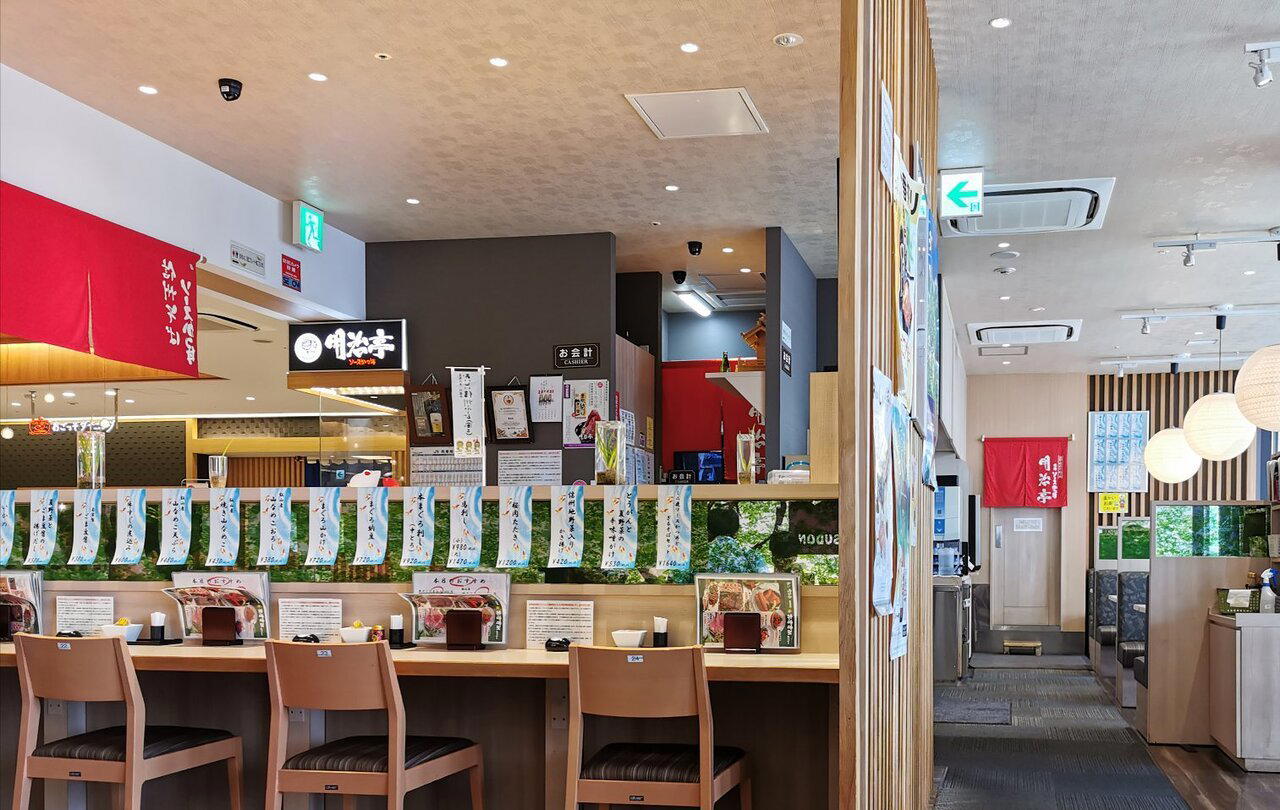
The menu
What to order
- Sauce Katsudon
- Basashi
Nagoya's Dining Scene and the Sustainability Shift
Across Japan's major restaurant cities, a quiet but measurable reorientation has taken place over the past decade. The question of where ingredients come from, and how their procurement affects the broader ecosystem, has moved from fringe concern to a genuine consideration inside serious kitchens. Nagoya sits at an interesting point in this shift. Long defined by its own distinctive Nagoya-meshi tradition, the city's restaurant culture has historically prized intensity of flavour and regional specificity over the kind of farm-forward signalling more associated with Tokyo or Kyoto. That is changing. Restaurants across price tiers are increasingly sourcing from identified producers, reducing waste through multi-use preparation, and building menus around what the season dictates rather than what the supply chain allows. Nagano Meijitei belongs to this evolving cohort.
For context, Nagoya's premium dining tier is not short of ambition. The city holds multiple Michelin-recognised addresses, from the kaiseki tradition represented at venues comparable to Gion Sasaki in Kyoto to the more European-inflected formats closer in spirit to HAJIME in Osaka. Nagano Meijitei occupies a different register, one where the sourcing story is as much a part of the dining proposition as the food itself.
What the Meijitei Name Signals
The name carries weight in the Japanese restaurant tradition. Meijitei connotes a classical heritage sensibility, a deliberate invocation of the Meiji-era dining rooms that blended Japanese and incoming Western influences into something distinctly local. In Nagoya's context, that register speaks to a particular kind of restaurant: formal enough to command attention, rooted enough to resist novelty for its own sake. Whether the kitchen leans toward kaiseki structure, a more relaxed multi-course format, or something that engages the surrounding Nagano region's agricultural output as a primary framework, the name sets an expectation of considered, methodical cooking.
Japanese restaurants operating under this kind of cultural framing tend to apply similar discipline to their ingredient relationships. The Nagano region itself, sitting in the mountainous interior of central Honshu, produces some of Japan's most recognised cold-climate vegetables, mountain herbs, and freshwater produce. A restaurant drawing on that geography has inherent reasons to prioritise direct producer relationships, short supply chains, and minimal-waste kitchen practice, all characteristics of the sustainability-conscious tier of Japanese dining that has earned international recognition at addresses like Harutaka in Tokyo and akordu in Nara.
Nagoya's Broader Restaurant Context
Understanding Nagano Meijitei requires understanding the competitive and cultural environment it operates within. Nagoya is Japan's fourth-largest city and sits at the economic centre of the Chubu region, but it has historically attracted less international dining attention than Tokyo, Osaka, or Kyoto. That gap has been narrowing. The city's own Nagoya-meshi canon, anchored by dishes like hitsumabushi eel at Atsuta Horaiken and the various miso-inflected preparations that define the local palate, remains a draw. But a parallel tier of more internationally literate restaurants has developed alongside it.
That tier includes Italian addresses like Bacio and cucina Wada, French-influenced formats such as Chez Kobe, and hybrid operations like Cucina Italiana Gallura, which approaches sushi through an Italian interpretive lens. Across this spread, the city demonstrates an appetite for restaurants that engage with both local identity and broader culinary conversation. Nagano Meijitei positions itself within that broader pattern. Our full Nagoya restaurants guide maps this diversity in greater detail.
The Sustainability Framework in Japanese Fine Dining
Japan's fine dining tradition has always carried an implicit sustainability logic. The kaiseki format, with its seasonal menu rotation, zero-waste approach to ingredient use, and preference for local produce, predates the modern sustainability movement by centuries. What has changed is the explicitness of the framing. Kitchens that once communicated these values through the food alone now articulate them as part of a legible restaurant identity, one that connects to the same conversation happening at Goh in Fukuoka, at rural ryokan dining rooms in Takashima (湖畔荘), and at mountain-adjacent restaurants like 庄羽屋 in Nishikawa Machi.
For a restaurant in Nagoya drawing on Nagano-region produce, this framework is not cosmetic. Mountain-sourced ingredients arrive with a geography that implies specific harvesting windows, small-batch availability, and relationships with producers who cannot supply at industrial scale. That constraint shapes how a kitchen plans, how menus rotate, and how waste is minimised because over-ordering against scarce seasonal supply is simply not viable. Restaurants operating at this intersection tend to run tighter, more deliberate kitchens than venues with access to commodity-scale supply chains. Compare the approach to what has developed at addresses in Nanao (三本木 奈川製) and Sapporo (古仲山乃), where geographic remoteness has similarly shaped a producer-first kitchen logic.
Planning Your Visit
Nagoya is well connected by shinkansen, sitting roughly 35 minutes from Osaka and under 90 minutes from Tokyo on the Tokaido line, which makes it accessible as a standalone destination or as part of a longer Japan itinerary. For restaurants of Nagano Meijitei's type, where the kitchen operates around seasonal and producer-constrained supply, advance booking is advisable. Japanese restaurants in this tier, particularly those with a heritage name and a defined format, tend to operate with limited covers by design, and walk-in availability is rarely a reliable assumption. Visitors pairing Nagoya with other Chubu-region stops, including the Nagano highlands or rural Gifu, will find the restaurant's sourcing geography maps naturally onto that kind of itinerary.
The international visitor arriving with reference points from Tokyo's omakase tier or the multi-course kaiseki tradition will find Nagoya's comparable venues operating at a somewhat different register: less internationally publicised, occasionally less expensive for equivalent cooking quality, and still developing the kind of global dining press that cities like Kyoto and Tokyo attract reflexively. That gap represents an opportunity. Restaurants like Nagano Meijitei, Birdland in Sakai (Birdland), and the sustained international formats at Le Bernardin in New York City or Atomix in New York City all operate on the premise that sourcing integrity and technical precision are non-negotiable, regardless of geography or fame. In Nagoya, that standard is increasingly available to the traveller who looks for it.
Frequently asked questions
How does Nagano Meijitei reflect Nagoya's approach to sustainable Japanese dining?
Nagoya's restaurant community has been part of a broader reorientation across Japan's major dining cities toward ingredient provenance and reduced waste — trends that align naturally with the classical kaiseki framework, which has embedded seasonal and zero-waste logic for centuries. Nagano Meijitei's name positions it within the heritage end of this spectrum, suggesting a kitchen rooted in tradition rather than contemporary experimentation. For current sourcing practices and menu philosophy, the venue is the authoritative source.
What's the signature dish at Nagano Meijitei?
Nagoya itself has a distinct regional food culture — miso katsu, hitsumabushi, and kishimen feature prominently across the city's dining establishments — so the kitchen likely draws from this local repertoire. check the venue's official channels for current menu specifics.
Should I book Nagano Meijitei in advance?
For any restaurant positioning itself within Nagoya's classical dining tradition, advance reservation is advisable, particularly on weekends and national holidays when the city's dining rooms fill quickly. Nagoya sits on the Tokaido shinkansen line, drawing visitors from Tokyo and Osaka in under 90 minutes, which puts additional pressure on well-regarded tables. Reach out to the venue directly to confirm current booking arrangements.
What is Nagano Meijitei known for?
Nagano Meijitei carries a name that signals classical heritage within the Japanese restaurant tradition — the Meijitei designation invokes a Meiji-era sensibility, suggesting a kitchen oriented toward continuity and craft over trend-chasing. Set in Nagoya, Japan's fourth-largest city and a dining destination with strong regional identity, the restaurant operates within a scene that has seen measurable movement toward sustainability-conscious sourcing over the past decade.
Is Nagano Meijitei good for vegetarians?
Classical Japanese formats such as kaiseki do incorporate significant vegetable and tofu-based courses, and temple cuisine traditions across Japan have a long vegetarian lineage. Check directly with Nagano Meijitei in Nagoya about dietary accommodation before booking.
Is Nagano Meijitei good value for money?
Within Nagoya's fine dining segment, value depends heavily on format: a multi-course kaiseki in this tier of city typically runs between ¥8,000 and ¥25,000 per person depending on length and provenance of ingredients. Nagoya generally prices below Tokyo equivalents at comparable quality levels, which has been one consistent draw for the city's restaurant scene.
Compact Comparison
Comparable venues nearby, for context on price, style, and recognition.
| Venue | Cuisine | Price | Awards | Notes |
|---|---|---|---|---|
| Nagano MeijiteiThis venue — the venue you are viewing | Nagano Sauce Katsudon | $10–20 | Not listed | Not listed |
| Shabushabu Creative Izakaya Butagin Sakae ten | Lettuce Shabu-Shabu & Pork Izakaya | $30–50 | Tabelog 100 #56 | Naka, Lettuce Shabu-Shabu & Pork Izakaya |
| Buta Inagaki | Tonkatsu (Japanese pork cutlet) | $20–30 | Tabelog 100 #41 | Mizuho, Tonkatsu (Japanese pork cutlet) |
| Teuchi Udon Kato | Japanese Udon | $10–20 | Tabelog 100 #63 | Nakamura, Japanese Udon |
| Mitsumura | Traditional Tempura & Kakiage Donburi | $20–30 | Tabelog 100 #46 | Kita, Traditional Tempura & Kakiage Donburi |
| 右江田 | Traditional Sushi Omakase | $150–200 | Not listed | Nakagawa, Nagoya-style Unagi Hitsumabushi |
Continue exploring
More in Nagoya
Restaurants in Nagoya
Browse all →
Hotels in Nagoya
Browse all →

Wineries in Nagoya
Browse all →

Details
- Classic
- Casual Hangout
- Standalone
- Sake Program
- A La Carte
Current opening hours
- Monday
- 11 AM–10 PM
- Tuesday
- 11 AM–10 PM
- Wednesday
- 11 AM–10 PM
- Thursday
- 11 AM–10 PM
- Friday
- 11 AM–10 PM
- Saturday
- 11 AM–10 PM
- Sunday
- 11 AM–10 PM
Hours can change for holidays and private events. Last verified .
No-nonsense, casual station restaurant atmosphere with friendly service and large portions.