Set against the stone walls and cedar gates of Higashiyama, Kameyama occupies a position in Kyoto's kaiseki tradition where address and atmosphere carry as much weight as the food. The dining room sits within the precincts of Kenninji's eastern edge, placing it inside a neighbourhood where the culinary register has long been shaped by temple culture and seasonal discipline. Reservations are advised well in advance.
Pearl is the En Primeur Club membership app — saves, bookings, and concierge access live there. Same editors, same standards.
- Address
- Japan, 〒605-0811 Kyoto, Higashiyama Ward, Komatsucho, 566-15 建仁寺南側
- Phone
- +81755250009
- Website
- gionmaruyama.com
- Directions
- Get directions
 Saves & bookings on Pearl
Stone Walls, Cedar Gates, and the Weight of Higashiyama
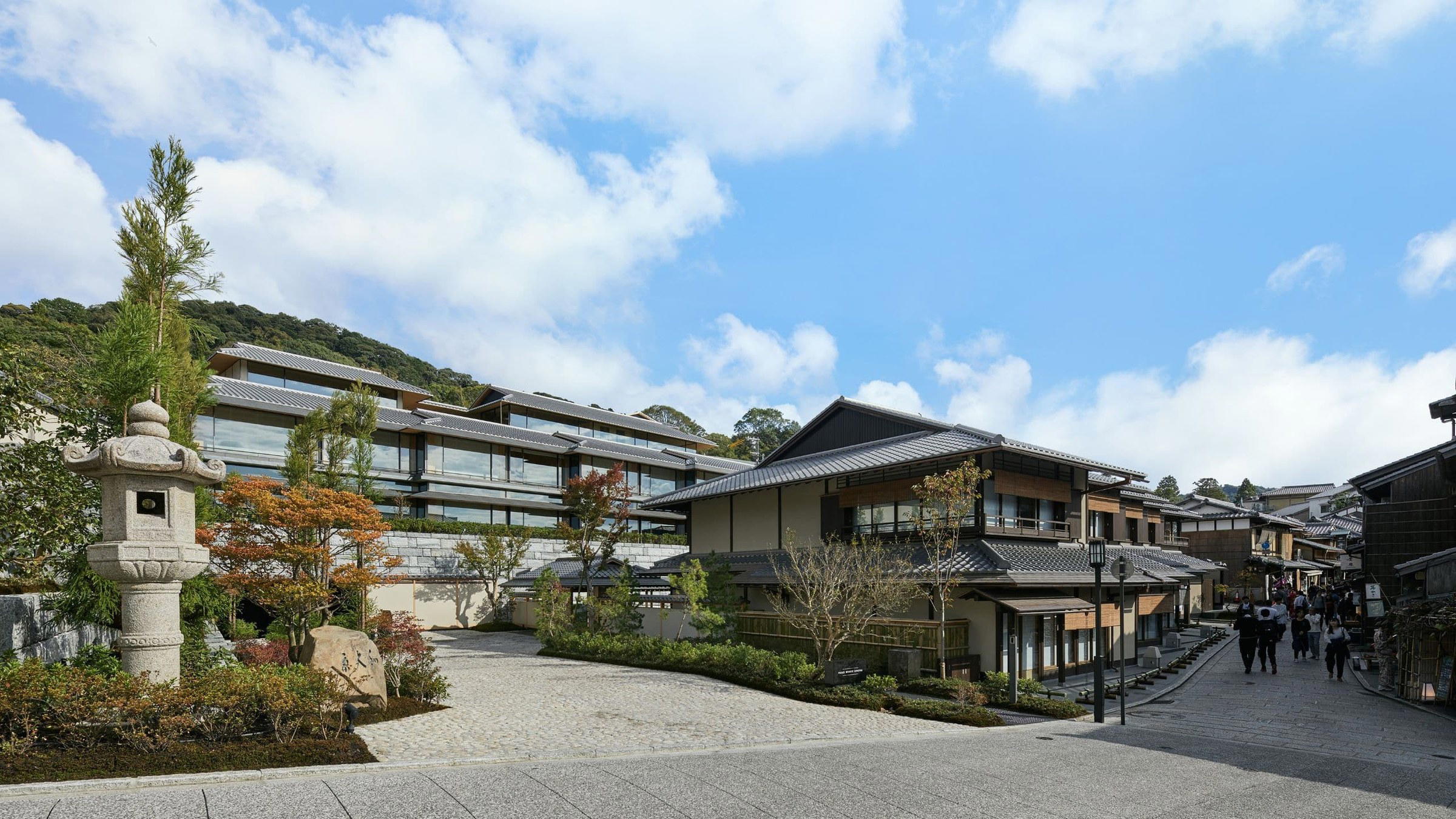
The approach to Kameyama (神亀丸山) sets the register before a single dish arrives. Higashiyama Ward is the most temple-dense corridor in a city built around temples, and the address — tucked along the stone-paved lanes near Kenninji — places this restaurant inside a neighbourhood where architecture, season, and culinary tradition have coexisted for centuries. The streets here narrow as they climb. Lanterns mark doorways. The ambient noise is footsteps on cobblestone rather than traffic. In a city where the physical context of a meal is understood to be part of the meal itself, Kameyama's location is not incidental.
Kyoto's kaiseki tradition is geographically concentrated in a handful of zones: the geisha districts of Gion and Pontocho, the temple margins of Higashiyama, and the broader arc of restaurants that have accumulated Michelin recognition over successive editions. Kameyama sits within this geography, drawing on the same civic and culinary inheritance that has shaped addresses like Gion Sasaki and Kikunoi Honten, where kaiseki is practised as a discipline of restraint rather than spectacle.
Where Kyoto's Drink Culture Meets the Kaiseki Counter
One of the more instructive divides in Kyoto's formal dining scene concerns how restaurants treat their beverage programs. Many kaiseki houses operate with a curated sake list calibrated to the seasonal tasting arc, while a smaller number have broadened toward domestic wine and aged spirits without abandoning the original sake logic. The tension between these approaches reflects broader questions about whether kaiseki should remain a closed culinary system or engage with fermentation traditions beyond rice.
At restaurants of Kameyama's neighbourhood and register, the sake program typically follows prefecture and season: light junmai-daiginjo for spring courses built around bamboo shoots and early bream, fuller yamadanishiki expressions for the heavier root-vegetable sequences of autumn and winter. The sommelier-adjacent role in a kaiseki house is often filled by the head host or a dedicated sake specialist who pairs by texture and temperature as much as by flavor compound. This is a more demanding pairing logic than many wine programs, because the range of serving temperatures for sake across a single evening can span thirty degrees.
For those building a mental map of how beverage curation works across Japan's serious dining tier, comparisons reach beyond Kyoto. HAJIME in Osaka and Harutaka in Tokyo demonstrate how top-tier Japanese restaurants integrate both sake and domestic wine into their pairing offers, while akordu in Nara represents the model where Japanese produce meets European cellar depth. Each approach produces a different reading of the same night.
The Kaiseki Framework and What It Demands of a Kitchen
Kaiseki is not a cuisine in the conventional sense. It is a sequencing discipline, originally developed to accompany the tea ceremony before migrating into formal restaurant culture during the Edo period. The logic is seasonal and rhythmic: a succession of small courses that move from light to rich, cold to warm, raw to cooked, with each dish marking a moment in the natural calendar. A kitchen that executes kaiseki credibly must source by season rather than convenience, and must rotate its menu with enough granularity that a guest returning in adjacent months encounters a meaningfully different sequence.
The discipline also places demands on the room. Kaiseki service moves at a pace that requires front-of-house coordination as precise as the kitchen's, because each course transition is a moment of ceremony as much as logistics. Restaurants in Kyoto's serious kaiseki bracket, among them Hyotei, Mizai, and Isshisoden Nakamura, have built their reputations as much on the rigour of their service as on the food itself. The distinction between a kaiseki house and a restaurant that happens to serve many courses is largely a question of that integrated discipline.
Placing Kameyama in the Wider Dining Geography
Kyoto occupies a specific position within Japan's premium dining map. It holds more Michelin stars per capita than almost any city in the world, but the concentration of those stars in the kaiseki and Japanese traditional categories means the city's dining culture reads as deliberately local rather than globally eclectic. This is the inverse of Tokyo, where the spectrum runs from kaiseki through French gastronomy to ramen at the highest technical register.
Within Kyoto, the Higashiyama address carries its own gravitational weight. The neighbourhood's density of heritage architecture and foot traffic from Yasaka Shrine and Kiyomizudera creates a distinctive dining context: visitors are often already attuned to ceremony and craft before they sit down. That attunement is an advantage for a restaurant asking guests to move slowly through a long sequence of small dishes. It is also an argument for why the neighbourhood has sustained formal dining addresses across multiple generations.
Across the wider Kansai region and beyond, the comparative set for high-register Japanese dining now extends to Goh in Fukuoka, Abon in Ashiya, and, at the opposite end of the country, aki nagao in Sapporo and affetto akita in Akita. The geographic spread of serious Japanese dining has widened considerably over the past decade, but Kyoto retains its position as the reference point for the kaiseki tradition specifically. For a broader picture of where Kameyama sits within that city context, our full Kyoto restaurants guide maps the field across price tier, neighbourhood, and culinary register.
Planning a Visit
Higashiyama is reachable by taxi from Kyoto Station in roughly fifteen minutes, or on foot from the Gion-Shijo subway station in around twenty. The neighbourhood is busiest on weekends and during cherry blossom season in late March and early April, as well as the autumn foliage window in November, when foot traffic along the Ninenzaka and Sannenzaka lanes reaches its annual peak. Reservations at formal dining addresses in this part of the city are advisable several weeks ahead during those periods. Evenings in Higashiyama tend to quiet considerably after the day-tripper traffic recedes, which is when the neighbourhood's character as a place for serious dining rather than sightseeing becomes most apparent. Guests planning around the kaiseki format should allow two to three hours minimum.
For context on how Kyoto's restaurant tier compares with peers elsewhere, in format, price architecture, and reservation dynamics, the benchmark set extends internationally. Le Bernardin in New York City and Lazy Bear in San Francisco illustrate how fixed-format tasting menus operate at the high end of Western fine dining, while Aji Arai in Oita and Ajidocoro in Yubari District show how the serious Japanese dining tradition distributes across prefectures that sit well outside the major metropolitan circuits. Akakichi in Imabari rounds out the picture of how regional Japan maintains culinary rigour at a remove from the Michelin-dense cities.
How 祇園丸山 Kyoto compares with similar nearby venues.
| Venue | Cuisine | Price |
|---|---|---|
| Tempura Endoh Yasaka | French | Not listed |
| Gion Sasaki | Kaiseki, Japanese | ¥¥¥¥ |
| Gion Suetomo | Kaiseki | Not listed |
Continue exploring
More in Kyoto
Restaurants in Kyoto
Browse all →
Bars in Kyoto
Browse all →
Hotels in Kyoto
Browse all →
Wineries in Kyoto
Browse all →
At a Glance
- Special Occasion
- Garden
- Sake Program
Know Before You Go
- Getting there
- Japan, 〒605-0811 Kyoto, Higashiyama Ward, Komatsucho, 566-15 建仁寺南側