Our verdict
びのむ occupies a discreet address in Nishiazabu, one of Tokyo's more quietly considered dining neighbourhoods, where low-signage venues and serious reservation books define the block. The name itself — a phonetic play on the verb 'to drink' — signals a wine-forward sensibility that positions it differently from the kaiseki and omakase counters that dominate Tokyo's fine-dining conversation. Booking logistics and neighbourhood context are the starting points for any visit.

Pearl is the En Primeur Club membership app — saves, bookings, and concierge access live there. Same editors, same standards.
- Address
- 4 Chome-8-6 Nishiazabu, Minato City, Tokyo 106-0031, Japan
- Phone
- +81359808252
- Hours
- Mon–Sat 5:30–11 PMSun Closed
- Website
- tabelog.com
- Directions
- Get directions
Nishiazabu's Quiet Tier and Where びのむ Sits Within It
Tokyo's fine-dining geography tends to organise itself by neighbourhood logic as much as cuisine category. Ginza and Azabu-Juban attract the city's highest-density concentration of Michelin-starred counters, while Nishiazabu — a short walk south through the backstreets of Minato ward — operates at a lower volume but comparable seriousness. The area has historically drawn restaurants that prefer low signage to high footfall, a posture that suits venues whose primary growth mechanism is word-of-mouth and repeat custom rather than walk-in traffic. びのむ, addressed at 4 Chome-8-6 Nishiazabu, fits that neighbourhood pattern precisely.
The name deserves a brief note because it sets the editorial frame for everything that follows. In Japanese, the verb nomu (飲む) means to drink, and the hiragana rendering びのむ points to a wine or beverage orientation that distinguishes it from the kaiseki counters and sushi rooms that dominate conversation about Tokyo's premium dining tier. Across the city, venues that lead with a drinks programme, whether wine-centric, sake-forward, or cocktail-driven, occupy a distinct and arguably underreported niche within the broader fine-dining set. For travellers already familiar with the mechanics of booking Harutaka or securing a seat at RyuGin, びのむ represents a different kind of access challenge: less publicly documented, which makes pre-trip intelligence more valuable, not less.
The Booking Experience: What You Need to Know Before You Go
Tokyo's reservation infrastructure divides into roughly three tiers. The first is the internationally visible layer, counters that appear on the World's 50 Best list, carry three Michelin stars, or have been covered extensively in English-language travel media. These venues have developed reservation systems (some through concierge-only channels, others through platforms like Tableall or Omakase) that, while competitive, are at least legible to non-Japanese speakers. The second tier is Japanese-language-first, meaning the booking process assumes familiarity with local platforms or phone reservation culture. The third tier is effectively invisible to most international visitors: venues with no website, no English-language presence, and reservation access that flows through personal introduction or hotel concierge relationships.
びのむ, with no listed website, no published phone number, and no English-language press record, sits in or near that third tier. That is not a criticism, it is an accurate characterisation of how a meaningful number of Tokyo's most considered small venues operate. The practical implication for travellers is clear: direct booking without a local contact or concierge connection is unlikely to succeed, and attempting to walk in without a reservation would be misjudged at this address. For visitors already working with a hotel concierge at a major Tokyo property, this is precisely the kind of venue that benefits from that relationship. For independent travellers, Japanese-language dining platforms and local fixers who specialise in Tokyo reservations are the more realistic path.
This booking opacity is not unusual in the context of Tokyo's dining culture more broadly. Venues like L'Effervescence and Sézanne at the internationally recognised end of the spectrum have streamlined English-language access precisely because their reputation demands it. At the other end, small Nishiazabu venues that have not sought that kind of visibility often maintain an intentional distance from the reservation infrastructure that serves inbound tourism. Understanding which side of that divide a venue sits on is part of the due diligence for any serious Tokyo dining trip.
Placing びのむ in Tokyo's Wider Dining Conversation
Tokyo holds more Michelin stars than any other city on earth, a fact that tends to flatten conversation about the city's dining range into a single prestige category. The reality is considerably more stratified. At the top of the recognised tier, venues such as Crony (French-inflected, innovation-led) and Sézanne (Michelin-starred French) have attracted sustained international attention. Below that layer, and often more interesting for it, sits a population of small, unlisted, or lightly documented restaurants that serve a local clientele and resist the profiling that comes with guidebook recognition.
Drink-led venues form a specific subset of that unlisted cohort. Across Japan's major cities, the wine bar and wine-forward restaurant format has grown consistently over the past decade, partly as a response to the dominance of sake and shochu traditions, and partly driven by a younger generation of sommeliers and restaurateurs who trained abroad or developed wine literacy through Japan's increasingly sophisticated import market. The geographic spread of that trend is visible in venues like HAJIME in Osaka, where French technique and Japanese precision meet, and in regional destinations such as Gion Sasaki in Kyoto and Goh in Fukuoka, each of which has developed its own relationship between local ingredient culture and wine pairing logic. In that context, a Nishiazabu address with a name that foregrounds drinking fits a pattern that is developing across the country rather than representing an isolated local phenomenon.
For comparison across international markets, the dynamic at play, a small, address-only venue with a beverages-forward identity and restricted access, has parallels in New York's more rarefied dining tier. Atomix in New York operates in a similarly controlled-access register, and Le Bernardin represents the fully institutionalised end of the same prestige spectrum. Tokyo's version of this dynamic tends to be smaller in format and more resistant to documentation, which makes first-hand local knowledge the primary currency.
Planning Considerations
The Nishiazabu address places びのむ within reasonable distance of Hiroo and Roppongi stations on the Tokyo Metro Hibiya and Oedo lines respectively, with Roppongi-Itchome on the Namboku line also viable depending on exact approach. The neighbourhood is walkable from several of Minato ward's major hotel clusters, which matters if a concierge relationship is part of the booking strategy. Beyond transport, the practical planning checklist for this kind of venue in Tokyo is short and consistent: secure the reservation before arrival in the city, confirm dietary requirements through the same channel used to book, and treat the absence of a published phone number or website as useful information about the format rather than a gap to be worked around.
For travellers building a wider Japan itinerary, the regional network of serious smaller restaurants is worth mapping. akordu in Nara, 一本杉川島 in Nanao, and 湖畔荘 in Takashima each represent the kind of considered, low-profile dining that rewards the same pre-trip research investment that applies to a Nishiazabu reservation. The full picture is available through our full Tokyo restaurants guide, which maps the broader scene in more detail.
Venue Logistics at a Glance
| Venue | Neighbourhood | Cuisine Focus | Price Tier | Booking Access |
|---|---|---|---|---|
| びのむ | Nishiazabu | Wine-forward (details limited) | Not published | No website / concierge recommended |
| Harutaka | Ginza | Sushi | ¥¥¥¥ | Counter reservation, advance booking |
| L'Effervescence | Nishiazabu | French | ¥¥¥¥ | Online / English-accessible |
| RyuGin | Roppongi | Kaiseki | ¥¥¥¥ | Online / English-accessible |
| Crony | Tokyo | Innovative French | ¥¥¥¥ | Reservation required |
Frequently asked questions
Is びのむ suitable for visitors who do not read Japanese?
Given the venue's location in Nishiazabu, its lack of English-language web presence, and the absence of any published booking channel, the practical experience at びのむ is likely to be conducted primarily in Japanese. This is consistent with a number of small, serious venues in the neighbourhood that serve a local clientele and have not developed English-language service infrastructure. Travellers who do not read Japanese are leading served by booking through an intermediary, hotel concierge or local fixer, who can also confirm language logistics at the time of reservation. The situation is not atypical for this tier of Tokyo dining, and it is navigable with the right planning. Venues such as Bistro Ange in Toyohashi and 羽根屋 in Nishikawa Machi face similar dynamics for non-Japanese-speaking visitors, and the same concierge-first approach applies across all of them.
Pricing, Compared
Comparable venues nearby, for context on price, style, and recognition.
| Venue | Cuisine | Price | Awards | Notes |
|---|---|---|---|---|
| びのむThis venue — the venue you are viewing | Modern Oden with Wine Pairing | $100–150 | Not listed | Not listed |
| sumiyaki kadota or yourisu zuki | Charcoal-grilled Japanese diner & motsunabe | $50–100 | Tabelog 100 #25 | Shibuya, Charcoal-grilled Japanese diner & motsunabe |
| Oni Tei | Traditional chicken yakiniku / yakitori in Shibuya | $50–100 | Tabelog 100 #77 | Shibuya, Traditional chicken yakiniku / yakitori in Shibuya |
| Chuogo Honten Mita | Tokyo Ramen | $20–30 | Tabelog 100 #78 | Minato, Tokyo Ramen |
| Tori Go | Yakitori Omakase | $50–100 | Tabelog 100 #48 | Meguro, Yakitori Omakase |
| New Shin Mikan | Sea urchin and oyster-focused Japanese izakaya counter | $50–100 | Tabelog 100 #58 | Minato, Sea urchin and oyster-focused Japanese izakaya counter |












Details
- Intimate
- Elegant
- Date Night
- Special Occasion
- Private Dining
- Extensive Wine List
- Omakase
- Wine
Current opening hours
- Monday
- 5:30–11 PM
- Tuesday
- 5:30–11 PM
- Wednesday
- 5:30–11 PM
- Thursday
- 5:30–11 PM
- Friday
- 5:30–11 PM
- Saturday
- 5:30–11 PM
- Sunday
- Closed
Hours can change for holidays and private events. Last verified .
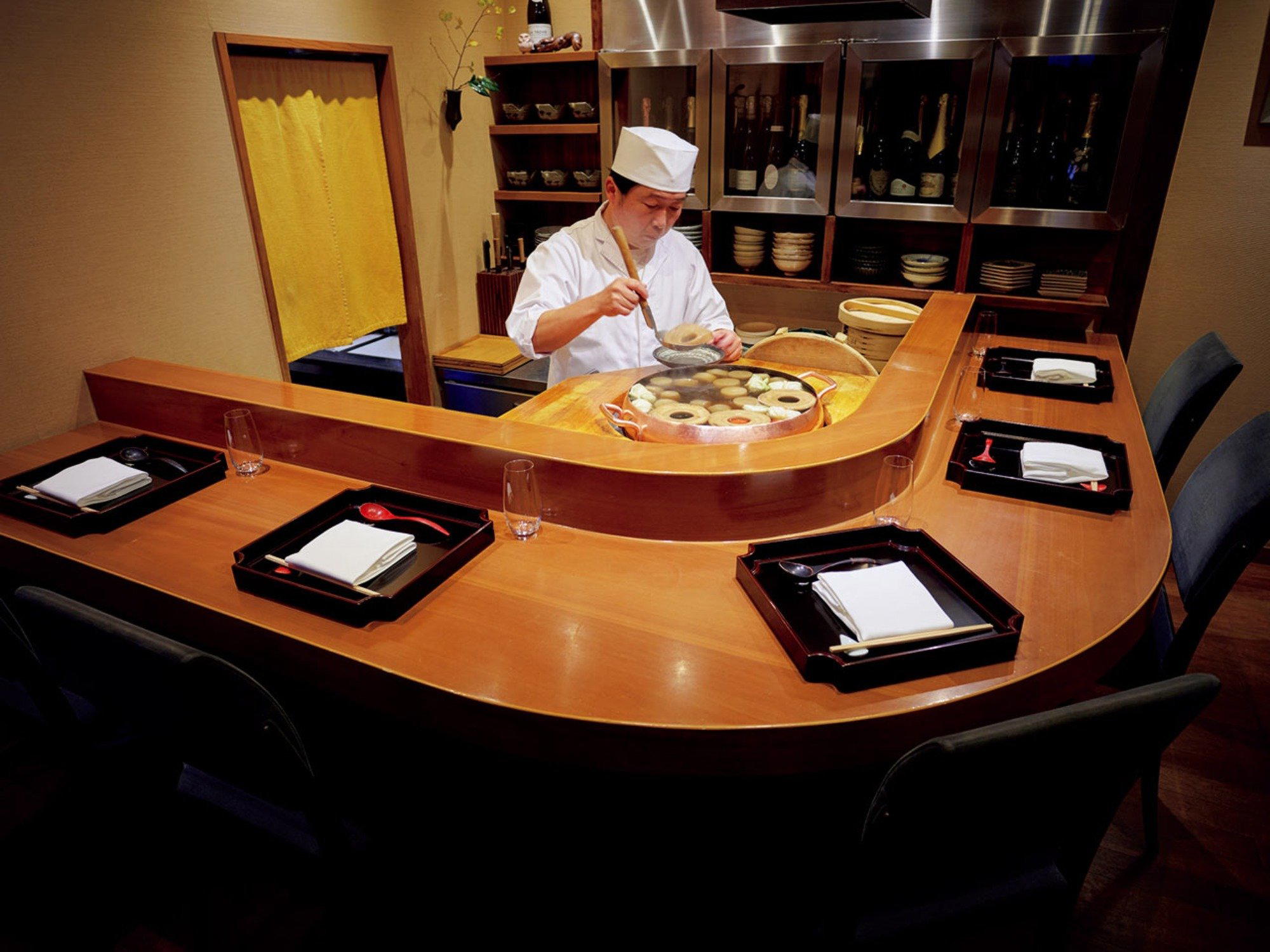
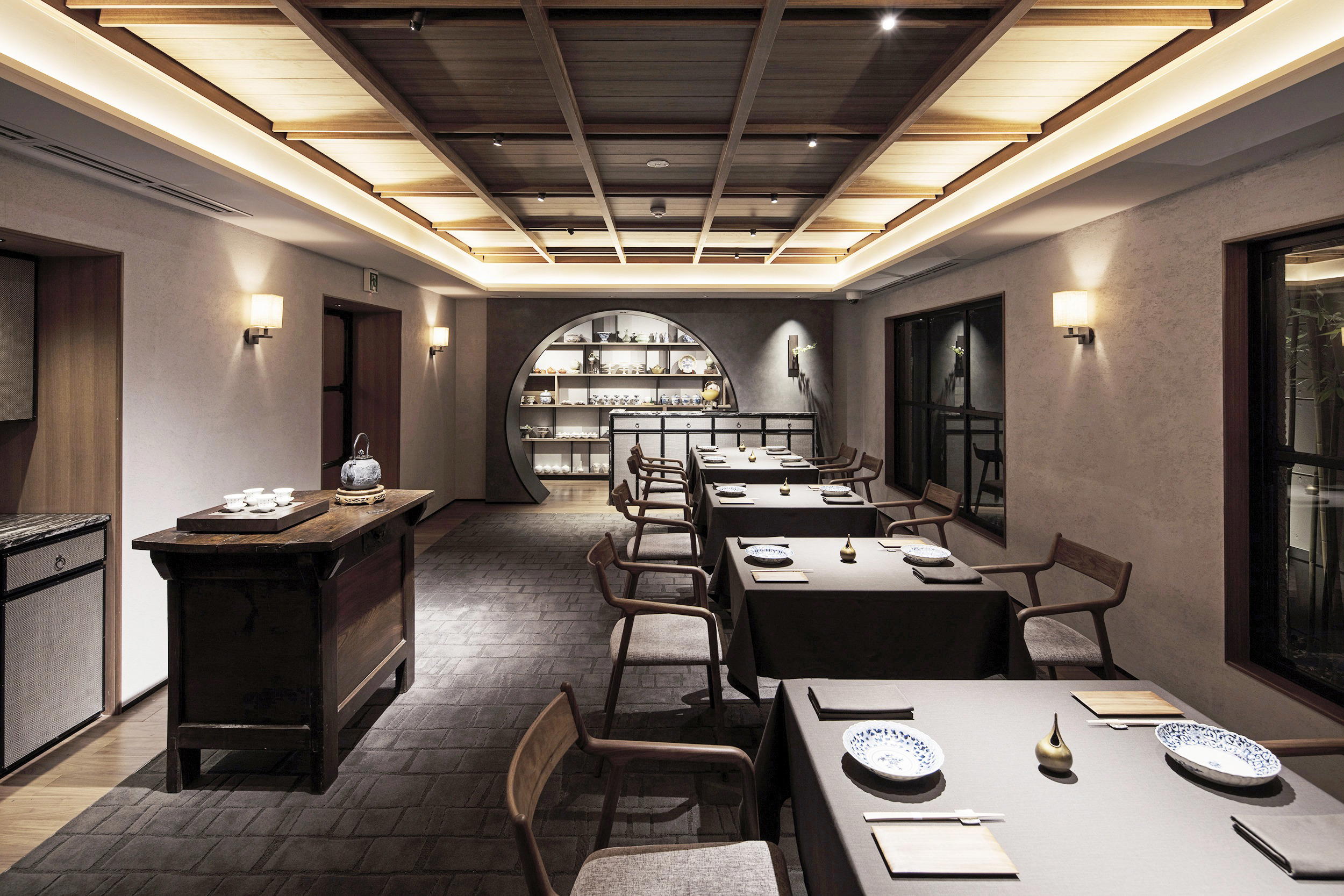
Cozy counter seating on the first floor with a large copper pot of simmering oden and intimate private rooms upstairs, creating an elegant low-profile address atmosphere.