
Tabelog 100 #89
Our verdict
萬屋おかげさん occupies a basement space in Yotsuya, Shinjuku, operating within a Tokyo dining scene where izakaya-format hospitality and serious drink programs increasingly overlap. Verified venue data remains limited, but the address places it firmly in a neighbourhood known for intimate, counter-led dining. Approach with an open itinerary and a willingness to follow the house rhythm.

Pearl is the En Primeur Club membership app, where members save venues, book tables and use the concierge.
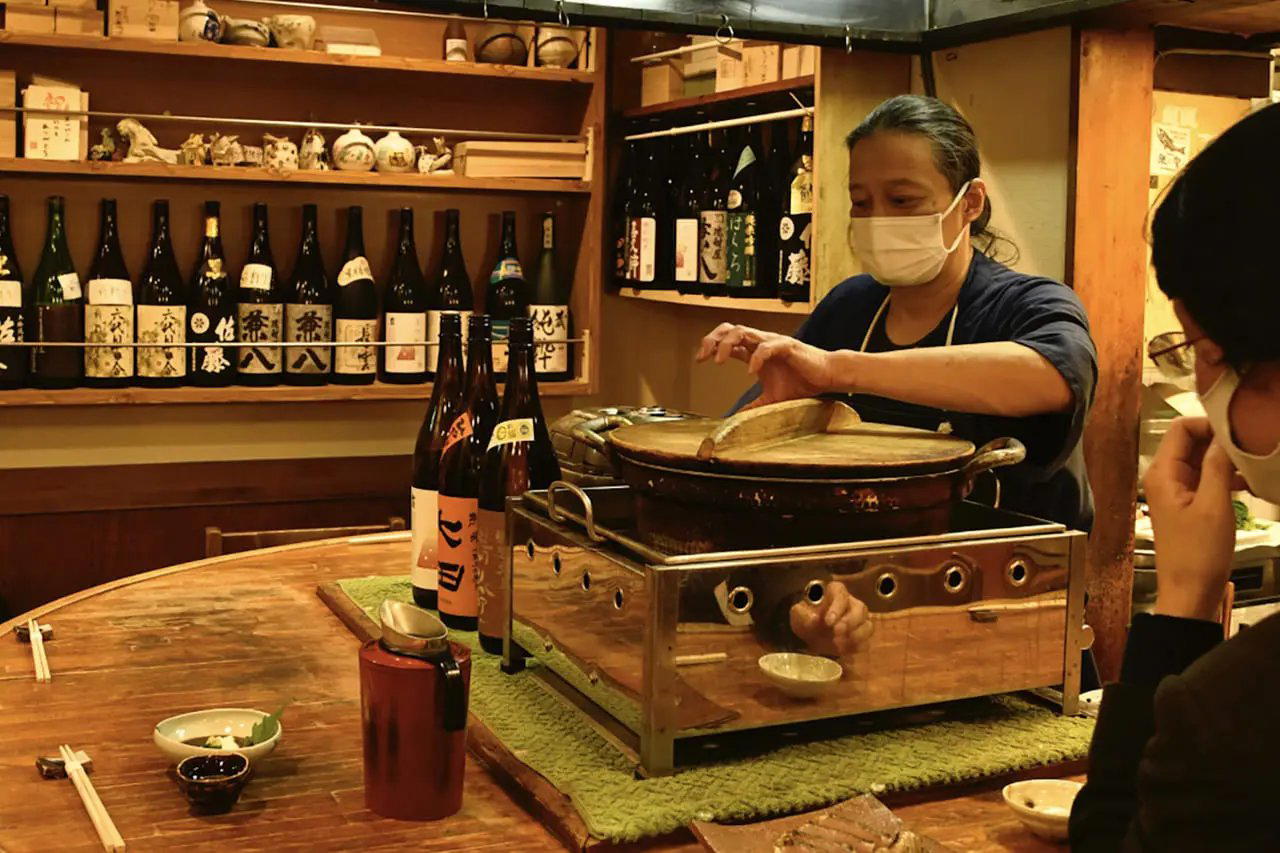
Yotsuya's Basement Dining Register
Tokyo's Shinjuku ward contains multitudes: the broad avenues and department-store towers of the main station exits give way, within a few blocks, to the narrower residential quarter of Yotsuya, where basement restaurants and single-floor bars have operated for decades with little fanfare and consistent local loyalty. This is not the part of Shinjuku that appears on foreign travel itineraries organised around Kabukicho or the Golden Gai. It is the part that rewards guests who read addresses carefully and descend a flight of stairs without knowing quite what to expect.
萬屋おかげさん sits at 2 Chome-10, Yotsuya, in a basement level that signals, before a word is spoken or a dish placed, the particular register of Tokyo dining it inhabits. Basement-level restaurants in this city occupy a specific cultural position: they tend toward the intimate, the counter-led, and the operator-driven, rather than the large-format or the design-showcase. The format predisposes a certain type of experience, one where the person across the pass matters more than the room around them.
The Drink Program in Context
In Tokyo's current dining conversation, the relationship between food and drink has shifted considerably. At the ¥¥¥¥ tier occupied by venues like Harutaka, L'Effervescence, RyuGin, and Sézanne, wine lists and sake programs have become increasingly central to the dining proposition, not supplementary to it. Sommeliers at that level are trained in allocation systems, regional curation, and food pairing at a depth that rivals European counterparts. The question for mid-tier operators is how much of that seriousness filters down.
Across Tokyo, a cohort of neighbourhood-anchored restaurants has responded by investing disproportionately in their drink programs relative to their price point or room size. The logic is direct: a cellar or sake selection differentiates a compact room in a way that kitchen investment alone cannot, particularly when ingredient sourcing costs are already high. Yotsuya, with its concentration of smaller operators and local regulars, has historically been a neighbourhood where this kind of quiet drink-program ambition has found a willing audience.
Verified data on 萬屋おかげさん's specific list does not extend to individual producers or cellar depth at this stage. What the address and format signal, however, is alignment with a dining type where the drink conversation is expected rather than optional. In rooms of this scale, a guest who arrives with curiosity about what is being poured tends to be rewarded. That is as true at intimate counters in Yotsuya as it is at larger programmes elsewhere in the city.
What the Format Implies About the Food
The name 萬屋 carries historical resonance in Japanese: a yorozuya was a general merchant, a shop that sold everything, a place of broad provision rather than narrow specialism. The name applied to a restaurant suggests an approach to the menu that is generous in range rather than rigidly defined by a single technique or cuisine category. Whether that resolves as izakaya-adjacent sharing plates, a broader washoku framework, or something with more contemporary inflection is not verifiable from available data.
What the basement Yotsuya address and the naming convention together suggest is a house that positions itself as a place of provision: seasonal, responsive, and oriented toward regular guests who want to eat and drink well without the formality of a tasting-menu-only format. That cohort of Tokyo restaurants, sometimes called izakaya in shorthand but more accurately described as counter-led multi-course casual, has been growing in critical regard. Crony operates at the innovative end of that register; 萬屋おかげさん, on current signals, reads closer to the traditional or washoku end.
For broader geographic comparison, the format shares something with the kind of operator seen at Gion Sasaki in Kyoto or Goh in Fukuoka, restaurants where the room is small, the produce is seasonal, and the expectation is that guests arrive ready to eat what the kitchen has decided is worth serving that day. Across Japan, this format has proven durable because it aligns kitchen cost control with genuine hospitality, and because it rewards repeat visits in a way that fixed tasting menus often do not.
Placing It in the Wider Japanese Scene
Tokyo does not exist in isolation from the broader Japanese dining conversation, and Yotsuya's restaurant stock reflects both local Shinjuku character and the influence of operators who have trained across Japan's regional kitchen cultures. Venues like HAJIME in Osaka and akordu in Nara represent the kind of regional ambition that has, over the past decade, made Tokyo's dominance of the high-end conversation less absolute. Smaller operators in Tokyo neighbourhoods like Yotsuya sometimes benefit from that shift: as critics and serious diners look beyond the obvious destination addresses, the basement counter with a considered drink list and a seasonal menu earns attention it might previously have been denied.
Internationally, the counter-led neighbourhood restaurant operating with a strong drink program has found sustained critical regard in cities from New York, where Atomix demonstrates how a Korean fine-dining format can anchor itself around beverage seriousness, to Paris and beyond. The format works when the person running the room knows their producers and can talk about what is in the glass with the same fluency as what is on the plate. In Tokyo, that fluency is common enough to be an expectation rather than a differentiator at the leading end, which means the interesting question for a venue like 萬屋おかげさん is whether it carries that fluency into a more accessible price register.
Planning a Visit
Yotsuya is served by the JR Chuo Line and the Tokyo Metro Marunouchi and Nanzai lines, making it direct to reach from central Tokyo without the transfers required for more peripheral neighbourhoods. The 2 Chome address on Yotsuya's main residential grid is a short walk from Yotsuya Station. Basement-level restaurants in Tokyo often operate without prominent signage at street level; arriving slightly before your intended time and confirming the building number before descending is standard practice in this part of the city.
In Tokyo's tighter restaurant market, walk-in availability at counter-format restaurants is limited, particularly on weekends. The EP Club Tokyo guide covers the broader city context for planning across styles and price points; see our full Tokyo restaurants guide for additional orientation.
For guests building a longer Japan itinerary, operators in regional cities including 一本杉川嶋 in Nanao, 古仁屋山乃 in Sapporo, 湖畔荘 in Takashima, 蔵羽屋 in Nishikawa Machi, Birdland in Sakai, and Bistro Ange in Toyohashi illustrate how Japan's dining ambition distributes well beyond the major metropolitan centres.
Quick reference: 萬屋おかげさん, B1, 2 Chome-10, Yotsuya, Shinjuku City, Tokyo.
Frequently asked questions
What should I order at 萬屋おかげさん?
Verified menu data is not available for 萬屋おかげさん at this stage. The name and format suggest a seasonally responsive kitchen rather than a fixed menu, which typically means following the kitchen's lead rather than arriving with a specific dish in mind. Restaurants in this register across Tokyo, from Yotsuya to Kagurazaka, tend to reward guests who ask what arrived that morning rather than anchoring on a single item. For a broader picture of Tokyo cuisine styles and what to expect across kitchen types, see our full Tokyo restaurants guide.
Can I walk in to 萬屋おかげさん?
In Tokyo generally, counter-format restaurants in residential neighbourhoods like Yotsuya operate with limited covers and high local regulars, which compresses walk-in availability significantly, particularly on Friday and Saturday evenings. If no advance reservation system is available online, a direct phone call or in-person inquiry during off-peak hours is the standard approach for this type of venue in the city.
What is the standout thing about 萬屋おかげさん?
Based on available data, the address and format combination places 萬屋おかげさん within a specific and increasingly sought-after category of Tokyo dining: the basement counter in a residential neighbourhood where the house rhythm and drink program matter as much as any individual dish. In a city where the highest-profile addresses are well-documented, this is the tier that serious local diners often cite as where the most consistent value-to-quality alignment is found. For equivalent quality signals in other formats, L'Effervescence and RyuGin represent the upper bracket of what Tokyo's dining scene formally recognises.
Is 萬屋おかげさん allergy-friendly?
No allergy or dietary accommodation data is confirmed for 萬屋おかげさん. In Tokyo, restaurants operating in the counter or omakase-adjacent format often have limited flexibility for substitutions, particularly when menus are set by produce availability. Tokyo's dining infrastructure generally supports allergy communication in writing for foreign guests, and this is worth preparing in advance.
Is 萬屋おかげさん overpriced or worth it?
Price range data is not verified. The Yotsuya neighbourhood context and basement counter format typically position a restaurant below the ¥¥¥¥ tier occupied by Tokyo's award-documented destination addresses, such as Harutaka or Sézanne. At neighbourhood counter restaurants in Tokyo, the value question generally resolves in the guest's favour when the drink program is serious and the kitchen responds to the season, because those two factors together produce a per-visit experience that scales with repeat attendance rather than declining after a first visit.
What makes 萬屋おかげさん worth seeking out in a city with hundreds of counter restaurants?
The specificity of the address is itself a signal. In Tokyo's Shinjuku ward, the density of dining options around the major station exits means that operators in the quieter Yotsuya quarter survive through local loyalty and consistent quality rather than passing foot traffic. A basement counter at this address has self-selected for a type of guest who is looking deliberately, not stumbling in by chance, and that dynamic tends to produce rooms where both sides of the counter take the interaction seriously. For guests building a Tokyo itinerary around neighbourhood character rather than award recognition alone, Yotsuya merits attention alongside better-documented dining districts.
Price and Recognition
Comparable venues nearby, for context on price, style, and recognition.
| Venue | Cuisine | Price | Awards | Notes |
|---|---|---|---|---|
| 萬屋おかげさんThis venue (the venue you are viewing) | Traditional Japanese Izakaya | $50–100 | Tabelog 100 #89 | Not listed |
| Akasaka Totoya Uoshin | Traditional Seasonal Japanese Kaiseki | $100–150 | Tabelog 100 #36 | Minato, Traditional Seasonal Japanese Kaiseki |
| Esaki | Modern Japanese Kaiseki | $50–100 | Not listed | Shinjuku, Modern Kaiseki |
| かぶん | Yakiniku (Japanese BBQ) | $50–100 | Not listed | Minato, Yakiniku (Japanese BBQ) |
| Torisho Ishii Hina | Modern Yakitori Omakase | $150–200 | Not listed | Minato, Modern Yakitori Omakase |
| Mita Basara Honten | Tomato Sukiyaki & Modern Japanese Kaiseki | $50–100 | Tabelog 100 #68 | Minato, Tomato Sukiyaki & Modern Japanese Kaiseki |
Recognition history
Dated appearances from independent guides and award organizations, with the underlying list record or original source where available.
Tabelog 100 #89 · No. 89
Tabelog · Tabelog 100 - Izakaya - EAST - 2025
Continue exploring
More in Tokyo
Restaurants in Tokyo
All restaurants in Tokyo →
Bars in Tokyo
All bars in Tokyo →





Details
- Cozy
- Intimate
- Date Night
- Special Occasion
- Sake Program
- Omakase
- Sake
Current opening hours
- Monday
- Closed
- Tuesday
- 6–10 PM
- Wednesday
- 6–10 PM
- Thursday
- 6–10 PM
- Friday
- 6–10 PM
- Saturday
- 6–10 PM
- Sunday
- Closed
Hours can change for holidays and private events. Hours as of .
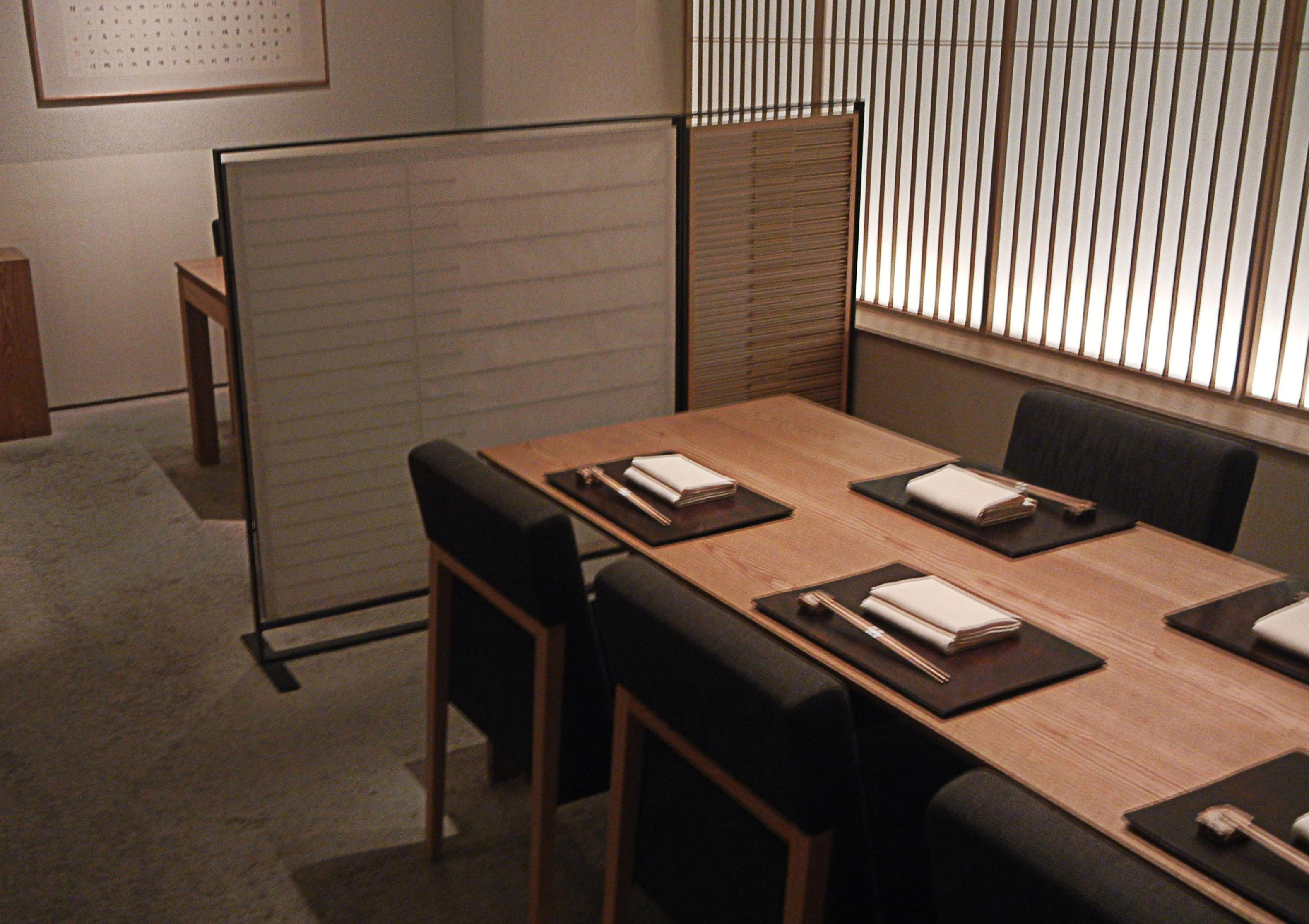
Cozy and comfortable basement space with counter seating, ideal for lingering over high-quality drinks and food in an intimate setting.