Our verdict
かぶん occupies the ground floor of a residential tower in Higashi-Azabu, one of Minato City's quieter residential pockets. The venue sits at an address that rewards deliberate planning rather than passing discovery, positioning it among Tokyo's smaller, less-publicised dining formats. Full details on cuisine type, chef, and booking remain limited in public records.

Pearl is the En Primeur Club membership app, where members save venues, book tables and use the concierge.
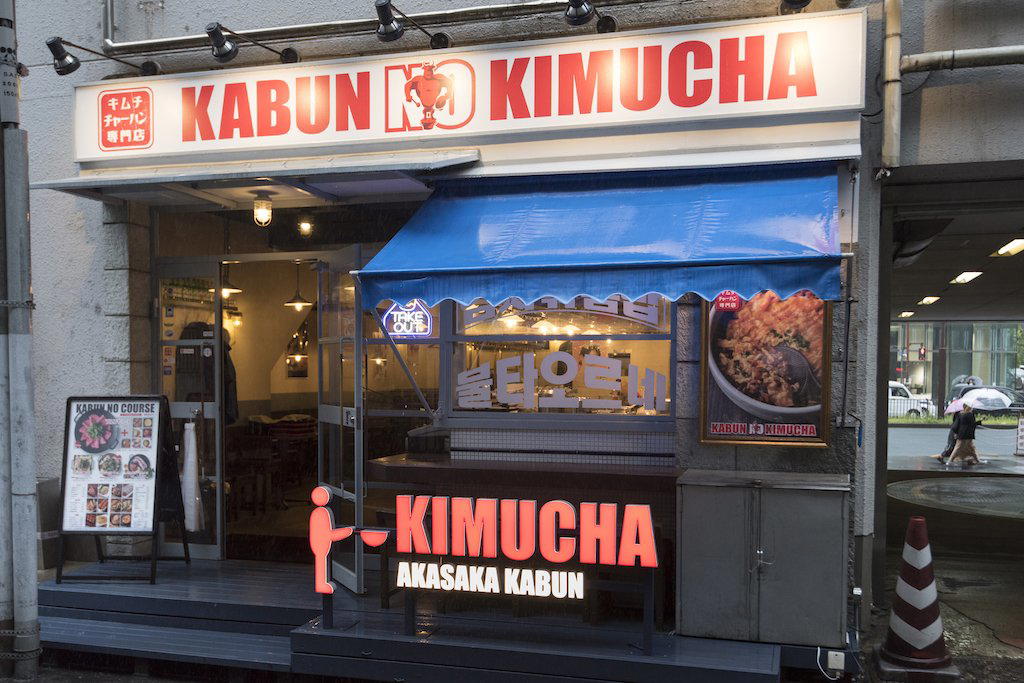
Higashi-Azabu and the Quiet End of Minato's Dining Map
Minato City contains multitudes. On one axis you have the high-wattage restaurant corridors of Roppongi and Azabu-Juban, where Michelin-starred counters and destination French tables compete for the same internationally mobile clientele. On the other, places like Higashi-Azabu operate at a different register entirely. The neighbourhood is residential in character, its streets notably calmer than the main arteries that connect Azabu to Hiroo or Roppongi. Restaurants that choose this location are making a deliberate statement about their audience: they expect guests who plan ahead and arrive with intention, not those who stumble in from a nearby bar.
かぶん sits inside this quieter geography, occupying the ground floor of バーリータワーズ (Burley Towers), a mixed-use residential building at 3 Chome-8-10 Higashi-Azabu. That address places it at a remove from the concentration of press-covered dining rooms that dominate most Tokyo restaurant coverage, and that remove is itself an editorial fact worth noting. Tokyo's food scene has always operated across multiple tiers of visibility. The Michelin circuit, the 50 Best conversation, the domestic culinary press: each illuminates a slightly different slice of the city. The venues that sit outside all three of those spotlights are not necessarily less serious. Sometimes they are simply less legible to outside observers.
How Tokyo's Neighbourhood Restaurant Format Has Shifted
The evolution of the Tokyo neighbourhood restaurant over the past two decades tracks a broader pattern visible across Japan's urban dining culture. Through the 1990s and early 2000s, neighbourhood dining in cities like Tokyo, Osaka, and Kyoto was largely defined by the ippin ryori tradition: small, owner-operated rooms with hand-written menus, priced for regulars rather than expense accounts. That format has not disappeared. Venues like Gion Sasaki in Kyoto demonstrate that the intimate, chef-driven room still commands serious attention when execution is at a high level, and Goh in Fukuoka shows the same dynamic operating outside the major metropolitan centres.
What has changed is the competitive context around those rooms. The post-2008 Michelin Tokyo expansion accelerated a sorting process. Restaurants that wanted international visibility needed to operate in formats and at price points that legibility demanded. Those that did not became, in a sense, more interesting to a different kind of guest: the Tokyo resident, the Japan-specialist traveller, the person who has already worked through the standard itinerary of Harutaka or RyuGin and is now looking sideways rather than up.
かぶん operates in that sideways register. Public records on the venue are sparse: no confirmed cuisine classification, no chef credit in available databases, no published price range. That data sparsity is less a gap than a signal. In a city where the most-discussed restaurants are often the most thoroughly documented, a venue that resists easy categorisation occupies a specific niche. Whether that resistance is a function of deliberate positioning, limited marketing appetite, or simply a very local clientele, the effect is the same: the room operates on a different information economy than the Michelin tier above it.
Reading the Higashi-Azabu Address
Location in Tokyo functions as shorthand for competitive set. An address in Ginza signals that a restaurant is pricing against the high-end omakase market and expects an international awareness. An address in Nihonbashi or Yaesu reads as serious and traditional, drawing on proximity to old merchant culture. Higashi-Azabu, by contrast, reads as residential and local, even though it sits within walking distance of Roppongi Hills and the embassies that line the northern edge of the ward.
That positioning has parallels in other Japanese cities. akordu in Nara demonstrates how a location slightly off the main tourist path can still anchor a serious dining experience for guests who have done their research. In Tokyo specifically, the Higashi-Azabu and Mita corridors have historically housed restaurants that punch above their address in terms of culinary seriousness, partly because lower rents relative to Roppongi or Azabu-Juban allow smaller operations to sustain a more focused format without the volume pressure that a prestige location imposes.
Guests arriving at かぶん should approach it through that frame: a ground-floor room in a residential tower is not inherently modest. In Tokyo, it is often the format that serious independent operators choose precisely because it insulates them from the pressures of high-footfall locations.
Contextualising Against Tokyo's Current French and Innovation Tier
But Minato City's dining scene as a whole skews heavily toward French-influenced and kaiseki formats at the upper end. L'Effervescence and Sézanne represent the French fine dining tier that has established itself firmly in the international conversation, while Crony operates at the innovative end of the French-Japanese hybrid format. These rooms set the competitive context for anything serious operating in Minato's broader catchment.
Venues that do not explicitly compete in that tier often do so by offering something structurally different: a smaller format, a tighter menu, a more specific regional or technical focus. Japan's regional restaurant scene offers ample precedent. HAJIME in Osaka built its identity on technical precision at a scale that most Tokyo restaurants cannot match. Venues like 一本木 なか川 in Nanao and 湖畔荘 in Takashima demonstrate that serious dining in Japan extends well beyond the Tokyo-Osaka-Kyoto axis, which itself reframes what a Higashi-Azabu address means: not a fallback from a more prestigious location, but a specific choice with its own logic.
For a broader survey of where かぶん fits within Tokyo's current restaurant scene, our full Tokyo restaurants guide maps the city's key dining corridors and price tiers in detail. Further afield, 古代山乃 in Sapporo, 庭羽屋 in Nishikawa Machi, Birdland in Sakai, and Bistro Ange in Toyohashi illustrate the range of formats that serious dining takes across Japan's secondary cities. For international comparison, Le Bernardin in New York City and Atomix in New York City represent how the same tension between visibility and seriousness plays out in a different market.
Know Before You Go
- Address: 〒106-0044 Tokyo, Minato City, Higashi-Azabu, 3 Chome-8-10, バーリータワーズ 1F
- Nearest Station: Azabu-Juban (Namboku/Oedo lines) is the most practical access point for the Higashi-Azabu area
- Booking: No confirmed online booking channel in public records; direct contact with the venue is advisable
- Price Range: Not published in available data; guests should confirm directly before visiting
- Hours:
- What is the ideal way to book かぶん?
- No confirmed booking platform or phone number appears in current public records for かぶん. In Tokyo, smaller independent venues at this address type frequently operate via direct telephone or walk-in during quiet periods. Given the venue's limited online presence, arriving with a reservation confirmed in advance is the safest approach, particularly for guests visiting from outside Japan where language coordination may require extra lead time.
- What is the signature at かぶん?
- Is かぶん suitable for non-Japanese speaking visitors?
- This is a practical consideration for any venue in Higashi-Azabu with a limited international profile. Tokyo's restaurant scene broadly accommodates international guests at the upper end of the market, but smaller neighbourhood rooms in residential areas like かぶん's address at バーリータワーズ may operate primarily for a Japanese-speaking clientele. Guests without Japanese language ability should plan communication logistics ahead of arrival, ideally through a hotel concierge or a Japanese-speaking contact who can assist with initial reservation and menu inquiries.
Frequently asked questions
Where do I go for かぶん?
かぶん is located at Japan, 〒106-0044 Tokyo, Minato City, Higashiazabu, 3 Chome−8−10 バーリータワーズ 1F, Tokyo.
Is かぶん suitable for a solo diner visiting Minato City?
Higashi-Azabu's dining culture, which sits at the quieter eastern edge of Minato City's restaurant map, tends to favour intimate room sizes and counter seating, formats that accommodate solo diners more readily than the large-group venues found along Roppongi-dori. かぶん's ground-floor Barly Towers address places it in a neighbourhood-scale setting consistent with that format.
What should I eat at かぶん?
The restaurant sits in Higashi-Azabu, a Minato City pocket that skews toward French-influenced and precision-driven cooking, so the surrounding competitive set may offer useful reference points.
What's the best way to book かぶん?
No phone number or booking website is publicly documented for かぶん at this stage. For restaurants at this address tier in Higashi-Azabu, reservations typically go through Tableall, Omakase, or direct walk-in inquiry. Arriving in person to ask about availability is a practical fallback for neighbourhood-format venues in this part of Minato City.
What's the signature at かぶん?
What is known is that かぶん occupies a ground-floor space at Barly Towers in Higashi-Azabu, a residential-adjacent address that in Tokyo typically signals a focused, counter-led or single-menu format rather than an à la carte operation. Verifying the current format directly with the venue is advisable.
A Credentials Check
Comparable venues nearby, for context on price, style, and recognition.
| Venue | Cuisine | Price | Awards | Notes |
|---|---|---|---|---|
| かぶんThis venue (the venue you are viewing) | Yakiniku (Japanese BBQ) | $50–100 | Not listed | Not listed |
| Seo | Yakitori | $100–150 | Tabelog 100 #15 | Minato |
| Yokoyama | Seasonal Japanese Kaiseki | $100–150 | Not listed | Minato |
| Yama no Chaya | Traditional Japanese Unagi Kaiseki | Not listed | Tabelog 100 #56 | Chiyoda |
| Sake Hidejiro | Japanese Sake Omakase Izakaya | $50–100 | Tabelog 100 #80 | Shibuya |
| TOSA DINING おきゃく | Kochi Regional Cuisine | $50–100 | Not listed | Chūō |
Continue exploring
More in Tokyo
Restaurants in Tokyo
All restaurants in Tokyo →
Bars in Tokyo
All bars in Tokyo →






Details
- Lively
- Modern
- Group Dining
- After Work
- Business Dinner
- Open Kitchen
- Sake Program
- A La Carte
- Sake Program
Current opening hours
- Monday
- 5 PM–1 AM
- Tuesday
- 5 PM–1 AM
- Wednesday
- 5 PM–1 AM
- Thursday
- 5 PM–1 AM
- Friday
- 5 PM–3 AM
- Saturday
- 5 PM–12 AM
- Sunday
- 5 PM–12 AM
Hours can change for holidays and private events. Last verified .
Casual atmosphere ideal for after-work dinners and group gatherings with a focus on high-quality grilled meats.