
One of Champagne's oldest continuously operating houses, Alfred Gratien has produced méthode traditionnelle wines from Épernay since 1864. For those seeking Champagne built on craft discipline rather than volume, Alfred Gratien represents a considered alternative to the grandes marques.
Pearl is the En Primeur Club membership app — saves, bookings, and concierge access live there. Same editors, same standards.
- Address
- 30 Rue Maurice Cerveaux, 51200 Épernay
- Phone
- +33 3 26 56 30 30
- Website
- alfredgratien.com
- Directions
- Get directions
 Saves & bookings on Pearl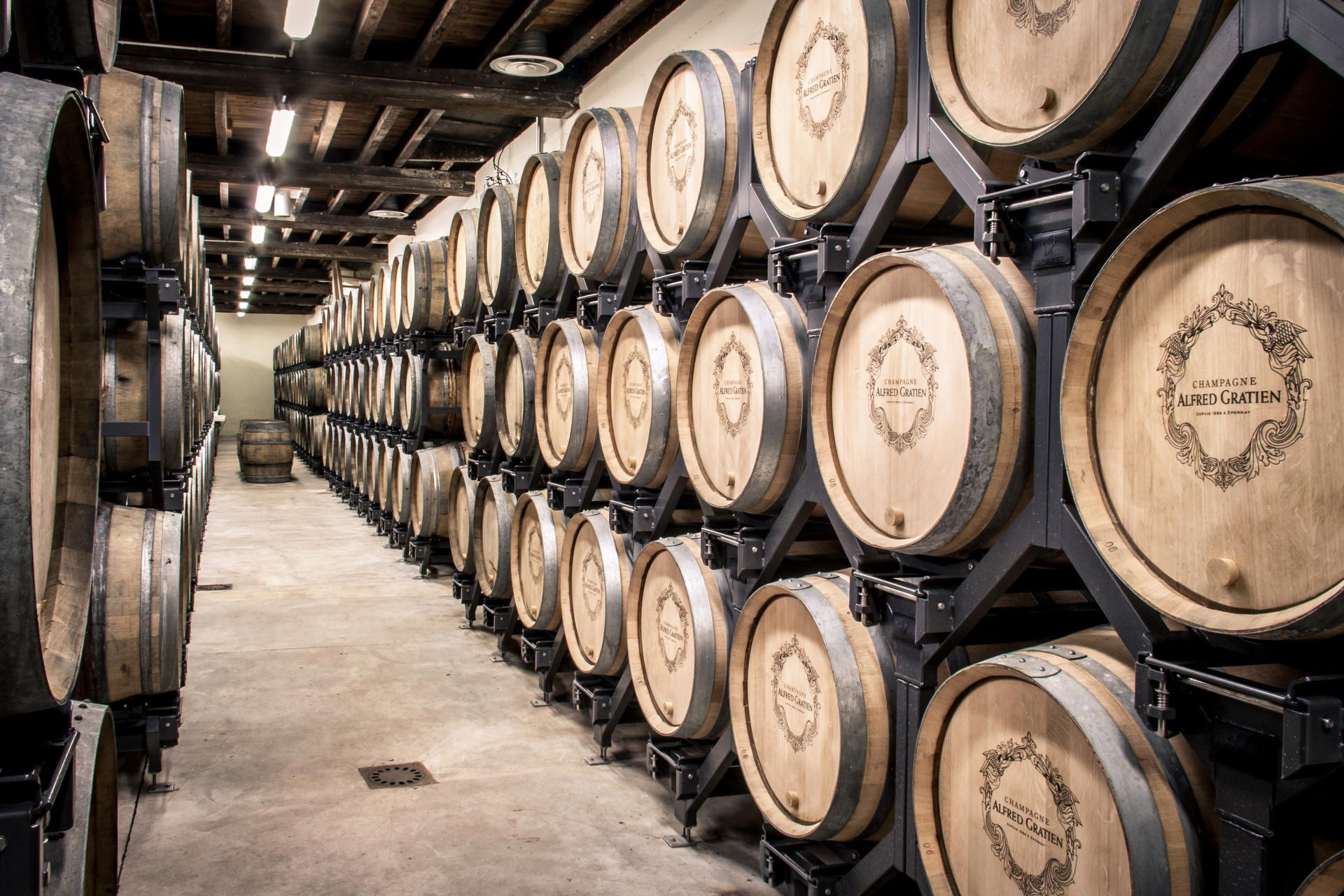
A House Built on Time: Alfred Gratien in Épernay
Rue Maurice Cerveaux is not the boulevard most visitors picture when they imagine Épernay. The grand Avenue de Champagne, lined with the monumental facades of Moët & Chandon and its neighbours, draws the crowd. This quieter address, by contrast, belongs to a different register of Champagne house: smaller in footprint, longer in method, and notably less interested in volume as a measure of ambition. Alfred Gratien, trading from this address since 1864, is among the oldest continuously operating houses in the region, and its longevity is inseparable from a set of production choices that remain genuinely rare in Champagne today.
What Sets the Approach Apart
Champagne's winemaking culture has long debated the trade-off between consistency at scale and the slower, more variable processes that produce wines with greater textural complexity. The grandes marques, Moët & Chandon, Pol Roger, and their peer group, achieve house style through precise blending and stainless-steel fermentation, which delivers reliability across large release volumes. Alfred Gratien occupies a structurally different position. The house ferments its base wines in small oak casks rather than tank, a practice that most Champagne producers abandoned during the twentieth century as they scaled upward. Cask fermentation introduces micro-oxygenation and a degree of batch-to-batch variation that cannot be entirely controlled, which means the winemaker is working with the wine rather than simply engineering it toward a predetermined specification.
Winemaker Nicolas Jaeger holds that process together. At a house of this size and methodology, the winemaker's reading of each harvest's character, which parcels, which cask lots, which reserve wines to deploy, determines whether the finished blend holds its character across years.
Terroir and the Marne Valley's Influence
The editorial angle most commonly applied to prestige Champagne focuses on brand heritage or blending philosophy, but the underlying argument in the winery's favour is ultimately about terroir expression. The Marne Valley's chalky subsoil, the same geological foundation that gives Grand Cru villages their drainage characteristics and mineral tension, registers differently in wines that undergo cask fermentation than in those processed through stainless steel. The wood, over a short contact period, allows the wine's own structural elements, particularly its acidity and extract from the chalk-heavy soils, to develop texture rather than being locked into a clean, reductive profile. The result, across the winery's range, tends toward a more oxidative, nutty register that reads more like a grand Blanc de Blancs from the Côte des Blancs than the bright, fruit-forward style that dominates high-volume Champagne.
This connection between soil type and production method is not distinctive to the winery, Gosset, another old-line Champagne house, similarly ferments without malolactic conversion and positions its wines as built for extended cellaring, but the combination of oak fermentation, non-malolactic philosophy, and small-house scale places the winery in a narrow comparable set where terroir legibility is genuinely prioritised over stylistic uniformity.
For context, the broader world of small, methodologically rigorous European producers, from Albert Boxler in Niedermorschwihr to Bordeaux properties like Château Bastor-Lamontagne in Preignac, Château Batailley in Pauillac, and Château Bélair-Monange in Saint-Emilion, tends to share an orientation toward site fidelity over market formula. The winery belongs in that conversation, even though it operates in a category, Champagne, where appellation identity usually overrides estate-level terroir discussion.
The House in Its Épernay Context
Épernay functions as Champagne's commercial and symbolic centre, but the city's wine identity is not monolithic. The Avenue de Champagne's prestige houses represent one tier: globally distributed, heavily marketed, and priced against international luxury competitors. A second tier, concentrated in smaller streets and in the surrounding villages, operates with lower production volumes and greater sensitivity to vintage variation. The winery belongs to this second tier, and its address on Rue Maurice Cerveaux is quietly appropriate for a house that has always operated somewhat outside the grande marque spotlight.
Visitors arriving in Épernay typically structure their time around the obvious marquee names, which makes sense given those houses' visitor infrastructure. But the case for building in a visit to the winery rests on a different proposition: here, you are looking at a production scale where individual decisions remain visible in the glass. This is not a tasting room experience calibrated for throughput.
For producers who share the winery's orientation toward methodological discipline, Pol Roger and Gosset both sit in a comparable part of the Champagne spectrum, though each with distinct house styles.
Further afield, the discipline-over-volume approach that defines the winery's position in Champagne maps loosely onto producers in other French appellations: Château Boyd-Cantenac in Cantenac, Château Branaire Ducru in St-Julien, and Château Cantemerle in Haut-Médoc each represent houses where production scale and methodological continuity remain closely linked. Beyond France, Château Clinet in Pomerol, Aberlour in Aberlour, and Accendo Cellars in St. Helena each demonstrate, in their respective categories, that the commitment to craft at controlled volume continues to generate critical recognition across different producing regions. The Chartreuse production house in Voiron offers a different but analogous example of a centuries-old French producer whose identity is inseparable from a slow, labour-intensive process that has resisted rationalisation.
Planning a Visit
The winery is located at 30 Rue Maurice Cerveaux, 51200 Épernay, a short distance from the city centre.
How It Stacks Up
Comparable venues nearby, for context on price, style, and recognition.
| Venue | Cuisine | Price | Awards | Notes |
|---|---|---|---|---|
| Alfred GratienThis venue — the venue you are viewing | Chardonnay, Pinot Noir | $$$ | Not listed | Not listed |
| Perrier-Jouët | Chardonnay, Pinot Noir | $$$$ | Not listed | Épernay |
| Pol Roger | Pinot Noir, Chardonnay | $$$$ | Not listed | Avenue de Champagne |
| Gosset | Chardonnay, Pinot Noir | $$$ | Not listed | Avenue de Champagne |
| Moët & Chandon | Pinot Noir, Chardonnay | $$$$ | World's 50 Best #57 | Épernay |
| Egly-Ouriet | Pinot Noir, Chardonnay | $$$ | Not listed | Ambonnay |
Recognition history
Dated appearances from independent guides and award organizations, with the underlying list record or original source where available.
Falstaff Winery - 3 Stars
Falstaff
Continue exploring
More in Épernay
Wineries in Épernay
Browse all →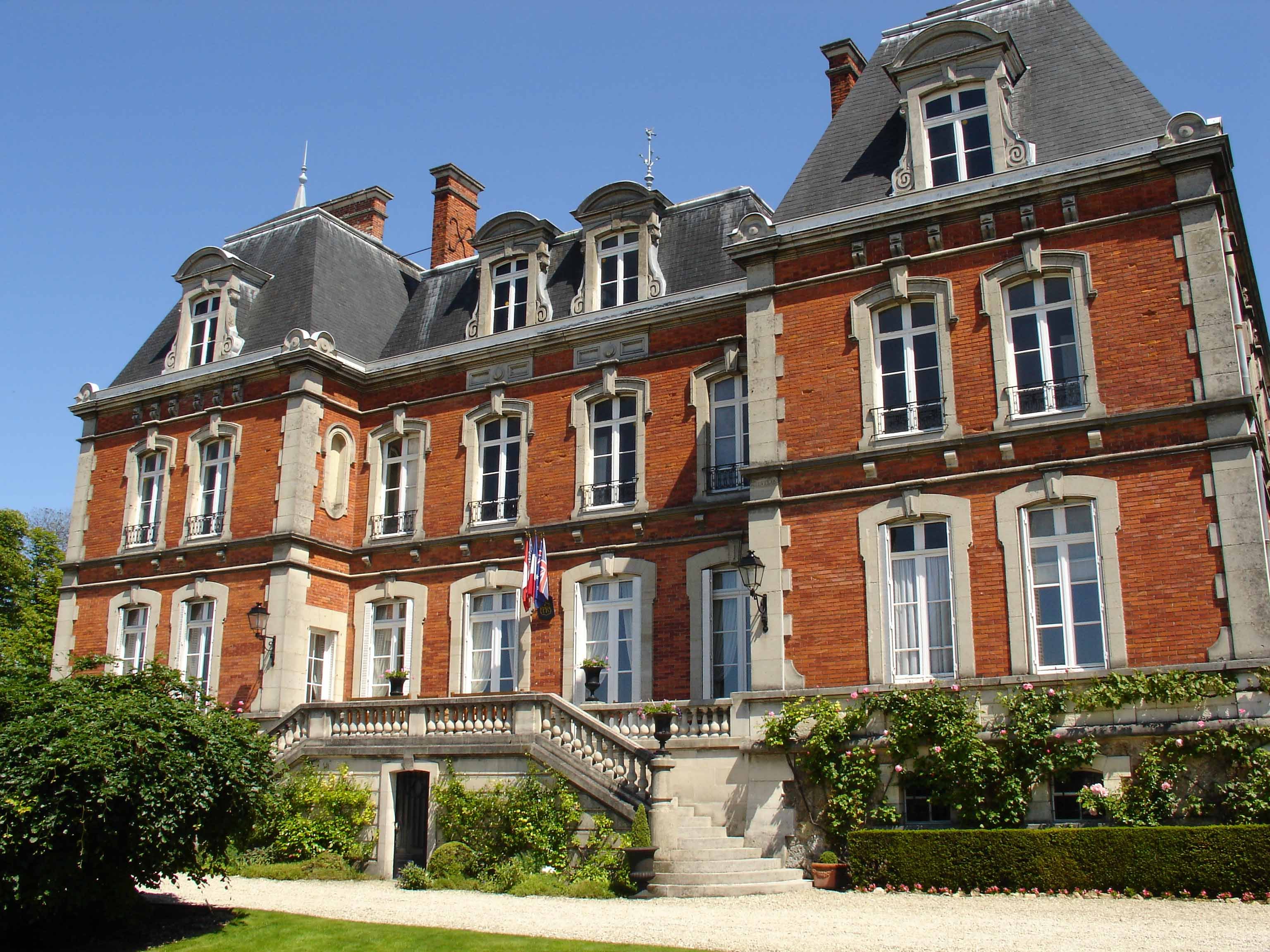
Bars in Épernay
Browse all →
Restaurants in Épernay
Browse all →
At a Glance
- Classic
- Elegant
- Intimate
- Sophisticated
- Wine Education
- Special Occasion
- Cave Tasting
- Historic Building
- AOC Champagne
- Chardonnay
- Pinot Noir
- Pinot Meunier
- Sparkling
- Guided Tasting
- Private Tasting
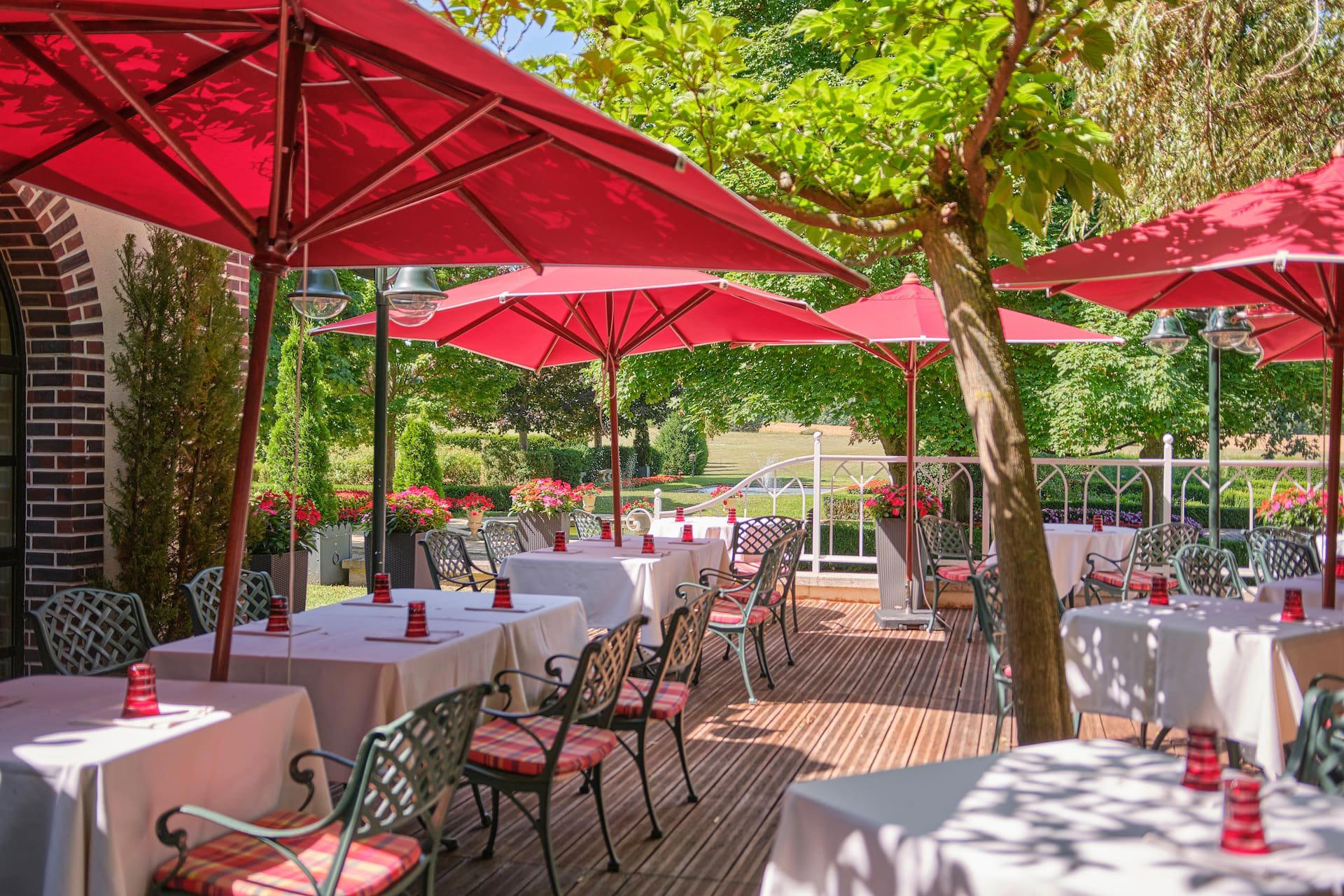
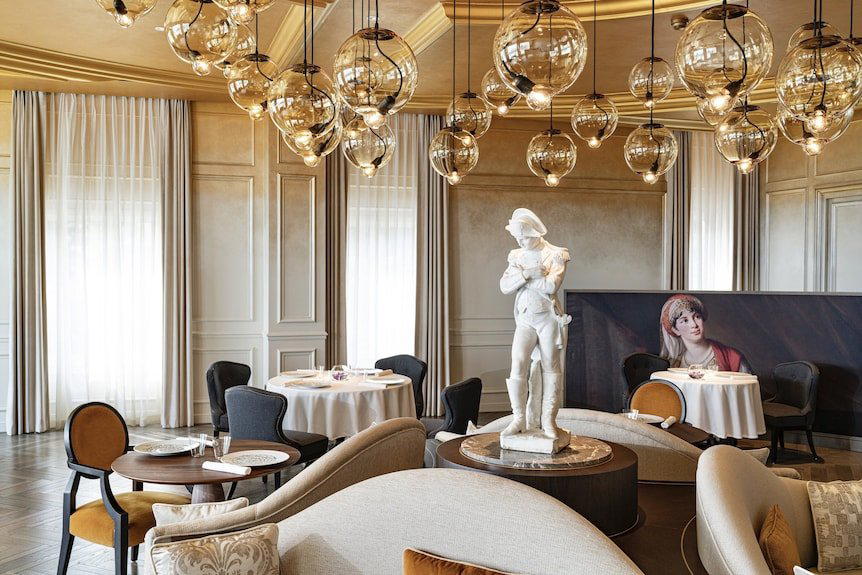
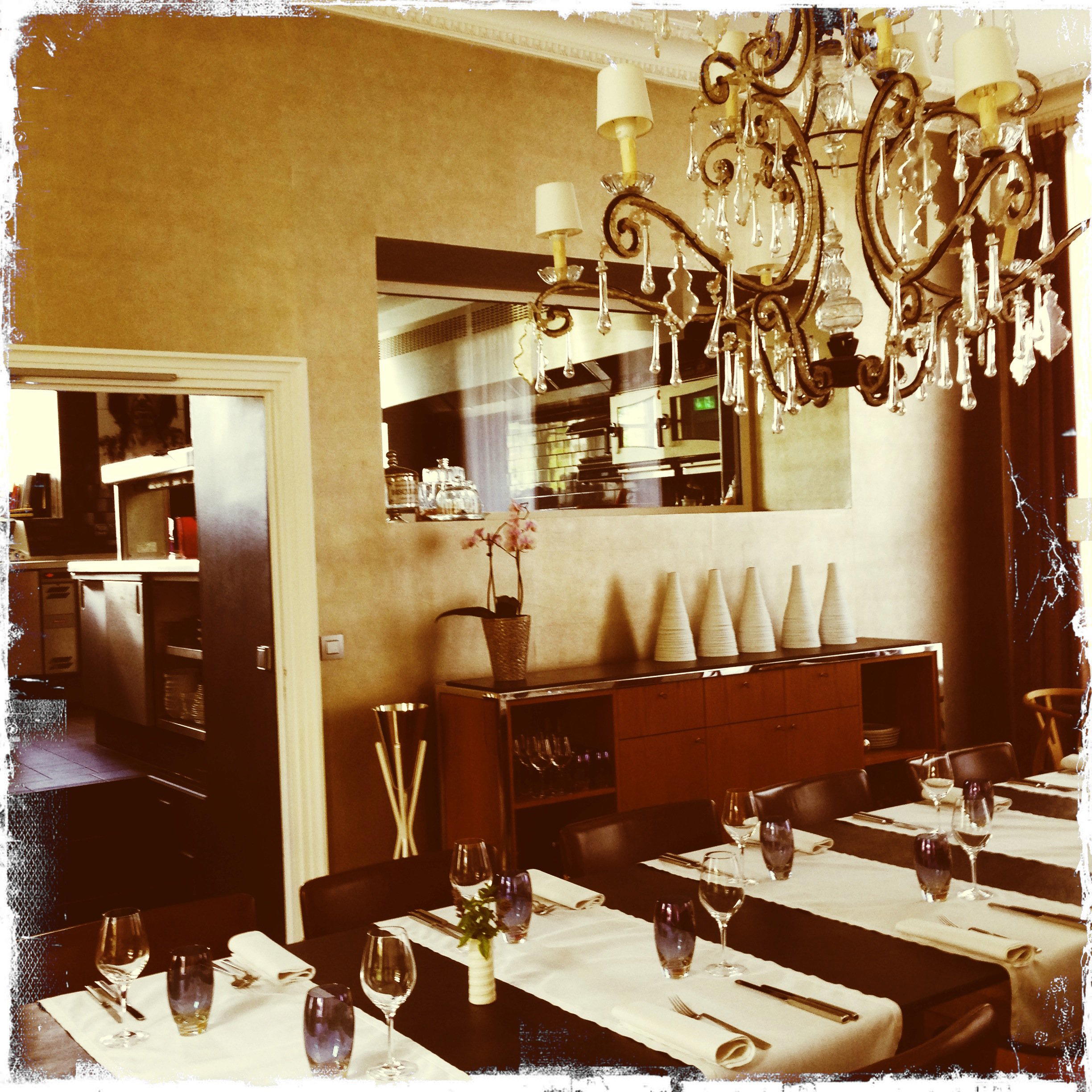
Intimate and historic atmosphere in century-old cellars dug into chalk with a prestigious wine store, featuring knowledgeable guides and generous tastings in a welcoming boutique setting.