Le Royal




1 Michelin Star · Star Wine List · Wine Spectator Best of Award of Excellence
Our verdict
A Michelin-starred table inside Champagne's most decorated five-star hotel, Le Royal sits above the Marne valley with panoramic vineyard views that frame every service. Chef Paul Fourier leads a creative menu that earns its place among the region's serious dining destinations. Star Wine List ranked the cellar first in its category for two consecutive years, 2024 and 2025.

Pearl is the En Primeur Club membership app — saves, bookings, and concierge access live there. Same editors, same standards.
- Address
- Hameau de Bellevue, 9 Rue de la République, 51160 Champillon, France
- Phone
- +33 3 26 52 41 04
- Hours
- Mon ClosedTue–Sat 7–9 PMSun Closed
- Website
- royalchampagne.com
- Directions
- Get directions
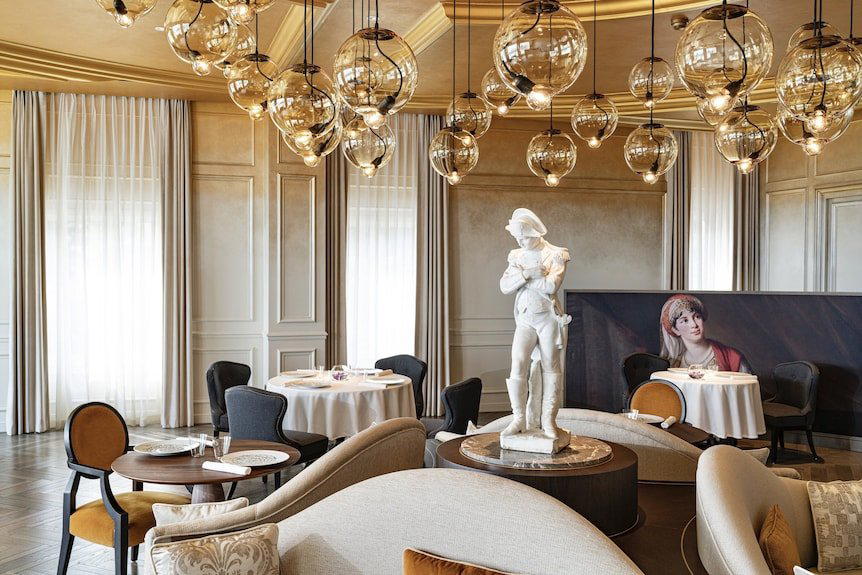
A Table Above the Vines
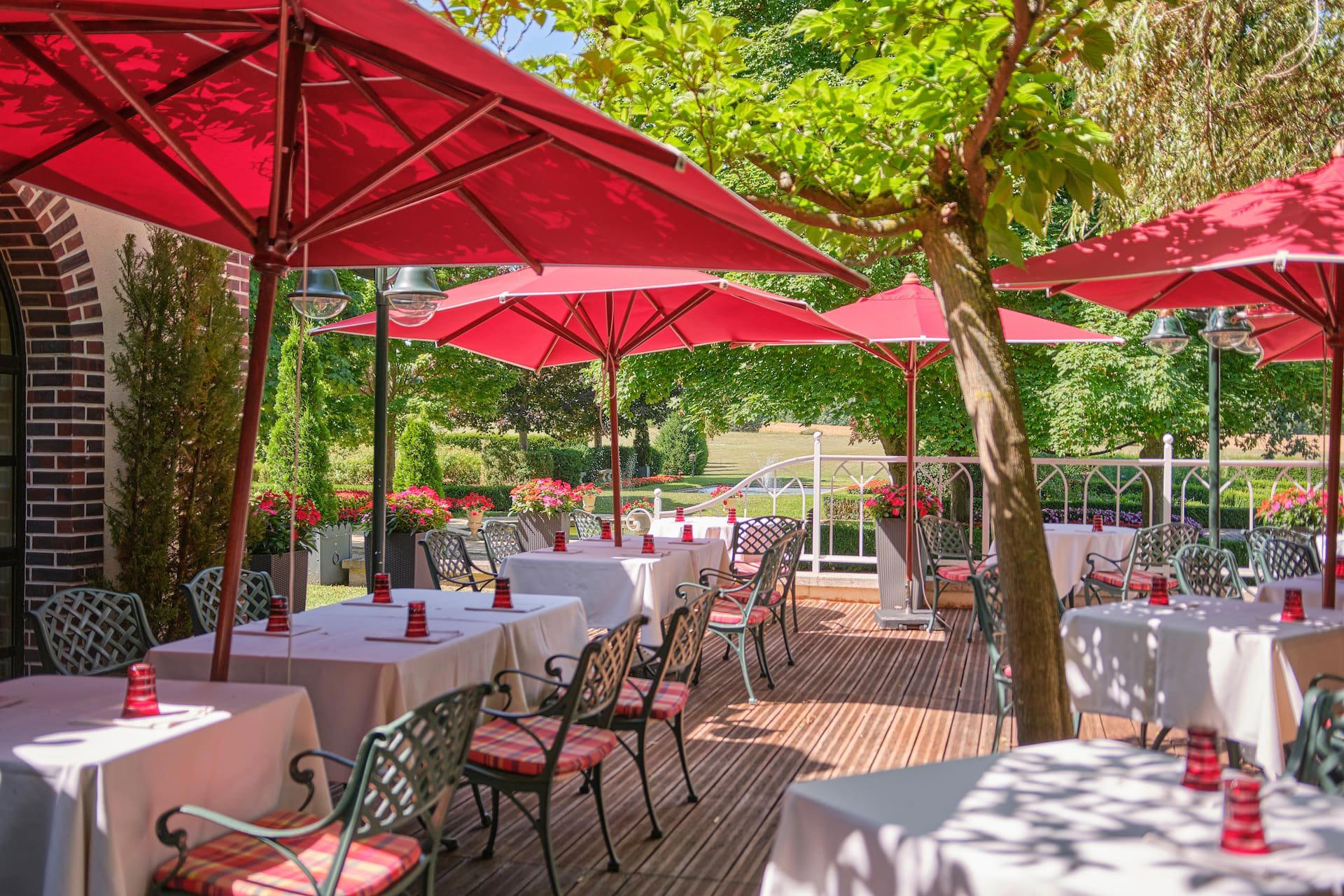
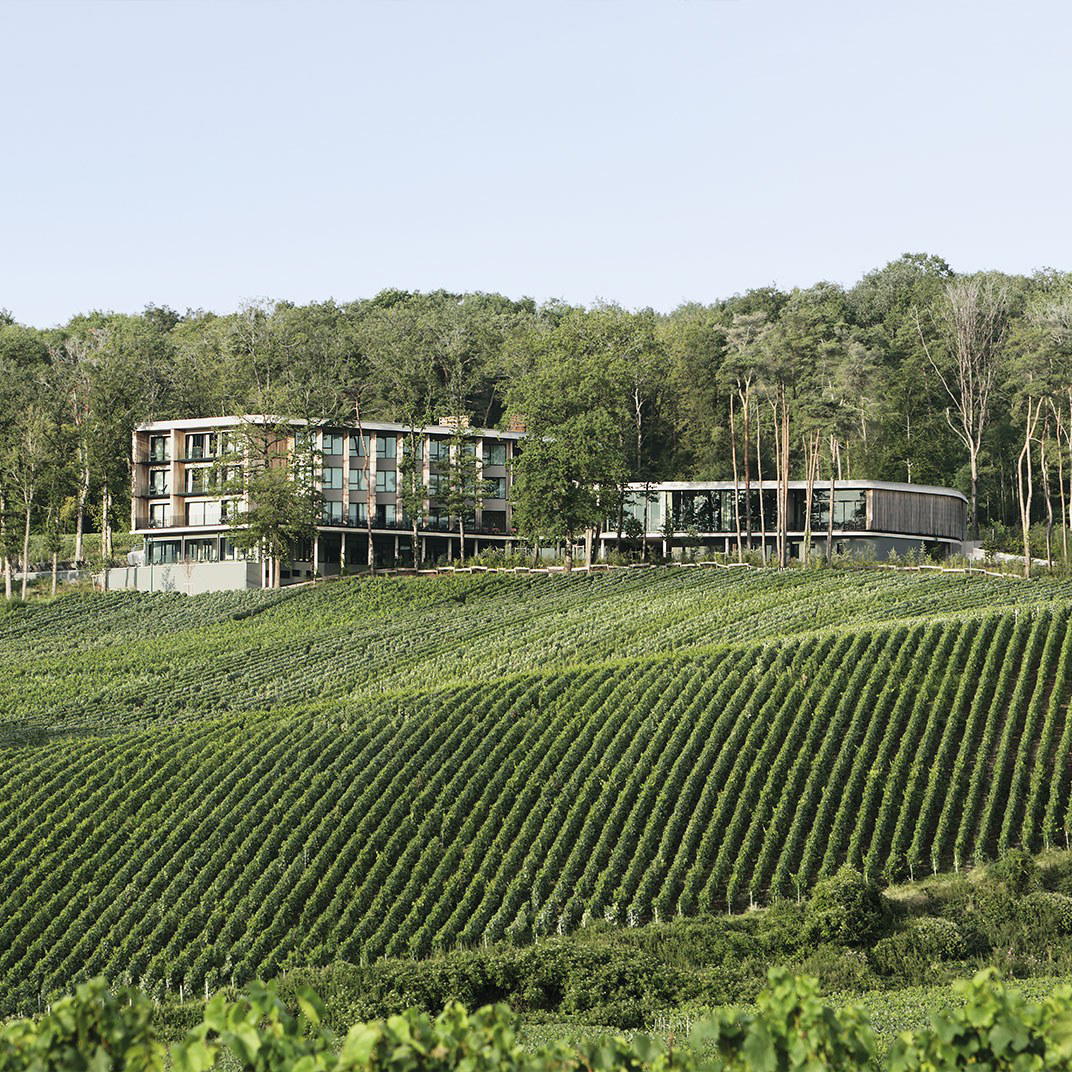
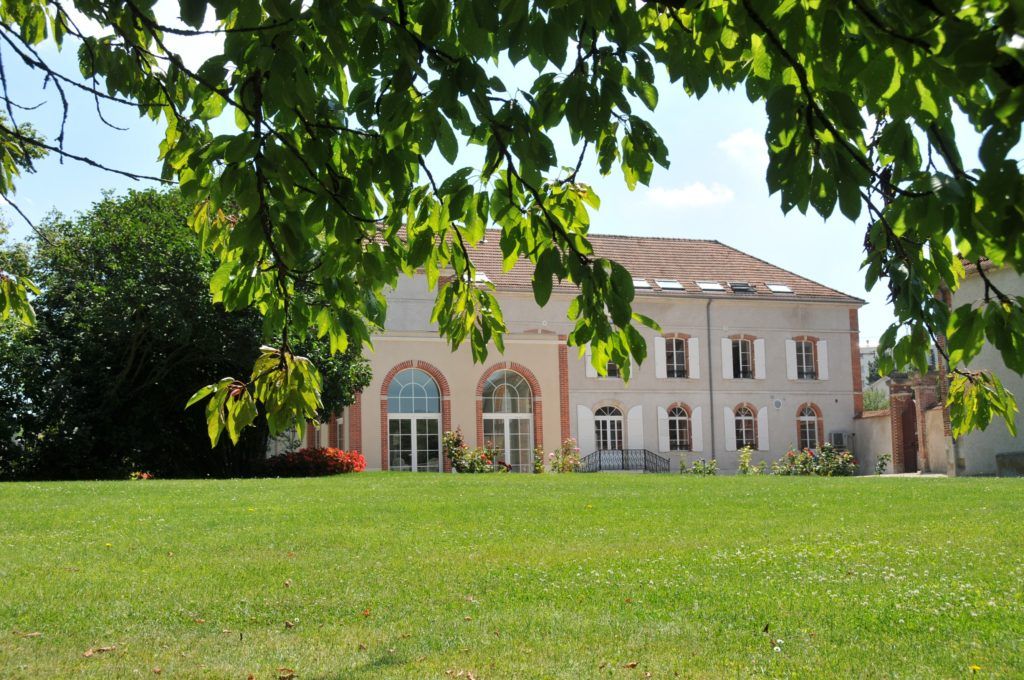
The drive into Champillon already signals the register of what follows. The village sits on a ridge above Épernay, and the approach to the Royal Champagne Hotel and Spa along the Hameau de Bellevue delivers a view across the Marne valley that few dining rooms in France can claim as backdrop. When the weather holds, the vine-covered hillsides extend in every direction, a sight that has drawn visitors to this particular elevation for well over a century. Le Royal, the hotel's flagship restaurant, inherits all of that context and builds a serious creative menu around it.
Hotel restaurants in wine regions occupy a complicated position. The setting does much of the commercial work, and there is always a risk that the kitchen coasts on the view. Le Royal has avoided that trap. Michelin awarded it a star in both 2024 and 2025, and Star Wine List ranked its cellar first in its category for both of those same years — a pairing of accolades that places it in a small group of French hotel restaurants where food and wine programs have advanced together rather than one propping up the other. For context on where this falls in the broader French fine-dining hierarchy, the category includes properties like Alléno Paris au Pavillon Ledoyen in Paris, Flocons de Sel in Megève, and Mirazur in Menton. Le Royal is playing in that conversation, within the specific constraints and advantages of a Champagne-region address.
Creative Cooking in a Champagne Frame
French creative cuisine at the starred level has developed a recognizable grammar over the past decade: seasonal produce treated with technical precision, plate compositions that foreground texture and temperature contrast, and a loosening of the classical sauce vocabulary in favour of lighter, more acidic reductions. Chef Paul Fourier works within that grammar at Le Royal, though the setting imposes its own logic. This is Champagne country, not merely in the sense of a wine that arrives with the bill, but as a culinary and agricultural region with its own seasonal rhythms and larder. The vine-growing communities of the Marne valley have historically drawn their table from the surrounding chalk soils, river produce, and the game that moves through the surrounding forests. A kitchen that ignores that provenance in favour of generic fine-dining imports would be squandering its location.
Chef Fourier's background represents the kind of French formation that matters in this context. French creative kitchens at the starred level have typically demanded long apprenticeships that move through classical houses before arriving at a personal vocabulary. The pattern, visible across a generation of chefs whose restaurants now define the country's dining tier — from the lineages behind Troisgros - Le Bois sans Feuilles in Ouches to the rigorous training paths leading to rooms like Auberge de l'Ill in Illhaeusern, is one of accumulated technique before expression. Fourier's kitchen shows that discipline: the creativity registers as controlled rather than restless, additions that serve the plate rather than announce themselves.
The Wine Program and Its Significance
It would be easy to assume that a hotel restaurant in the middle of Champagne has an unfair advantage on its wine list. The producers are practically next door; relationships with grower houses are geographically obvious; and the marketing value of a great Champagne selection is self-evident when your dining room looks out over the vines producing it. The assumption, however reasonable, undersells what Star Wine List's consecutive number-one rankings in 2024 and 2025 actually measure. Those assessments evaluate list depth, breadth beyond the headline category, pricing structure relative to market, and the curation of grower producers alongside the familiar grandes maisons. A hotel cellar that simply stocked the obvious Champagne labels would not score at that level.
The consequence for the diner is meaningful. Le Royal operates in a region where the difference between a wine list built around négociant brands and one that reaches into the récoltant-manipulant tier is the difference between drinking what you already know and discovering what the appellation actually tastes like at grower scale. The Star Wine List recognition is the clearest publicly available signal that this cellar is doing the harder work. For serious wine travelers, that ranking carries more information than a general impression of the room.
The restaurant sits within a five-star hotel property, which means the wine program extends into a wider hospitality context. Guests staying at the Royal Champagne Hotel and Spa can move between Le Royal and the hotel's other offerings, with the vineyard view available from multiple vantage points across the property. But the restaurant functions as a destination independent of the rooms: the combination of starred cooking and a nationally ranked cellar in a setting this specific is not something that requires an overnight stay to justify the journey from Reims, Épernay, or further afield.
Where Le Royal Sits in the Regional Dining Picture
Champagne as a fine-dining region is often underestimated relative to Burgundy, Bordeaux, or Alsace. The grandes maisons have historically directed visitor attention toward the cave rather than the table, and the region's population centers are modest in scale. Reims has developed a more serious restaurant scene, anchored by rooms like Assiette Champenoise, which holds three Michelin stars and operates at the absolute peak of what French gastronomy delivers. Le Royal's single star positions it in a different tier, one level below that ceiling, but with a location argument that Reims cannot make: the view from Champillon is genuinely specific to this ridge, this valley, and this vine-covered horizon.
For visitors who want to trace how creative French cooking expresses itself across different regional contexts, Le Royal serves as a useful data point alongside very different operations: the Alpine register of Flocons de Sel in Megève, the provençal intensity of AM par Alexandre Mazzia in Marseille, or the southern-French remoteness of Auberge du Vieux Puits in Fontjoncouse. Each of those kitchens converts its geography into cooking; Le Royal's task is the same, with the specific challenge that Champagne itself is so dominant a product that the food risks being overshadowed by what fills the glasses.
It is also worth placing Le Royal within a longer tradition of French destination restaurants that have chosen elevation over urban proximity. Houses like Bras in Laguiole and Paul Bocuse - L'Auberge du Pont de Collonges in Collonges-au-Mont-d'Or have demonstrated that dining experiences anchored to a specific landscape can sustain pilgrimages that purely urban restaurants cannot. Le Royal is a younger entrant to that conversation, but its geography makes the same argument.
Visiting Le Royal: Practical Considerations
Champillon is approximately six kilometers from Épernay, which puts Le Royal within a short drive of the region's main accommodation hub. Reims, with its TGV connection to Paris (roughly 45 minutes), is around 30 kilometers to the north. The practical pattern for most visitors is a drive from one of those two bases, or a stay at the hotel itself, which the awards data confirms is among the strongest five-star options in the region. The reservation should cover not just a table but also whether you want to explore the cellar's depth: asking the sommelier to work within a specific producer style or appellation-focus rather than defaulting to the standard pairings will get more from a list ranked at the top of its category.
For a broader picture of what Champillon and the surrounding Marne valley offer beyond this one table, see our full Champillon restaurants guide, our full Champillon hotels guide, our full Champillon bars guide, our full Champillon wineries guide, and our full Champillon experiences guide.
Frequently asked questions
Does Le Royal work for a family meal?
Is Le Royal formal or casual?
at Le Royal?
Comparison Snapshot
| Venue | Cuisine | Price | Awards |
|---|---|---|---|
| Le Royal - Royal Champagne Hotel & SpaThis venue — the venue you are viewing | French Gastronomique | $200–300 | 1 Michelin Star · Star Wine List |
| Alléno Paris au Pavillon Ledoyen | Creative | Not listed | Michelin 3 Star |
| Kei | Contemporary French, Modern Cuisine | Not listed | Michelin 3 Star |
| L'Ambroisie | French, Classic Cuisine | Not listed | Michelin 3 Star |
| Le Cinq - Four Seasons Hôtel George V | French, Modern Cuisine | Not listed | Michelin 3 Star |
| Plénitude | Contemporary French | Not listed | Michelin 3 Star |
Recognition history
Dated appearances from independent guides and award organizations, with the underlying list record or original source where available.
Michelin 1 Star
Michelin
Star Wine List
Star Wine List
Wine Spectator Best of Award of Excellence
Wine Spectator
Gault & Millau Remarkable Restaurant
Gault & Millau
Full recognition history (8 entries)
Michelin 1 Star
Michelin
Star Wine List
Star Wine List
Michelin 1 Star
Michelin
Star Wine List
Star Wine List
Continue exploring
More in Champillon
Restaurants in Champillon
Browse all →
Bars in Champillon
Browse all →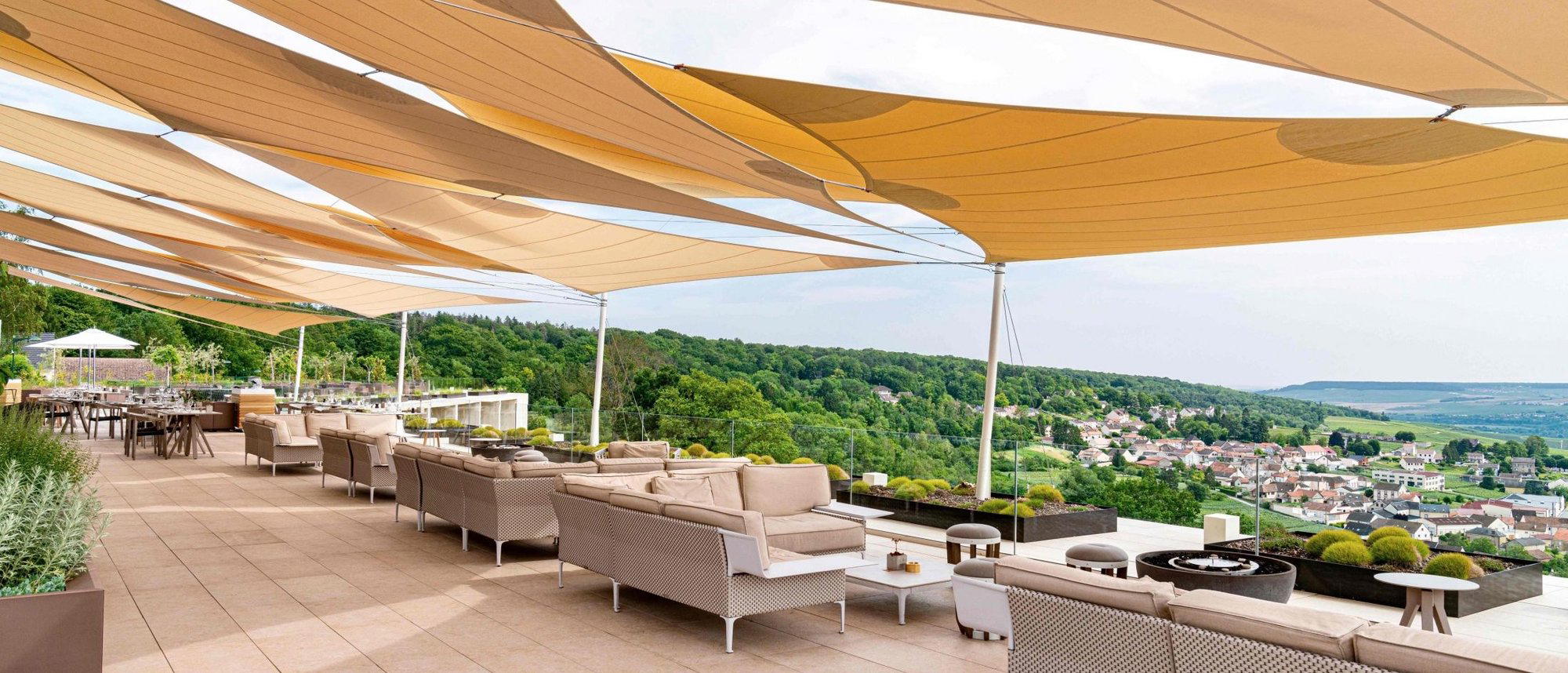
Hotels in Champillon
Browse all →
Wineries in Champillon
Browse all →
Details
- Elegant
- Sophisticated
- Scenic
- Ornate
- Date Night
- Special Occasion
- Hotel Restaurant
- Panoramic View
- Terrace
- Extensive Wine List
- Sommelier Led
- Vineyard
- Mountain
- Tasting Menu
- A La Carte
- Vegetarian Friendly
Current opening hours
- Monday
- Closed
- Tuesday
- 7–9 PM
- Wednesday
- 7–9 PM
- Thursday
- 7–9 PM
- Friday
- 7–9 PM
- Saturday
- 7–9 PM
- Sunday
- Closed
Hours can change for holidays and private events. Last verified .
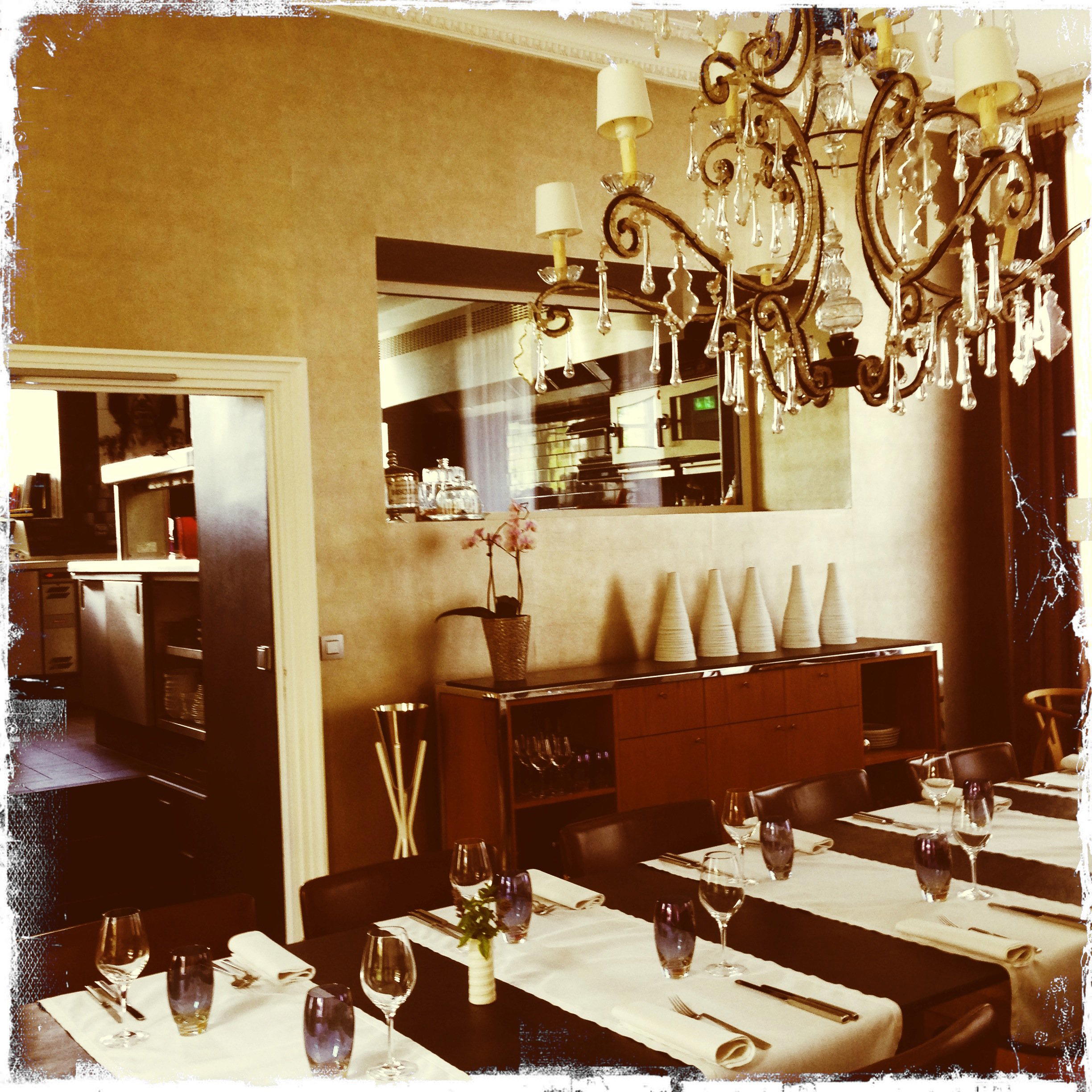
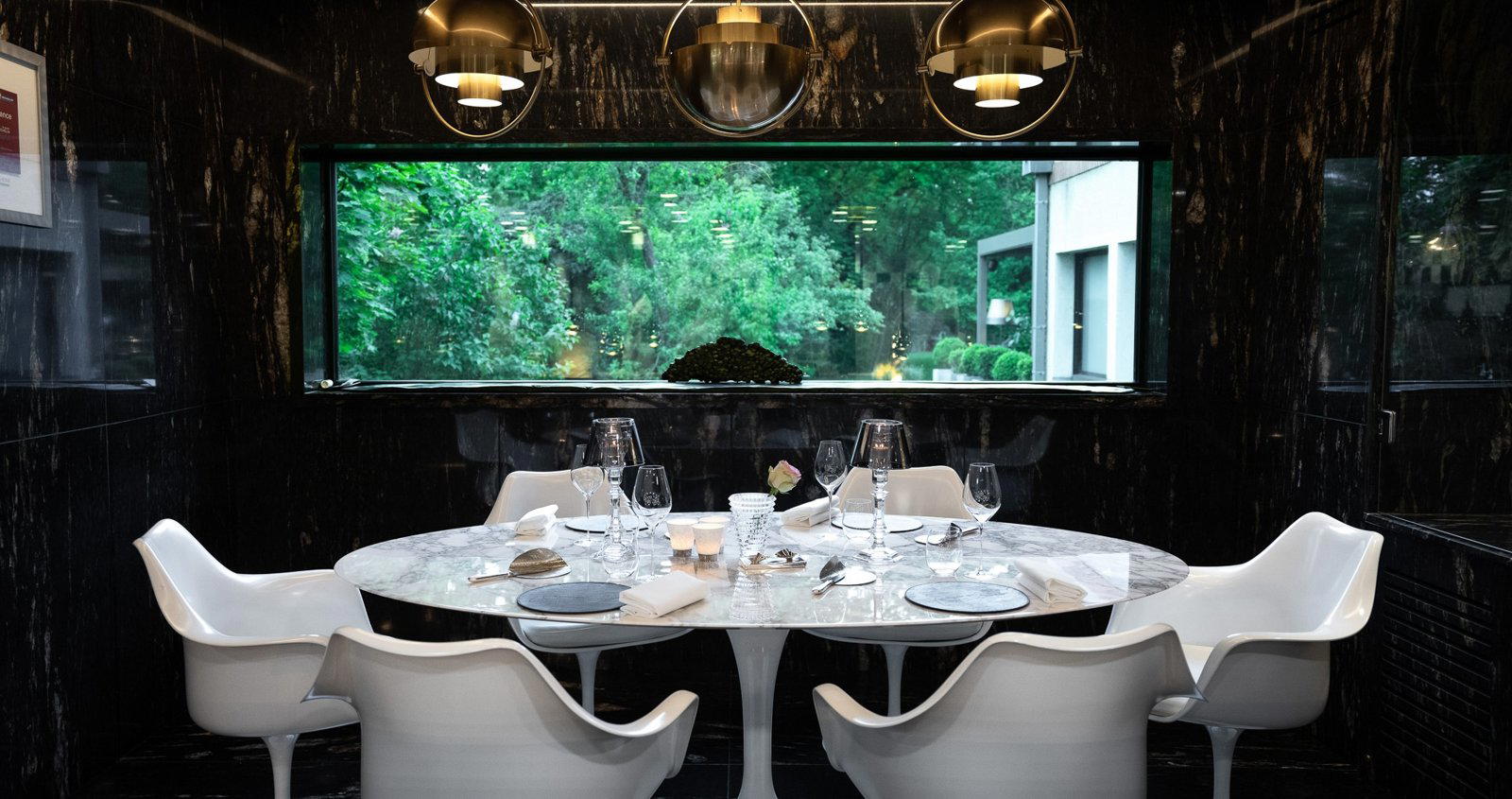
Elegant atmosphere with sophisticated decor featuring ancient paintings and crystal lighting, offering a refined and serene dining experience.