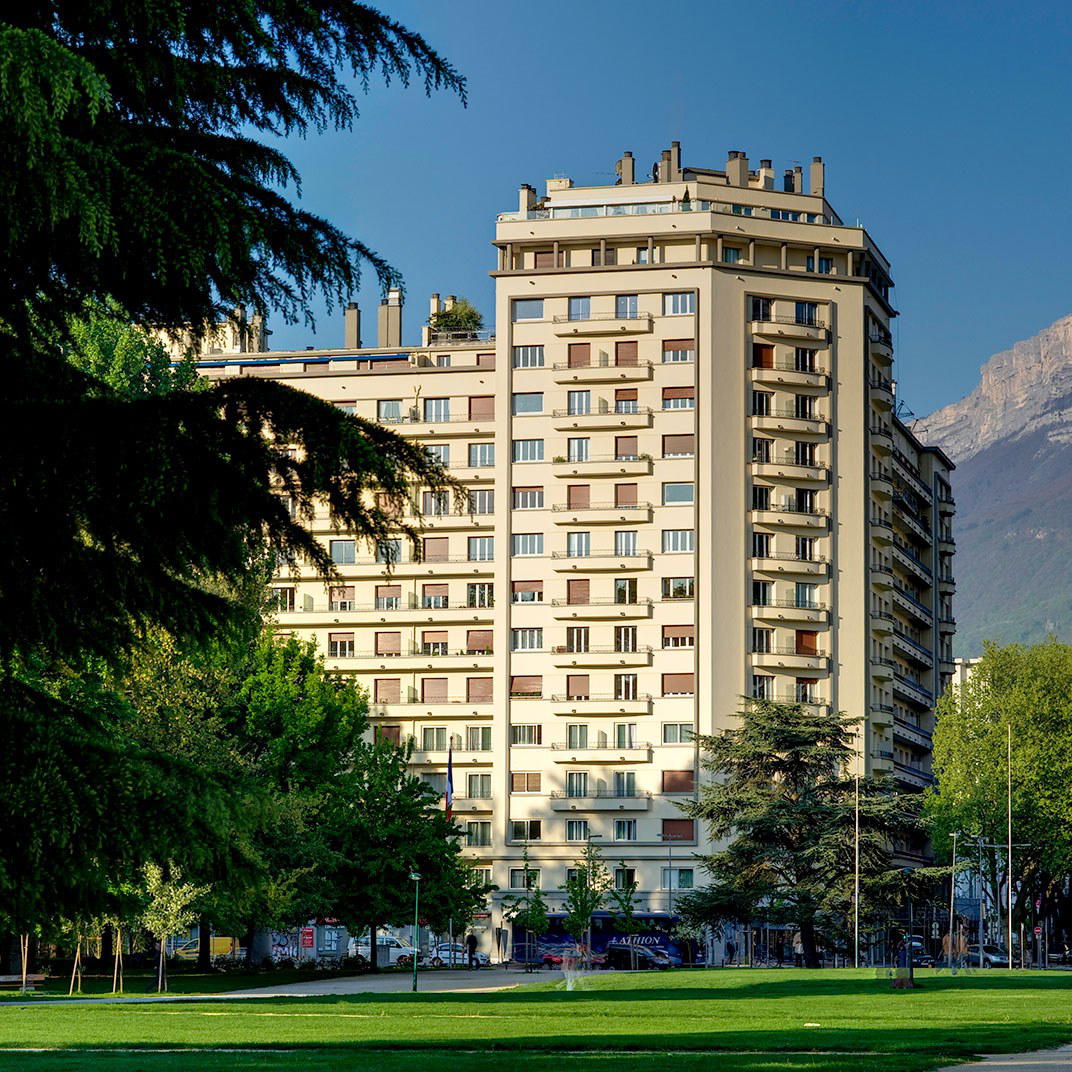
Located on Boulevard Edgar Kofler at the foot of the Chartreuse massif, the venue draws on one of France's most geologically distinct subalpine zones. For those tracing serious French wine and spirits culture beyond the major appellations, this is a reference point.
Pearl is the En Primeur Club membership app — saves, bookings, and concierge access live there. Same editors, same standards.
- Address
- 10 Bd Edgar Kofler, 38500 Voiron
- Phone
- +33 4 76 05 90 34
- Website
- chartreuse.fr
- Directions
- Get directions
 Saves & bookings on Pearl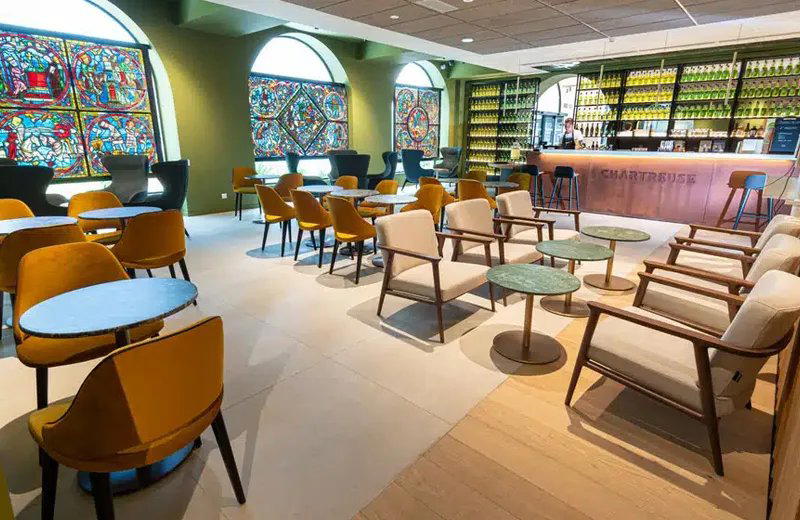
Where the Massif Meets the Glass
The Chartreuse massif does not ease you in gradually. The limestone ridges rise sharply from the Isère valley floor, and the town of Voiron sits at the point where the flatlands end and the mountain geology begins. That transition, from alluvial plain to fractured karst, from mild valley air to the cooler, more demanding climate of the subalpine zone, is precisely what defines the agricultural and artisanal tradition of this part of France. Voiron is not a destination most French food and wine travellers place on their itineraries, yet the town carries a density of terroir-driven production that exceeds its modest profile.
Terroir at This Latitude
The Chartreuse massif is geologically among the more complex subranges in the French Prealps. The dominant limestone, laid down during the Jurassic and Cretaceous periods, creates drainage conditions that stress root systems in ways valley soils do not. Rainfall is high but erratic across elevations. The temperature differential between valley floor and the higher exposures can shift the effective growing season by several weeks, compressing phenological development and concentrating aromatic compounds. These are not abstract conditions: they translate directly into the character of anything produced in proximity to the massif, from the botanicals used in the liqueur tradition the region is associated with to any wine or fermented product that draws on local agricultural inputs.
France has many terroir arguments. Bordeaux makes them on the basis of gravel drainage and maritime moderation, estates like Château Branaire Ducru in St-Julien or Château Batailley in Pauillac anchor their identity in the specifics of the Médoc's stony subsoils. Pomerol producers such as Château Clinet argue for clay's heat retention. In Sauternes, the morning mist patterns that allow botrytis to develop on Château Bastor-Lamontagne and Château d'Arche are the terroir argument made liquid. In the subalpine southeast, the argument is different in register but no less specific: altitude, limestone, and botanical density are the operative forces.
In southeastern France, the major critical attention concentrates predictably: Rhône appellations draw scrutiny, Lyon's restaurant culture commands extensive coverage, and Provence producers like Château d'Esclans in Courthézon attract sustained interest for rosé. The Isère department and the Chartreuse zone exist in a different critical register, which makes a Prestige-level rating here more signal-dense than the same rating might be in a market already saturated with critical coverage. For a venue at this address to carry that recognition, the standard of production or curation has to be demonstrably above the regional average.
Voiron as a Wine and Spirits Reference Point
Voiron's association with the Chartreuse liqueur tradition is one of France's longest-running examples of place-locked production. The Grande Chartreuse monastery's distillation operations, using a formula that incorporates over 130 alpine plants, have operated from this general geography for centuries, with Voiron specifically becoming the production and storage site. The result is a town whose identity in fermented and distilled culture runs unusually deep, and whose geographic specificity is locked to the massif in ways that most French beverage towns cannot claim.
That context matters when evaluating any serious address in the town. The comparison set for Voiron is not the broader Loire or Bordeaux circuit. The relevant peers are places where a single dominant tradition shapes local production culture so completely that any serious venue either participates in that tradition or consciously positions against it. In Speyside, for instance, Aberlour operates inside a whisky geography so defined that individual distillery character is always read against the regional baseline. In Napa, Accendo Cellars in St. Helena positions within a Cabernet-dominated premium tier. Voiron's dominant tradition is botanical and alpine, and Chartreuse as a venue name carries that freight whether or not the menu engages with it directly.
Planning a Visit to Voiron
Voiron sits approximately 25 kilometres northwest of Grenoble, accessible by train on the Lyon-Grenoble regional line, which makes it a feasible day trip from either city without requiring a car. The town centre is compact and walkable, with Boulevard Edgar Kofler forming part of the main urban axis. For those building a longer itinerary through the Auvergne-Rhône-Alpes region, Voiron pairs logically with Grenoble's food scene or with vineyard visits further south and west: the Rhône corridor runs through Haut-Médoc and beyond, and producers like Château Cantemerle or Château Boyd-Cantenac in Cantenac and Château Dauzac in Labarde anchor a broader southwest France circuit that serious wine travellers often run in sequence.
The address is confirmed at 10 Boulevard Edgar Kofler, 38500 Voiron.
The Chartreuse massif's proximity also rewards timing visits around the transition seasons. Late spring and early autumn bring the clearest conditions in the valley, and the mountain backdrop is most legible when the snowline either sits high enough to show the full limestone face or descends far enough to frame the lower ridges. These are not merely scenic considerations: the temperature and humidity patterns of those seasons also reflect the growing conditions that shape what ends up in the glass.
For readers tracking Saint-Émilion alongside their southeast France itineraries, Château Bélair-Monange and the Pomerol and Sauternes estates referenced above represent the Bordeaux end of a broader French fine wine geography. Voiron and Chartreuse sit at a different coordinate on that map, but the 2025 Prestige recognition is the kind of signal that places it alongside those addresses as a stop that merits deliberate planning rather than opportunistic detour.
How It Stacks Up
Comparable venues nearby, for context on price, style, and recognition.
| Venue | Cuisine | Price | Notes |
|---|---|---|---|
| ChartreuseThis venue — the venue you are viewing | Isère | $$ | Not listed |
| Domaine de Montvac | Grenache Noir, Syrah | $$ | Vacqueyras |
| Pernod Absinthe | Absinthe de Pontarlier | $$ | La Cluse-et-Mijoux |
| Domaine Henri Jayer | Winery | Not listed | Burgundy |
| Domaine Auguste Clape | Syrah, Marsanne | $$$ | Cornas |
| Maison Champy | Pinot Noir, Chardonnay | $$$ | Beaune |

At a Glance
- Historic
- Intimate
- Wine Education
- Historic Building
- Cave Tasting
- Isère
- Liqueur Tasting
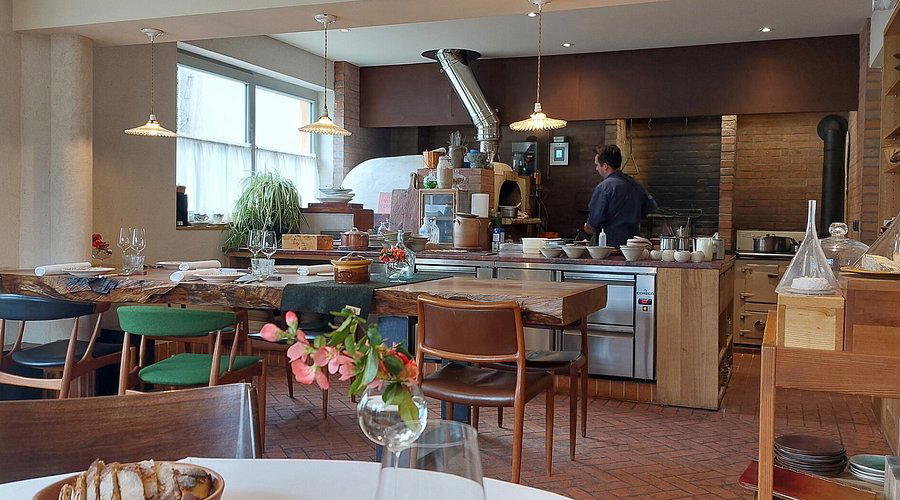
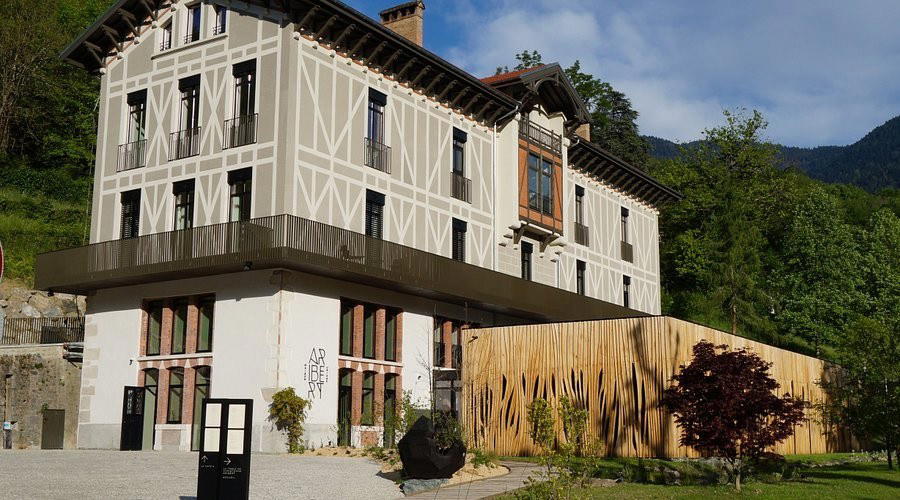
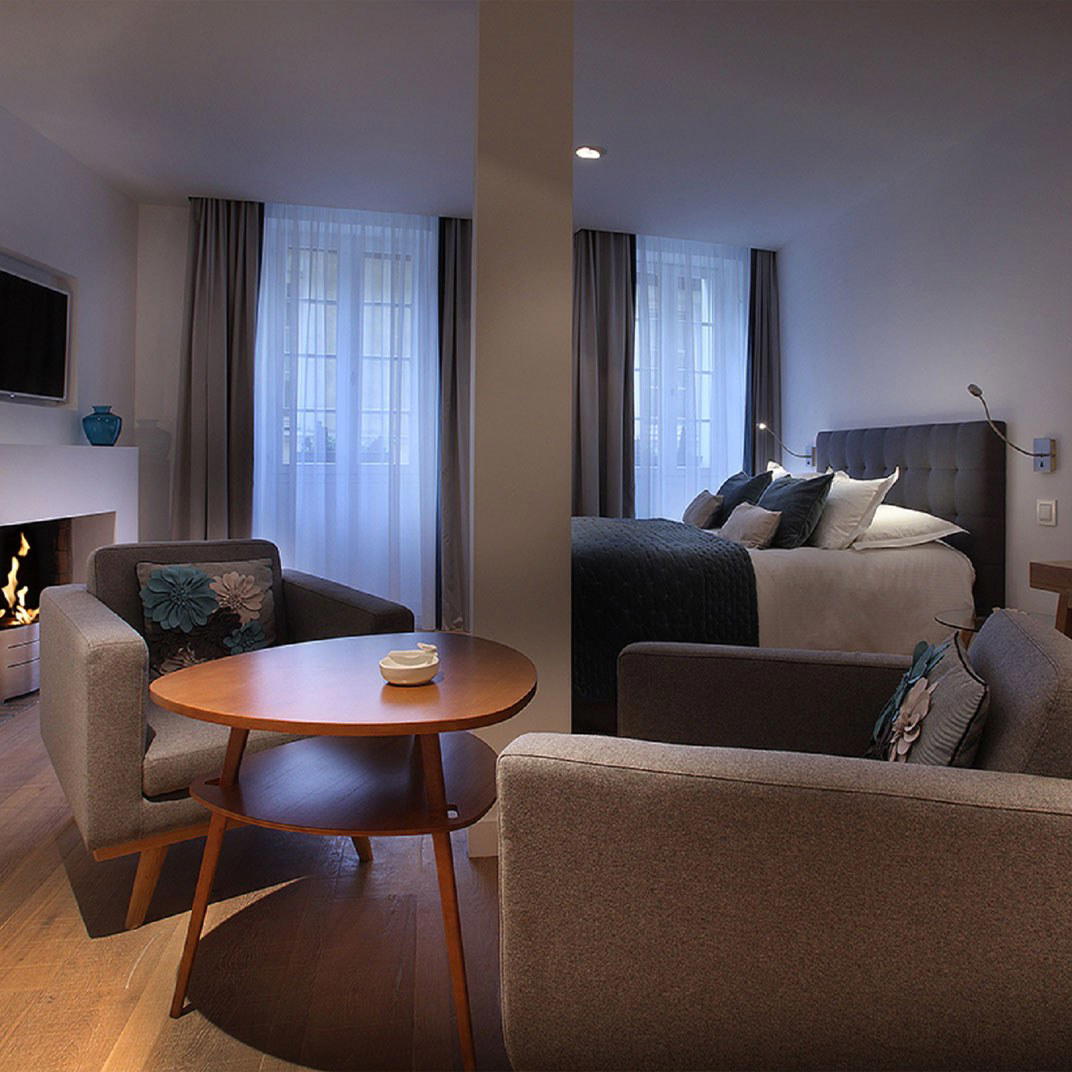
Cozy bar atmosphere with professional service in a beautifully restored historic cellar museum.