Our verdict
Village Cafe sits on Sanlitun Road in Beijing's Chaoyang district, occupying a stretch of the capital where expatriate dining culture and local café life have long overlapped. The venue's address places it within walking distance of the embassy quarter, positioning it in a neighbourhood that has shaped Beijing's international dining conversation for decades. Specific menu, pricing, and booking details are best confirmed directly with the venue.

Pearl is the En Primeur Club membership app, where members save venues, book tables and use the concierge.
The menu
What to order
- Poke Bowl
- Brunch Buffet
- Avocado Chicken Sandwich
- Lasagna
Sanlitun and the Café Equation in Beijing
Beijing's Chaoyang district has, over the past two decades, developed one of the more complicated dining identities in any major Asian city. It is simultaneously home to the capital's most formal Chinese restaurant tier, where places like Xin Rong Ji on Xinyuan South Road and Chao Shang Chao in Chaoyang operate at the ¥¥¥¥ tier with serious regional cooking, and a looser, more international café and casual-dining register that has grown steadily around the Sanlitun embassy belt. Village Cafe, at 11 Sanlitun Road, sits squarely in that second register. The address puts it in the Chaoyang embassy cluster, a neighbourhood where the customer mix has historically skewed toward diplomatic staff, long-term expatriates, and the kind of Beijing resident who crosses easily between local and international references.
That geography matters more than it might appear. The stretch of Sanlitun Road running through the embassy zone is not the same Sanlitun as the commercial Village mall complex a short distance away. The residential-adjacent pockets around the embassies tend to produce a different kind of dining room: quieter, more regulars-driven, and often less concerned with the spectacle that Beijing's upmarket dining tier can produce. Whether Village Cafe follows that pattern precisely is something the venue itself would need to confirm, but the address places it in that gravitational field.
Where Casual Sits in Beijing's Dining Tier
To understand what a café-format venue on Sanlitun Road is operating against, it helps to map the broader tier structure. Beijing's upper dining bracket has consolidated significantly around a handful of reference points. At the formalist end, the ¥¥¥¥ houses, regional Chinese specialists, vegetarian tasting-menu addresses like Lamdre and King's Joy, and Beijing-cuisine specialists such as Jingji, compete on culinary rigour, sourcing credentials, and the kind of service architecture that involves a coordinated front-of-house and kitchen team working in close alignment. That alignment, in Beijing's better rooms, is as deliberate as anything you would find at Le Bernardin in New York or Atomix, even if the idiom is entirely different.
The café and casual mid-register occupies a different competitive logic. Sanlitun's café addresses compete less on kitchen prestige and more on consistency, environment, and how well the room functions as a working or social space across a long day. In this tier, the team dynamic the editorial angle calls for looks different: the emphasis shifts from the triangle of chef, sommelier, and captain to the relationship between kitchen reliability and floor responsiveness, how quickly a room can turn from a mid-morning laptop session to a proper lunch service and back again without losing coherence.
The Sanlitun Embassy Zone as Context
The Sanlitun embassy area has a particular rhythm that distinguishes it from the higher-traffic Sanlitun retail and nightlife corridors. Foot traffic here runs on a weekday-daytime cycle more than a weekend-evening one, which shapes what a successful café needs to be. The better addresses in this micro-zone have historically built their reputations on being dependable across that full daily arc: morning coffee service, working lunches, afternoon meetings, and early dinners that wrap before the city's main dinner rush begins.
That dependability is a form of operational discipline that doesn't get the recognition that tasting-menu precision does, but it's no less demanding to execute well. Across Chinese cities, the addresses that have managed this kind of consistent all-day service, from 102 House in Shanghai to more neighbourhood-focused operations in Beijing, have tended to build genuinely loyal local followings that sustain them through the churn that affects more trend-dependent rooms. It is a different success metric than the kind tracked by the awards circuits that recognise places like Chef Tam's Seasons in Macau or Xin Rong Ji in Chengdu, but it reflects a genuine discipline.
Fitting Village Cafe into the Broader China Café Conversation
The café-format venue has had an interesting trajectory across Chinese cities in the past decade. What began as a largely expatriate-oriented format in cities like Beijing and Shanghai has, in many neighbourhoods, become a format that local diners claim with equal ownership. The visual language of the all-day café, open kitchens, counter seating, non-Chinese food alongside Chinese coffee culture, has become fluent across a much wider demographic than it was even five years ago. Venues in analogous positions in other Chinese cities, from Ru Yuan in Hangzhou to neighbourhood-focused addresses in Fuzhou like Jiangnan Wok·Rong, each reflect the local inflection of this broader shift.
In Beijing, the Sanlitun corridor sits at an interesting junction: internationally visible enough to attract visitors, locally embedded enough to sustain a regulars trade. That dual positioning is where Village Cafe's address places it, at least in structural terms.
Planning a Visit
Village Cafe is located at 11 Sanlitun Road in the Chaoyang district, in the embassy quarter north of the Sanlitun commercial area. The neighbourhood is walkable from several embassy compounds and accessible via the Sanlitun area's taxi and ride-share network; the nearest subway access is via the Tuanjiehu or Dongzhimen lines depending on approach direction, though the walk from either station is moderate. For the broader Beijing dining context, including the formal Chinese restaurant tier across Chaoyang and beyond, the EP Club Beijing restaurants guide covers the full range of addresses across price points and cuisine types. If your Beijing itinerary includes more than a single meal, the contrast between the Sanlitun café register and the more formal rooms at King's Joy or Imperial Treasure Fine Chinese Cuisine in Guangzhou (for reference against a comparable-tier city) gives a useful sense of how wide the dining range across the region actually is. For visitors with more time, the formal-dining circuit extends well beyond Beijing: Shang Palace in Yangzhou, Dai Yuet Heen in Nanjing, Dingshan·Jiangyan in Suzhou, and Fleurs Et Festin in Xiamen each represent the serious end of Chinese city dining beyond the capital.
Frequently asked questions
What's Village Cafe's location?
Village Cafe is located at 11 Sanlitun Rd, 使é¦åº Chaoyang, Beijing, China, 100027, Beijing.
Is Village Cafe in Beijing a good option for expatriates or visitors staying near the Sanlitun embassy area?
Village Cafe's address at 11 Sanlitun Road places it squarely in the Chaoyang embassy quarter, one of Beijing's most established expatriate neighbourhoods. The café-format has historically served this corridor well, offering a familiar setting for those based at or visiting nearby diplomatic missions.
What do people recommend at Village Cafe?
Confirmed menu details for Village Cafe are not part of the available record. The venue sits at 11 Sanlitun Road in Beijing's Chaoyang district, an area where café-format venues have historically served a mix of expatriate and local professional clientele, with offerings typically running toward all-day café staples and light meals. For specific dish recommendations, checking recent visitor reviews on local platforms is the most reliable route.
Should I book Village Cafe in advance?
Café-format venues in the Sanlitun embassy quarter of Chaoyang tend to draw a steady mid-week crowd from nearby offices and consulates, which can tighten availability during peak lunch hours. Arriving off-peak or contacting the venue directly is the practical approach until a formal reservation process is confirmed.
Budget and Context
Comparable venues nearby, for context on price, style, and recognition.
| Venue | Cuisine | Price | Awards | Notes |
|---|---|---|---|---|
| Village CafeThis venue (the venue you are viewing) | Contemporary International Cafe | $20–30 | Not listed | Not listed |
| Vineyard Cafe | Home-Style European | Not listed | Not listed | Beixinqiao, Home-Style European |
| Dali Courtyard | Yunnanese | $20–30 | Not listed | Jiaodaokou, Yunnanese |
| Shanghai | Gongrentiyuchang, Beijing Cuisine | Not listed | Not listed | Not listed |
| Zhenziwei seafood restaurant | Hong Kong-Style Seafood Congee Hot Pot | $30–50 | Black Pearl 1 Diamond | Sanlitun, Hong Kong-Style Seafood Congee Hot Pot |
| 丽æå¡å°é¡¿é åºçé¤å | Balizhuang, chinese | Not listed | Not listed | Not listed |
Continue exploring
More in Beijing
Restaurants in Beijing
All restaurants in Beijing →

Bars in Beijing
All bars in Beijing →
Details
- Cozy
- Modern
- Brunch
- Casual Hangout
- Open Kitchen
- A La Carte
- Vegetarian Friendly
- Gluten Free Options
Current opening hours
- Monday
- 6:30 AM–10:30 PM
- Tuesday
- 6:30 AM–10:30 PM
- Wednesday
- 6:30 AM–10:30 PM
- Thursday
- 6:30 AM–10:30 PM
- Friday
- 6:30 AM–10:30 PM
- Saturday
- 6:30 AM–10:30 PM
- Sunday
- 6:30 AM–10:30 PM
Hours can change for holidays and private events. Hours as of .
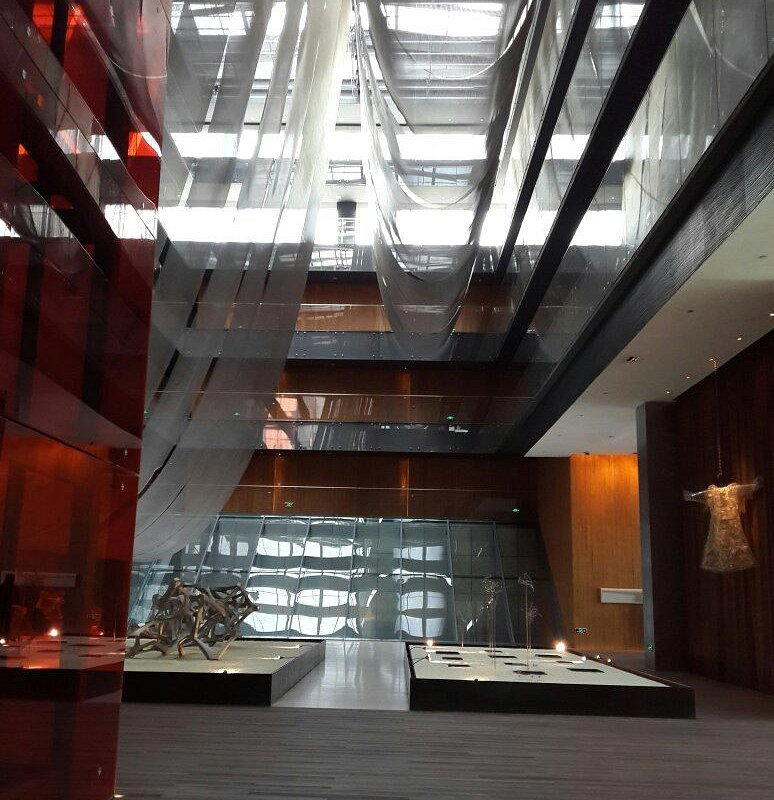
Spacious and naturally lit with a bright, colorful, and airy atmosphere.