
1 Michelin Star
Our verdict
Dingshan·Jiangyan (Xiangcheng) holds a 2025 Michelin star on Shiquan Street in Suzhou's Canglang district, placing it among the city's recognised addresses for classical Jiangsu cuisine. The ¥¥¥ price tier positions it in the mid-to-upper bracket of Suzhou dining, where traditional Su-style technique meets considered presentation. For visitors with serious interest in the regional tradition, it warrants close attention.

Pearl is the En Primeur Club membership app, where members save venues, book tables and use the concierge.
The menu
What to order
- Suzhou claypot rice
- Fried Purple Cap
- Sauced Water Shield
- Aged pigeon
Shiquan Street and the Weight of Suzhou's Culinary Tradition
Shiquan Street runs through Canglang district in a way that puts you immediately inside older Suzhou. The canal-side lanes, whitewashed walls, and dense residential fabric of this part of the city carry a different register than the tourist-facing blocks near Pingjiang Road. It is in this context that Dingshan·Jiangyan (Xiangcheng) operates, at 420 Shiquan Street, where the setting does a great deal of the editorial work before a dish arrives.
Su cuisine, or Suzhou-style Jiangsu cooking, is among the most historically documented regional traditions in Chinese gastronomy. Court records from the Qing dynasty reference its delicacy and sweetness; the combination of restrained sugar with soy and an emphasis on seasonal freshwater produce has defined the tradition for centuries. Unlike the spice-forward schools of Sichuan or Hunan, Su cuisine asks more of its cook in terms of knife work, timing, and the management of subtle aromatics. Braising, steaming, and slow reduction dominate the method set. What arrives at table tends to look modest and taste considered, a contrast that regularly confuses diners expecting spectacle.
A Michelin Star in Context
The 2025 Michelin star awarded to Dingshan·Jiangyan (Xiangcheng) places it within a defined peer group in the city. At the ¥¥¥ price tier, it sits one bracket below Pingjiangsong, Suzhou's ¥¥¥¥ Michelin-starred address and arguably the most formal expression of the tradition in the current guide. The distinction matters: the ¥¥¥ tier in Suzhou occupies the space where serious cooking and relative accessibility intersect, drawing both local business dining and travellers who understand the tradition but do not require the full ceremony of the upper-tier counters.
Across the wider region, starred addresses for Jiangsu cuisine have multiplied in recent years. Guang Ying Ju • Lao Zheng Xing in Nanjing represents how the tradition presents in the provincial capital, while cities further afield, from Ru Yuan in Hangzhou to 102 House in Shanghai, show how refined Chinese regional cooking has evolved across Yangtze Delta dining. Dingshan·Jiangyan belongs inside that broader movement, specifically in the Suzhou instance of it.
For those tracking Michelin recognition across Chinese fine dining more widely, the guide's expanding coverage has created a denser map. From Xin Rong Ji (Xinyuan South Road) in Beijing to Chef Tam's Seasons in Macau and Imperial Treasure Fine Chinese Cuisine in Guangzhou, the common thread is regional specificity earning recognition, rather than fusion or international reference points. Dingshan·Jiangyan sits squarely in that category.
The Sensory Register of Su Cuisine
Any serious engagement with Jiangsu cuisine requires adjusting expectations around visual drama. Su-style dishes are rarely plated for social media in the way that some contemporary Chinese restaurants have adopted. The bowls tend toward ceramic in muted glazes; the sauces are darker, glossier, less photogenic than the vibrant reds of Cantonese or the chile-oil pools of Sichuan. The intelligence in the cooking is tactile and aromatic rather than visual.
The smell that typically defines a Suzhou kitchen is a combination of Shaoxing rice wine, old soy, and the faint sweetness of caramelised rock sugar. These are the aromatics of red-braised pork, of braised crab with ginger, of slow-cooked freshwater fish. Sound, too, carries its own signal: the low simmer rather than the fierce wok-fire snap. These are patience-based techniques, and the silence of a kitchen producing Su cuisine properly is itself a kind of marker.
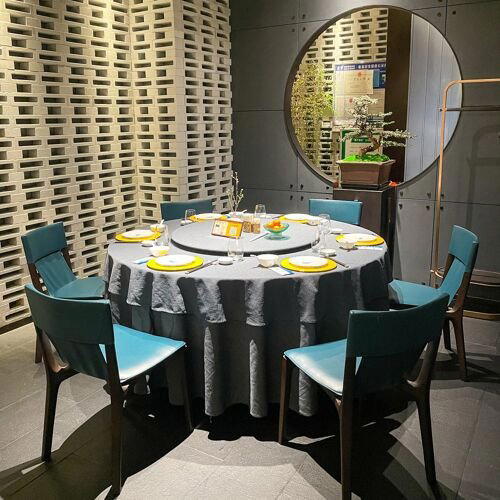
At the ¥¥¥ tier, the room at this address is likely to feel considered without being theatrical. Suzhou's better mid-tier restaurants have increasingly moved toward private-room formats or at least clearly delineated table arrangements, reducing the ambient noise that can compromise the quieter pleasures of the food. The Canglang district setting suggests a neighbourhood-embedded character rather than a hotel-adjacent or commercial-strip format.
How Dingshan·Jiangyan Sits Among Suzhou's Options
Suzhou's restaurant scene has enough range that a meaningful comparison is possible. For Jiangsu cuisine at a more accessible price point, Bai Sheng Ren Jia (Wuzhong) occupies the ¥¥ tier in Wuzhong district, offering the tradition without the mid-upper pricing. At the other end of the local spectrum, Ban Ting Jia Yan (Suzhou Industrial Park) extends the regional dining conversation into the newer commercial east of the city.
For those interested in the rural edge of Suzhou-adjacent eating, Ge Jia Wu Farmer's House represents the farmhouse end of the tradition, where ingredients arrive directly from garden or lake. Hua Chi 88 rounds out the city's mid-tier alternatives, offering a different approach to the same geographic pantry. Dingshan·Jiangyan, with its Michelin recognition and ¥¥¥ positioning, sits above this comparison group in terms of formal ambition and price expectation, and should be chosen when the goal is specifically starred-level Jiangsu cooking in the Canglang area rather than a general Suzhou meal.
Planning the Visit
The address at 420 Shiquan Street in Cang Lang Qu, Suzhou 215005 places the restaurant in one of the older residential-cultural corridors of central Suzhou, within walking distance of Canglang Pavilion, one of the city's classical gardens. For visitors structuring a day around the older city fabric, that proximity makes an evening here a natural extension rather than a diversion. The ¥¥¥ tier implies a per-person spend that lands comfortably in the mid-upper range of local restaurant pricing, meaningful but not prohibitive for a table of two or a small group.
Given that this is a Michelin-starred address in a city where local and regional dining interest has grown steadily, advance reservation is advisable, particularly for weekend evenings or key dates in the Chinese calendar. No online booking platform or specific reservation method appears in current public records, which suggests direct contact with the restaurant or a local concierge arrangement as the reliable path in.
For anyone building a broader Suzhou itinerary around dining, the full coverage across categories is available in our full Suzhou restaurants guide. Accommodation context is in our full Suzhou hotels guide, and if the visit extends to drink and culture, our full Suzhou bars guide, our full Suzhou wineries guide, and our full Suzhou experiences guide cover the rest of the city's offer. For those comparing across the broader Chinese fine dining circuit, Xin Rong Ji in Chengdu and Le Bernardin in New York City represent points on the same global map where technique and tradition are the primary currency.
Frequently Asked Questions
Frequently asked questions
Does Dingshan·Jiangyan (Xiangcheng) work for a family meal?
At the ¥¥¥ price tier, this is a planned occasion rather than a spontaneous family outing. Families with a genuine interest in classical Jiangsu cooking will find the 2025 Michelin star a reasonable signal of consistency and craft. It suits a table marking a birthday or reunion more naturally than it suits young children or casual group dining.
What should I expect atmosphere-wise at Dingshan·Jiangyan (Xiangcheng)?
The Shiquan Street address in Canglang district puts the restaurant inside one of Suzhou's older residential-cultural corridors, where canal-side lanes and whitewashed walls set the register before you arrive. A Michelin-starred Jiangsu address at the ¥¥¥ tier in this neighbourhood typically runs with composed, understated interiors rather than theatrical presentation. Expect a measured pace and a room oriented around the food.
Is Dingshan·Jiangyan (Xiangcheng) Michelin-listed?
Dingshan·Jiangyan (Xiangcheng) has received recognition including: Michelin 1 Star (2025).
What do people recommend at Dingshan·Jiangyan (Xiangcheng)?
Jiangsu cuisine at a Michelin-starred level in Suzhou generally centres on braised and slow-cooked preparations, freshwater fish from the surrounding lakes, and seasonal produce handled with restraint rather than spectacle. Asking the kitchen for house recommendations on arrival is the practical approach here.
Quick Comparison
| Venue | Cuisine | Price | Awards | Notes |
|---|---|---|---|---|
| Dingshan·Jiangyan (Xiangcheng)This venue (the venue you are viewing) | Modern Jiangsu Cuisine | Not listed | 1 Michelin Star | Not listed |
| Yu Mian Tang | Suzhou Heritage Noodles | $20–30 | Michelin Bib Gourmand | Not listed |
| Pingjiangsong | Modern Suzhou Cuisine | Not listed | 1 Michelin Star | Jiangsu Cuisine |
| Bai Sheng Ren Jia (Wuzhong) | Authentic Suzhou (Jiangsu) Cuisine | Not listed | Michelin Bib Gourmand | Not listed |
| Ban Lan (Huqiu) | Modern Fujian | Not listed | Michelin Plate | Not listed |
| Chai Court | Cantonese | Not listed | Michelin Plate | Not listed |
Recognition history
Dated appearances from independent guides and award organizations, with the underlying list record or original source where available.
Michelin 1 Star
Michelin
Continue exploring
More in Suzhou
Details
- Elegant
- Sophisticated
- Scenic
- Intimate
- Business Dinner
- Celebration
- Special Occasion
- Panoramic View
- Private Dining
- Local Sourcing
- Waterfront
- A La Carte
Current opening hours
- Monday
- 10:30 AM–2:30 PM, 5–9 PM
- Tuesday
- 10:30 AM–2:30 PM, 5–9 PM
- Wednesday
- 10:30 AM–2:30 PM, 5–9 PM
- Thursday
- 10:30 AM–2:30 PM, 5–9 PM
- Friday
- 10:30 AM–2:30 PM, 5–9 PM
- Saturday
- 10:30 AM–2:30 PM, 5–9 PM
- Sunday
- 10:30 AM–2:30 PM, 5–9 PM
Hours can change for holidays and private events. Hours as of .
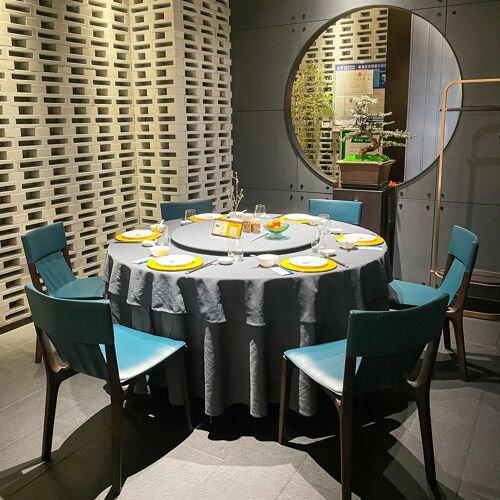
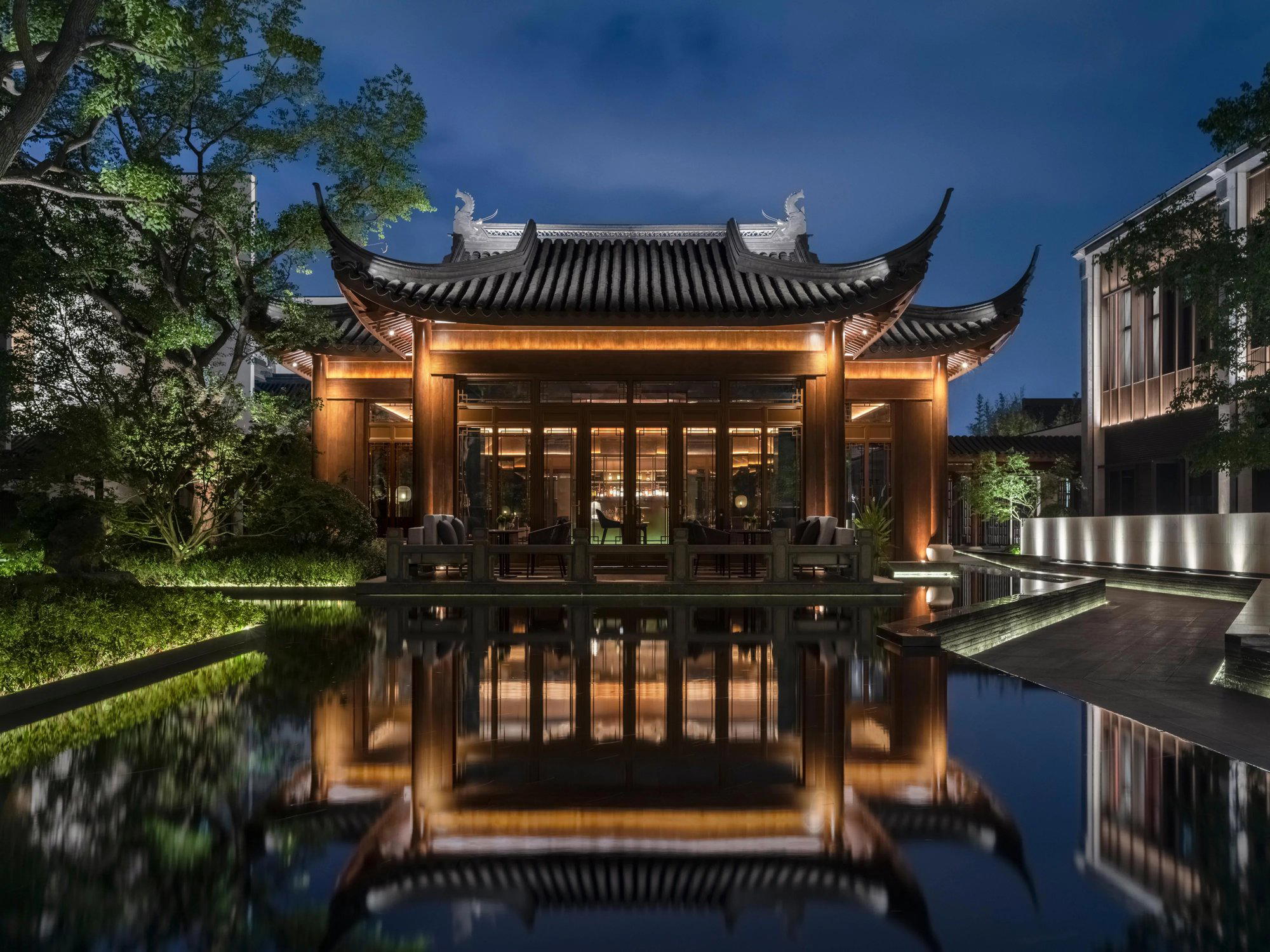
Light-filled dining room with floor-to-ceiling windows, hushed atmosphere featuring intangible cultural heritage displays creating a museum-like refined setting.