



1 Michelin Star · La Liste Top Restaurants · Black Pearl 1 Diamond
Our verdict
Sheng Yong Xing in Chaoyang holds a Michelin star, a Black Pearl Diamond, and a place on La Liste's 2025 global ranking, making it one of Beijing's more credentialed addresses for Sichuan-inflected Chinese cooking. The signature roast duck, certified 45 days old and grilled over jujube wood in a stone oven, is the dish that draws repeat bookings. A reasonably priced wine list and a bright, open dining room round out the offer at the ¥¥¥ price tier.

Pearl is the En Primeur Club membership app — saves, bookings, and concierge access live there. Same editors, same standards.
The menu
What to order
- Roast Duck
- Sautéed Bohai Sea Prawns
Where Beijing's Serious Duck Bookings Land
Beijing's roast duck tradition is one of the most documented and debated in Chinese gastronomy, with a hierarchy of addresses ranging from century-old institutions in Qianmen to modern, precision-driven kitchens in Chaoyang. Within that hierarchy, a distinct tier has emerged over the past decade: restaurants that take the duck as a serious culinary object, apply documented sourcing protocols, and sit at a price point that signals intent without reaching the extreme of the city's most formal banquet rooms. Sheng Yong Xing on Xindong Road sits in that tier, where the ¥¥¥ pricing places it below neighbours like Xin Rong Ji (Xinyuan South Road) and Chao Shang Chao (Chaoyang), both of which operate at ¥¥¥¥, while the award stack places it well above casual neighbourhood cooking.
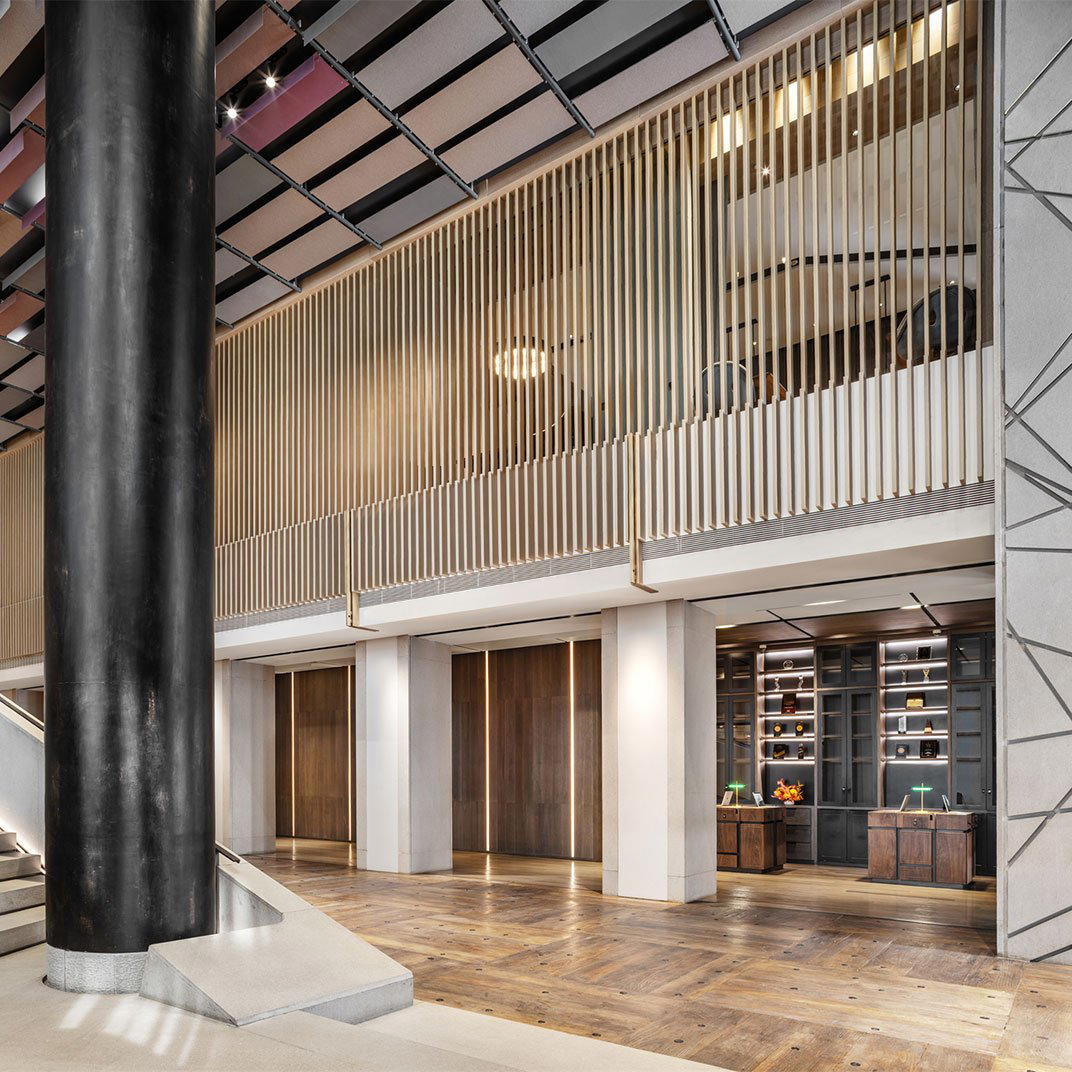
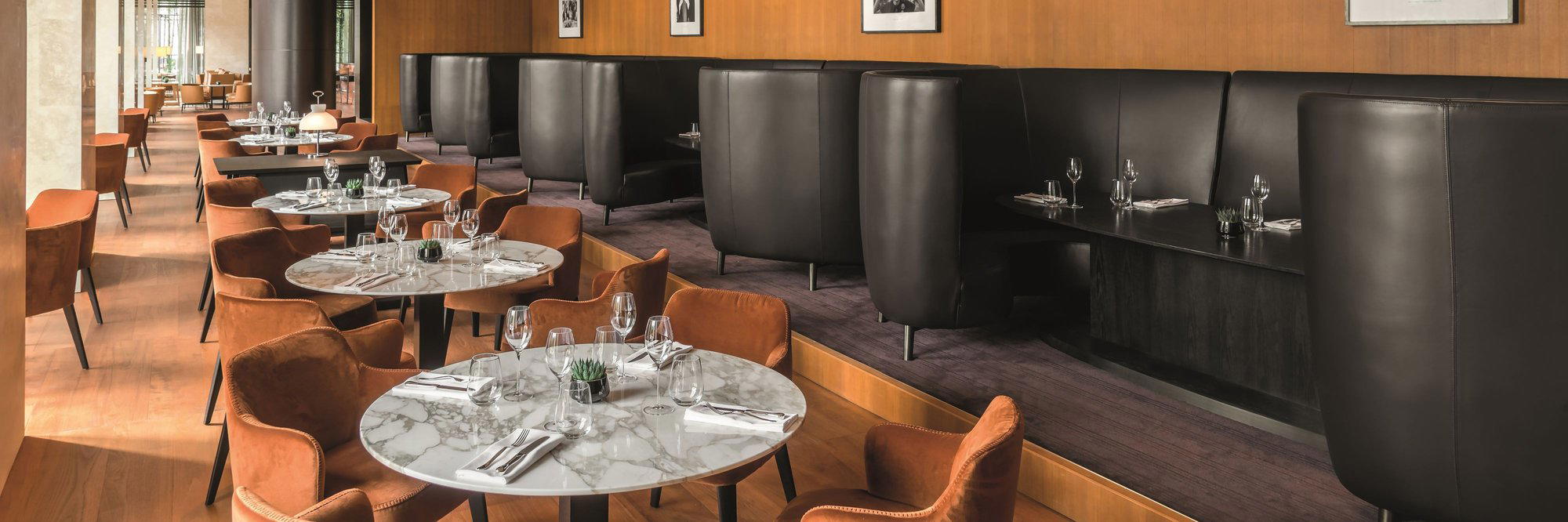
The room itself contributes to the appeal in a way that older Beijing duck houses do not. Where many of the capital's legacy roast duck restaurants favour dark wood panelling and a certain formality of ceremony, Sheng Yong Xing reads as open and bright, a deliberate contrast that positions it for a different kind of occasion: the sort of dinner where the food remains the centrepiece but the setting does not impose. That combination of serious culinary credentials and an accessible physical atmosphere is increasingly the model for the Chaoyang dining market, where the customer base is internationally mobile and less interested in theatrical formality than in cooking that can be verified by a third party.
The Duck and What Comes With It
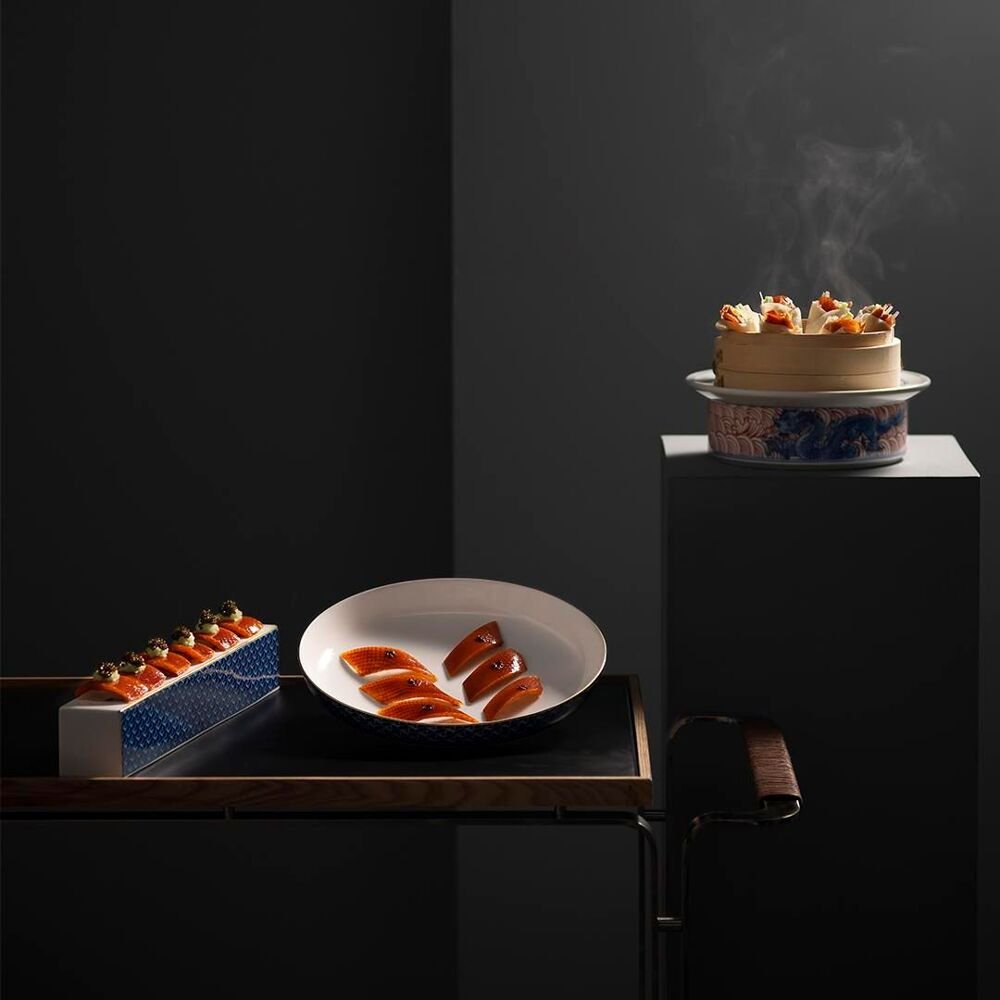
The roast duck at Sheng Yong Xing is the dish around which a visit is organised. The sourcing protocol is documented: each bird arrives with a certificate confirming it is 45 days old, a detail that matters because duck raised to that precise age carries a specific fat-to-muscle ratio that governs how the skin behaves in a stone oven heated by jujube wood. Jujube wood burns at a consistent temperature with a mild, faintly sweet smoke character, which is the traditional Beijing choice for stone-oven roasting. The result is skin that crisps without blistering and meat that retains moisture at the bone. This is not an incidental specification: the combination of breed age, fuel type, and oven format represents the technical core of what separates a documented roast duck program from a generic kitchen that happens to serve duck.
For those inclined toward a more elaborate order, caviar is available as an accompaniment — a combination that has appeared at several high-attention Chinese restaurants across the region in recent years as a signal of positioning rather than tradition. Whether that pairing appeals is a matter of preference, but its presence on the menu at this price point tells you something about where the kitchen situates itself in the broader conversation about premium Chinese dining. Comparable pairings appear at addresses like Chef Tam's Seasons in Macau and Imperial Treasure Fine Chinese Cuisine in Guangzhou, both of which operate in the space where classical Chinese technique meets contemporary luxury signalling.
Beyond the duck, the kitchen draws from coastal sourcing for at least one other anchor dish: sautéed prawns from the Bohai Sea finished with shrimp roe. The Bohai Sea supplies a significant proportion of northern China's premium shellfish, and shrimp roe carries a concentrated saline depth that amplifies the prawn's natural sweetness. This kind of ingredient pairing — coastal protein, its own processed roe, is a Sichuan-adjacent technique applied to northern raw material, which speaks to the restaurant's positioning as Chinese Sichuan rather than strictly regional Beijing cuisine. That cross-regional approach is common at the credentialed tier across China's major cities, where chefs trained in Sichuan idiom apply those techniques to whatever local sourcing is strongest. For reference on how Sichuan cooking reads in its home city, Chun Tai Restaurant in Chengdu provides a useful point of comparison.
The Award Architecture and What It Signals
Sheng Yong Xing carries four independent credentials for 2024 and 2025: a Michelin star (2024), a Black Pearl Diamond (2025), a La Liste score of 78 points (2025), and a ranking of #269 on Opinionated About Dining's Asia list (2025). Each of these schemes uses different methodology, and the overlap matters. Michelin operates on inspector visits and rewards technical consistency. Black Pearl, which originates in China and carries significant weight in the domestic market, evaluates food quality and cultural specificity. La Liste aggregates across multiple review sources and weighted press commentary. OAD relies on a database of frequent diners with specific culinary knowledge. Holding all four simultaneously is an argument for consistency across methodologies, not luck in one survey cycle.
For Beijing, this places the restaurant in a competitive bracket that includes addresses across cuisine categories. Vegetarian fine dining in the capital has its own credentialed tier, Lamdre and King's Joy both operate at ¥¥¥¥, while the Beijing Cuisine category has its own serious contenders, including Jingji. Sheng Yong Xing's ¥¥¥ pricing against this award footprint represents a relative value position within the credentialed tier, not a budget proposition.
Booking This Address: What to Plan For
Chaoyang's premium restaurant corridor, which runs through the Sanlitun and Xindong Road area, concentrates a significant share of Beijing's most-awarded dining within a relatively compact geography. That concentration means competition for tables across the district is real, particularly on weekend evenings and during the autumn and spring travel seasons when business dining and leisure tourism peak simultaneously. A restaurant with Michelin recognition and a documented specialty dish that requires advance ordering, a whole roast duck typically needs to be reserved ahead, operates on a tighter booking window than a comparable address without a centrepiece production item.
The practical read: approach this reservation as you would any single-star address in a major Chinese city during high season. Booking several days in advance is a baseline expectation; for larger groups or specific dates, extend that window further. The duck's 45-day certification is a sourcing chain detail, not a made-to-order specification on the day, but whole duck service at credentialed restaurants in China typically requires confirmation at the point of reservation rather than on arrival. Confirm at the time of booking.
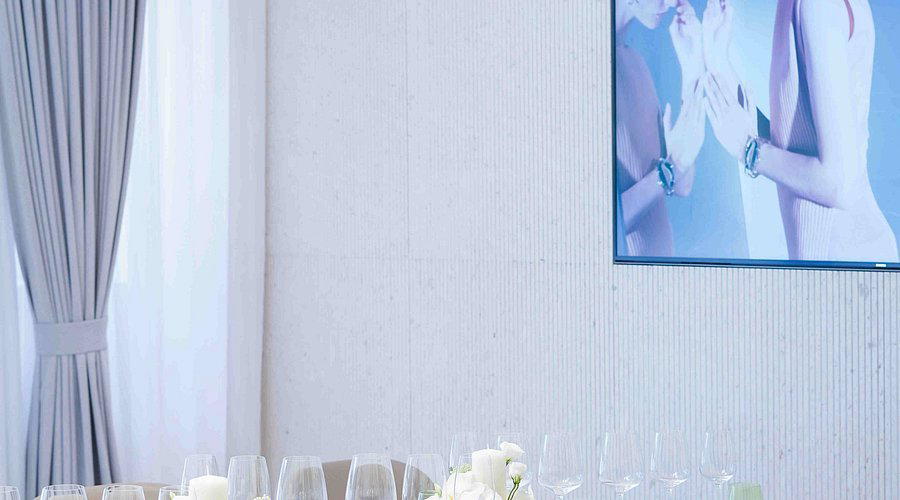
The wine list, described as reasonably priced relative to the food spend, is a meaningful footnote for a Chinese restaurant at this level. Wine pricing at Beijing's upper-tier restaurants has historically been a friction point for international visitors accustomed to European or American mark-up structures. A list that is described as accessible at a Michelin-starred address represents a practical advantage worth factoring into total spend calculations. For visitors moving between cities and looking at comparable high-attention Chinese dining, 102 House in Shanghai, Ru Yuan in Hangzhou, and Xin Rong Ji in Chengdu offer regional points of reference across different price and cuisine profiles. For an international benchmark at the serious end of the seafood-focused fine dining spectrum, Le Bernardin in New York City illustrates how sourcing transparency and technical consistency function as the primary trust signals at the credentialed tier, regardless of geography.
See our full Beijing restaurants guide for the broader picture of the city's dining tiers, or explore our full Beijing hotels guide, our full Beijing bars guide, our full Beijing wineries guide, and our full Beijing experiences guide to build out a complete visit. For those interested in how Chinese fine dining reads in other parts of the region, Dai Yuet Heen in Nanjing is a useful comparison point for Cantonese technique applied in a non-Guangdong setting.
Know Before You Go
- Address: Xindong Road, 甲5号, Chaoyang, Beijing 100027
- Price tier: ¥¥¥
- Awards: Michelin 1 Star (2024), Black Pearl 1 Diamond (2025), La Liste 78pts (2025), OAD Asia #269 (2025)
- Signature: 45-day certified roast duck, grilled in a stone oven over jujube wood
- Booking: Reserve in advance; confirm duck order at time of booking
- Wine: In-house list described as reasonably priced relative to food spend
- 4.9 (12 verified reviews)
Frequently asked questions
How much does it cost to eat at Sheng Yong Xing (Chaoyang)?
Pricing at Sheng Yong Xing (Chaoyang) is listed as ¥¥¥.
Is Sheng Yong Xing (Chaoyang) award-winning?
Sheng Yong Xing (Chaoyang) has received recognition including: Opinionated About Dining Top Restaurants in Asia Ranked #269 (2025); La Liste Top Restaurants (2025): 78pts; Black Pearl 1 Diamond (2025); It’s all about the signature roast duck here; yours will even come with a ‘birth certificate’ proving….
What's the must-try dish at Sheng Yong Xing (Chaoyang)?
The roast duck is the organising principle of a visit. Each bird arrives with a certificate confirming it is 45 days old, then grilled in a stone oven over jujube wood for crispy skin and juicy meat. The kitchen also offers Bohai Sea prawns sautéed with shrimp roe, a dish built around concentrated umami. For those willing to spend more, caviar is available as an accompaniment to the duck.
Where exactly is Sheng Yong Xing (Chaoyang)?
Sheng Yong Xing (Chaoyang) is located at China, 5, Chaoyang, Xindong Rd, 甲5号CN 北京市 邮政编码: 100027, Beijing.
Should I book Sheng Yong Xing (Chaoyang) in advance?
Advance booking is advisable. Sheng Yong Xing holds a Michelin star (2024), a Black Pearl Diamond, and a La Liste score of 78 points for 2025, credentials that sustain consistent demand at a ¥¥¥ price point in Chaoyang's competitive dining corridor. The restaurant does not publish a website or reservations link in the public record, so contacting the venue directly through the Xindong Road address or a hotel concierge is the most reliable route.
Compact Comparison
A small set of peers for context, based on recorded venue fields.
| Venue | Cuisine | Price | Awards | Notes |
|---|---|---|---|---|
| Sheng Yong Xing (Chaoyang)This venue (the venue you are viewing) | Beijing Roast Duck | $50–100 | 1 Michelin Star · La Liste Top Restaurants | Not listed |
| Jing | Modern French with Asian Influences | $300–500 | 1 Michelin Star · Black Pearl 1 Diamond | French Contemporary |
| Xin Rong Ji (Xinyuan South Road) | Taizhou Chinese Fine Dining | $300–500 | 3 Michelin Stars · World's 50 Best #84 | Taizhou |
| Chao Shang Chao (Chaoyang) | Modern Teochew (Chaoshan) Fine Dining | $200–300 | Michelin Plate · La Liste Top Restaurants | Chao Zhou |
| Lamdre | Modern Plant-Based Chinese Vegetarian | Not listed | 2 Michelin Stars · World's 50 Best #17 | Vegetarian |
| Jingji | Imperial Beijing Royal Cuisine | $200–300 | 2 Michelin Stars · La Liste Top Restaurants | Beijing Cuisine |
Recognition history
Dated appearances from independent guides and award organizations, with the underlying list record or original source where available.
Michelin 1 Star
Michelin
La Liste Top Restaurants
La Liste
Black Pearl 1 Diamond
Black Pearl
Opinionated About Dining Top Restaurants in Asia Recommended
Opinionated About Dining
Full recognition history (7 entries)
Black Pearl 1 Diamond
Black Pearl
Opinionated About Dining Top Restaurants in Asia Ranked #269
Opinionated About Dining
Michelin 1 Star
Michelin
Continue exploring
More in Beijing
Restaurants in Beijing
All restaurants in Beijing →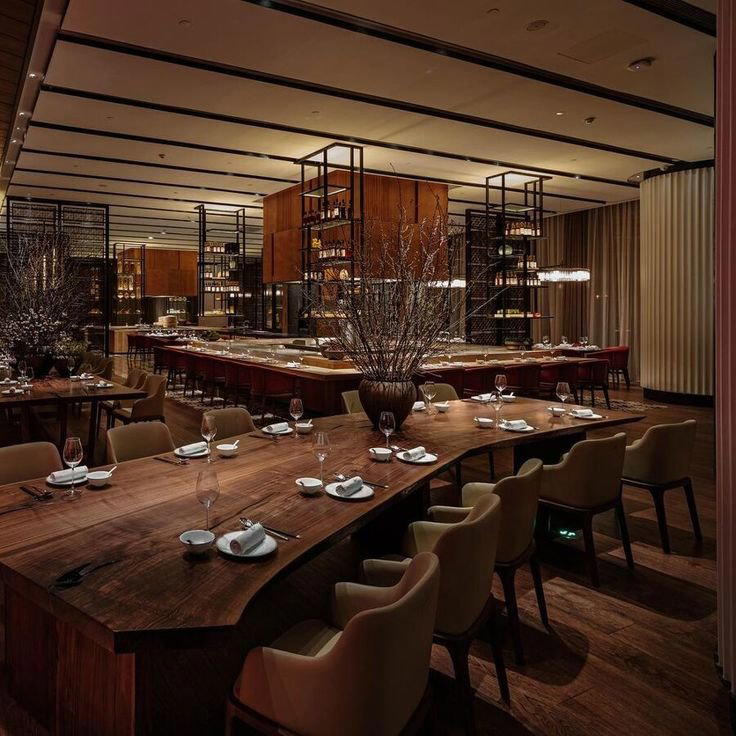
Bars in Beijing
All bars in Beijing →

Sheng Yong Xing (Chaoyang)
The wine
- Wine program
- Curated wine list
- Extensive wine list
- Sommelier-led
Details
- Elegant
- Modern
- Classic
- Intimate
- Sophisticated
- Special Occasion
- Business Dinner
- Date Night
- Open Kitchen
- Private Dining
- Extensive Wine List
- Sommelier Led
- A La Carte
Bright and open with soft lighting, minimalist Chinese design blending historical Chinese culture and western elements, creating a peaceful, tranquil, and elegant atmosphere.