
UNE IMMERSION operates at one of Tokyo's most compressed formats: two seatings per service, two parties per shift, with a single chef managing every aspect from the kitchen to the table. The prix fixe opens with carp soup and moves through meticulously plated French technique inflected by regional Japanese roots. A Michelin Plate holder in both 2024 and 2025, it sits at a price point, ¥¥¥, below the city's upper-tier French houses yet above casual dining.
Pearl is the En Primeur Club membership app — saves, bookings, and concierge access live there. Same editors, same standards.
- Address
- Japan, 〒151-0071 Tokyo, Shibuya, Honmachi, 1 Chome−28−8 DAIM 1F
- Phone
- +81 3-5843-5567
- Website
- uneimmersion.com
- Directions
- Get directions
 Saves & bookings on Pearl
Two parties per service, one chef, zero delegation
UNE IMMERSION is a Modern French restaurant in Honmachi, Shibuya, Tokyo, priced at about $100 per person. Tokyo's French dining scene is structured in layers. At the apex sit multi-Michelin-starred houses such as L'Effervescence, Sézanne, and Château Restaurant Joël Robuchon, each running full brigade kitchens and priced at ¥¥¥¥. Below them, a smaller cohort of highly personal, low-capacity formats has developed, restaurants where the restriction in scale is itself a statement about what the cooking is trying to do. UNE IMMERSION, in Honmachi, Shibuya, operates in that second tier, and it takes the logic further than most.
The service format is fixed: two parties per lunch and two per dinner, with the chef handling every component himself. That constraint shapes sourcing decisions, plating precision, and service pacing under a single set of hands. Where larger French kitchens in Tokyo distribute responsibility across departments, UNE IMMERSION collapses the gap between conception and execution entirely. The format is as much an argument about cuisine as the food itself.
French technique, Japanese provenance
The prix fixe at the restaurant opens with carp soup, an ingredient that rarely leads a French menu but carries weight in Japanese regional cooking, where freshwater carp has been a staple protein for centuries. Using it as the entry point into a French structure establishes the menu's axis: European technique applied to material drawn from a specific Japanese geography rather than from the standardised luxury ingredients, foie gras, turbot, langoustine, that define the Parisian reference model most Tokyo French kitchens cite.
Turnip and squid appetiser pushes the same idea further. Sculpted into the shape of a white rose, it is acknowledged in the restaurant's own documentation as a homage to the venue where the chef trained. The plating is an act of memory as much as technique, a way of marking lineage while the ingredient choices redirect that lineage toward local material. Turnip is a winter-season root vegetable that appears extensively in Japanese cuisine; squid is a coastal product abundant along Japan's Pacific and Sea of Japan shorelines. The dish connects French formal elegance to the provenance of the archipelago rather than to the Alpine or Atlantic provenance of classic French cuisine.
This approach places the restaurant within a broader pattern visible across Japan's most considered restaurants. HAJIME in Osaka draws a comparable line between European structure and Japanese ingredient specificity. akordu in Nara applies a similar logic from a Spanish-Basque starting point. The argument these restaurants collectively make is that French or European cooking in Japan is at its most interesting not when it replicates Parisian orthodoxy, but when its technical framework becomes the means of articulating Japanese terroir rather than replacing it.
Where UNE IMMERSION sits relative to Tokyo's French tier
Tokyo has more Michelin-starred French restaurants than Paris. That density creates a calibrated competitive set, and the restaurant's positioning within it is specific. At ¥¥¥, it prices below the rooms that occupy the ¥¥¥¥ tier, Florilège, ESqUISSE, and the city's starred French houses, while its Michelin Plate recognition in both 2024 and 2025 confirms inspector attention. A Michelin Plate is awarded to restaurants whose cooking is described as good rather than notable, and it positions a venue in the inspector's reviewed-and-noted tier without the star designation. For a single-chef, two-party-per-service format, the recognition signals that the format is functioning as intended rather than being penalised for its scale.
A restaurant that serves four seatings per day, two parties each, will accumulate reviews slowly. High scores from small sample sets are common at this type of venue and should be read as directionally positive rather than statistically decisive. The format has been sustained across multiple Michelin cycles.
For readers comparing across the Japanese French scene more broadly, Gion Sasaki in Kyoto offers a comparable tension between European form and Japanese seasonality, though from a Japanese cuisine starting point. Internationally, the French tradition itself has produced rooms where a single chef working at extreme precision defines the experience, Hotel de Ville Crissier in Switzerland and Les Amis in Singapore represent different points on the spectrum of how French haute cuisine travels and transforms outside France.
Honmachi, Shibuya: neighbourhood context
Honmachi sits in the western part of Shibuya ward, a residential district well outside the commercial and nightlife corridors of Shibuya Crossing and Daikanyama. The address, 1 Chome-28-8 DAIM 1F, indicates a ground-floor space in a low-rise building of the kind that houses a number of Tokyo's more deliberate dining destinations, where a quieter address is part of the offer. The ward's character is calmer than central Shibuya, consistent with the experience a two-party-per-service format requires. Tokyo's French dining at this level rarely sits on arterial streets.
Readers planning a broader Japan itinerary around serious dining can extend the logic of this kind of cooking through Goh in Fukuoka, 1000 in Yokohama, and 6 in Okinawa, each working through different regional ingredients and formal structures.
Know Before You Go
- Cuisine: French prix fixe with Japanese regional ingredient references
- Price range: ¥¥¥
- Awards: Michelin Plate 2024, Michelin Plate 2025
- Format: Two parties per lunch sitting; two parties per dinner sitting
- Staffing: Chef operates alone, cooking, plating, and service
- Address: 〒151-0071 Tokyo, Shibuya, Honmachi, 1 Chome-28-8 DAIM 1F
- Booking: Advance reservation is essential.
Cuisine and Awards Snapshot
Comparable venues nearby, for context on price, style, and recognition.
| Venue | Cuisine | Price | Awards | Notes |
|---|---|---|---|---|
| UNE IMMERSIONThis venue — the venue you are viewing | Modern French | $$$ | Michelin Plate | Not listed |
| Nebuka | Modern French Vegetable Omakase | $$$ | Michelin Plate | Minato |
| LUGDUNUM Bouchon Lyonnais | Lyonnais Bouchon | $$$ | Michelin Plate | Shinjuku |
| Bistro YEBISU | French-Japanese Fusion Bistro | $$$ | Michelin Plate | Shibuya |
| La Lune | Modern French with Japanese Influences | $$$ | Michelin Plate | Minato |
| Clos Des Gourmets | Modern French Fine Dining | $$$$ | Michelin Plate | Minato |
Recognition history
Dated appearances from independent guides and award organizations, with the underlying list record or original source where available.
Michelin Plate
Michelin
Michelin Plate
Michelin
Michelin Plate
Michelin












At a Glance
- Intimate
- Elegant
- Modern
- Cozy
- Sophisticated
- Date Night
- Special Occasion
- Chefs Counter
- Sake Program
Current opening hours
- Monday
- 12–1 p.m., 6–9 p.m.
- Tuesday
- 12–1 p.m., 6–9 p.m.
- Wednesday
- 12–1 p.m., 6–9 p.m.
- Thursday
- 12–1 p.m., 6–9 p.m.
- Friday
- 12–1 p.m., 6–9 p.m.
- Saturday
- 12–1 p.m., 6–9 p.m.
- Sunday
- 12–1 p.m., 6–9 p.m.
Hours can change for holidays and private events. Last verified .
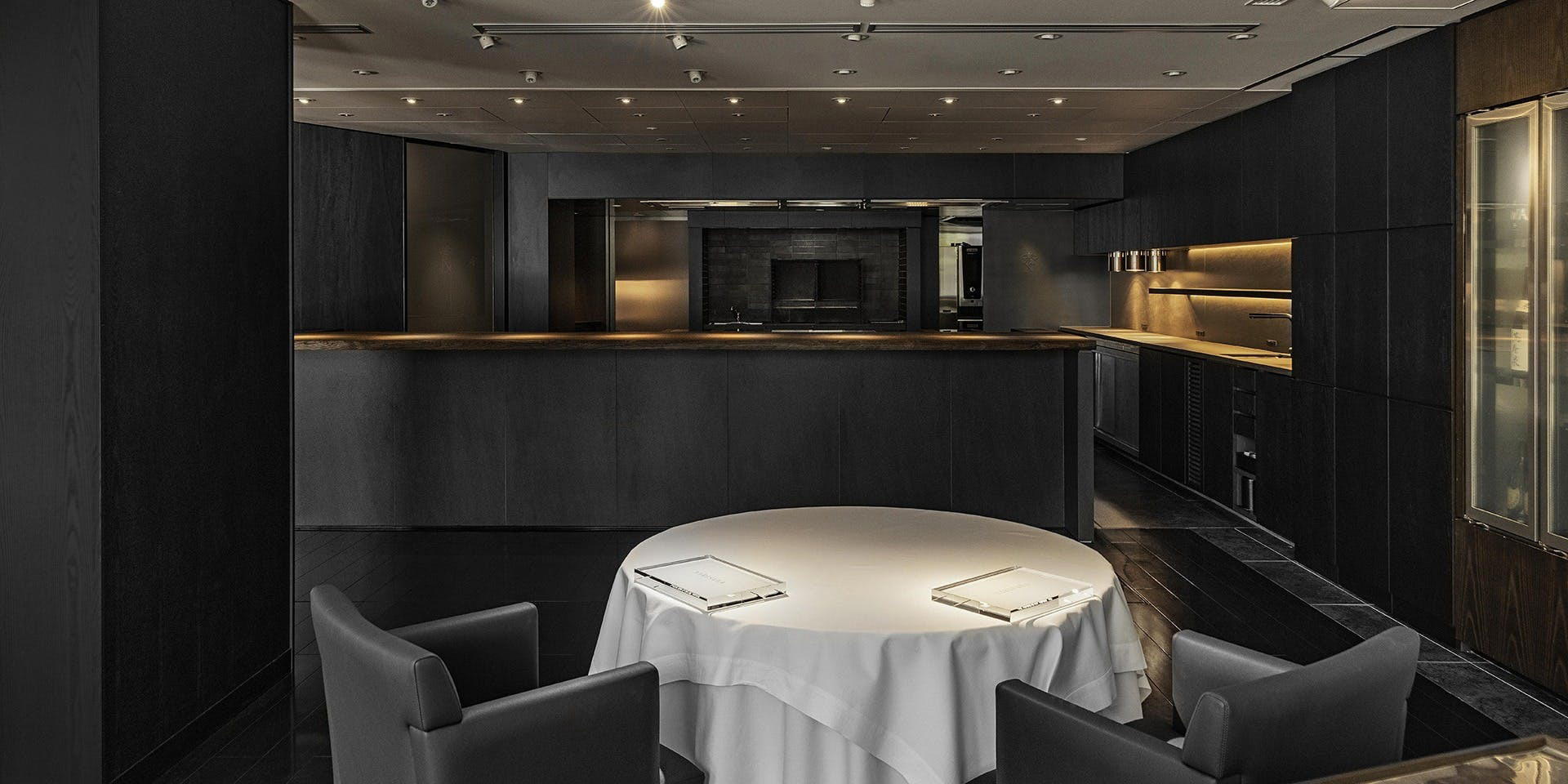
Simple, stylish interior with white and wood tones, calm and elegantly restrained atmosphere illuminated by candle-glow, fostering immersion in the cuisine.