
Among Higashiazabu's French addresses, La Lune holds a Michelin Plate (2025) for a kitchen that fuses classical French technique with Japanese seasonal logic, foie gras poêlé alongside spring pulses, summer watermelon, and winter Shogoin daikon. The room delivers: high ceilings, chandeliers, and ceiling fans frame a dining space that signals occasion without apology. Sitting at the ¥¥¥ price point, it occupies a distinct position below the three-star Franco-Japanese tier.
Pearl is the En Primeur Club membership app — saves, bookings, and concierge access live there. Same editors, same standards.
- Address
- FUJI RESIDENCE, 2 Chome-26-16 Higashiazabu, Minato City, Tokyo 106-0044, Japan
- Phone
- +81 3-3589-2005
- Website
- la-lune.tokyo
- Directions
- Get directions
 Saves & bookings on Pearl
French Technique, Japanese Seasons: The Higashiazabu Tier Worth Knowing
Tokyo's French dining scene has polarised over the past decade. At one end sit the heavy-investment flagships: L'Effervescence, Sézanne, and Château Restaurant Joël Robuchon occupy the ¥¥¥¥ tier, where Michelin stars and tasting-menu pricing place them in a global comparable set. What sits between is a quieter, mid-luxury register, restaurants operating at ¥¥¥ with serious kitchens, Michelin recognition, and enough personality to make them worth planning around rather than falling back on. La Lune, in Higashiazabu's FUJI RESIDENCE, is one of the clearer examples of that middle tier working properly.
The restaurant holds a Michelin Plate for 2025. In a city where the starred French table count is high and the competition for that recognition is intense, the Plate designation at ¥¥¥ pricing represents a specific kind of proposition: technically grounded cooking, at a price point that sits below the commitment required by the city's starred Franco-Japanese rooms.
What the Kitchen Is Doing
The framework here is French, but the seasonal logic is Japanese, and the kitchen uses that tension as its organising principle rather than treating it as a novelty. Amuse-bouches are built around seafood, a deliberate reference to Japan's relationship with the sea. The shifting of ingredients through the calendar is explicit: pulses in spring, watermelon in summer, chestnuts in autumn, Shogoin daikon through winter. These are not imported French produce treated with Japanese reverence; they are Japanese ingredients processed through classical French discipline.
That distinction matters when you consider how Tokyo's Franco-Japanese genre has developed. Venues like Florilège and ESqUISSE have built international profiles on versions of this fusion, each with a particular ideological bent. La Lune's version is quieter in its ambitions but consistent in its execution. The foie gras poêlé functions as a house anchor, a classical preparation that signals where the kitchen's training sits, held alongside the seasonal Japanese material rather than replaced by it. Service arrives on wooden trays, with chopsticks, which reinforces the Japanese framing without abandoning the French menu structure. These are editorial choices made at the mise en place level, not surface decoration.
The Room and What It Signals
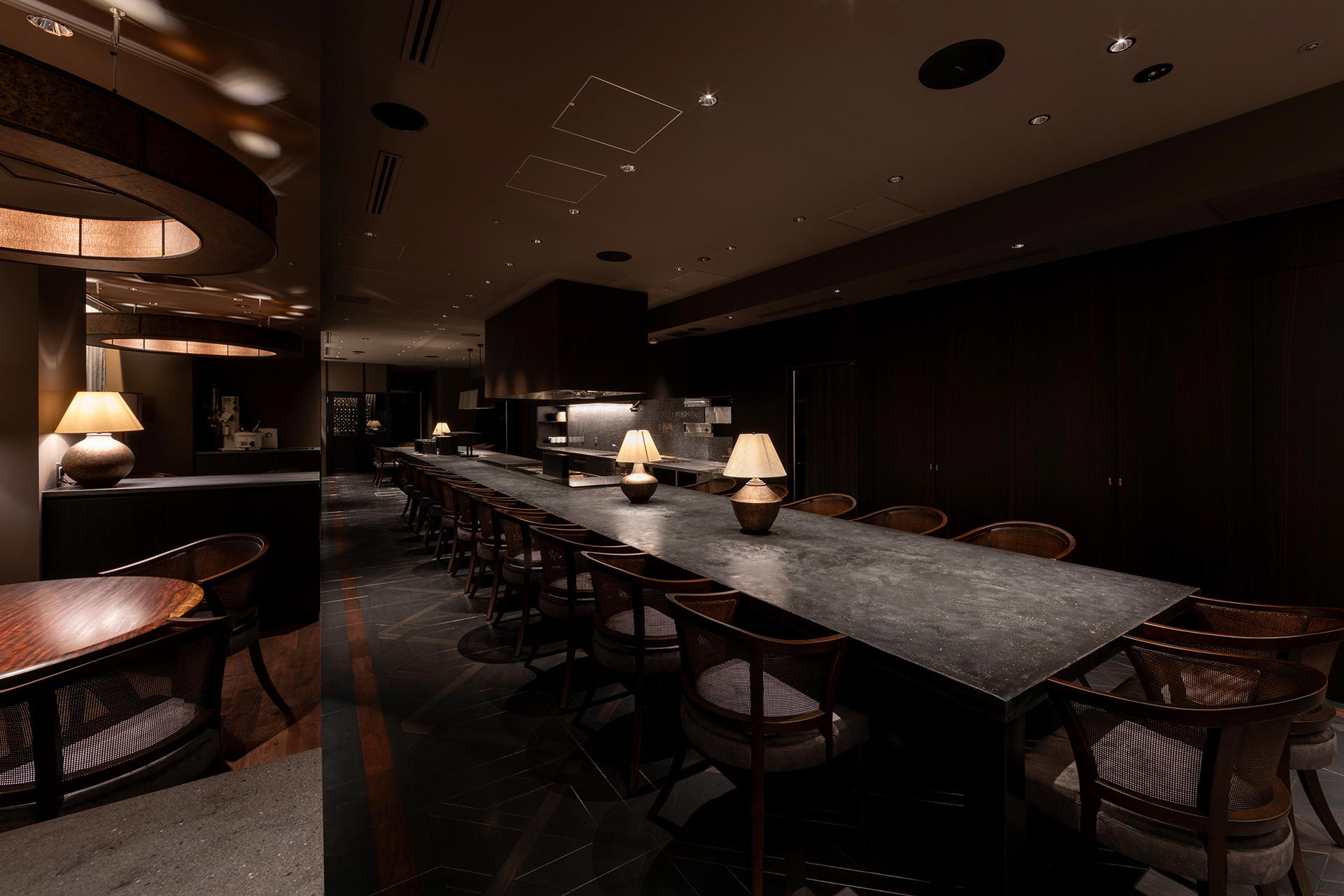
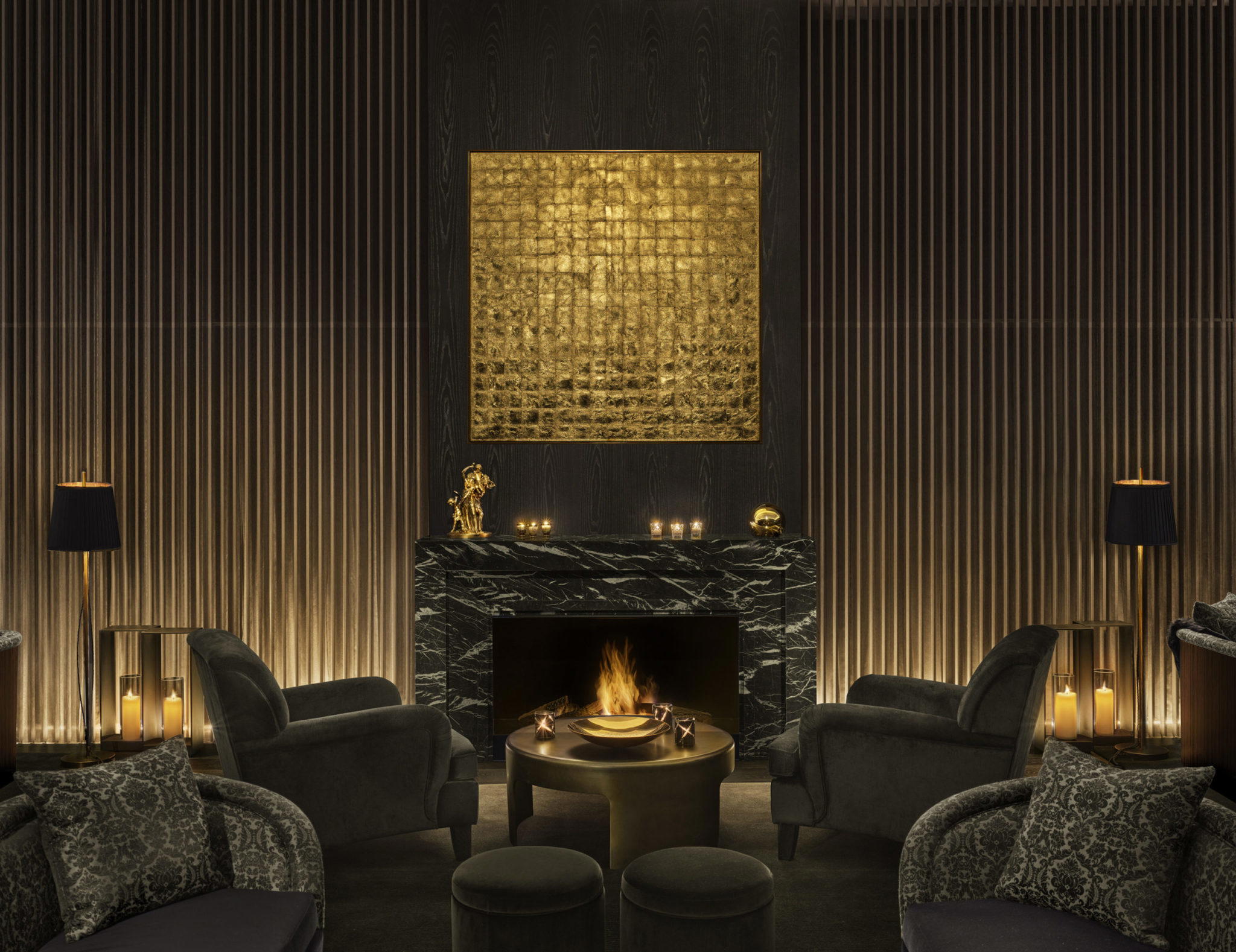
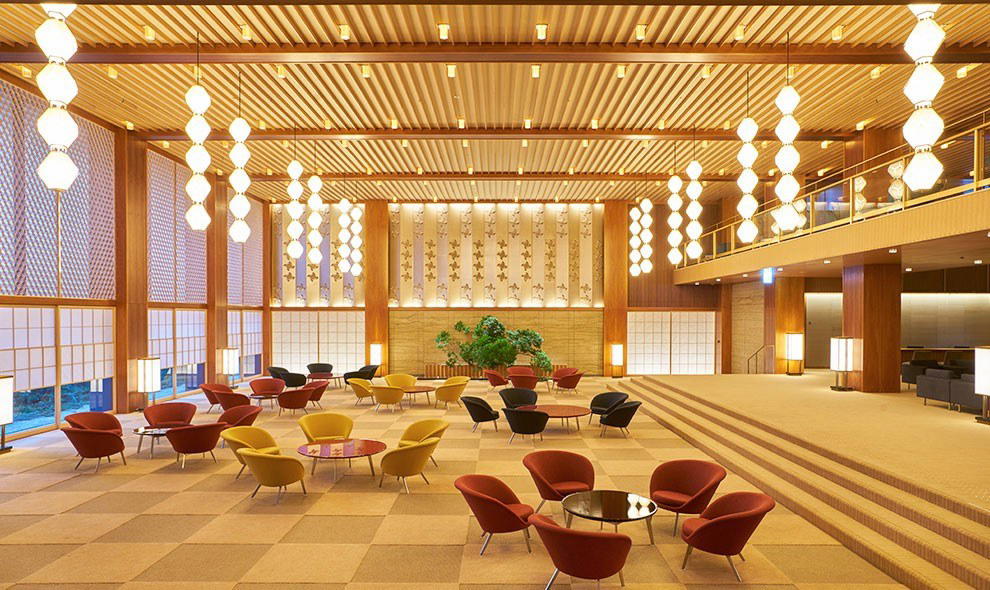
The physical space at La Lune communicates clearly about the kind of dining the kitchen intends. High ceilings, elaborate trims, chandeliers, and ceiling fans describe a room furnished with enough formality to frame an occasion dinner, but with enough idiosyncrasy, those ceiling fans against the chandelier formality, to suggest it is not a replica of anywhere else. The FUJI RESIDENCE address in Higashiazabu places it in Minato City, a ward that houses several of Tokyo's serious French addresses and carries the ambient credibility that comes from years of high-end European dining concentration in the area.
Compared to the grand-hotel French rooms of central Tokyo, this is a more contained setting. Compared to the stripped-back formats increasingly favoured by younger French-Japanese kitchens, it reads as unambiguously dressed up. That positioning, formal but neighbourhood-scaled, suits a ¥¥¥ price point. It makes the room accessible at a price where the grand-hotel alternative would cost significantly more, while still delivering the physical context that marks a meal as deliberate rather than casual.
Planning Your Visit: What to Know Before You Go
The restaurant sits in Higashiazabu, reachable from Azabu-Juban Station (Namboku and Oedo lines), which makes it logistically convenient relative to several of the area's other serious restaurants. For visitors staying in central Tokyo, Roppongi, Azabu, or Toranomon, this is a short taxi or a walkable distance depending on your accommodation's exact location.
Booking practice for ¥¥¥ French rooms in Tokyo varies considerably. Starred venues at ¥¥¥¥ like L'Effervescence typically require reservations weeks or months out, and some operate exclusively through their own reservation systems in Japanese. At the ¥¥¥ Michelin Plate tier, the booking window is generally more accessible, but this should not be taken as a guarantee of walk-in availability, particularly on Friday and Saturday evenings or during Tokyo's high dining seasons (spring cherry blossom and autumn foliage periods bring significant visitor volume that tightens availability across the city's mid-to-upper restaurant tier). Reserving a week or more ahead for weekend visits is a reasonable planning standard.
5 from 100 ratings.
Where La Lune Sits in the Wider Picture
If your Tokyo dining agenda is built around French cuisine specifically, the city offers a range of entry points. The three-star tier, L'Effervescence with its ingredient-led rigour, Sézanne with its Parisian-leaning precision, demands both booking lead time and ¥¥¥¥ commitment. The restaurant offers Michelin-recognised French cooking with explicit Japanese seasonal integration at a step below that commitment level, which makes it a practical first-night option or a return visit for those who have already worked through the starred tier.
For travellers building a broader Japan itinerary, the Franco-Japanese tradition extends well beyond Tokyo. HAJIME in Osaka and akordu in Nara represent different regional expressions of the same synthesis. Closer to Tokyo, 1000 in Yokohama is within easy reach for day-trip dining. For those comparing the Franco-Japanese genre internationally, Les Amis in Singapore and Hotel de Ville Crissier in Crissier represent how classical French anchors operate in other geographies.
Tokyo's dining scene extends well beyond French cuisine, with sushi counters, kaiseki rooms, bars, wineries, and experiences all part of the wider picture. For Japanese dining beyond Tokyo, Gion Sasaki in Kyoto, Goh in Fukuoka, and 6 in Okinawa cover distinctly different regional registers.
A Tight Comparison
Comparable venues nearby, for context on price, style, and recognition.
Recognition history
Dated appearances from independent guides and award organizations, with the underlying list record or original source where available.
Michelin Plate
Michelin
Michelin Plate
Michelin
Michelin Plate
Michelin









At a Glance
- Elegant
- Intimate
- Sophisticated
- Cozy
- Modern
- Date Night
- Special Occasion
- Celebration
- Open Kitchen
- Extensive Wine List
Current opening hours
- Monday
- 12–2:30 PM, 6–10 PM
- Tuesday
- 12–2:30 PM, 6–10 PM
- Wednesday
- Closed
- Thursday
- 6–10 PM
- Friday
- 12–2:30 PM, 6–10 PM
- Saturday
- 12–2:30 PM, 6–10 PM
- Sunday
- 12–2:30 PM, 6–10 PM
Hours can change for holidays and private events. Last verified .
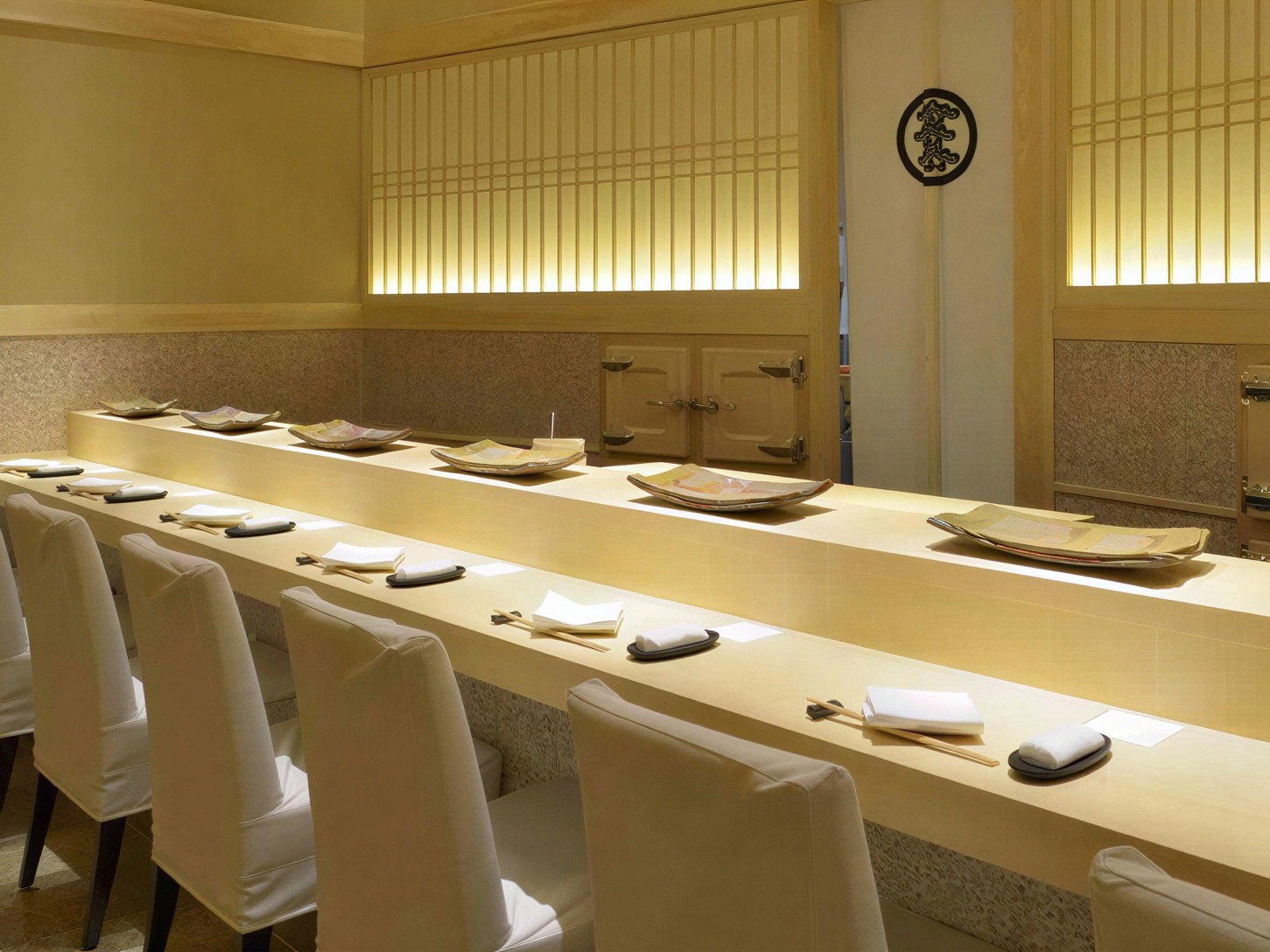
Elegant and inviting with soft Nordic-style lighting in a black-themed glass interior, modern dining area with kitchen view, creating a bright, spacious, and comfortable atmosphere.