Tabelog 100 #44
Our verdict
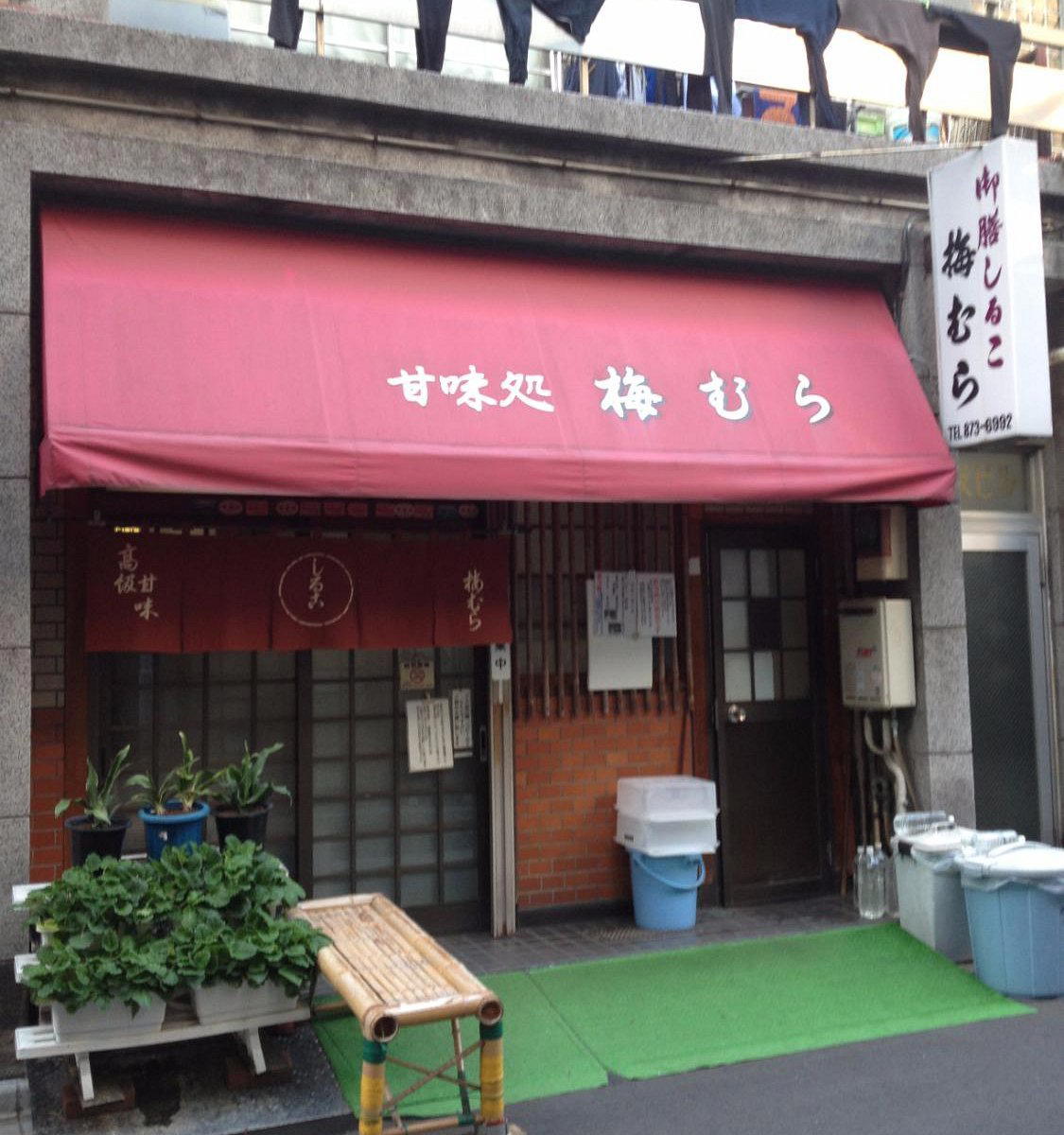
Umemura occupies a particular position in Tokyo's premium dining scene, where restrained craft and long-standing reputation carry more weight than spectacle. Placed alongside the city's established high-end counters and kaiseki rooms, it represents a strand of Japanese dining that resists easy categorisation. Knowing what to expect before you arrive matters here.

Pearl is the En Primeur Club membership app, where members save venues, book tables and use the concierge.
The menu
What to order
- Shio udon
- Inarizushi
- Dango
Reading the Room: Tokyo's Precision Dining Tier
Tokyo has, over the past two decades, developed one of the most stratified fine dining structures of any city in the world. At the upper end, a cluster of counters and intimate dining rooms operates in a register that bears little resemblance to the broader restaurant market: fixed-format menus, small capacity, months-long booking windows, and a pricing logic set by peer comparison rather than by what the neighbourhood around them might suggest. Umemura sits within this broader pattern, a Tokyo address whose reputation belongs to that tier of dining where the experience is shaped less by surface theatrics and more by accumulated craft and institutional consistency.
Understanding Umemura requires understanding what that tier looks like in 2024 and how it got there. The city's premium dining rooms have not remained static. Over the past decade, the pressure of international recognition, shifting guest demographics, and the post-pandemic restructuring of hospitality have pushed many established venues to reconsider their formats, their sourcing logic, and their relationship to Japanese culinary tradition. Some have pivoted toward hybridised approaches. Others have doubled down on classical restraint. The evolution of individual venues within this tier tells a larger story about where Tokyo's fine dining identity is heading.
The Shape of an Evolution
In Tokyo, reputation is both earned slowly and defended carefully. The venues that have maintained standing across multiple cycles of critical attention tend to share certain characteristics: a commitment to format discipline, ingredient sourcing with real provenance depth, and a kitchen posture that treats consistency as the primary ambition rather than novelty. Umemura fits this profile, and its current direction reads as a consolidation of what has defined it rather than a departure from it.
This is worth noting because the broader market has moved in a different direction. Several of Tokyo's most-discussed openings in recent years have leaned into cross-cultural fusion, tasting menus that reference European technique, or theatrical presentation formats borrowed from international fine dining. Against that backdrop, a venue whose identity is grounded in Japanese culinary tradition, and whose evolution has been gradual rather than disruptive, occupies a more specific position. It becomes a reference point for a certain kind of dining guest: one who has worked through the spectacle tier and arrived at something quieter.
Comparable addresses in Tokyo that operate in this register include RyuGin, where Seiji Yamamoto's kaiseki work has accumulated Michelin recognition across many years, and Harutaka, a sushi counter whose pricing and booking structure places it firmly in the ¥¥¥¥ bracket alongside the city's most recognised names. What distinguishes these venues from newer arrivals is precisely the length of their track record: the ability to be assessed not just on a single visit but across years of documented output.
Where Umemura Sits in the City's Critical Map
Tokyo's premium dining scene is not monolithic. It divides, broadly, between the kaiseki tradition rooted in Japanese seasonality and ceremony, the sushi counter format with its own hierarchy of training lineage and sourcing, and a French-inflected tier that has become increasingly sophisticated in its synthesis of European and Japanese approaches. L'Effervescence and Sézanne represent the French side of that conversation, both holding strong critical standing and operating at the ¥¥¥¥ price point. Crony takes a more innovative approach within the same price tier, blending French technique with a looser, more instinctive format.
Umemura's placement within or adjacent to these conversations is significant. It is not trying to compete across those categories but to hold a distinct position within one of them, where depth of tradition rather than breadth of reference is the measure. This is the dining equivalent of a wine producer who has worked one appellation for thirty years rather than expanding the portfolio: the logic is compression, not expansion.
For guests building a Tokyo itinerary around serious dining, Umemura belongs in conversation with these addresses rather than beneath them. The relevant comparison is not with mid-market or casual dining but with the full tier of counters and rooms that define Tokyo's international dining reputation. See our full Tokyo restaurants guide for a broader map of how these venues relate to one another across neighbourhoods and formats.
Japan's Wider Fine Dining Geography
Tokyo does not exist in isolation. Japan's fine dining culture is geographically distributed in a way that no other country quite matches, with regional cities maintaining serious culinary traditions that are not derivative of the capital but parallel to it. HAJIME in Osaka operates at three Michelin stars with a kitchen philosophy that has evolved considerably since opening. Gion Sasaki in Kyoto represents the kaiseki tradition at its most formally rooted, while akordu in Nara demonstrates how a non-Japanese culinary framework can find coherent expression within the Japanese ingredient and hospitality context. Further south, Goh in Fukuoka has built a reputation that draws guests from Tokyo rather than the other way around.
Beyond the major cities, venues like 一本杉川島料理 in Nanao, 古往今来 in Sapporo, 湖畔荘 in Takashima, and 庄羽屋 in Nishikawa Machi show how deeply the culture of careful, format-disciplined dining extends into regional Japan. Birdland in Sakai and Bistro Ange in Toyohashi add further texture to that picture.
The point is that Tokyo venues like Umemura sit within a national culture of serious dining, not at its apex. The standards of craft, sourcing, and hospitality that Tokyo's premium tier demonstrates are replicated, in different registers, across the country.
Planning a Visit
Umemura operates in a segment of Tokyo dining where advance planning is not optional. The booking window at venues of this type typically extends several weeks at minimum and, for sought-after sittings, considerably longer. Guests arriving in Tokyo without reservations at this tier will find the alternatives are mid-market, not equivalent. For international comparisons that illuminate what this level of Japanese dining can mean at its most developed, Atomix in New York City and Le Bernardin offer reference points from the American side: venues where format discipline and institutional reputation define the guest experience in ways that translate across cultures.
Reservations: Book well in advance; this tier of Tokyo dining rarely accommodates walk-ins or last-minute requests. Dress: Smart casual at minimum; formal dress is appropriate and generally expected at this price point. Budget: Pricing aligns with the ¥¥¥¥ tier common across Tokyo's most recognised counters and kaiseki rooms.
Frequently asked questions
How does Umemura compare to other fine dining venues in Tokyo's kaiseki and counter dining scene?
Tokyo's upper dining tier divides broadly between the kaiseki tradition rooted in Japanese seasonality and the more format-driven counter model seen in sushi and kappo. Umemura sits within this ecosystem as a venue that has earned critical standing in a city where the competition across both traditions is as concentrated as anywhere in the world. For context, Tokyo holds more Michelin stars than any other city globally, which sets the bar against which all serious venues here are measured.
What do people recommend at Umemura?
Specific dish recommendations circulate primarily through word of mouth among guests who have dined at Umemura, as the menu is not published openly. In Tokyo's upper dining tier, menus at venues of this type are typically seasonal and counter-driven, meaning what arrives on the table reflects the day's sourcing rather than a fixed list. The safest approach is to arrive without expectations tied to a particular dish and let the kitchen set the direction.
Should I book Umemura in advance?
Yes, and significantly so. Tokyo restaurants operating at Umemura's level routinely carry booking windows of two to four months, with some extending further for weekend seatings. Leaving this to the week of arrival in Tokyo is a reliable way to find no availability. Contacting the venue directly, or working through a concierge with established relationships in the city's dining circuit, is the standard approach.
What has Umemura built its reputation on?
Umemura has developed standing within Tokyo's stratified fine dining structure through consistency over time, which in this city carries more critical weight than a single season of attention. Tokyo's premium dining scene distinguishes between venues that peak and fade and those that maintain position across successive critical cycles. Umemura belongs to the latter category, which in a city with the density of serious restaurants that Tokyo has, is itself a meaningful credential.
Quick Comparison
Comparable venues nearby, for context on price, style, and recognition.
| Venue | Cuisine | Price | Awards | Notes |
|---|---|---|---|---|
| UmemuraThis venue (the venue you are viewing) | Japanese Soul Food | Not listed | Tabelog 100 #44 | Not listed |
| Kanmidokoro Mitsubachi Honten | Traditional Japanese sweets café (anmitsu & kakigori) | $1–10 | Tabelog 100 #100 | Bunkyō |
| Kansai Fu Teuchi Udon Irasshai | Kansai-style handmade udon | $1–10 | Tabelog 100 #43 | Taitō |
| TAKUMA | Tokyo Ramen Counter | $1–10 | Tabelog 100 #21 | Hachioji |
| Kadoya | Japanese traditional sweets (wagashi) shop | $1–10 | Tabelog 100 #90 | Adachi |
| Yoshinoya | Traditional Japanese sweets (kusa dango) shop | $1–10 | Tabelog 100 #31 | Katsushika |
Recognition history
Dated appearances from independent guides and award organizations, with the underlying list record or original source where available.
Tabelog 100 #44 · No. 44
Tabelog · Tabelog 100 - Japanese traditional sweets / Japanese sweets cafe - TOKYO - 2023