
Tabelog 100 #90
Our verdict
Kadoya places Tokyo wagashi in its everyday register rather than its gift-box register: low-priced, take-out, and tied to the Kita-Senju rhythm of buying early before the counter runs out. Its selection for the Tabelog 100 Japanese traditional sweets and sweets cafe list in Tokyo in 2023 gives this modest format a clear editorial signal.

Pearl is the En Primeur Club membership app, where members save venues, book tables and use the concierge.
The menu
What to order
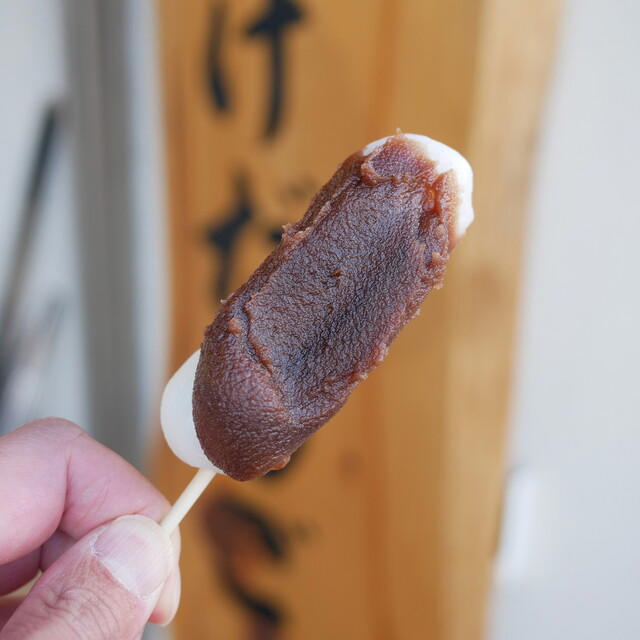
- Grilled dango
- Japanese traditional sweets assortment
Approaching Tokyo, the city changes tempo. The city’s polished dessert counters and department-store confectionery halls give way to a more local grammar: short walks, small storefronts, cash in hand, and sweets bought for the day rather than staged for ceremony. Kadoya belongs to that older rhythm of Japanese traditional sweets, where the ritual is not a long meal but a brief, purposeful exchange.
That distinction matters in Tokyo. Japanese traditional sweets can be formal, seasonal, and gift-oriented, but they also survive as everyday food: something carried home, shared after tea, or eaten soon after purchase. The city’s serious sweet shops are not always expensive, and price alone is a poor guide to cultural weight. Kadoya sits in the - JPY 999 - JPY 999 bracket, yet its inclusion in the 2023 Tabelog Hyakumeiten selection for Japanese traditional sweets puts it in a narrower field than its price suggests.
Tokyo Japanese traditional sweets, treated as a daily errand rather than a dessert course
Tokyo’s dining hierarchy often rewards reservation friction: omakase counters, tasting menus, fixed seating, and long booking windows. Japanese traditional sweets operate by different rules. In this category, scarcity can come from production rhythm rather than reservation access. A shop opens, batches move, and late arrivals may face a reduced choice. The custom is closer to a morning market than a restaurant sitting.
Kadoya’s small-shop rhythm keeps that ritual intact. There is no long room to read, no dining counter to decode, no wine pairing to justify the trip. The decision is compressed: arrive, choose from what is available, pay, leave. That directness is part of the pleasure of Tokyo’s traditional sweets culture, especially in areas where the line between food shopping and eating out remains porous.
Tokyo helps explain the appeal. The city has never needed only the theatrical polish of its most visible districts to sustain serious food habits. Its strength is density at human scale: soba, gyoza, izakaya, sweets, and everyday specialists serving local repeat customers as much as cross-town visitors. In that setting, a Japanese traditional sweets stop reads less like a detour and more like a useful punctuation mark in a day built around trains, errands, and casual eating.
The comparison with other Tokyo dining categories is instructive. A meal at Senju Takeyabu sits in a different pacing register, while Tachiataru, Saiko Gyoza Bo, BOSSA BURGER, and Sushi Tanaka show how varied the local Tokyo field becomes once the lens moves beyond destination fine dining. Kadoya occupies the small-spend, high-specificity end of that spectrum: a place where the category carries the weight, not the bill.
The award signal is about category discipline, not luxury cues
Tabelog’s Hyakumeiten lists can be blunt instruments, but they are useful for reading Japanese food culture because they recognize categories that international award systems often ignore. A Tokyo Japanese traditional sweets selection is not the same as a Michelin dining room. It rewards shops that matter inside a local genre, including formats too modest for conventional restaurant prestige.
That is why the 2023 Tabelog Hyakumeiten selection is the relevant trust signal here. It places Kadoya inside a Tokyo-wide Japanese traditional sweets conversation rather than merely inside a local address book. For travelers accustomed to measuring restaurants by tasting-menu price or chef biography, this is the correction: Japanese sweets culture often values repetition, freshness, and the timing of purchase above narrative polish.
The absence of a named chef from the provided profile is not a weakness in this context. Japanese traditional sweets shops rarely need the auteur framing now common in fine dining. The craft is judged through consistency, seasonal literacy when applicable, and whether regular customers return for the work rather than the story around it. Kadoya’s profile pushes attention back to the sweets themselves and the act of buying them at the right moment.
There is also an etiquette lesson in the way to approach a place like this. Do not treat it as a lingering cafe unless the shop’s format clearly supports that. Do not arrive expecting a restaurant sequence. The smarter reading is transactional but respectful: know that the day’s availability matters, accept that popular items may be limited, and understand that a low price does not mean low consequence in the local food culture.
How to place it inside a Tokyo food day
Kadoya works as a small anchor in a wider Tokyo itinerary, especially for travelers using the city as a lived route rather than treating it only through central neighbourhoods. The value is not in building an entire day around one sweet shop; it is in seeing how Tokyo’s food seriousness extends into categories that rarely make international tasting-menu lists.
For a broader read on the city, compare this kind of specialist errand with casual and formal stops across Our full Tokyo restaurants guide. Citywide contrasts can include other Tokyo dining rooms, quick-format counters, design-led cafes, curry specialists, yakitori rooms, and casual food specialists. Together they show the range between polished rooms, everyday formats, and quick-format food.
Planning Tokyo only through restaurants misses half the city’s practical intelligence. Hotel location shapes how realistic a morning sweets run becomes, so cross-check Our full Tokyo hotels guide. Evening pacing belongs in a separate lane: Our full Tokyo bars guide covers that side of the city, while Our full Tokyo wineries guide and Our full Tokyo experiences guide help frame the wider food-and-culture map.
The same logic travels across Japan and beyond: small-format specialists often teach more about local habits than expensive set pieces. For comparison across formats and cities, look at unnamed local specialists in other Japanese cities and overseas dining scenes: grilled beef shops, cafes, curry specialists, sake bars, and onigiri counters. Kadoya’s lesson is simple: in Tokyo, the serious table is not always a table.
Frequently asked questions
How do I find Kadoya?
Kadoya is located in Tokyo.
Is Kadoya more mid-range or high-end?
Pricing at Kadoya is listed as - JPY 999 - JPY 999 View spending breakdown.
What's the best way to book Kadoya?
There is no reservation system listed for Kadoya in the provided record, so the practical move is to check the venue's latest public information before going. It is in Tokyo, and timing matters more than assuming a formal booking process.
What's the signature at Kadoya?
No single item is named in the public record. The main reference point is its 2023 Tabelog Hyakumeiten selection in the Japanese traditional sweets category, which points to Japanese traditional sweets rather than a plated dessert list. Check the venue's official channels for the latest details.
Style and Standing
Comparable venues at a similar level for quick context.
| Venue | Cuisine | Price | Awards | Notes |
|---|---|---|---|---|
| KadoyaThis venue (the venue you are viewing) | Japanese traditional sweets (wagashi) shop | $1–10 | Tabelog 100 #90 | Not listed |
| Chomeiji Sakura Mochi | Traditional Japanese wagashi (Chomeiji-style sakuramochi) | $10–20 | Tabelog 100 #45 | Sumida |
| Chiba Ya | Traditional Japanese sweet potato & wagashi shop | $1–10 | Tabelog 100 #8 | Taitō |
| Fukuo Shoten | Traditional Japanese sweets and agar jelly shop | $1–10 | Tabelog 100 #61 | Chiyoda |
| Stand Hero | Standing Japanese Izakaya & Kushikatsu Bar | $10–20 | Tabelog 100 #49 | Chiyoda |
| Kamezawa Do | Japanese Confectionery (Wagashi) | Not listed | Tabelog 100 #20 | Chiyoda |
Recognition history
Dated appearances from independent guides and award organizations, with the underlying list record or original source where available.
Tabelog 100 #90 · No. 90
Tabelog · Tabelog 100 - Japanese traditional sweets / Japanese sweets cafe - TOKYO - 2023
Continue exploring
More in Tokyo
Restaurants in Tokyo
All restaurants in Tokyo →

Bars in Tokyo
All bars in Tokyo →



Details
- Classic
- Cozy
- Solo
- Casual Hangout
- After Work
- Standalone
- A La Carte
- Counter Dining
A simple, nostalgic Japanese sweets shop and cafe with a modest interior, quiet atmosphere, and a local, old-school neighborhood feel where customers mainly pop in for takeaway treats.