
An eight-seat counter in Shitaya makes the case for Tokyo udon as a serious small-room genre, not only a quick lunch category. Kansai Fu Teuchi Udon Irasshai sits in Tabelog’s Udon EAST 100 for 2024, with sub-¥999 pricing, counter seating, and a sell-out rhythm that rewards early, flexible planning.
Pearl is the En Primeur Club membership app — saves, bookings, and concierge access live there. Same editors, same standards.
- Address
- Japan, 〒110-0004 Tokyo, Taito City, Shitaya, 1 Chome−13 下谷岩瀬ビル
- Website
- tabelog.com
- Directions
- Get directions
 Saves & bookings on Pearl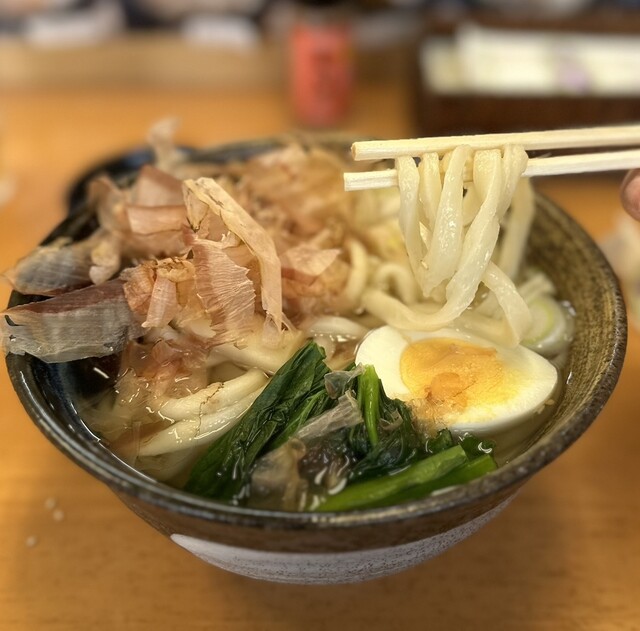
The room tells the story before the bowl does: counter seating, an L-shaped arrangement, and the compressed choreography of an eight-seat udon shop in Shitaya. Tokyo has plenty of noodle rooms built for throughput, but the smaller hand-cut udon counters ask for a different kind of attention. The guest is close to the work, close to the timing, and close to the limits of production. Kansai Fu Teuchi Udon Irasshai belongs to that compact tradition, where space, pace, and noodle supply define the meal as much as the broth or flour.
Eight seats turn udon into a counter-format meal
Udon in Tokyo is often treated as democratic fuel: fast, inexpensive, and folded into the workday. The counter format changes the category. With only eight seats, this is not a long-linger dining room or a group-friendly izakaya substitute; it is a small noodle counter where the physical container sets the rules. The listed layout, an L-shaped counter for four plus four additional seats, creates a room where every place matters. That scale also explains the appeal for solo diners, a practical Tokyo dining pattern that suits noodle shops better than many tasting-menu restaurants.
The Kansai-style reference matters because Tokyo noodle culture is usually discussed through soba, ramen, or regional ramen variants. Kansai udon tends to read differently in the city’s dining grammar: lighter in tone than heavy ramen shops, less ceremonial than high-end soba, and more dependent on restraint than spectacle. The Tabelog 100 Udon EAST 2024 selection puts the shop inside a recognized East Japan udon cohort rather than the broader field of casual noodle addresses. Its Tabelog score of 3.66 is not the whole argument, but in Japan’s review culture it signals a shop that has moved beyond local convenience into specialist attention.
Price sharpens the point. A sub-¥999 average places the experience in Tokyo’s everyday-lunch bracket, far below nearby higher-spend restaurants such as sardexka and Iriya Kishimojin Monzen no Daya, both listed in five-figure yen dinner territory. That gap is useful for travelers: Tokyo’s serious dining does not only sit behind omakase counters, hotel dining rooms, or reservation systems. It also appears in small rooms where the limiting factor is not a luxury tariff but production capacity and timing.
Shitaya's scale suits a noodle shop with limited supply
Shitaya sits in Taito, close enough to the better-known Ueno-Asakusa orbit to fit into a day of museums, temples, and old-city walking, but it has a quieter dining texture than the station-heavy corridors nearby. This is useful context for udon. The format works better in neighborhoods where a short, focused service can survive on repeat custom and destination noodle hunters rather than late-night traffic. Kansai Fu Teuchi Udon Irasshai operates in that older Tokyo register: modest frontage, compact seating, and a service window that is narrow enough to shape the visitor’s day.
The logistics are part of the editorial assessment, not an afterthought. Reservations are unavailable, cards and digital payments are not accepted, and the shop may close once noodles sell out. Dinner is listed only on Tuesday, and even then the same sell-out logic applies. Those facts place it in a different category from contemporary Tokyo restaurants designed around online booking, multilingual websites, and predictable seatings. The better comparison is the city’s small specialist food counters, where the guest trades convenience for immediacy and low cost.
That structure also makes it a poor fit for diners who need a leisurely meal, a broad à la carte spread, or a controlled reservation plan. It is stronger for travelers who understand that a short lunch counter can be the point. In the same city, a visitor might use 12/10 Shinjuku ten for a different Shinjuku register, 124. KAGURAZAKA (Yakitori) for skewers, or . 鮪と炭火焼き うお炭 秋葉原店 for tuna and charcoal cooking. Udon here occupies another lane: lower spend, tighter room, shorter service, and less tolerance for late arrival.
How to place it in a Tokyo eating day
The strongest use case is a focused lunch around Iriya or Uguisudani rather than a cross-town detour built on a fixed reservation. The restaurant is listed near Iriya Station and within walking reach of JR Uguisudani Station, which makes it workable before or after time in Ueno, Yanaka, or Asakusa. The planning logic is simple: arrive early in the service window, carry cash, and have a second plan nearby if noodles have run out. That second plan is another low-cost local option such as HARU or Tonpei, while CANNONBALL DINER sits in a slightly higher casual bracket.
For travelers mapping Tokyo by category, the shop also helps correct a common bias. Premium visitors often over-index on sushi, kaiseki, cocktail bars, and hotel restaurants, then treat noodle shops as filler between reservations. Tokyo does not work that neatly. A serious udon counter at sub-¥999 pricing can offer more local texture than a middling expensive dinner, especially when the room’s constraints are so visible. The value is not theatrical scarcity; it is the alignment of handwork, seat count, and a service model that ends when supply does.
Use the broader city guides to balance the itinerary: Our full Tokyo restaurants guide for dining, Our full Tokyo hotels guide for where to stay, Our full Tokyo bars guide for drinking, Our full Tokyo wineries guide for wine-focused addresses, and Our full Tokyo experiences guide for cultural planning. Readers building a wider Japan file can also compare casual formats with 3 Chome no Curry Ya San, 2D Cafe, -Grilled beef Sukiyaki- KAMAKURA TANUKIAN 鎌倉 たぬき庵 in Kamakura.cafe in Osaka.know in Kumamoto, (Shoku) Vietnam in Kawasaki, [Curry Senmon Ten] Maruyama Kyoju. in Sapporo, and [ki:] in Kyoto. For Japanese food culture abroad, Jōdo Saké Bar in Los Angeles and Onigiri Time in Pasadena sit in a different context, where Japanese formats are translated for California dining habits.
Quick Comparison
Comparable venues for orientation by cuisine and category.
| Venue | Cuisine | Price | Notes |
|---|---|---|---|
| Kansai Fu Teuchi Udon IrasshaiThis venue — the venue you are viewing | Kansai-style handmade udon | $ | Not listed |
| Usagiya | Japanese Confectionery Shop | $ | Taitō |
| Tokyo Style Noodle Hotate Biyori | Scallop-focused Tsukemen & Ramen | $ | Chiyoda |
| Chuka Soba Nishino | Tokyo ramen (chuka soba) counter | $ | Bunkyō |
| KAMAYOSHI | Japanese Udon | $ | Chiyoda |
| Nihonbashi Nagato | Traditional Edo-style Japanese wagashi (sweets) | $ | Chūō |
Recognition history
Dated appearances from independent guides and award organizations, with the underlying list record or original source where available.
Tabelog 100 #43 · No. 43
Tabelog · Tabelog 100 - Udon - EAST - 2024








At a Glance
- Lively
- Cozy
- Classic
- Intimate
- Solo
- Casual Hangout
- After Work
- Standalone
Current opening hours
- Monday
- 11:30 AM–1:30 PM
- Tuesday
- 11:30 AM–1:30 PM, 6–7:30 PM
- Wednesday
- 11:30 AM–1:30 PM
- Thursday
- 11:30 AM–1:30 PM
- Friday
- 11:30 AM–1:30 PM
- Saturday
- 11:30 AM–1:30 PM
- Sunday
- Closed
Hours can change for holidays and private events. Last verified .