Michelin Bib Gourmand · Tabelog 100 #11
Our verdict
A Michelin Bib Gourmand recipient in both 2024 and 2025, Teuchisoba Kanei occupies a row of old houses on Kuramaguchi-dori in Kyoto's Kita Ward, serving 100% buckwheat zaru soba in tatami rooms with a sharkskin wasabi grater at each table. The format is spare, the price point is low, and the critical recognition is consistent. For soba served with this level of craft at this price, few addresses in Kyoto match it.

Pearl is the En Primeur Club membership app, where members save venues, book tables and use the concierge.
Old Houses, Earth Floors, and Two Years Running with a Bib Gourmand
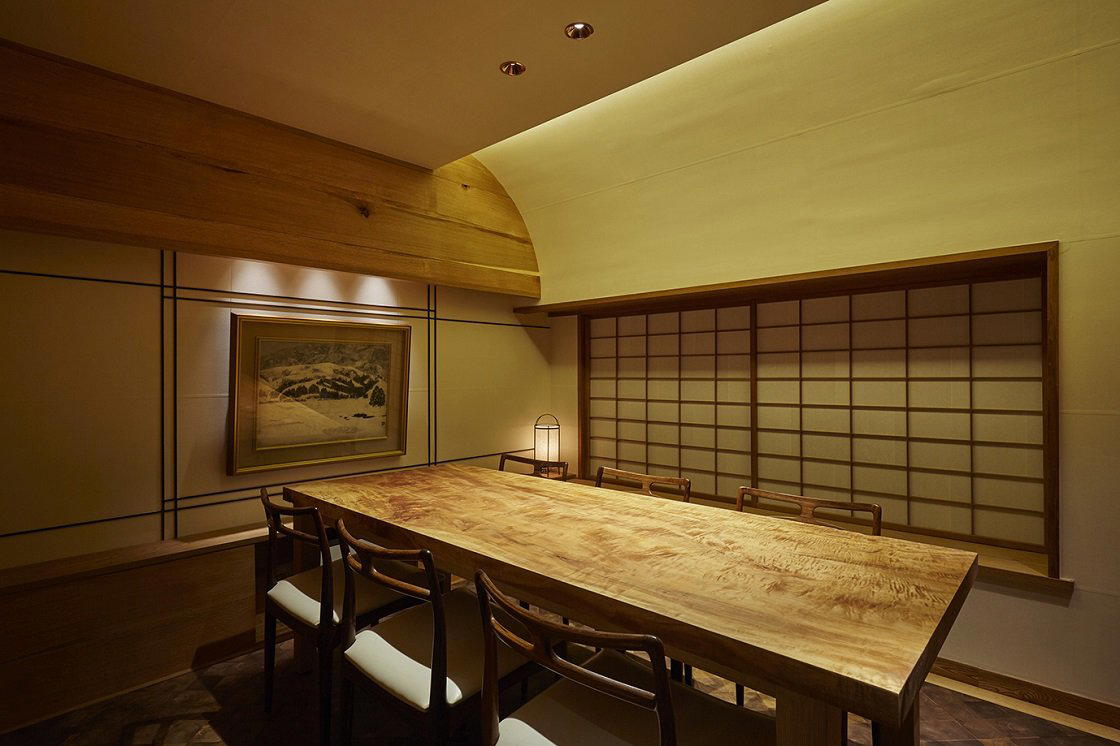
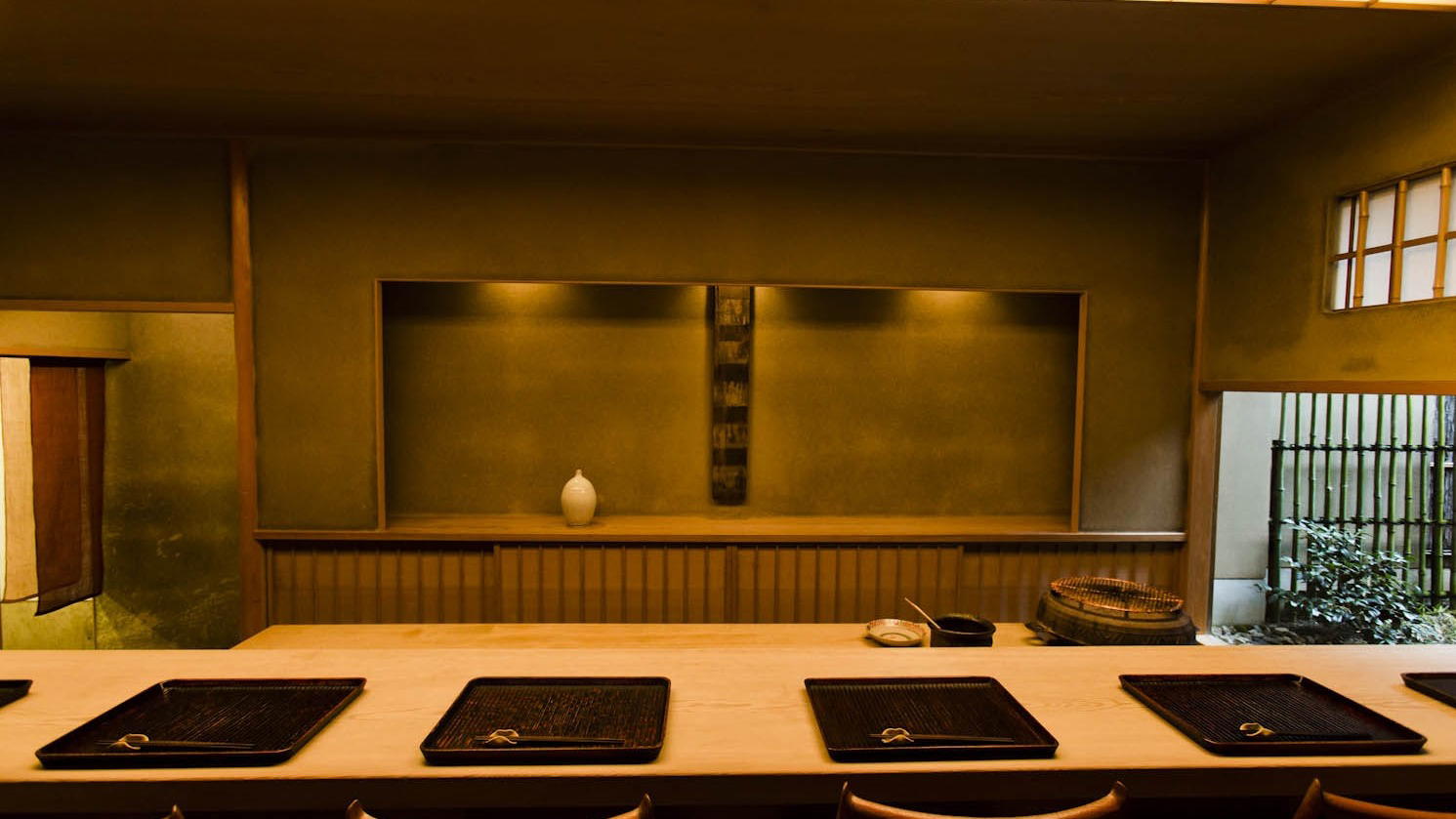
Kuramaguchi-dori, the long east-west street cutting through Kita Ward, is not where most first-time visitors to Kyoto instinctively end up. The temples of Kinkaku-ji draw crowds to the northwest; Gion and Higashiyama pull them southeast. That geographic gap is, in part, what has allowed a strip of preserved machiya townhouses along this corridor to hold their character. Teuchisoba Kanei sits within that row, behind a noren curtain and through an earth-floor entrance that reads less like a restaurant threshold and more like a neighbour's gate. The transition from street to interior is immediate and deliberate: tatami seating, wooden floors, low tables, and a domestic quiet that signals the kitchen's priorities rather than its ambitions.
Michelin awarded Teuchisoba Kanei a Bib Gourmand in both 2024 and 2025, the designation reserved for addresses that deliver high quality at moderate prices. Within a Kyoto restaurant scene that tilts heavily toward kaiseki at ¥¥¥¥, with rooms like Honke Owariya occupying a formal multi-course register, and where the kaiseki tier is represented by houses such as Gion Sasaki, Ifuki, and Kyokaiseki Kichisen at the upper end of the price spectrum, a soba counter earning consecutive Bib Gourmands carries weight beyond its ¥ price band. It signals that the critical infrastructure has noticed something here that goes past nostalgia.
What 100% Buckwheat Actually Means at the Table
Most soba in Japan is blended: buckwheat combined with wheat flour in ratios that range from 80/20 down to 50/50, the wheat providing the gluten that makes the dough workable and the noodle resilient. A 100% buckwheat soba, called juwari, is technically harder to produce and hold together, and it announces itself differently at the table: more pronounced earthiness, a shorter texture, and a finish that carries the grain's natural bitterness longer. The zaru soba here, served on a bamboo draining basket with dipping sauce, is made entirely from buckwheat flour. That decision places Teuchisoba Kanei in a smaller, more exacting subset of soba producers, comparable in approach to the craft-focused soba tradition you find at Tokyo addresses like Akasaka Sunaba or Osaka's Ayamedo, where ingredient fidelity is the central argument.
The sharkskin grater and a stick of fresh wasabi provided to each table extends that argument. Commercial wasabi paste, which comprises most of what appears at mid-range Japanese restaurants globally, is a different product entirely from freshly grated rhizome. The sharkskin grater produces a finer, cooler paste than metal alternatives, and the ritual of grating while the soba is prepared gives the wasabi time to develop its volatile compounds. It is a small, considered system, and it tells you something about how the kitchen weights its priorities. The menu extends the buckwheat theme: buckwheat tofu and buckwheat red-bean soup both appear, making the grain the through-line rather than a single application.
Where Teuchisoba Kanei Sits in Kyoto's Broader Dining Picture
Kyoto's dining reputation is built on restraint and seasonal precision, and much of the critical energy concentrates at the leading end. The kaiseki houses that hold three and four stars accumulate the column inches; the ¥¥¥¥ rooms at places like Gion Sasaki and Kyokaiseki Kichisen set the international reference points. Below that tier, the city has a long tradition of affordable craft: tofu restaurants, obanzai canteens, ramen counters with decades of neighbourhood loyalty. Soba sits within that tradition, but the juwari format with proper fresh wasabi and consecutive Bib Gourmand recognition puts Teuchisoba Kanei on a different footing from a casual noodle stop.
Other Kyoto restaurants operating in this zone of serious craft at approachable prices, including Gombei and Itsutsu, demonstrate that the city supports multiple formats at this level. Chikuyuan Taro no Atsumori and Juu-go represent adjacent registers within Kyoto's non-kaiseki dining. Across the wider Kansai and western Japan circuit, addresses like HAJIME in Osaka and akordu in Nara work in entirely different registers, but they anchor the regional critical seriousness within which Teuchisoba Kanei's consecutive recognitions should be read. Further afield, Harutaka in Tokyo, Goh in Fukuoka, 1000 in Yokohama, and 6 in Okinawa each illustrate how Michelin's Japan operation has broadened its recognition across formats and price points, rather than concentrating exclusively at the starred tier.
The Physical Experience: Atmosphere as Argument
In a city where kaiseki rooms often stage their minimalism with considerable architectural expense, the atmosphere at Teuchisoba Kanei is unreconstructed rather than designed. The machiya row on Kuramaguchi-dori, the noren curtain, the earth-floor entryway, the tatami seating: these are not renovation choices made in the last decade. They reflect the building's actual age and use, and that continuity carries a different kind of authority than a newly fitted-out dining room working to evoke tradition. For those who read the format correctly, the reward is soba at a level and a price that is genuinely hard to find in the city.
Planning Your Visit
Teuchisoba Kanei is located at 11-1 Murasakino Higashifujinomoricho, Kita Ward, Kyoto 603-8223, in the northern part of the city along Kuramaguchi-dori. Budget: ¥ price range, in keeping with the Bib Gourmand positioning. Reservations: Dress: No dress code applies; the tatami room setting requires removing shoes. Getting there: Kita Ward is most efficiently reached from central Kyoto by bus along the Kuramaguchi corridor or by taxi from Kyoto Station.
For further reading across Kyoto's dining options by format and price, see our full Kyoto restaurants guide. For accommodation, our full Kyoto hotels guide covers the range from international brands to machiya ryokan. Drinking and nightlife recommendations appear in our full Kyoto bars guide. Regional wine and sake producers are mapped in our full Kyoto wineries guide, and cultural programming in our full Kyoto experiences guide.
Frequently asked questions
What's Teuchisoba Kanei known for in terms of accolades?
Teuchisoba Kanei has received recognition including: A soba shop in a row of old houses on Kuramaguchi-dori. Pass through the noren curtain and the earth-floor entrance, and the nostalgic sight of tatami seating and tables on wooden floors puts you immediately at ease. ‘Zaru soba’, soba on a ….
Where is Teuchisoba Kanei in Kyoto?
Teuchisoba Kanei is located at 11-1 Murasakino Higashifujinomoricho, Kita Ward, Kyoto, 603-8223, Japan, Kyoto.
What should I order at Teuchisoba Kanei?
The zaru soba is the anchor of the menu: 100% buckwheat flour soba served on a bamboo draining basket with dipping sauce, accompanied by a sharkskin grater and a stick of wasabi to grate fresh at the table. Beyond the soba itself, the kitchen also offers buckwheat tofu and buckwheat red-bean soup, which give a fuller picture of what the kitchen does with a single grain. For a two-time Michelin Bib Gourmand recipient at the ¥ price point, the zaru soba is the clearest expression of why the guide keeps returning.
What cuisine category does Teuchisoba Kanei fall under?
What's the pricing like at Teuchisoba Kanei?
Pricing at Teuchisoba Kanei is listed as ¥.
Who's behind the kitchen at Teuchisoba Kanei?
The chef associated with Teuchisoba Kanei is Kai Horitzky.
Do they take walk-ins at Teuchisoba Kanei?
Arriving early, particularly at lunch, is the practical approach given the venue's Bib Gourmand profile and compact tatami seating. Checking ahead via the address at 11-1 Murasakino Higashifujinomoricho, Kita Ward, is advisable before making the trip from central Kyoto.
A Quick Peer Check
| Venue | Cuisine | Price | Awards | Notes |
|---|---|---|---|---|
| Teuchisoba KaneiThis venue (the venue you are viewing) | Traditional Hand-Ground Soba | $10–20 | Michelin Bib Gourmand · Tabelog 100 #11 | Not listed |
| Gion Sasaki | Modern Kaiseki | $300–500 | 3 Michelin Stars · La Liste Top Restaurants | Kaiseki, Japanese |
| cenci | Innovative Italian-Japanese Fusion | $100–150 | 1 Michelin Star · World's 50 Best #76 | Italian |
| Ifuki | Sumibi Kappo Kaiseki | $200–300 | 2 Michelin Stars · La Liste Top Restaurants | Kaiseki |
| Kyokaiseki Kichisen | Kyoto Kaiseki | $200–300 | 2 Michelin Stars · La Liste Top Restaurants | Japanese |
| Kyo Seika | Modern Chinese Fine Dining | $150–200 | 1 Michelin Star · Tabelog Bronze #216 | Chinese |
Recognition history
Dated appearances from independent guides and award organizations, with the underlying list record or original source where available.
Michelin Bib Gourmand
Michelin
Tabelog 100 #11 · No. 11
Tabelog · Tabelog 100 - Soba - WEST - 2025
Full recognition history (4 entries)
Michelin Bib Gourmand
Michelin
Michelin Bib Gourmand
Michelin