

Akasaka Sunaba is a long-standing soba house in Minato's Akasaka district, ranked among Japan's most respected casual dining addresses by Opinionated About Dining three years running, placing at #58, #73, and #63 between 2023 and 2025. The format is direct: handmade buckwheat noodles, a focused menu, and a pace set by the room rather than the clock. Open Monday through Saturday, closed Sunday.
Pearl is the En Primeur Club membership app — saves, bookings, and concierge access live there. Same editors, same standards.
- Address
- 6 Chome-3-5 Akasaka, Minato City, Tokyo 107-0052, Japan
- Phone
- +81 3-3583-7670
- Website
- muromachi-sunaba.co.jp
- Directions
- Get directions
 Saves & bookings on Pearl
Where Akasaka's Working Day Begins and Ends with Buckwheat
The blocks around Akasaka's government offices and media buildings have a particular rhythm, suited crowds at lunch, quieter evenings as the district exhales. Soba houses fit this pattern more naturally than almost any other format, offering a meal that can be quick or contemplative depending on what the diner brings to it. Akasaka Sunaba has occupied this cadence for long enough that it remains a familiar, trusted stop.
Tokyo's soba tradition sits in a different register from the city's more photogenic dining categories. Where an omakase counter at Ginza or a kaiseki room in Minami-Aoyama commands planning months in advance and a significant outlay, a well-regarded soba house operates on walk-in logic, counter service, and the kind of pricing that makes a weekday lunch feel like a reasonable given. The comparison venues most discussed in Tokyo's premium dining scene, RyuGin, L'Effervescence, Harutaka, occupy a different tier entirely. Akasaka Sunaba's comparable set is smaller, more specific: the group of buckwheat specialists that Opinionated About Dining tracks under its Casual Japan list, where the criteria are craft, consistency, and what a bowl actually delivers rather than what surrounds it.
Three Years in the Rankings, and What That Means
Opinionated About Dining's Casual Japan list is one of the more demanding recognition frameworks for this format. It tracks restaurants without the Michelin infrastructure of multi-course tasting menus or sommelier programs, measuring instead the quality of a defined, repeatable craft. Akasaka Sunaba has appeared on this list in 2023 (#58), 2024 (#73), and 2025 (#63). Soba houses in Tokyo, Kyoto, and beyond compete on the same list; holding a position inside the top 75 for three consecutive years signals something durable.
For context within the Tokyo soba scene, Edosoba Hosokawa and Azabukawakamian represent the category's more prominent addresses. Each has its own district logic, Hosokawa operating with a precision that draws serious enthusiasts, Azabukawakamian anchored in the quieter lanes of Azabu. Akasaka Sunaba's position in the same neighbourhood as Hamacho Kaneko and within reach of Hamadaya and Ittoan places it in a district with depth across Japanese dining formats, from formal kappo to casual noodle traditions.
The Craft Behind the Counter
Soba-making is one of Japanese cuisine's most technically demanding casual crafts. The buckwheat flour used in high-grade soba is sensitive to humidity, temperature, and handling; the ratio of buckwheat to wheat flour (the difference between juwari, or 100% buckwheat, and various sobako blends) affects texture, bite, and how the noodle holds against both cold dipping broth and hot soup. In a well-run soba house, this is a team discipline as much as an individual one. The prep work, milling, mixing, rolling, cutting, distributes across the kitchen in a sequence that requires coordination rather than solo performance. The floor staff's role in timing service, managing the gap between noodle cutting and delivery, and reading the pace of the room contributes directly to what arrives in the bowl.
The restaurant is run by various chefs rather than a single public-facing name. The craft is embedded in process and repetition rather than in a single practitioner's biography. This is consistent with how the broader category operates: the soba tradition rewards institutional knowledge and collective discipline over individual signature.
The collaboration between kitchen and floor at a soba house is also more compressed than at a multi-course venue. There are no elaborate hand-offs between courses, no sommelier narrating pairings, no brigade managing fifteen components of a single plate. Instead, the team dynamic runs on timing and economy, getting cold soba to the table before the noodles begin to absorb moisture, ensuring the tsuyu arrives at the right temperature, reading when a table wants a second order without disrupting the room's pace. These are small calibrations that accumulate into a consistent experience.
The Neighbourhood and When to Go
Akasaka sits between the political and commercial infrastructure of central Tokyo, close to the Akasaka-mitsuke and Akasaka stations, with the TBS Broadcasting Center and several government ministry buildings defining the area's weekday population. This gives the district a reliable lunch density and a quieter evening profile than, say, Roppongi or Shinjuku. A soba house in this context serves a different purpose at noon than at 6pm: lunch runs faster, evening allows the meal to expand.
The restaurant is open Monday through Friday from 11 AM to 8 PM, Saturday from 11 AM to 7:30 PM, and closed on Sundays. The weekday hours align with the district's working pattern, and the Saturday close at 7:30pm rather than 8pm is worth noting for anyone planning a weekend visit. Walk-in access is the norm here, though arriving at off-peak hours can reduce any wait. The format does not require advance booking in the way that Tokyo's fine dining tier demands, making it one of the more accessible quality addresses in the city for a traveller without a month of planning runway.
Japan's soba tradition extends well beyond Tokyo: Ayamedo in Osaka and Chikuyuan Taro no Atsumori in Kyoto are the relevant reference points in other cities. For Japan's broader fine dining picture, HAJIME in Osaka, Gion Sasaki in Kyoto, akordu in Nara, Goh in Fukuoka, 1000 in Yokohama, and 6 in Okinawa cover the range of formats across the country's major dining cities.
What Regulars Order
At a soba house with the restaurant's standing, the ordering logic among regulars converges on a few consistent choices. Cold soba, zaru or mori, served on a bamboo drainer with cold tsuyu for dipping, is the standard by which the kitchen's buckwheat quality is most directly assessed. There is nowhere for the noodle to hide in cold service: texture, bite, and the faint earthiness of good buckwheat are all present without broth to mediate them. Hot soba in kake format, with a light dashi-based soup, is the colder-months preference for many, but the cold preparations carry more of the house's technical identity. Side dishes, tamagoyaki, kakiage, and similar accompaniments common to the Tokyo soba tradition, are part of what makes a lunch here feel complete rather than abbreviated.
Budget Reality Check
Comparable venues nearby, for context on price, style, and recognition.
| Venue | Cuisine | Price |
|---|---|---|
| Akasaka SunabaThis venue — the venue you are viewing | Soba | $$ |
| Afuri | Chiyoda, Modern Yuzu Ramen | $$ |
| Tonkatsu Aoki | Ōta, Traditional Tonkatsu | $$ |
| Gyoza Bar Chaozu | Minato, Gyoza and Champagne Bar | $$ |
| Tenichi | Chūō, Classic Tempura | $$$ |
| Tonki | Meguro, Classic Tonkatsu | $$ |
Recognition history
Dated appearances from independent guides and award organizations, with the underlying list record or original source where available.
Opinionated About Dining Casual in Japan Ranked #71
Opinionated About Dining
Opinionated About Dining Casual in Japan Ranked #63
Opinionated About Dining
Tabelog 100 #49 · No. 49
Tabelog · Tabelog 100 - Soba - EAST - 2025
Opinionated About Dining Casual in Japan Ranked #73
Opinionated About Dining
Opinionated About Dining Casual in Japan Ranked #58
Opinionated About Dining
Continue exploring
More in Tokyo
More from Chef Various
Browse all →
Restaurants in Tokyo
Browse all →



Bars in Tokyo
Browse all →







At a Glance
- Classic
- Cozy
- Quiet
- Well Known
- Business Dinner
- Casual Hangout
- Historic Building
- Standalone
- Sake Program
Current opening hours
- Monday
- 11 AM–8 PM
- Tuesday
- 11 AM–8 PM
- Wednesday
- 11 AM–8 PM
- Thursday
- 11 AM–8 PM
- Friday
- 11 AM–8 PM
- Saturday
- 11 AM–7:30 PM
- Sunday
- Closed
Hours can change for holidays and private events. Last verified .
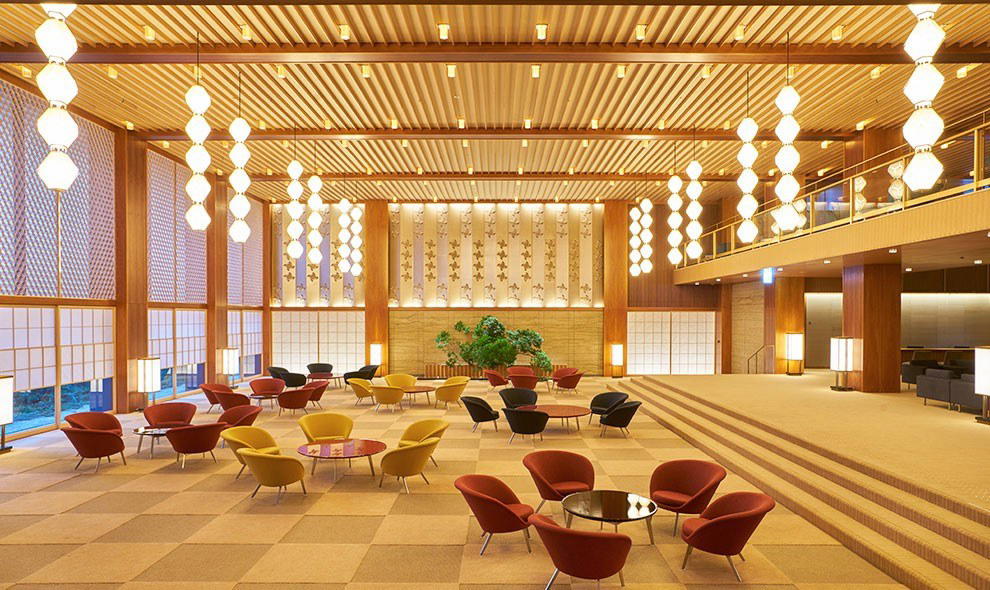
Clean and unadorned dining room with wood finishes and simple décor; warm, inviting atmosphere with functional lighting that keeps focus on the food; choice of Western or traditional tatami seating.