Located in central Kyoto at 海老屋町324-1, Tenyou (点邑) occupies a quieter register within a city that has long set the standard for kaiseki discipline. The address places it inside a dense pocket of the old capital where ritual and restraint are the default mode, not the exception. For travellers who understand what Kyoto's serious dining rooms demand, Tenyou warrants attention on its own terms.
 Discover on Pearl
Pearl is the En Primeur Club membership app — saves, bookings, and concierge access live there. Same editors, same standards.
The Weight of the Room Before the First Course Arrives
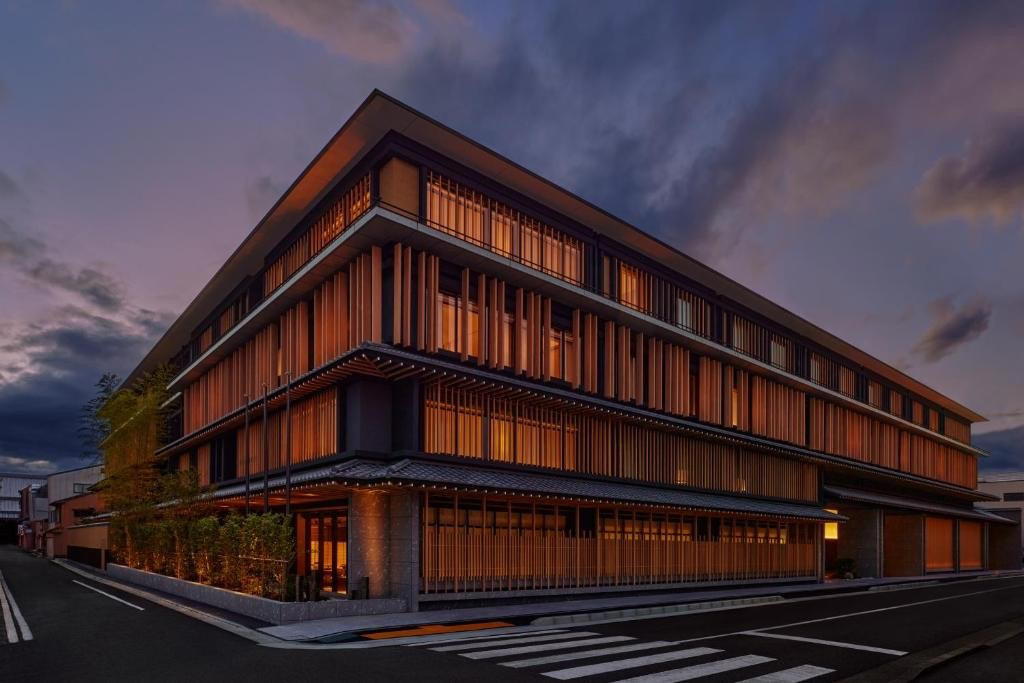
Tenyou (点邑) is a restaurant in Kyoto, with a price tier of ¥¥¥¥ and a reservation policy that calls for advance planning. The 海老屋町 address that Tenyou (点邑) occupies sits inside that tradition, in a part of central Kyoto where the built environment still makes spatial arguments about seriousness and proportion. In a city where the dining ritual begins on the pavement, the physical approach to a room is not incidental, it is the opening act.
That framing matters because Kyoto's premium dining culture is inseparable from its spatial logic. The great kaiseki rooms of this city, Gion Sasaki, Hyotei, Kikunoi Honten, Mizai, have built their reputations not only on what is served but on the choreography of how it is served, and in what kind of room. Architecture and tableware carry as much meaning as the food itself. Tenyou sits within this culture, in a postcode that carries its own expectations.
How Kyoto Shapes the Dining Ritual
The concept of ma, purposeful negative space, runs through Kyoto dining more consistently than in any other Japanese city. Where Tokyo's leading counters often reward density and velocity (courses that arrive with precision but minimal pause), Kyoto's model has historically prized slowness as a form of respect. The guest is not moved through a menu; they are held inside an experience that unfolds at its own speed. This is not simply a stylistic preference. It reflects a deeper Kyoto philosophy in which the meal is understood as a seasonal document: an argument about what the current moment in the year should taste like, expressed through the selection of ingredients, the temperature of each dish, and the geometry of how food is arranged on ceramic.
That philosophy connects directly to the kaiseki tradition that radiates from Kyoto across the rest of Japan. Rooms like Isshisoden Nakamura, one of the oldest continuously operating kaiseki establishments in the city, demonstrate that longevity in this format is not accidental. It requires a sustained commitment to the seasonal calendar, to supplier relationships that predate modern distribution networks, and to a front-of-house etiquette that treats pacing as content. The leading Kyoto rooms teach their guests how to eat, without ever making them feel instructed.
Where Tenyou (点邑) Sits in This Context
Kyoto's dining tier has stratified considerably over the past decade. At the upper end, rooms with Michelin recognition and decades of lineage command multi-month booking windows and price points that rival the city's ryokan rates. Directly below that bracket sits a cohort of rooms that operate with comparable seriousness but with less institutional visibility, some by design, some simply because the city generates more quality than the international review circuit can process in a given season. Tenyou occupies a position within that broader Kyoto field, at a postcode (604-8085) that places it inside the city's densely layered old centre rather than on its more recognisable tourist corridors.
For comparative reference: the kaiseki tier in Kyoto runs from highly accessible lunch-focused formats at the ¥¥¥ level through to invitation-and-allocation rooms at the ¥¥¥¥ bracket. Tenyou belongs to the same central Kyoto conversation as rooms in nearby neighbourhoods, where the density of serious dining relative to foot traffic creates a different kind of atmosphere than Gion or Higashiyama. It is a part of the city where restaurants serve Kyoto residents as much as visitors, and where the room dynamics reflect that balance.
Comparable seriousness in a regional Japanese context can be found at HAJIME in Osaka, Goh in Fukuoka, and akordu in Nara, each of which reflects a regional interpretation of high-discipline Japanese dining. Internationally, the pacing and course-structure logic that defines rooms like Tenyou finds its closest analogues in the tasting-menu format practised at Atomix in New York City, where Korean fine dining has adopted a similarly ritual-oriented approach to sequencing and tableware.
The Etiquette the Room Expects
Kyoto kaiseki rooms operate according to a set of customs that are rarely posted and almost never explained, they are absorbed through the meal itself. Courses arrive in a sequence that mirrors the traditional kaiseki progression: sakizuke (opening bite), hassun (seasonal arrangement), yakimono (grilled component), and so on through to rice, pickles, and dessert. Guests who understand this structure gain more from the meal; the pacing makes sense as an argument, not just as a sequence. Rooms that operate within this tradition, as Tenyou appears to from its address and positioning, expect guests to arrive on time, to remain at the table between courses, and to engage with the food at the temperature it is served.
That last point matters more than it sounds. Kyoto kaiseki is calibrated to temperature in a way that differs from most European tasting-menu formats. A chilled dashi preparation and a warm ceramic bowl are not merely serving choices, they are the point. Eating at the wrong pace, or allowing a dish to sit, disrupts an argument the kitchen has spent considerable effort constructing. The room at Tenyou, like its counterparts across the city, holds this expectation. Guests who arrive having read the format, rather than arrived expecting it to explain itself, will extract more from the experience.
For broader context on how this dining culture sits within Kyoto's geography and seasonal calendar, Additional reference points worth consulting include Harutaka in Tokyo for a counter-format comparison, and venues across the broader Kansai and regional Japan network including 三本木 糸川制 in Nanao, 夕佳亭山乃 in Sapporo, 湖畔荘庵 in Takashima, 庄羽屋 in Nishikawa Machi, Birdland in Sakai, and Bistro Ange in Toyohashi for the range of formal dining that exists across the Japanese archipelago outside the capital.
Know Before You Go
- Address: 海老屋町324-1, 京都市, 京都府 604-8085
- Area: Central Kyoto (中京区), within the old grid of the city centre
- Booking: Reservations are essential.
- Timing: Reservations are essential, and timing matters in Kyoto's seasonal dining calendar.
- Format: Arrival punctuality is standard.
- Dress: Smart casual is appropriate.
Reputation Context
Comparable venues nearby, for context on price, style, and recognition.
| Venue | Cuisine | Price | Awards |
|---|---|---|---|
| Tenyou (点邑)This venue — the venue you are viewing | |||
| Gion Sasaki | Kaiseki, Japanese | ¥¥¥¥ | Michelin 3 Star |
| cenci | Italian | ¥¥¥ | Michelin 1 Star |
| Ifuki | Kaiseki | ¥¥¥¥ | Michelin 2 Star |
| Kyokaiseki Kichisen | Japanese | ¥¥¥¥ | Michelin 2 Star |
| Kyo Seika | Chinese | ¥¥¥ | Michelin 1 Star |

At a Glance
- Elegant
- Sophisticated
- Intimate
- Classic
- Special Occasion
- Date Night
- Business Dinner
- Chefs Counter
- Open Kitchen
- Historic Building
- Organic
- Local Sourcing
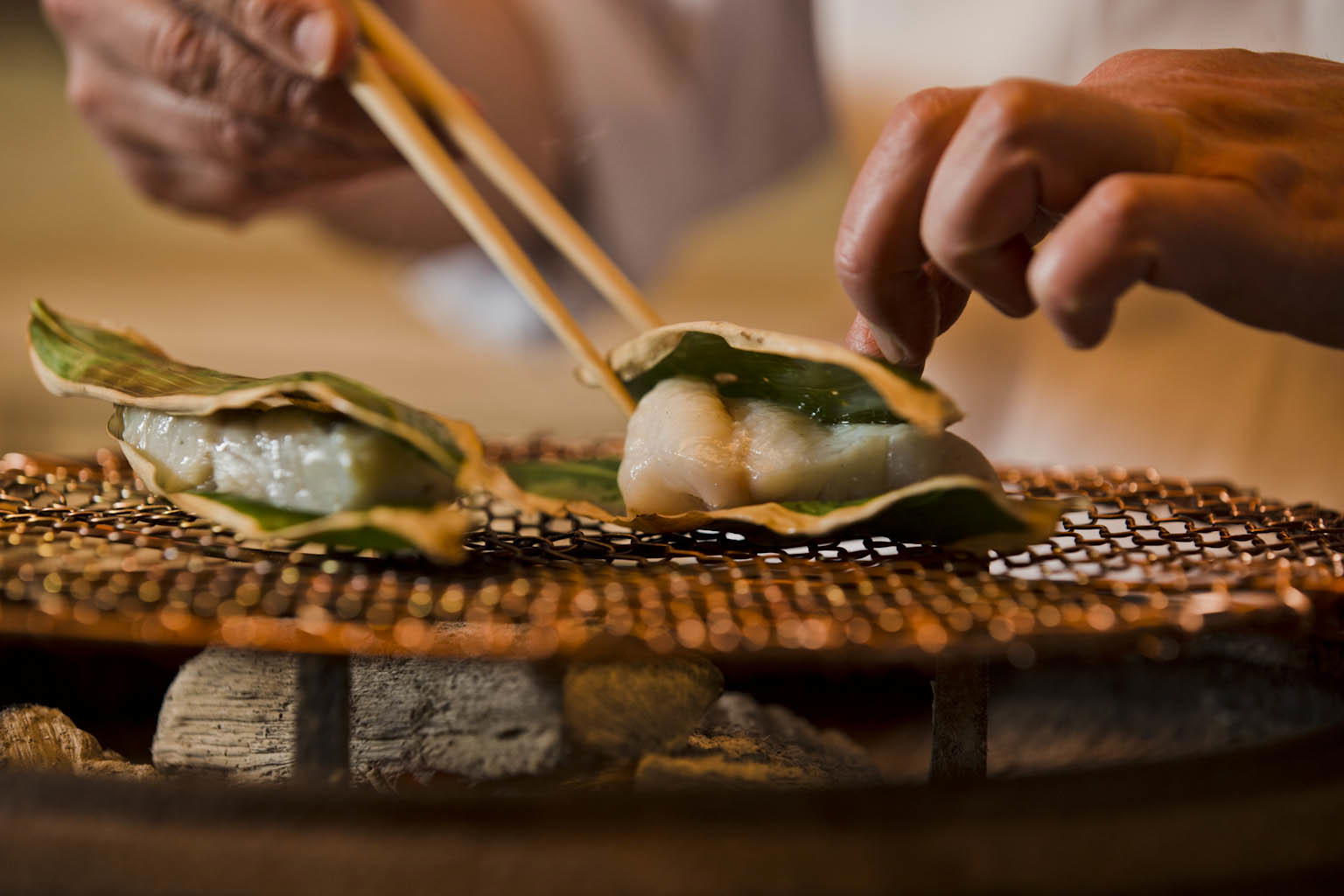
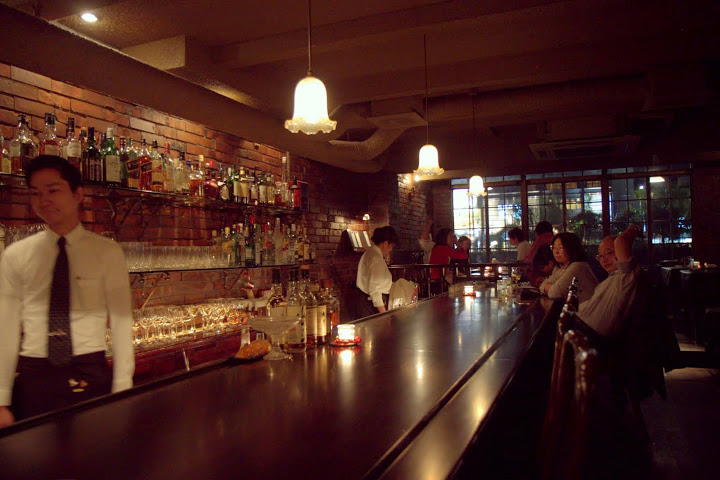
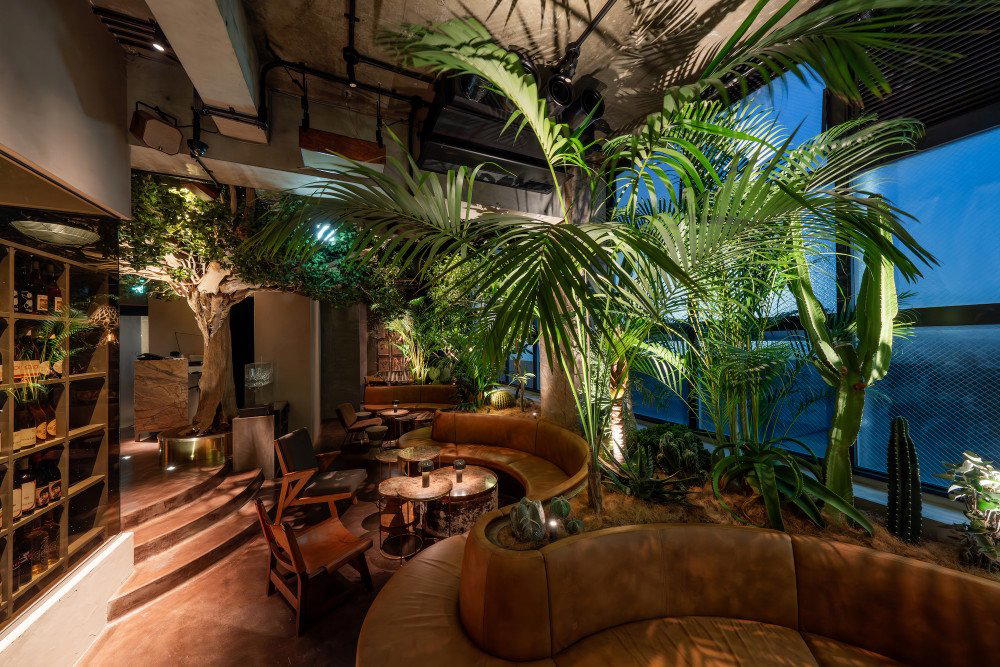
Refined and intimate counter dining experience with chef Kobayashi preparing tempura in front of guests, served on harmoniously decorated ceramic rectangular dishes.