Our verdict
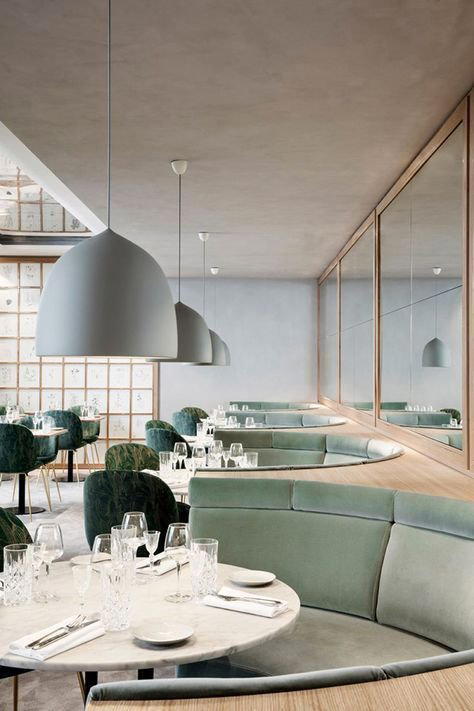
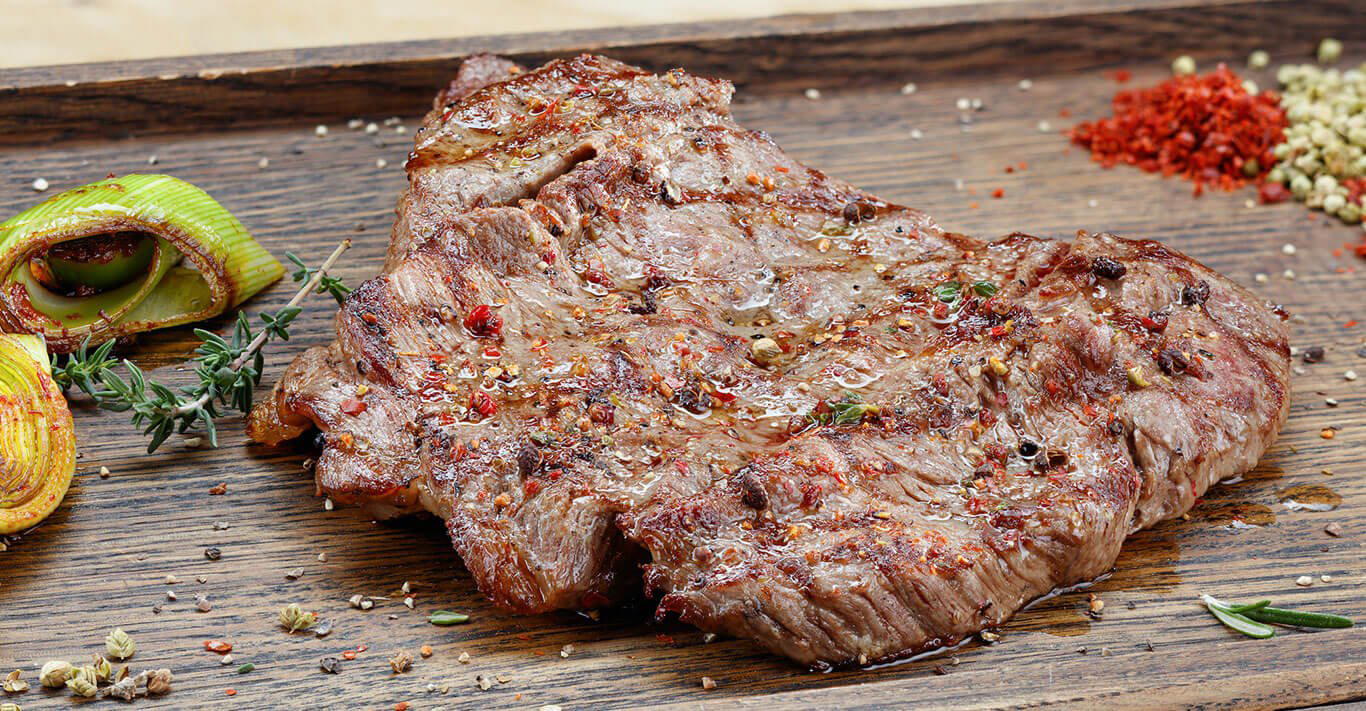
Steyk Khaus Butcher serves premium steakhouse fare in Moscow, with ribeye and black angus steak, an extensive wine list, and a leisurely pace for lunch or dinner.

Pearl is the En Primeur Club membership app, where members save venues, book tables and use the concierge.
Meat, Tradition, and the West Moscow Steakhouse Circuit
Michurinskiy Prospekt runs through one of Moscow's quieter residential corridors, well west of the Garden Ring and far from the concentrated dining theater of the city center. That address alone signals something about Steyk Khaus Butcher's positioning: this is a neighborhood-anchored steakhouse rather than a destination restaurant built to attract tourists or expense-account dinners in Tverskaya. The format, butcher-restaurant hybrid, belongs to a model that has grown across Moscow over the past decade, as the city's appetite for dry-aged beef and premium cuts moved from hotel dining rooms into standalone specialist venues.
Moscow's steakhouse culture has its own distinct arc. Unlike the Anglo-American tradition, which built its identity around open grills and tableside theatrics, the Russian premium meat restaurant leaned into butcher-shop transparency: the cut visible before the cook, the sourcing explained before the order. Steyk Khaus Butcher's name makes that lineage explicit, positioning the operation inside a format that treats the butchering process as part of the dining proposition, not a backstage detail. In this, it sits in a different competitive register than the modern Russian tables at White Rabbit or the European ambition of Twins Garden, where the kitchen's intellectual framework, fermentation, foraged ingredients, regional identity, drives the menu logic.
The Cultural Weight of Meat in Russian Dining
To understand why the butcher-steakhouse format resonates in Moscow specifically, it helps to consider the cultural role of meat in Russian food tradition. Beef has long occupied a prestige position at the Russian table, from the braised preparations of Soviet-era banquet culture to the grilled formats that arrived with post-Soviet prosperity and access to international sourcing. The shift toward dry-aging and breed-specific cuts, Hereford, Black Angus, Wagyu, represents the latest chapter in that story, one driven partly by domestic producers who began serious cattle programs in the 2010s and partly by a dining public that had developed vocabulary for what distinguished a well-rested rib-eye from a commodity steak.
That cultural context matters when reading a venue like Steyk Khaus Butcher. The butcher-restaurant model in Moscow is not simply an import of a Western format. It has been grafted onto existing Russian habits of communal eating and substantive portions, and onto a hospitality culture that values directness, knowing what you're getting before you commit, over the obscured sourcing of a conventional menu. The display case and the counter represent a form of transparency that sits comfortably within Russian dining expectations, even as the product category (prime-grade aged beef) signals obvious international influence.
Across Russia's other major dining cities, meat-focused formats have developed their own regional character. In Yekaterinburg, Khmeli Suneli reflects a Caucasian meat tradition built around different cuts and fire methods. In Novosibirsk, more casual formats like Burger Records address a younger market's relationship with quality beef in a fast-casual frame. Steyk Khaus Butcher occupies the premium specialist tier between those poles: more focused than a multi-format restaurant, less formal than a white-tablecloth steakhouse.
Where It Sits in Moscow's Dining Conversation
Moscow's restaurant scene has bifurcated in interesting ways. On one side, venues like Varvary and Accenti operate with the ambition and vocabulary of European fine dining, tasting menus, wine programs, kitchen provenance as narrative. On the other, a cohort of more focused, format-driven venues has built loyal followings by doing one thing with commitment and repeating it well. Steyk Khaus Butcher belongs to the latter group, where the editorial proposition is built around product quality and format consistency rather than conceptual range.
The Michurinskiy Prospekt address (building 8, structure 2) places the venue in Prospekt Vernadskogo district, which lacks the dining density of Patriarch's Ponds or Chistye Prudy but has developed its own pocket of neighborhood restaurants serving a resident rather than tourist clientele. For diners willing to travel west of the center, and in a city where good food is distributed unevenly across a vast urban footprint, that willingness matters, the venue offers something the downtown circuit doesn't always provide: a local regularity, a format that rewards repeat visits.
For wider Moscow context, including comparable formats in other categories, the EP Club Moscow guide covers the city's current dining spread, from the modern European tables at Aist to the broader neighborhood patterns that define where serious eating now happens. Further afield, the butcher-restaurant model has analogues across Russian cities: Kukhterin in Tomsk and Dzhani Restorani in Nizhny Novgorod both demonstrate how meat-centered hospitality adapts to provincial city contexts with distinct sourcing and service cultures. Saint Petersburg's restaurant scene, accessible through entries like 1913 and Lev I Ptichka, offers a parallel read on how Russia's second city handles premium dining categories. The contrast with Moscow's approach, more commercially aggressive, more format-diverse, is instructive. Even within St. Petersburg, a venue like Made in China illustrates how the city's dining scene draws on a different set of international references than Moscow's western-leaning steakhouse culture. In the south, Alanskaya Kukhnya in Krasnodar and Grisha in Omsk suggest how regional identity shapes the meat-dining proposition outside the two capitals. At the far end of the Russian restaurant spectrum, Konditerskaya Kuzina in Syktyvkar is a reminder of how diverse the country's hospitality formats have become beyond Moscow's gravitational pull.
Planning a Visit
Steyk Khaus Butcher is located at Michurinskiy Prospekt, 8, structure 2, in Moscow's Prospekt Vernadskogo district. The venue is accessible by metro via Prospekt Vernadskogo station on the Sokolnicheskaya (red) line. For international context on the premium steak-dining tier more broadly, the format shares some DNA with tightly focused protein-specialist restaurants like Le Bernardin and Atomix in New York, though the Moscow butcher-restaurant model operates with a different set of assumptions about format, scale, and dining occasion.
Frequently asked questions
Where do I go for Steyk Khaus Butcher?
Steyk Khaus Butcher is located at Michurinskiy Prospekt, 8, стр. 2, Moscow, Russia, 119192, Moscow.
Is Steyk Khaus Butcher suitable for a business dinner in Moscow?
The butcher-steakhouse format at Steyk Khaus Butcher positions it closer to a focused, meat-specialist dining room than a full-service venue built around corporate entertaining. Its location on Michurinskiy Prospekt in Moscow's Prospekt Vernadskogo district suits guests already on the west side of the city rather than those travelling from central business addresses. For a working dinner where the quality of the cut matters more than ceremony, the format is appropriate; for formal client hospitality with broader menu range, the central Moscow options serve differently.
What do people recommend at Steyk Khaus Butcher?
Steyk Khaus Butcher operates on a butcher-steakhouse model, which means the cut selection is central to the experience rather than peripheral to it. Regulars on Moscow's dining circuit tend to approach these venues by asking the counter directly what arrived that week, since stock rotates with supply. Given the format and the west Moscow residential setting, the throughline is straightforward beef-led ordering rather than elaborate accompaniments.
How hard is it to get a table at Steyk Khaus Butcher?
Steyk Khaus Butcher sits on Michurinskiy Prospekt, 8, structure 2, well outside Moscow's central dining corridor, which means it draws a more local, neighbourhood crowd rather than the city-wide reservation pressure seen at venues closer to the Garden Ring. Contact details are not publicly listed at this time, so checking in directly at the address or via local booking platforms is the most reliable approach. Walk-in availability tends to be more accessible at west Moscow neighbourhood restaurants than at destination venues in the centre.
Fast Comparison
Comparable venues nearby, for context on price, style, and recognition.
| Venue | Cuisine | Price | Awards | Notes |
|---|---|---|---|---|
| Steyk Khaus ButcherThis venue (the venue you are viewing) | Premium Steakhouse | Not listed | Not listed | Not listed |
| Turandot | Pan-Asian Fine Dining | $100–150 | Not listed | Boulevard Ring |
| Twins | Modern Russian Fine Dining | Not listed | Not listed | Тверской |
| La Bottega Siciliana | Sicilian Italian | Not listed | Not listed | Boulevard Ring |
| Chefs Table | Modern Russian & International Seasonal Tasting Menu | $150–200 | La Liste Top Restaurants | Central (TsAO) |
| Красота - Krasota | Modern Russian Gastro-Theater | $500+ | La Liste Top Restaurants | Boulevard Ring |