Khmeli Suneli
Khmeli Suneli serves authentic Georgian cooking with khachapuri, khinkali, and shashlik, plus an extensive wine list for lunch, dinner, or late night.
Pearl is the En Primeur Club membership app — saves, bookings, and concierge access live there. Same editors, same standards.
- Address
- Lenin Ave, 69к10, Yekaterinburg, Sverdlovsk Oblast, Russia, 620075
- Phone
- +73433010206
- Website
- hmeli.ru
- Directions
- Get directions
 Saves & bookings on Pearl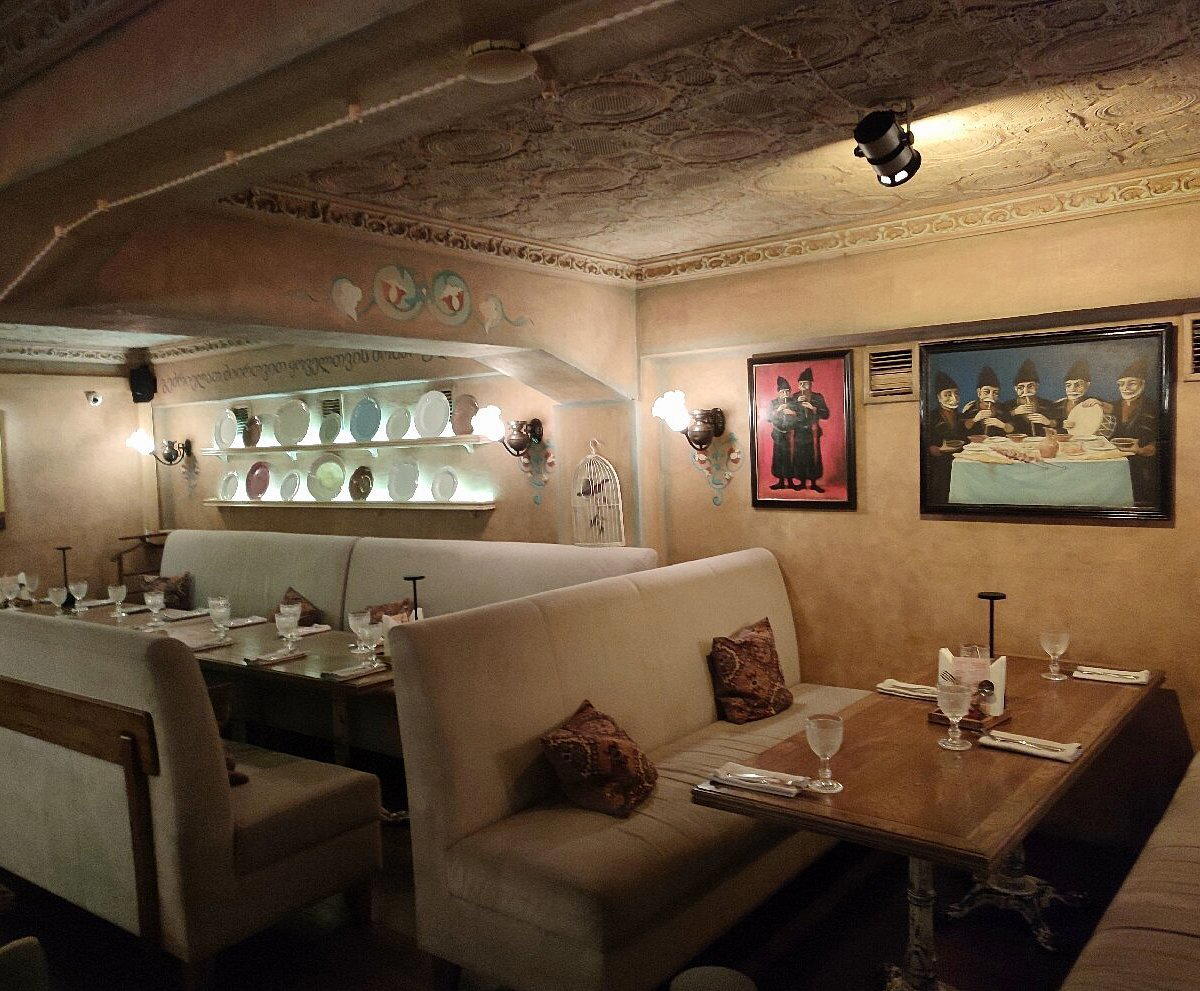
Where the Caucasus Meets the Urals
Lenin Avenue in central Yekaterinburg is a long, Soviet-scaled boulevard where the city's dining options range from chain canteens to rooms that take their sourcing seriously. At number 69, Khmeli Suneli lands in the second category. The name itself is an immediate signal: khmeli suneli is the foundational Georgian spice blend, a mixture of blue fenugreek, coriander seed, dried marigold petals, and a half-dozen aromatic companions that appears in everything from satsivi to chakhokhbili. Naming a restaurant after an ingredient rather than a place or a person is an editorial choice, and it frames the kitchen's priorities before you've read a single menu line.
Georgian cuisine has spread across Russian cities in ways that outpace most other regional traditions. From Moscow's Café Pushkin-era dining rooms to newer openings in Novosibirsk and Voronezh, the Georgian kitchen travels well because its ingredient logic is coherent and self-reinforcing: walnut pastes, tkemali plum sauces, churchkhela, adjika, and herb combinations that shift in ratio from region to region but remain recognisable across the whole South Caucasus. Yekaterinburg, sitting at the geographic boundary between European Russia and Siberia, has developed its own appetite for these flavours over the past two decades, and Khmeli Suneli is among the addresses that reflect that appetite seriously rather than superficially.
The Ingredient Logic Behind Georgian Cooking
Understanding what distinguishes a considered Georgian kitchen from a generic one comes down to the spice rack and the sourcing behind it. The restaurant blend is not monolithic: proportions shift by region, by season, and by the cook's hand. Blue fenugreek, the anchor note, gives the mixture a slightly bitter, hay-like depth that distinguishes Georgian herb blends from their Levantine or Indian counterparts. Marigold petals, known in Georgia as imeruli zafrana, provide a muted golden colour and a faint floral dryness. When a kitchen sources these components with attention, the difference registers clearly in the finished dish.
Georgia's wine tradition is equally specific. The country claims some of the oldest continuous winemaking on record, with qvevri (clay amphora) fermentation producing amber wines with phenolic structure that pairs differently from European white wine conventions. A Georgian restaurant that carries a considered wine list, including Rkatsiteli, Mtsvane, or Saperavi from reputable producers, is signalling that it understands the cuisine as a complete system rather than a selection of photogenic dishes. For Russian cities east of the Urals, access to quality Georgian wine depends on distribution relationships that smaller venues sometimes struggle to maintain consistently. This is one of the markers that separates serious operators in this category from those running on surface-level Georgian aesthetic.
Khmeli Suneli in Yekaterinburg's Dining Scene
Yekaterinburg's restaurant scene has moved meaningfully since the mid-2010s. The city's position as Russia's fourth-largest urban centre, and its history as an industrial and cultural hub for the Urals region, has produced a dining public that expects more than it did a decade ago. Within that set, the question is always the same: is the kitchen treating Georgian cooking as a cuisine with internal logic, or as a mood board?
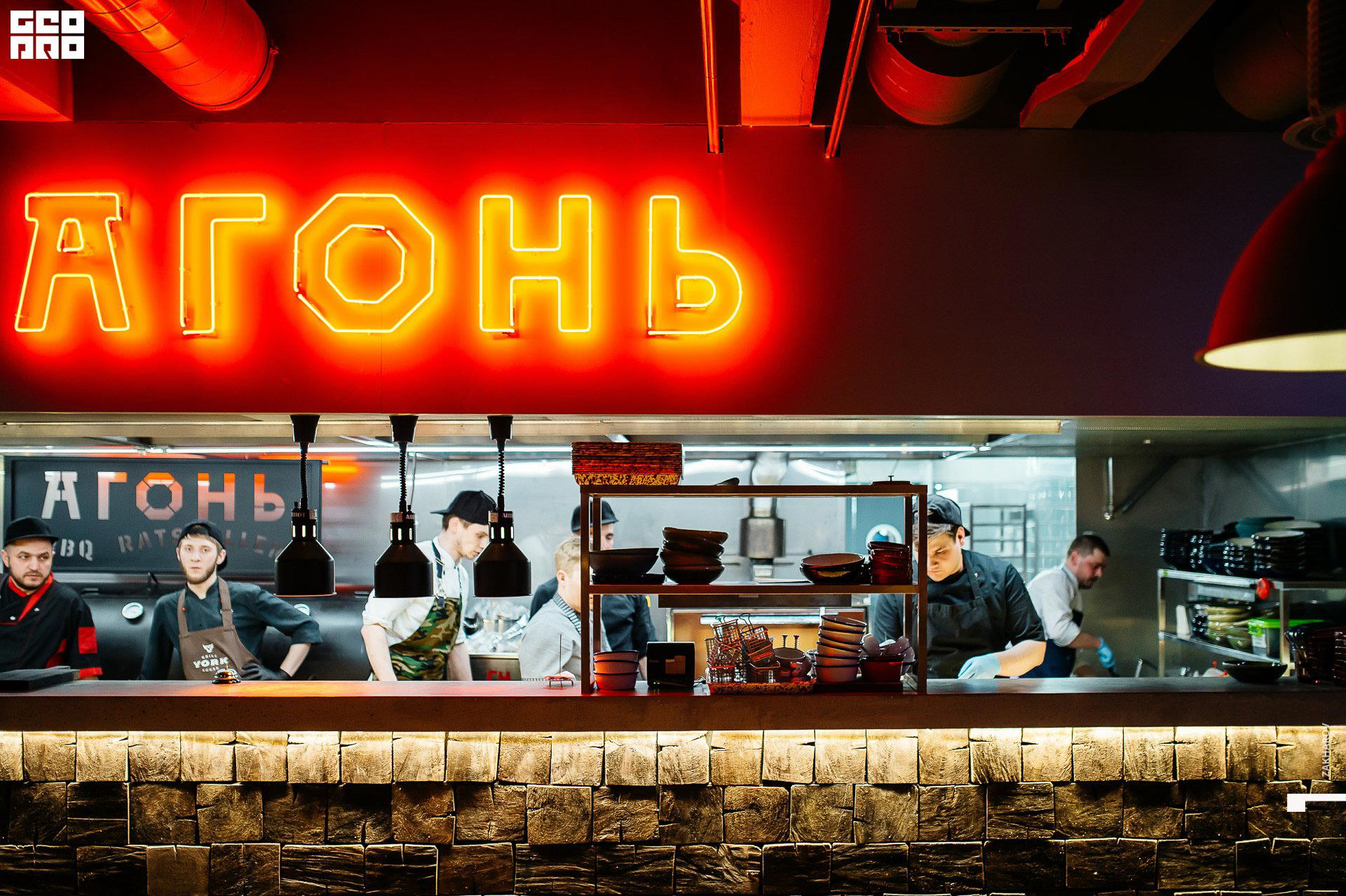
The restaurant's address on Lenin Avenue places it in the city's commercial and civic core, walkable from the main transport connections and the administrative district. For visitors arriving for business or conference purposes, which accounts for a significant share of Yekaterinburg's hospitality traffic, proximity to the centre matters. BEEFSTROGANOFF GRILL, which anchors the Russian classical tradition in the city, Carbonara for Italian-format cooking, and АГОНЬ BBQ Ratskeller for open-fire formats. Each represents a different culinary tradition; together they sketch the range available to a serious dining visitor to the city. See our full Yekaterinburg restaurants guide for a broader view of the city's dining options across formats and price tiers.
For context on how Georgian and Caucasian cooking is being treated at the higher end of Russia's restaurant scene, Twins Garden in Moscow and 1913 in Saint Petersburg represent the capital and second-city registers. Regional specialists elsewhere in Russia, including Alanskaya Kukhnya in Krasnodar and Dzhani Restorani in Nizhny Novgorod, show how Caucasian cuisine is being interpreted across different Russian city contexts. The comparison is instructive: each city brings its own sourcing constraints and dining culture to the same culinary tradition.
Across Siberia and the wider Urals region, restaurants working with non-Russian culinary traditions face a specific sourcing challenge. Supply chains for imported Georgian ingredients, including churchkhela, specific regional cheeses, and certain herb varieties, are longer and less predictable than those serving Moscow or Saint Petersburg kitchens. This is the operational reality that separates performance from intention in regional Georgian cooking. Venues like Kukhterin in Tomsk and Grisha in Omsk navigate similar geographic supply constraints in their own culinary categories, and the challenge is comparable in kind if not in specifics.
Planning a Visit
The restaurant sits at Lenin Ave, 69к10 in central Yekaterinburg, in the Sverdlovsk Oblast. The address is accessible by metro (Yekaterinburg's single metro line has a stop at Ploshchad 1905 Goda, a short walk from the Lenin Avenue corridor), by tram, and by taxi. Reservations are recommended.
From Made in China in St. Petersburg to Lev I Ptichka in Saint Petersburg City, and further east to Burger Records in Novosibirsk and Konditerskaya Kuzina in Syktyvkar, the range of what Russia's regional cities are doing with food is wider than the Moscow-centric narrative allows. Cafe Pushkin in Moscow and krevetka in Voronezh anchor different ends of the Russian dining register. Le Bernardin in New York City and Atomix in New York City remain the global benchmarks for technique-driven, ingredient-led cooking.
Comparable Venues
Comparable venues nearby, for context on price, style, and recognition.
| Venue | Cuisine | Price | Notes |
|---|---|---|---|
| Khmeli SuneliThis venue — the venue you are viewing | Authentic Georgian | $$ | Not listed |
| Carbonara | Italian Pasta & Pizza | $$ | City Center |
| BEEFSTROGANOFF GRILL | Steakhouse & Grill | $$$ | Belinskogo |
| АГОНЬ BBQ Ratskeller | German BBQ & Beer Hall | $$ | Ploschad 1905 goda |
| Kazbek (Казбек) | Georgian | $$$ | Пресненский |
| Korean BBQ гриль | Korean Table-Top BBQ Grill | $$ | Northwestern District |
Continue exploring
More in Yekaterinburg
Restaurants in Yekaterinburg
Browse all →
At a Glance
- Cozy
- Rustic
- Classic
- Group Dining
- Family
- Celebration
- Open Kitchen
- Extensive Wine List
- Local Sourcing
Current opening hours
- Monday
- 12 PM–12 AM
- Tuesday
- 12 PM–12 AM
- Wednesday
- 12 PM–12 AM
- Thursday
- 12 PM–12 AM
- Friday
- 12 PM–12 AM
- Saturday
- 12 PM–12 AM
- Sunday
- 12 PM–12 AM
Hours can change for holidays and private events. Last verified .
Charming vintage-decorated space with warm, cozy atmosphere, rich colors, and authentic Georgian details like wood-fired ovens and traditional elements.