Kukhterin occupies a quiet lane in central Tomsk, where Siberian ingredient traditions meet a dining room that rewards the kind of attention most travelers reserve for larger Russian cities. The address on Pereulok Nakhanovicha places it within the historic merchant quarter, a location that says something about the kind of cooking being done here. For anyone tracking Russia's regional dining scene beyond Moscow and Saint Petersburg, Tomsk is worth the detour.
Pearl is the En Primeur Club membership app — saves, bookings, and concierge access live there. Same editors, same standards.
- Address
- Pereulok Nakhanovicha, 9, Tomsk, Tomsk Oblast, Russia, 634050
- Phone
- +73822900600
- Website
- kuhterin.ru
- Directions
- Get directions
 Saves & bookings on Pearl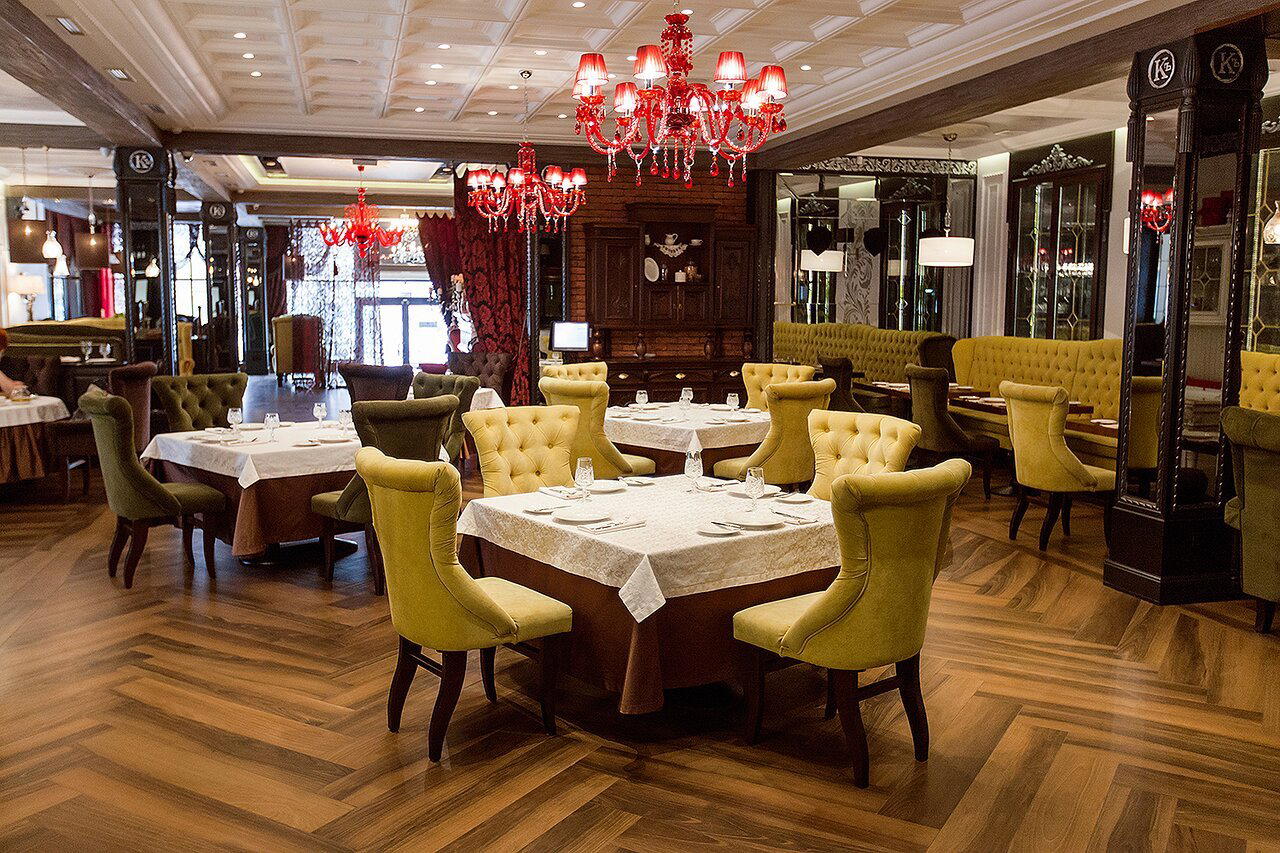
A Merchant City and Its Table
Tomsk earned its wealth from fur, gold, and trade routes that stretched east toward the Pacific and west toward the Urals. That mercantile history left the city with an architectural character, wooden carved facades, brick merchant houses, a skyline that still reads as pre-Soviet, and it left the regional kitchen with an unusually varied larder. Siberian cooking at its most interesting draws from taiga foraging, river fishing, and the livestock traditions of communities that had to provision themselves through winters that run long and hard. Kukhterin, a restaurant serving Siberian Russian Cuisine in Tomsk, operates inside that culinary inheritance rather than apart from it.
The address itself signals intent. The lane sits in the merchant quarter, where the Kukhterin family name carries genuine local weight: the Kukhterins were among Tomsk's most prominent nineteenth-century merchant dynasties, their legacy written into the city's civic buildings and charitable institutions. A restaurant bearing that name in this part of town is making a statement about rootedness, about the relationship between place, history, and what ends up on the plate.
Where the Ingredients Come From, and Why That Matters
Across Russia's regional dining scene, the tension between local sourcing and metropolitan import culture has sharpened over the past decade. In Moscow, restaurants like Twins Garden built their identity partly around vertically integrated supply chains, farming their own produce and making that transparency a central part of the story. Further west, 1913 in Saint Petersburg anchors its menu in the pre-revolutionary Russian kitchen, sourcing within a tradition rather than a geography. Tomsk's position, deep in Western Siberia, 2,800 kilometres east of Moscow by road, means the sourcing question resolves differently here. The distance from national distribution networks is not a disadvantage; it is, for a kitchen paying attention, an asset.
The Ob River basin produces pike, perch, and the region's prized sterlet. The taiga surrounding the city yields cedar nuts, wild mushrooms, and berries, lingonberry, cloudberry, and the intensely flavoured black crowberry, across a harvest season compressed into late summer and early autumn. Dairy traditions in the region lean toward fermented formats: cultured creams and soft cheeses that have more in common with Central Asian qatiq than with European-style production. Any kitchen in Tomsk drawing honestly from its surroundings is working with a pantry that has almost nothing in common with what arrives at a Moscow distribution centre, and that distinctiveness is the editorial point about Siberian regional cooking that venues like Kukhterin make concrete.
For context on how regional ingredient identity plays out elsewhere in Russian regional dining, Alanskaya Kukhnya in Krasnodar uses North Caucasian pastoral ingredients as its organising principle, and Khmeli Suneli in Yekaterinburg cross-references Georgian spice traditions with Ural-region produce. Each represents a different answer to the same underlying question: what does honest regional cooking look like when it starts from what the land actually provides rather than what a standardised menu expects?
Tomsk's Dining Scene in Comparative Frame
Tomsk is not a city that generates national dining press at the frequency of Novosibirsk or Yekaterinburg, the two regional centres that dominate Siberian food coverage. That relative quietness is partly a function of size, Tomsk's population sits around 570,000, and partly a function of the city's identity as a university town rather than an industrial centre. University cities in Russia have historically produced a restaurant culture oriented toward affordability and intellectual sociability rather than occasion dining. The more ambitious end of Tomsk's restaurant scene is therefore a smaller category, and Kukhterin operates within it.
For comparison, Grisha in Omsk, another Western Siberian city of comparable scale, represents the kind of chef-driven contemporary format that has emerged in second-tier Russian cities over the past several years. REBRO, also in Tomsk, operates in the same general tier and provides a useful local point of comparison for anyone mapping the city's dining options. Both addresses suggest that Tomsk's serious restaurant category, while small, is not absent.
The national frame matters too. At the upper end of Russian contemporary dining, venues like Cafe Pushkin in Moscow have spent decades constructing a nostalgic imperial-Russian register that bears little relationship to the actual peasant and merchant kitchens of the nineteenth century. The more interesting current in Russian food, one visible in places like Lev i Ptichka in Saint Petersburg, runs toward genuine regional specificity rather than theatrical historicism. Kukhterin's Tomsk address and its merchant-family name place it conceptually closer to that current.
Planning a Visit
Tomsk is accessible by rail from Novosibirsk, roughly a four-hour journey, and by air via Bogashevo Airport, which handles connections from Moscow and several regional hubs. The city's historic centre is compact and walkable; Pereulok Nakhanovicha sits within easy reach of the main university district and the Tom River embankment. Autumn, when the taiga harvest reaches the city's markets and the birch forests turn, is a reasonable season to time a visit if the regional ingredient story is the draw. Winter dining in Siberia carries its own logic, the cold concentrates the city's indoor culture, but travel logistics above 55 degrees north in January require planning. Kukhterin is recommended for reservations and opens daily from 7 AM to 12 AM.
Those building a wider Russia itinerary may also find value in the EP Club coverage of Dzhani Restorani in Nizhny Novgorod, Made in China in Saint Petersburg, and Knyagininskiy Dvor in Volgograd for a sense of how regional dining registers shift across Russia's geography.
Side-by-Side Snapshot
Comparable venues nearby, for context on price, style, and recognition.
| Venue | Cuisine | Price | Notes |
|---|---|---|---|
| KukhterinThis venue — the venue you are viewing | Siberian Russian Cuisine | $$$ | Not listed |
| REBRO | American Burgers & Grill | $$ | center |
| Pyshechnaya | Russian Pyshechnaya (Donut Cafe) | $ | Nevskiy |
| Китайская грамота | Кантонская кухня | $$$ | Бульварное кольцо |
| Mimino | Georgian | $$ | Oktyabrskaya |
| Twins | Modern Russian Fine Dining | $$$$ | Тверской |
Continue exploring
More in Tomsk
Restaurants in Tomsk
Browse all →
At a Glance
- Elegant
- Classic
- Sophisticated
- Business Dinner
- Special Occasion
- Date Night
- Terrace
- Historic Building
- Standalone
- Local Sourcing
Current opening hours
- Monday
- 7 AM–12 AM
- Tuesday
- 7 AM–12 AM
- Wednesday
- 7 AM–12 AM
- Thursday
- 7 AM–12 AM
- Friday
- 7 AM–12 AM
- Saturday
- 7 AM–12 AM
- Sunday
- 7 AM–12 AM
Hours can change for holidays and private events. Last verified .
Merchant luxury atmosphere with elegant decor; features a beautiful summer terrace described as enchanting by guests.