A konditorskaya on Ulitsa Svobody places Syktyvkar's pastry tradition in a city where regional identity runs deep and Moscow-style dining trends arrive late, if at all. Kuzina operates within that slower, more locally rooted food culture, where the sourcing of ingredients from the Komi Republic's surrounding forests and farms shapes what ends up on the counter.
Pearl is the En Primeur Club membership app — saves, bookings, and concierge access live there. Same editors, same standards.
- Address
- Ulitsa Svobody, 35/75, Syktyvkar, Komi Republic, Russia, 167000
- Phone
- +79091205894
- Website
- kuzina11.com
- Directions
- Get directions
 Saves & bookings on Pearl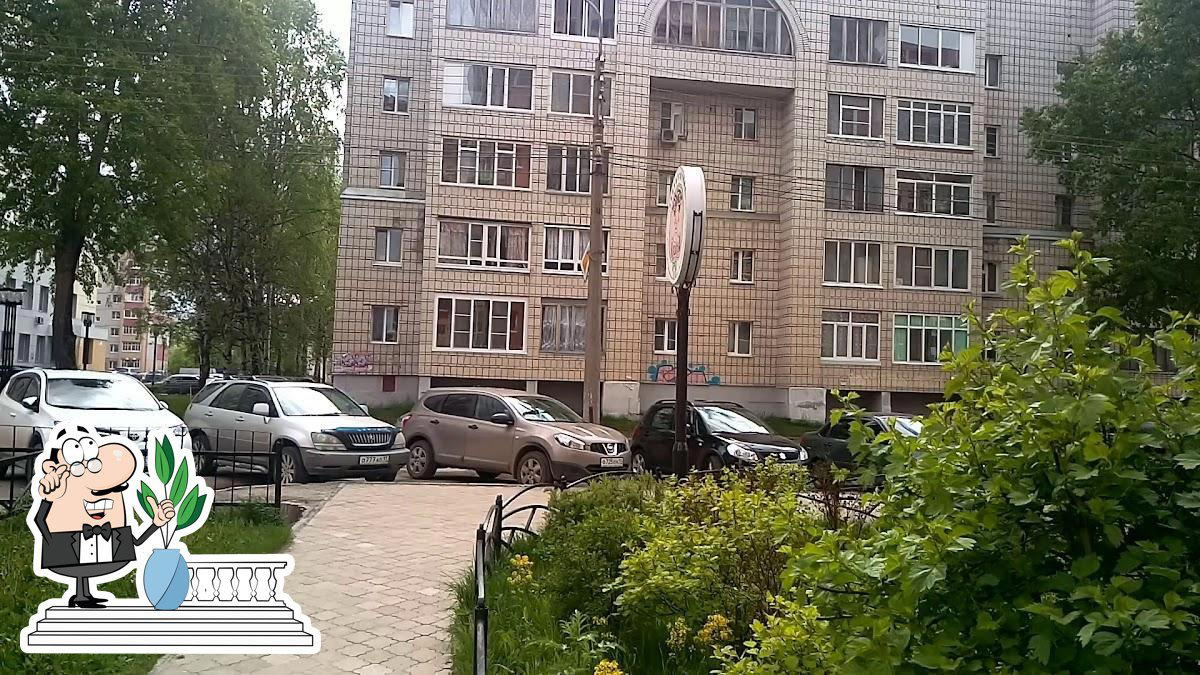
A Pastry Counter at the Edge of European Russia
Syktyvkar sits roughly 1,400 kilometres northeast of Moscow, capital of the Komi Republic, a region where birch forests run for hundreds of kilometres and the nearest major food distribution hub is a long drive south. That geography shapes what a konditorskaya here can do, and what it must do. In cities like Moscow or Saint Petersburg, a pastry shop operates inside a dense competitive field, choosing its angle against dozens of peer formats. In Syktyvkar, the field is narrower, and the relationship between an establishment and its immediate supply region matters more directly.
Konditerskaya "Kuzina" occupies a ground-floor address at Ulitsa Svobody, 35/75, a central Syktyvkar street that anchors the city's everyday retail and food life. The konditorskaya format itself, a Russian pastry and confectionery shop with counter service and a small seating area, is distinct from the restaurant model. It functions as a neighbourhood fixture: a place to stop mid-morning, to pick up something for a family table, or to sit briefly with tea. That functional character shapes the atmosphere before you even consider what is being made.
Ingredient Sourcing in the Komi Republic Context
The editorial angle that matters most in a place like Syktyvkar is not who trained the pastry team or what tasting menus look like in the capital. It is where the ingredients come from. The Komi Republic produces dairy from farms operating in short growing seasons, wild berries from taiga forests, and grains processed through a regional supply chain that looks nothing like the premium sourcing networks feeding Moscow's Twins Garden or the historic kitchens that supply 1913 in Saint Petersburg. What arrives on a konditorskaya counter in Syktyvkar reflects those constraints and those possibilities in roughly equal measure.
Northern Russian pastry tradition draws on ingredients that are seasonally abundant: cloudberries, lingonberries, and cowberries appear in jams and fillings during autumn; dairy from cold-climate herds tends toward a higher fat content that works well in layered pastries. These are not refinements introduced by trend-driven chefs. They are the material conditions of cooking in a subarctic-adjacent republic, and they give regional konditorskaya output a character that the Moscow pastry scene, however technically sophisticated, cannot replicate by substitution.
Contrast this with the approach at urban Russian dining establishments further south and west. Alanskaya Kukhnya in Krasnodar draws on North Caucasian agricultural abundance, a different climate and supply profile. Kukhterin in Tomsk operates within Siberian sourcing patterns. Each city's food culture reflects its geography in ways that are often more instructive than any single venue's menu decisions.
The Konditorskaya Format in Russian Food Culture
The konditorskaya sits in a specific tier of Russian food culture, below the restaurant but above the bulk bakery. At its functional core, it is a confectionery shop with some seating capacity, oriented around cakes, pastries, and hot drinks rather than a full meal format. This places it in a different competitive and social register from the dining establishments that dominate most travel editorial. The format has deep roots: Soviet-era konditorskiye were fixtures in every mid-size Russian city, often state-operated, serving standard pastries at fixed prices. Post-Soviet versions have diversified considerably, with some evolving toward European-style patisserie formats and others maintaining the traditional Russian range of honey cakes, puff pastries, and cream-filled tortes.
That evolution is worth tracking because it tells you something about a city's relationship with food modernisation. In Moscow, the konditorskaya has largely been absorbed or displaced by European-format patisseries and specialty coffee shops. In cities further from the capital, the format persists in more recognisable traditional form, adapted to local taste and local supply. Syktyvkar sits in that second category, a city where food culture changes at its own pace and on its own terms.
For comparison points across Russia's regional dining scene, Dzhani Restorani in Nizhny Novgorod and Khmeli Suneli in Yekaterinburg illustrate how regional capitals handle the tension between local tradition and wider culinary influence. Grisha in Omsk shows a similar dynamic in Western Siberia. Each operates within a regional food logic that diverges meaningfully from the Moscow-Petersburg axis.
Placing Kuzina in Syktyvkar's Food Scene
Within Syktyvkar's food culture, a konditorskaya on a central street serves a socially important function. The city has a population of roughly 240,000, a scale at which neighbourhood food fixtures matter more to daily life than destination dining. The Ulitsa Svobody address puts Kuzina within easy reach of both the city's administrative centre and its residential core, which makes it more of a community fixture than a destination in the tourism sense.
This is worth stating plainly, because the editorial framing that works for, say, Cafe Pushkin in Moscow or Lev i Ptichka in Saint Petersburg does not translate directly to a konditorskaya in Syktyvkar. The relevant question for a visitor is not whether this is a dining destination that warrants a special trip, but whether it represents the kind of local food experience that a place like Syktyvkar actually produces day-to-day. On that question, a traditional konditorskaya on a central street almost certainly does.
For visitors who arrive in Syktyvkar from other Russian cities or from abroad, the konditorskaya format offers a more direct encounter with regional food culture than a restaurant interpreting national cuisine for an outside audience. The pastries are not performing for the visitor. They are there for the local office worker, the family picking up something for Sunday, the student between classes. That social function is its own form of authenticity.
Planning a Visit
Konditerskaya "Kuzina" is located at Ulitsa Svobody, 35/75, in central Syktyvkar, Komi Republic, Russia, 167000. The konditorskaya format typically operates daytime hours oriented around breakfast and afternoon service. Given the format, walk-in access is the standard approach.
Fast Comparison
Comparable venues nearby, for context on price, style, and recognition.
| Venue | Cuisine | Price | Notes |
|---|---|---|---|
| Konditerskaya "Kuzina"This venue — the venue you are viewing | French & Italian Pastries and Confectionery | $$ | Not listed |
| Korean BBQ гриль | Korean Table-Top BBQ Grill | $$ | Northwestern District |
| O'Learys | American Sports Bar | $$ | Sheremetyevo Airport |
| Kazbek (Казбек) | Georgian | $$$ | Пресненский |
| Cococo | Modern Russian Fine Dining | $$$ | Admiralteysky |
| Kazbek | Authentic Georgian | $$ | Presnensky |
At a Glance
- Cozy
- Classic
- Casual Hangout
- Solo
- Family
Current opening hours
- Monday
- 8 AM–9 PM
- Tuesday
- 8 AM–9 PM
- Wednesday
- 8 AM–9 PM
- Thursday
- 8 AM–9 PM
- Friday
- 8 AM–9 PM
- Saturday
- 9 AM–7 PM
- Sunday
- 9 AM–7 PM
Hours can change for holidays and private events. Last verified .
Warm and welcoming bakery atmosphere with excellent quality products displayed for selection.