Michelin Bib Gourmand
Our verdict
A Michelin Bib Gourmand recipient in Kyoto's Kita Ward, Sobashubo Ichii draws consistent attention for handmade soba at an accessible price point. It sits in the tier of Kyoto noodle specialists where craft and restraint define the offer rather than ceremony or spectacle. The address in Hirano Miyanishicho places it near the northern temple precincts, away from the tourist-heavy centre.

Pearl is the En Primeur Club membership app, where members save venues, book tables and use the concierge.
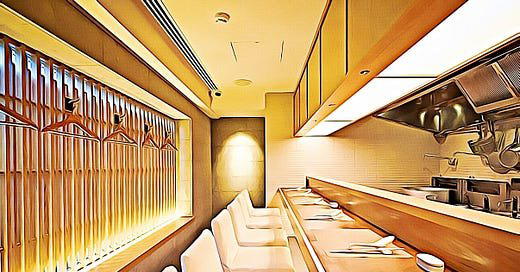
Soba in the Northern Quarters
Kyoto's reputation for food precision tends to be told through kaiseki: multi-course seasonal compositions built on the same aesthetic logic that governs its temples and textile patterns. But the philosophy that governs kaiseki, restraint, seasonal fidelity, the elimination of excess, runs through the city's broader cooking culture, including the soba shops that occupy quieter residential addresses well north of Gion's lacquered facades. In Kita Ward, where the density of tourists drops and the pace shifts accordingly, that philosophy finds a more everyday register. Sobashubo Ichii operates in this context, on a Hirano Miyanishicho address that places it near the shrines and forested edges of the northern district rather than the competitive cluster of central Kyoto dining.
The kaiseki principle most relevant here is not the multi-course structure but the underlying discipline: a single ingredient, treated with complete attention, produces a more coherent result than elaborate combination. Soba specialists in Japan have long operated on exactly this logic. The noodle itself, its buckwheat ratio, the hydration, the cut, the cook time, carries almost all the meaning. The broth, if served, is a support structure rather than a centre. Ichii's Bib Gourmand recognition in the 2024 Michelin Guide places it in a tier where that kind of craft discipline has been formally validated without the full-star apparatus that might otherwise draw a different crowd and change the character of the room.
Where Ichii Sits in Kyoto's Noodle Hierarchy
Kyoto's soba tradition occupies a quieter position than its kaiseki or tofu-kaiseki restaurants, but it is no less deliberate. The city's most historically rooted soba houses, such as Honke Owariya, have operated for centuries and carry a different kind of institutional weight. More recent specialists like Chikuyuan Taro no Atsumori and Gombei represent different points along the range from tradition to contemporary expression. Ichii, with its single price tier (¥) and Bib Gourmand status, signals something specific: accessible pricing with a quality floor high enough to draw formal recognition. This is a meaningful combination in a city where the gap between budget noodles and kaiseki-adjacent dining can feel unusually wide.
The Bib Gourmand category itself is worth contextualising. Michelin reserves it for restaurants that deliver high quality at a price point below the starred tier, in Japan, that typically means meals that come in well under ¥5,000. Ichii's single-¥ price designation confirms it operates at the more accessible end even within that bracket. Peer soba specialists in other Japanese cities with similar credentials include Akasaka Sunaba in Tokyo and Ayamedo in Osaka, which illustrate how seriously Japan's restaurant infrastructure takes the soba format as a category deserving of critical attention rather than casual dismissal.
In a city with this volume of dining options and a visitor base that includes both domestic Japanese travellers (who tend to score with more critical precision) and international visitors, holding 4.6 across nearly 300 data points suggests consistent execution rather than occasional brilliance. It is the kind of score that comes from a kitchen doing the same things well, repeatedly.
The Kita Ward Setting and What It Changes
Location shapes experience in ways that extend well beyond transport logistics. Kita Ward, where Ichii sits, is the northern residential and temple district of Kyoto. The area around Hirano Shrine and Kitano Tenmangu tends to attract visitors at specific seasonal moments, plum blossom in late February, autumn colour, but sits quieter in between. A soba shop in this setting operates on a different social register than those embedded in the tourist-dense zones of Higashiyama or the covered arcades near Nishiki Market. The clientele skews local and the atmosphere follows accordingly.
This is relevant because soba culture in Japan is, at its most authentic expression, a neighbourhood affair. The format, a counter or small dining room, a focused menu, a short service window, was not designed for lingering tourism. It was designed for deliberate, efficient pleasure: a meal that is complete without being lengthy. Ichii's Kita Ward positioning reinforces that register. The journey to reach it requires a degree of intention, which filters the room in ways that no amount of décor or reservation policy could otherwise achieve.
For visitors using Kyoto as a base for wider Kansai exploration, it is worth noting that Ichii's northern address connects more naturally to daytrips toward Arashiyama or the forested Kitayama area than to the central city circuit. Those combining a Kyoto stay with time in Osaka might consider HAJIME in Osaka or Ayamedo as part of a broader itinerary across the region. Further afield, akordu in Nara and Goh in Fukuoka represent different styles of precision dining worth considering alongside any serious Kansai-Kyushu trip.
Ichii Among Kyoto's Wider Dining Context
Kyoto's restaurant ecosystem is unusually stratified. At its upper end, establishments like Juu-go and Itsutsu operate in a rarefied tier where seasonal kaiseki menus and minimal seating create a different kind of access challenge. Kaiseki houses such as Gion Sasaki and Kyokaiseki Kichisen carry the city's formal culinary prestige at ¥¥¥¥ price points. Against this backdrop, a ¥-tier Bib Gourmand specialist in the northern ward represents something quite different: the same city's commitment to craft at the other end of the price spectrum, where the noodle is the luxury and the price is the point.
This matters for readers making decisions about where soba fits within a wider Kyoto itinerary. If the high-end kaiseki dinner is already planned (and for many visitors to Kyoto, it represents the primary dining event), a midday soba at a place like Ichii is a complementary rather than competing choice. The two formats ask for different things from the diner and deliver different rewards. Kaiseki asks for time, attention, and a relatively formal posture. A soba counter in Kita Ward asks only that you arrive, order clearly, and pay attention to what is in the bowl.
For broader orientation across Kyoto's dining options, the full Kyoto restaurants guide covers the city's range more comprehensively. The Kyoto hotels guide, bars guide, and experiences guide provide additional context for planning a stay that extends beyond single-meal decisions. Those researching restaurant options in other Japanese cities will find further reference points at Harutaka in Tokyo and 1000 in Yokohama, each representing distinct expressions of Japanese dining craft at different price tiers.
Planning Your Visit
Recognition: Michelin Bib Gourmand (2024). Budget: Single ¥ tier, expect a meal cost in line with the lower end of the Bib Gourmand bracket. Location: Hirano Miyanishicho, Kita Ward, Kyoto, in the northern residential and shrine district, away from the central tourist circuit. Reservations: No booking information is publicly confirmed; walk-in practice is common at Japanese soba counters of this type, though arriving early or avoiding peak weekend lunchtime is advisable. Access: Kita Ward is reachable by city bus from central Kyoto; the Kitano Tenmangu and Hirano Shrine area provides geographic orientation for the address. Timing: Soba specialists in Japan typically operate lunch hours and limited dinner service; confirming current hours before visiting is recommended given the address falls outside the main tourist zone where information is more readily aggregated.
FAQ
What is the signature dish at Sobashubo Ichii?
As a soba specialist operating within the ¥ price tier and holding Michelin Bib Gourmand recognition, the menu is expected to centre on handmade soba noodles in forms typical of serious Japanese soba houses: cold zaru or mori soba (served on a bamboo tray with dipping broth) and hot soba variations. Within Japanese soba craft, the quality of the buckwheat, the freshness of the noodle, and the calibration of the dashi-based tsuyu are the primary points of differentiation. Visitors should order with that in mind rather than seeking a dish defined by unusual ingredients or elaborate presentation.
Frequently asked questions
What should I budget for a meal at Sobashubo Ichii?
Pricing at Sobashubo Ichii is listed as ¥.
Is Sobashubo Ichii Michelin-listed?
Sobashubo Ichii has received recognition including: Michelin Bib Gourmand (2024).
What's the signature dish at Sobashubo Ichii?
The menu centres on soba, the hand-cut buckwheat noodle tradition that defines the restaurant's identity. Ichii holds a 2024 Michelin Bib Gourmand specifically within this cuisine category, which points to the soba courses as the reason to visit.
How would you describe the cuisine at Sobashubo Ichii?
Cuisine and Credentials
Comparable venues nearby, for context on price, style, and recognition.
| Venue | Cuisine | Price | Awards | Notes |
|---|---|---|---|---|
| Sobashubo IchiiThis venue (the venue you are viewing) | Traditional Handmade Soba with Duck | $10–20 | Michelin Bib Gourmand | Not listed |
| Mendokoro Janomeya | Kyoto-Style Chicken Ramen | $10–20 | Michelin Bib Gourmand · Tabelog 100 #50 | Nakagyō |
| Oito | Traditional Japanese Oden | $30–50 | Michelin Bib Gourmand | Higashiyama |
| Izugen | Traditional Kyoto Sushi | $20–30 | Michelin Bib Gourmand | Shimogyō |
| sonoba | Handmade Buckwheat Soba | $10–20 | Michelin Bib Gourmand | Shimogyō |
| Kappo Takohachi | Traditional Kappo | $50–100 | Michelin Plate | Nakagyō |
Recognition history
Dated appearances from independent guides and award organizations, with the underlying list record or original source where available.
Michelin Bib Gourmand
Michelin