
2 Michelin Stars
Our verdict
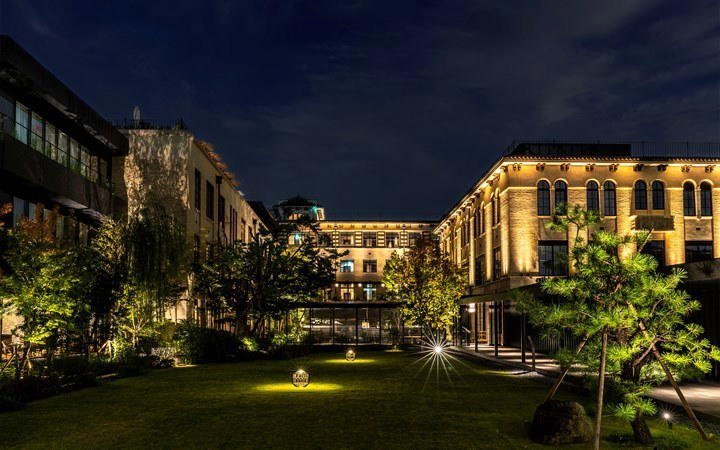
Set within a historic sukiya-style complex in Kyoto's Higashiyama Ward, Sanso Kyoyamato earned two Michelin stars in 2025 after holding one star the previous year. The property moves through a garden approach before opening into rooms where kaiseki service is framed as a complete work of Japanese art, with food arrangements, seasonal ceremony, and the presence of a dedicated proprietress all functioning as a single composed experience.

Pearl is the En Primeur Club membership app, where members save venues, book tables and use the concierge.
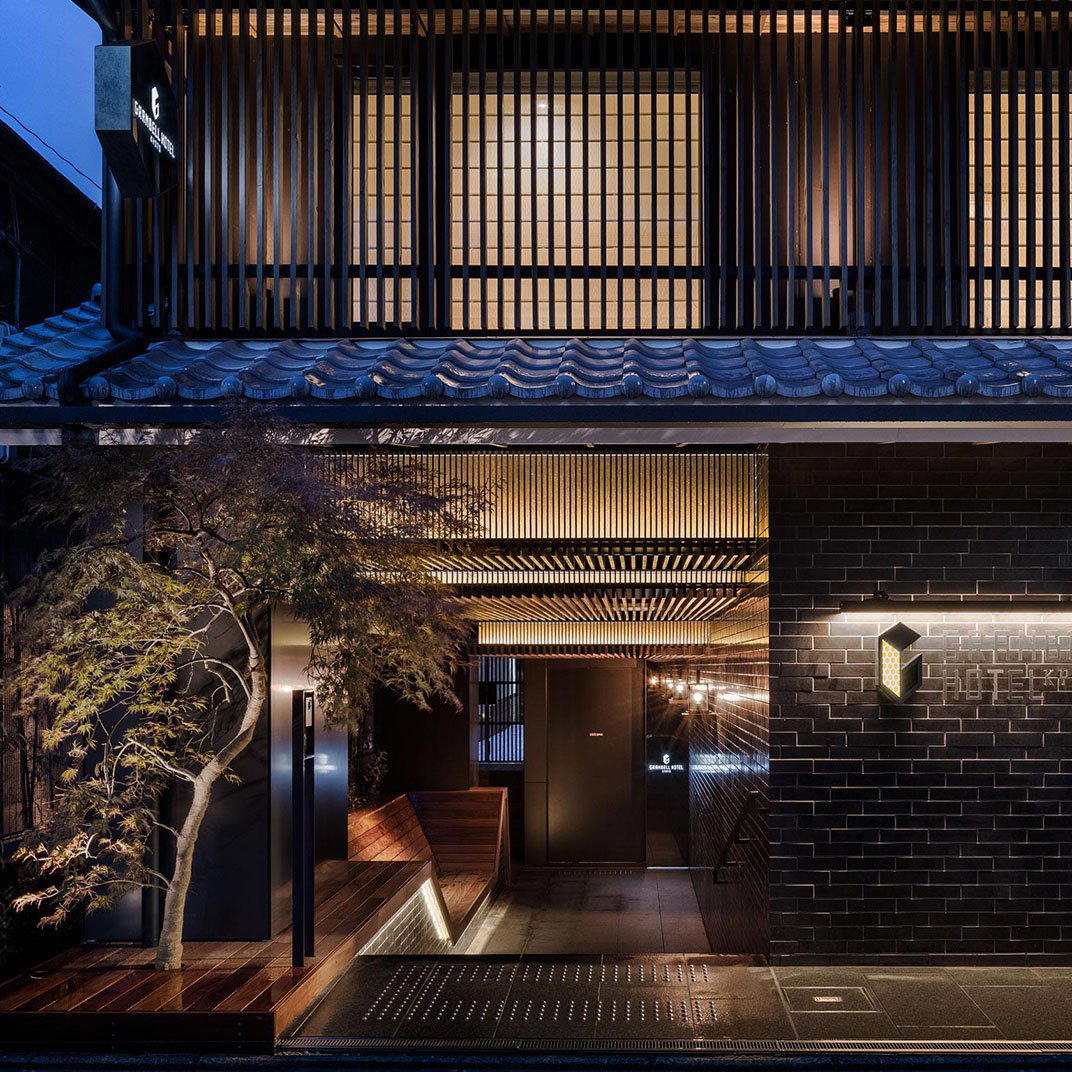
Higashiyama's Formal Register
Kyoto's Higashiyama Ward operates at a different register from the city's central dining corridors. The area around Masuyacho sits within a preserved urban fabric of wooden machiya frontages, stone-paved lanes, and temple precincts that haven't changed their essential character in generations. When a kaiseki house occupies this kind of address, the location isn't background scenery, it becomes an active part of the meal's meaning. The walk from the street gate to the main buildings at Isshisoden Nakamura and places of similar standing works the same way: the approach is choreographed, and the shift from city street to enclosed garden is part of how the experience assembles itself before a single dish appears.
Sanso Kyoyamato sits within this tradition. The property's sukiya-design buildings and garden views are continuous with the wider Higashiyama ethos, where architecture, seasonality, and cuisine are expected to cohere rather than operate independently. That coherence is harder to achieve than it looks. Plenty of Kyoto restaurants occupy historic rooms; far fewer manage to make the room, the service, and the food feel like a single statement. The Michelin distinction Sanso Kyoyamato earned in 2025, rising from one star to two, reflects a judgment that it belongs among those that do.
The Architecture of a Kaiseki Setting
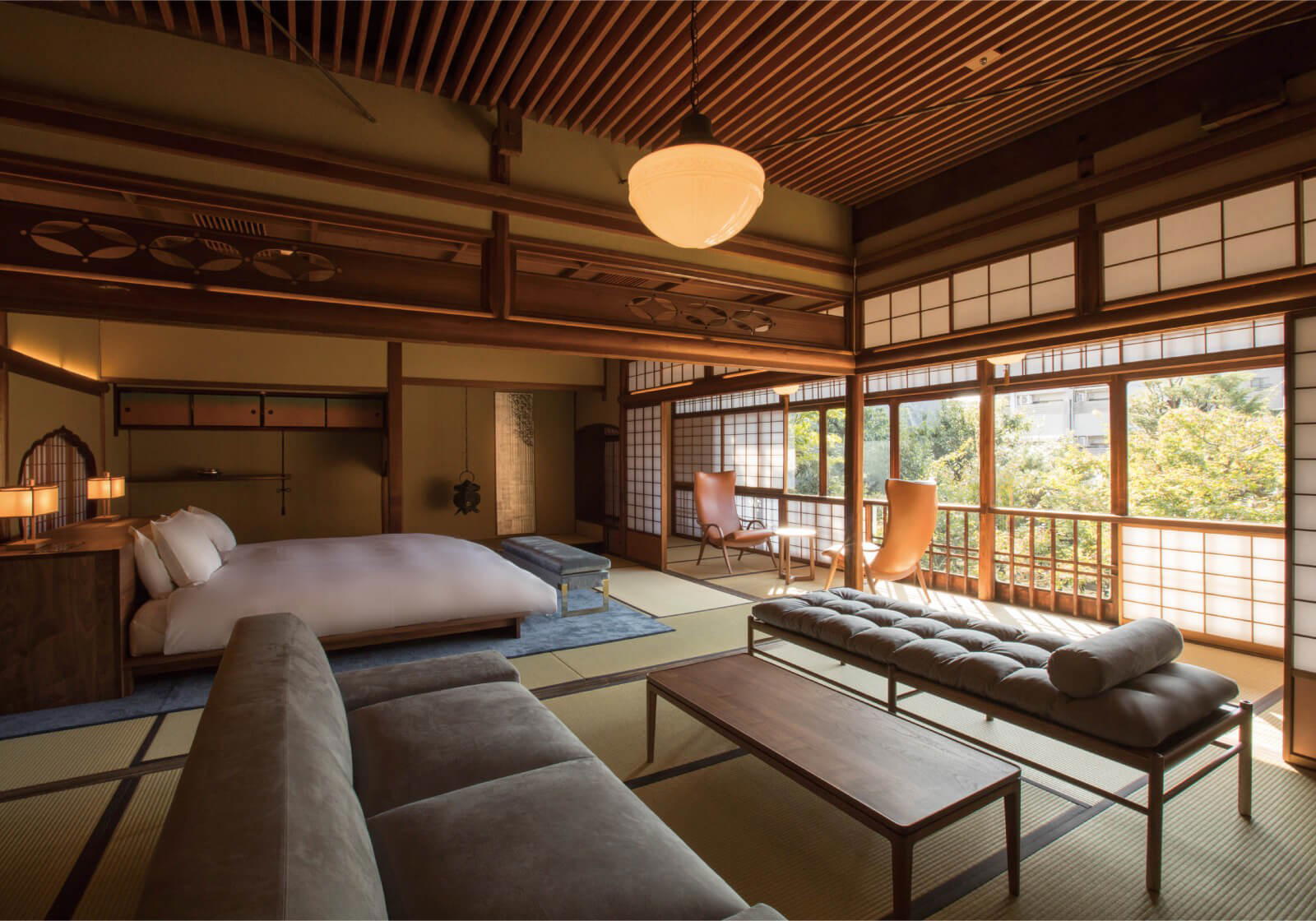
Sukiya architecture emerged from the tea ceremony tradition, and its principles, deliberate asymmetry, natural materials, rooms scaled to human attention rather than public display, carry into high kaiseki settings as an inherited grammar. At Sanso Kyoyamato, the Michelin inspectors' own language is telling: they describe the site as reflecting seasonal ceremonies and garden views, and characterise the total experience as a complete work of Japanese art. That framing positions the physical environment not as amenity but as compositional element.
The seasonal dimension here is not decorative. In Kyoto's kaiseki tradition, the garden view from a dining room is expected to change its character across the year, and a practitioner serious about the form designs service around those shifts. The short walk from the front gate to the main buildings, long enough to register the garden, short enough to avoid becoming a tour, is part of the same discipline. Places that handle this transition well tend to attract diners who understand what they're paying for, which shapes the room's atmosphere as much as any design decision. For context on how Higashiyama's dining scene positions itself in Kyoto's broader kaiseki hierarchy, our full Kyoto restaurants guide maps the relevant tiers.
Cuisine Within the Kaiseki Frame
Kyoto kaiseki at the top of the market is a highly codified form. The sequence, the ceramic choices, the lacquerware, the calibration of temperature and texture across multiple courses, these are not areas where individual expression operates freely. What distinguishes one leading house from another tends to be precision of execution, the quality of procurement from Kyoto's specialist producers, and the visual composition of each arrangement. The Michelin record for Sanso Kyoyamato specifically notes the chef's attention to the refinement of food arrangements and their elegant flavours, language that signals a practitioner working within tradition rather than against it.
That matters for placement in Kyoto's competitive set. The city's ¥¥¥¥ kaiseki tier, which includes Gion Matayoshi, Kenninji Gion Maruyama, Kikunoi Roan, and Kodaiji Jugyuan, contains houses where the cuisine's formal structure is essentially shared across the board, and the differentiators become setting, service character, and the degree to which everything in the room pulls in the same direction.
For comparison across Japan's broader kaiseki and Japanese fine dining spectrum, Harutaka in Tokyo and HAJIME in Osaka represent the form's range across different cities, while akordu in Nara shows how the region's culinary identity extends across the Kinki area. The point isn't that these places are directly comparable, they aren't, but that serious diners building a Japan itinerary tend to think in regional clusters, and Kyoto's two-star kaiseki houses occupy a distinct position within that planning logic.
Service as Compositional Element
The role of the proprietress (okami) in a Kyoto ryotei or high kaiseki house is not equivalent to a maître d' in the Western sense. The okami's function is closer to that of a host in the full cultural sense: managing the room's emotional temperature, ensuring that pace, conversation, and ceremony align, and acting as the social counterpart to the chef's technical presence. At Sanso Kyoyamato, the painstaking service of the proprietress is specifically called out in the Michelin recognition notes, which is unusual enough to be significant. Service at this level is expected to be polished everywhere; when it gets named, it's because it does something beyond polish.
This points to one of the defining characteristics of the top tier of Kyoto dining: the expectation that service is not a delivery mechanism for food but a practice in its own right, with its own aesthetic logic. Houses that achieve this tend to draw a specific kind of repeat visitor, one who returns not just for the seasonal menu but for the accumulated sense of being received well in a place that takes the whole occasion seriously. That dynamic is harder to replicate than a three-star kitchen, which is partly why Kyoto retains a category of dining that Tokyo's density and pace don't quite reproduce.
Placing Sanso Kyoyamato in Kyoto's Dining Map
Higashiyama runs north toward Gion and south toward Fushimi, with Masuyacho sitting in the middle section near the Kodaiji and Kiyomizudera temple approaches. The area draws a high volume of daytime visitors, but the restaurant addresses that line the quieter residential lanes function on a completely different rhythm, dinner reservations, formal service, no walk-in foot traffic. The physical address places Sanso Kyoyamato within reach of Gion's dining cluster while remaining in a slightly less trafficked section of the ward, which affects the approach's character.
For visitors structuring a Kyoto stay around dining, the Higashiyama houses at the ¥¥¥¥ tier typically require advance planning: reservations at two-star level kaiseki in Kyoto are generally sought months ahead, particularly during cherry blossom season (late March to mid-April) and autumn foliage season (November). These are the periods when the garden views that define the sukiya setting reach their visual peak, and when competition for bookings across the city's leading tables is at its highest. Visiting outside these windows, mid-summer, for instance, when Kyoto's heat is demanding but the garden takes on a different character, can mean both shorter lead times and a version of the space that regular visitors consider equally valid. Our full Kyoto hotels guide covers properties that complement this kind of dining itinerary, and our Kyoto experiences guide maps the cultural programming that pairs with evenings in Higashiyama.
Beyond Kyoto, the kaiseki and Japanese fine dining circuit extends to Goh in Fukuoka, 1000 in Yokohama, and 6 in Okinawa, each operating within Japan's Michelin framework but in city contexts quite different from Kyoto's heritage density. In Tokyo, Myojaku and Azabu Kadowaki represent the capital's version of the formal Japanese dining tradition. Kyoto's version, as Sanso Kyoyamato demonstrates, tends to be defined by the weight the setting carries, where the garden, the architecture, and the ceremony around the meal are not supplementary to the food but inseparable from it.
Planning Your Visit
Address: 359 Masuyacho, Higashiyama Ward, Kyoto, 605-0826, Japan. Cuisine: Kaiseki / Japanese (¥¥¥¥ price range). Awards: Michelin 2 Stars (2025); Michelin 1 Star (2024). Reservations: No direct booking link is listed; contacting via hotel concierge or specialist Japan dining agency is the standard approach for non-Japanese speakers. Timing: Advance booking is advisable, with peak demand during spring and autumn. Nearby: For other perspectives on Kyoto's dining, drinking, and hospitality, see our full Kyoto bars guide and our full Kyoto wineries guide.
Frequently asked questions
Is Sanso Kyoyamato award-winning?
Sanso Kyoyamato has received recognition including: During the short walk from the front gate to the main buildings, guests can appreciate the history of the buildings while feeling the presence of nature. Classic aesthetics pervade the entire site, from the sukiya design of the buildings to….
What dish is Sanso Kyoyamato famous for?
Sanso Kyoyamato does not trade on a single signature dish. The 2-Michelin-star kaiseki format at Higashiyama houses like this is built around sequence: the progression of courses, seasonal ingredients, ceramic choices, and presentation together constitute the statement. The chef's stated priority is the refinement of food arrangements and their flavours as part of a unified aesthetic that includes the sukiya buildings and garden.
Reputation Context
| Venue | Cuisine | Price | Awards | Notes |
|---|---|---|---|---|
| Sanso KyoyamatoThis venue (the venue you are viewing) | Traditional Japanese Kaiseki | $150–200 | 2 Michelin Stars | Not listed |
| Gion Sasaki | Modern Kaiseki | $300–500 | 3 Michelin Stars · La Liste Top Restaurants | Kaiseki, Japanese |
| cenci | Innovative Italian-Japanese Fusion | $100–150 | 1 Michelin Star · World's 50 Best #76 | Italian |
| Ifuki | Sumibi Kappo Kaiseki | $200–300 | 2 Michelin Stars · La Liste Top Restaurants | Kaiseki |
| Kyokaiseki Kichisen | Kyoto Kaiseki | $200–300 | 2 Michelin Stars · La Liste Top Restaurants | Japanese |
| Kyo Seika | Modern Chinese Fine Dining | $150–200 | 1 Michelin Star · Tabelog Bronze #216 | Chinese |
Recognition history
Dated appearances from independent guides and award organizations, with the underlying list record or original source where available.
Michelin 2 Stars
Michelin
Full recognition history (3 entries)
Michelin 2 Stars
Michelin
Michelin 1 Star
Michelin
Continue exploring
More in Kyoto
Restaurants in Kyoto
All restaurants in Kyoto →
Bars in Kyoto
All bars in Kyoto →
Hotels in Kyoto
All hotels in Kyoto →
Wineries in Kyoto
Browse all →
Details
- Elegant
- Classic
- Intimate
- Scenic
- Sophisticated
- Special Occasion
- Date Night
- Garden
- Historic Building
- Sake Program
- Garden
Current opening hours
- Monday
- 11:30 AM–3 PM, 5–9 PM
- Tuesday
- 11:30 AM–3 PM, 5–9 PM
- Wednesday
- Closed
- Thursday
- 11:30 AM–3 PM, 5–9 PM
- Friday
- 11:30 AM–3 PM, 5–9 PM
- Saturday
- 11:30 AM–3 PM, 5–9 PM
- Sunday
- 11:30 AM–3 PM, 5–9 PM
Hours can change for holidays and private events. Hours as of .
Classic sukiya architecture with seasonal ceremonies, garden views, birds singing, and polished omotenashi service creating a serene, artistic Japanese atmosphere.