
2 Michelin Stars
Our verdict
A two-Michelin-star ryotei in Kyoto's Kamigyo Ward, Yusokuryori Mankamero has operated continuously for three centuries, tracing its lineage from sake dealer to imperial-court banquet house. The restaurant preserves yusoku ryori, the formal cuisine of Heian-era court functions, alongside the Ikama school of shikibocho, a ceremonial knife-handling tradition that frames the kitchen as ritual as much as craft. Price range: ¥¥¥¥.

Pearl is the En Primeur Club membership app, where members save venues, book tables and use the concierge.
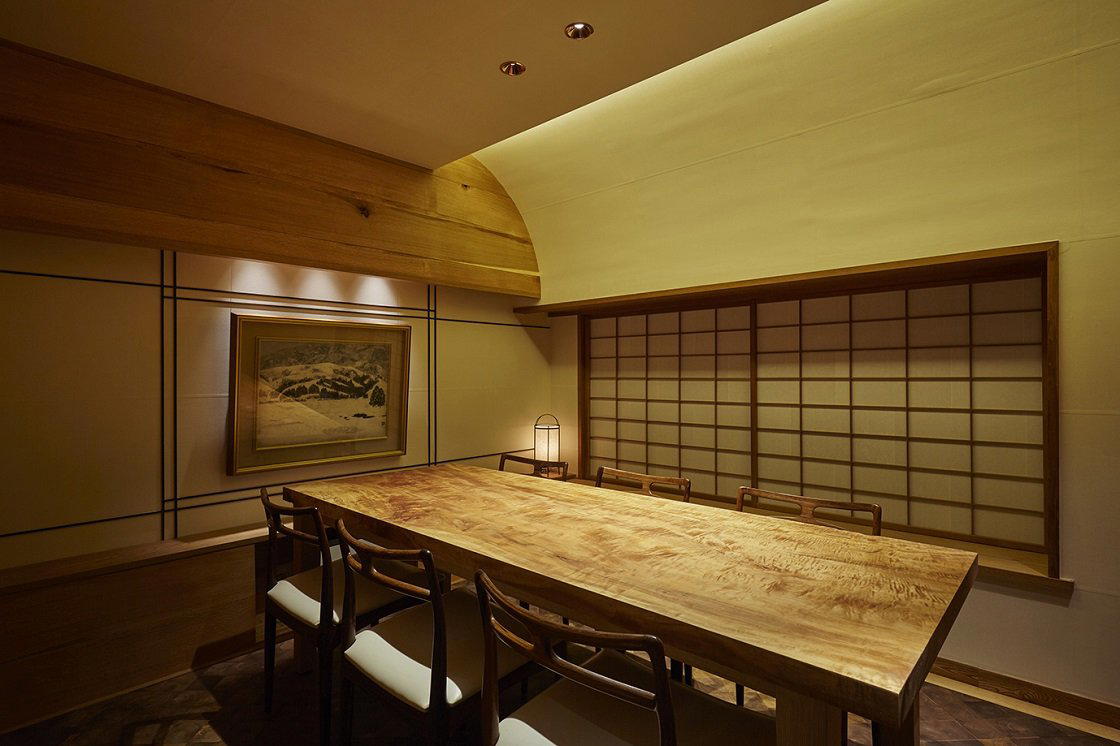
Three Hundred Years at the Table
Approach Mankamero on a quiet lane in Kamigyo Ward and the building gives little away to the casual passerby. The architecture speaks in the understated register that Kyoto's older establishments tend to favour: restrained facades, materials that have weathered into the surroundings rather than announcing themselves. What the exterior withholds, the interior returns through ceremony. This is a place where the act of being seated, of receiving a vessel, of watching a knife move through a ceremony older than most nation-states, is itself the experience. The meal begins before the food arrives.
That framing matters, because Mankamero is not simply a kaiseki restaurant that happens to be old. It is the custodian of yusoku ryori, the banquet cuisine that served imperial court functions during the Heian period. That tradition is rare in the most technical sense: there are very few establishments in Japan, let alone the world, where this lineage runs uninterrupted to the present day. Mankamero is among them, operating continuously for three centuries, having moved from its origins as a general store and sake dealership into a full ryotei that now holds two Michelin stars in both the 2024 and 2025 guides.
What Yusoku Ryori Actually Means
The phrase yusoku ryori translates loosely as cuisine of precedent and ceremony, drawn from a formal court tradition that governed not just what was served but how, by whom, and in what sequence. At its core, the tradition reflects the Heian court's obsession with propriety: food as social contract, as aesthetic communication, as proof of lineage and learning. Where most kaiseki lines trace themselves back to tea ceremony, yusoku ryori reaches further, into a pre-tea stratum of Japanese culinary history.
Kyoto's position as the former imperial capital makes it the natural home for this tradition. The city still holds a concentration of ryotei operating at the highest formal tier, including Isshisoden Nakamura and Gion Matayoshi, both of which sit within the Michelin-recognised kaiseki tier. But the yusoku ryori designation places Mankamero in a narrower category still. The tradition it carries is not simply one of technique or ingredient sourcing; it is one of codified ritual, and the Ikama school of shikibocho is where that ritual is most visible.
Shikibocho: The Ceremonial Art of the Knife
Shikibocho is a practice so specific that its survival depends on direct transmission from practitioner to practitioner across generations. In the Ikama school, which Mankamero preserves, the chef works with a ceremonial knife and chopsticks to break down and arrange fish or fowl without touching the ingredient with their hands. The performance is simultaneously culinary demonstration and ethical statement about the relationship between the cook, the food, and the guest. It is cookery framed as etiquette.
This is where the editorial angle most sharpens: Mankamero is not an izakaya, and the communal, convivial register of Japanese drinking culture operates here at an entirely different frequency. Where izakaya culture distributes dishes across the table, invites noise and improvisation, and treats drinking as the social engine, a yusoku ryori ryotei treats the table as a space of composed, deliberate exchange. The guest is not a participant in spontaneous conviviality but in a choreographed rite. The social element is present, and for formal gatherings, particularly those with business or ceremonial weight, the structure is the point. A meal here has always carried meaning beyond appetite.
Seasons as a Structural Principle
Kyoto kaiseki at the formal tier treats seasonality as architecture rather than garnish. The calendar governs not just the main ingredients but the choice of serving vessels, the lacquerware, the leaves and botanicals used as underlays beneath the food. At Mankamero, this principle holds with particular force. The restaurant reflects seasons in all of these layers simultaneously, from the arrangements on each course to the ceramic and lacquer that carries them.
This layered seasonal reading is one place where yusoku ryori diverges from more casual kaiseki interpretations. The formal tradition demands that every element in a presentation be considered, sourced, and placed with reference to the time of year and the occasion. It is an approach that other Michelin-recognised Kyoto establishments also deploy, including Kenninji Gion Maruyama, Kikunoi Roan, and Kodaiji Jugyuan, though the imperial-court lineage at Mankamero gives the seasonal programme a specific ceremonial grounding that those restaurants, operating within the wider kaiseki tradition, do not share.
Continuity as Practice, Not Mythology
The temptation when writing about a three-hundred-year institution is to let the age do the editorial work, to treat continuity as proof of quality. The Michelin inspectors are not sentimental in this way, and the two-star rating, held across multiple guide years, reflects assessed quality in the present tense. What the longevity does confirm is the specific nature of what Mankamero is transmitting: a codified school, the Ikama lineage, that requires active practice to survive. When those at the top of Japan's restaurant tier, including Harutaka in Tokyo and HAJIME in Osaka, are assessed partly on their command of tradition, the question of which tradition they are working within matters. Mankamero's tradition is among the most historically specified available in Japanese fine dining.
That specificity also positions the restaurant differently from newer formal kaiseki houses. The awards record at Mankamero is not a story of a contemporary chef building toward recognition; it is a story of an institution whose relevance the modern guide system has had to catch up to. The restaurant has not changed to suit the guides. The guides have arrived at the restaurant.
Placing Mankamero in Kyoto's Formal Dining Tier
Kyoto's leading formal dining tier is compact. The city's Michelin-starred Japanese restaurants operate in a relatively tight range at the ¥¥¥¥ price level, and the competitive set includes establishments like Isshisoden Nakamura and Gion Matayoshi, where the kaiseki tradition is the primary frame. Mankamero sits within this tier but operates in its own sub-category, one defined by imperial-court precedent rather than tea-ceremony kaiseki lineage. For travellers visiting from elsewhere in Japan, the comparison extends outward: akordu in Nara, Goh in Fukuoka, 1000 in Yokohama, and 6 in Okinawa each occupy different nodes of Japan's formal dining network, but none operate within the yusoku ryori lineage. For completeness, Myojaku and Azabu Kadowaki in Tokyo offer points of comparison within the wider Japanese formal dining tier.
For an overview of where Mankamero sits within Kyoto's broader dining scene, our full Kyoto restaurants guide maps the city's tiers and neighbourhoods. For context on how the dining experience connects to the city at large, see also our full Kyoto hotels guide, our full Kyoto bars guide, our full Kyoto wineries guide, and our full Kyoto experiences guide.
Planning Your Visit
Mankamero is located at 387 Ebisucho, Kamigyo Ward, Kyoto. It operates at the ¥¥¥¥ price tier and holds two Michelin stars as of the 2025 guide. Booking in advance is advisable for a house of this standing; ryotei at this tier in Kyoto typically operate on reservation-only terms with lead times that can extend weeks or months for prime dates. Dress code, hours, and direct booking contact are best confirmed through the restaurant directly or via a hotel concierge with established ryotei relationships.
Quick reference:
Frequently asked questions
What should I budget for a meal at Yusokuryori Mankamero?
Pricing at Yusokuryori Mankamero is listed as ¥¥¥¥.
Is Yusokuryori Mankamero award-winning?
Yusokuryori Mankamero has received recognition including: This long-serving restaurant was built as a general store and traded as a sake dealer before transforming into a ryotei. In continuous operation since its founding three centuries ago, Mankamero has preserved tradition by constantly changin….
What's the signature dish at Yusokuryori Mankamero?
Mankamero does not centre its kaiseki around a single signature preparation. The format follows yusoku ryori, cuisine rooted in imperial court precedent, where seasonality, serving vessels, and ceremonial knife-work collectively define the meal. The restaurant holds 2 Michelin stars in the 2025 guide, and its through-line is the Ikama school shikibocho tradition rather than any one dish.
Budget and Context
A quick peer list to put this venue’s basics in context.
| Venue | Cuisine | Price | Awards | Notes |
|---|---|---|---|---|
| Yusokuryori MankameroThis venue (the venue you are viewing) | Yusoku Ryori & Kaiseki | $200–300 | 2 Michelin Stars | Not listed |
| Gion Sasaki | Modern Kaiseki | $300–500 | 3 Michelin Stars · La Liste Top Restaurants | Kaiseki, Japanese |
| cenci | Innovative Italian-Japanese Fusion | $100–150 | 1 Michelin Star · World's 50 Best #76 | Italian |
| Ifuki | Sumibi Kappo Kaiseki | $200–300 | 2 Michelin Stars · La Liste Top Restaurants | Kaiseki |
| Kyokaiseki Kichisen | Kyoto Kaiseki | $200–300 | 2 Michelin Stars · La Liste Top Restaurants | Japanese |
| Kyo Seika | Modern Chinese Fine Dining | $150–200 | 1 Michelin Star · Tabelog Bronze #216 | Chinese |
Recognition history
Dated appearances from independent guides and award organizations, with the underlying list record or original source where available.
Michelin 2 Stars
Michelin
Full recognition history (3 entries)
Michelin 2 Stars
Michelin
Michelin 2 Stars
Michelin
Continue exploring
More in Kyoto
Restaurants in Kyoto
All restaurants in Kyoto →
Bars in Kyoto
All bars in Kyoto →
Hotels in Kyoto
All hotels in Kyoto →
Wineries in Kyoto
Browse all →
Details
- Elegant
- Classic
- Intimate
- Sophisticated
- Special Occasion
- Date Night
- Private Dining
- Historic Building
- Sake Program
- Garden
- Tasting Menu
- Set Menu
- Pescatarian Friendly
Current opening hours
- Monday
- 12–3 p.m., 5:30–9:30 p.m.
- Tuesday
- 12–3 p.m., 5:30–9:30 p.m.
- Wednesday
- Closed
- Thursday
- 12–3 p.m., 5:30–9:30 p.m.
- Friday
- 12–3 p.m., 5:30–9:30 p.m.
- Saturday
- 12–3 p.m., 5:30–9:30 p.m.
- Sunday
- 12–3 p.m., 5:30–9:30 p.m.
Hours can change for holidays and private events. Hours as of .
Traditional Kyoto sukiya architecture with tatami rooms, relaxing atmosphere, and beautiful gardens glimpsed through windows, creating an elegant and historic dining setting.