

1 Michelin Star · Tabelog Bronze #246
Our verdict
A Michelin-starred yakitori counter in Shimogyo Ward, Kyoto, Ryoriya Maekawa runs on eight seats, two sittings, and a reservation-only policy that reflects the seriousness of its format. Awarded Tabelog Bronze in both 2025 and 2026, with a score of 4.29 and consecutive selection to the Tabelog Yakitori 100, it sits in the upper tier of Kansai's counter dining scene, playful in spirit, precise in technique.

Pearl is the En Primeur Club membership app, where members save venues, book tables and use the concierge.
A Counter Where the Room Does the Work First
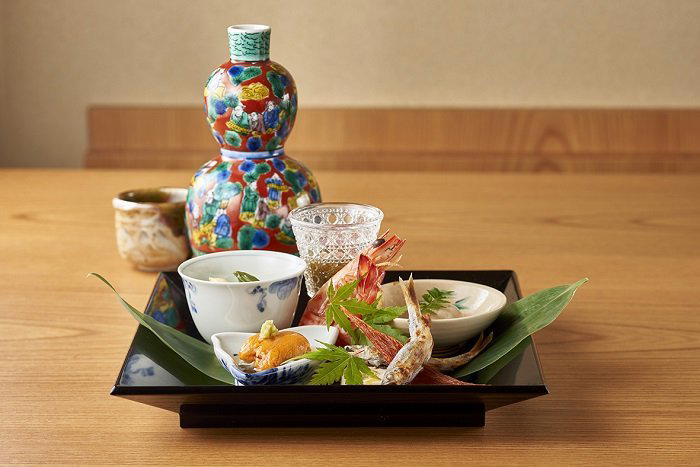
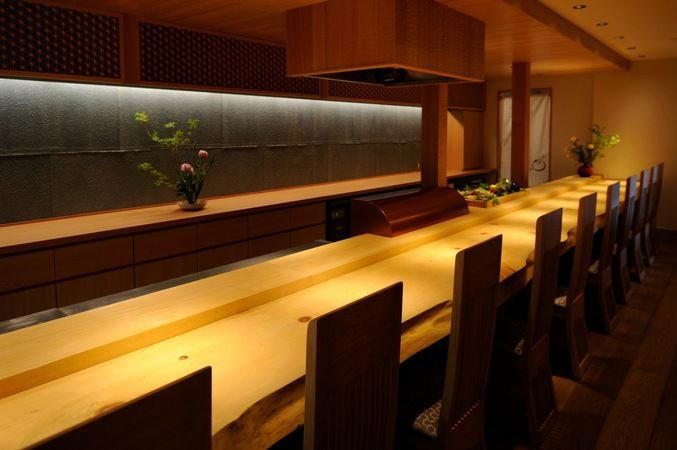
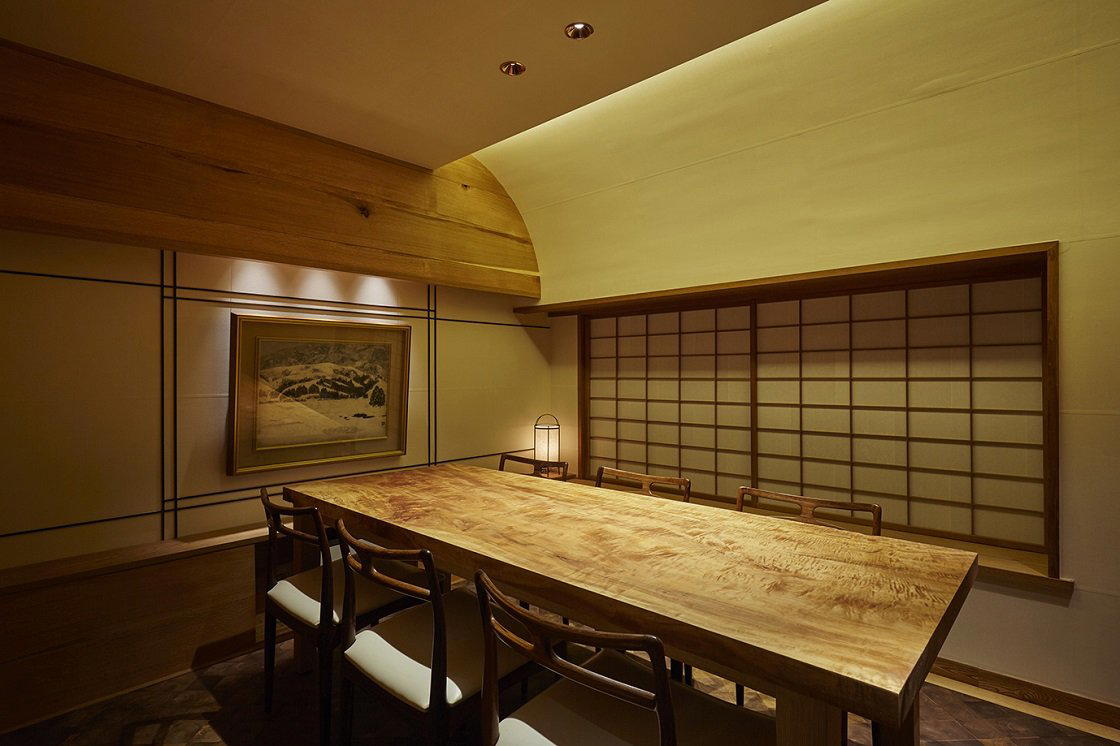
Shimogyo Ward is not Kyoto's most photographed dining district. Gion draws the kaiseki trade; Higashiyama handles the tourist corridor. But the wards closer to Kyoto Station have quietly absorbed a different kind of restaurant, smaller, less ceremonial, more alive in the way a well-run izakaya is alive. Ryoriya Maekawa operates inside this register. The space is described as a house restaurant with counter seating, a vaulted ceiling, and an all-wood interior that reads more houseboat than formal dining room. Light jazz plays through the speakers. The atmosphere signals, before any food arrives, that the evening will be communal rather than reverential.
That tonal choice matters in a city where the default register for serious Japanese cooking trends toward controlled quiet. Kyoto's kaiseki tradition, represented elsewhere in the city by restaurants like Kikunoi Roan and Isshisoden Nakamura, demands a particular kind of attention from the diner. Maekawa asks for something different: to be present at a counter where food is treated seriously but not solemnly, and where the kitchen's range across Japanese, Chinese, and Western traditions is framed as pleasure rather than curriculum.
Yakitori at the Precision End of the Format
Japan's yakitori culture has its own internal hierarchy. At the casual end, it is convenience food, skewers sold at station kiosks, eaten standing up with a cold beer. At the other end, a small group of counters has spent years applying the logic of omakase dining to grilled chicken: sourcing specific breeds, controlling charcoal temperature to the degree, and treating each cut of a single bird as its own technical problem. Ryoriya Maekawa operates in that second register.
The distinction between the two tiers shows up in the numbers. Dinner at Maekawa runs JPY 10,000–14,999 at the listed price point, though review-based spending data from Tabelog places the average closer to JPY 20,000–29,999 once drinks and the full progression of skewers are factored in. That price range positions it alongside Kyoto's mid-to-upper-tier counter formats, more accessible than the ¥¥¥¥ kaiseki rooms at Gion Matayoshi or Kenninji Gion Maruyama, but occupying a different category entirely from casual robatayaki. The format is intimate and focused, not convivial and sprawling.
The Tabelog recognition reinforces where the restaurant sits in the national yakitori conversation. Maekawa has been selected for the Tabelog Yakitori 100 in every year from 2022 through 2025, including consecutive placement in the Tabelog Yakitori WEST 100, which is the regional ranking for restaurants west of Tokyo. The Tabelog Award Bronze followed in 2025 and was renewed in 2026, with a score of 4.29. In a category where dozens of counters compete for a fixed number of places on those lists, consecutive selection from 2022 onward indicates consistent output rather than a one-season performance. The Michelin star, held for 2024, adds a second independent reference point against which the Tabelog data can be read.
The Izakaya Spirit Inside a Formal Format
Tension that makes Maekawa interesting is the gap between its credentials and its atmosphere. A Michelin-starred counter with four consecutive years on the Tabelog 100 could easily operate with the gravity those recognitions imply. Instead, the room is set up for enjoyment: jazz on the speakers, chefs in whites, a kitchen philosophy described as finding food fun, and a menu that moves freely across Japanese, Chinese, and Western references without privileging any of them as the primary frame.
This is closer to the izakaya spirit than to the kaiseki room, even if the format looks different on paper. The shared logic is that eating and drinking are social acts, and that the counter is a stage for interaction rather than contemplation. At Maekawa, the eight seats, all counter, create the conditions for that kind of evening. There is no private room. The dining room is a single shared space where the kitchen is visible and the progression of courses is communal. Sake, shochu, and wine are all available, which is itself a statement: the drinks program is broad enough to accommodate different kinds of drinkers at the same counter, which is the izakaya approach applied to a more structured environment.
The two-session format (first session from 17:00, second from 20:15) shapes the pace of those evenings. Each sitting has a defined beginning, which means the progression of food and drink has a rhythm. This is not somewhere to linger past closing; it is somewhere to commit fully to the time available, which tends to produce a more concentrated version of the convivial experience the room is designed to support.
Where Maekawa Sits in the Kansai Counter Scene
Kyoto's restaurant identity is built primarily on kaiseki, the seasonal, multi-course format that gave the city its culinary reputation internationally. But the counter dining scene that runs beneath that headline tier is wider and more varied than the kaiseki frame suggests. Yakitori specialists, ramen counters, sushi bars, and genre-crossing rooms like Maekawa operate in a different price band and with different social assumptions than the formal kaiseki rooms. For comparison within the city's ¥¥¥ bracket, cenci represents the Italian end of that tier, while Kyo Seika operates a Chinese counter format at similar pricing. Maekawa is the yakitori equivalent, a single-format specialist that takes the ingredient seriously without requiring the diner to perform the corresponding seriousness back at the room.
Across the Kansai region and beyond, the yakitori counter format has produced some of Japan's most closely followed restaurants. The Tabelog WEST designation, which Maekawa has held consecutively, maps to a competitive field that includes Osaka and the broader Kansai region, where counter cooking of this type has a long independent tradition. For context on how this format compares to other precision counter styles elsewhere in Japan, Harutaka in Tokyo represents the capital's high-end counter logic at its most exacting, while HAJIME in Osaka shows how the Kansai region can produce counter dining that operates at the top of its own category. More broadly, akordu in Nara, Goh in Fukuoka, 1000 in Yokohama, 6 in Okinawa, Myojaku in Tokyo, and Azabu Kadowaki in Tokyo each illustrate how Japan's counter dining culture adapts to different cities and different culinary traditions.
Within Kyoto specifically, the range of what the ¥¥¥ counter bracket can offer is illustrated by looking across formats: Kodaiji Jugyuan operates in the kaiseki tradition at a comparable price point, while Maekawa represents the yakitori specialist that has earned comparable recognition through a different culinary logic entirely.
Planning Your Visit
Ryoriya Maekawa is located at 405 Nanbacho, Shimogyo Ward, Kyoto. Reservations: Required, the counter runs reservation-only across both sessions, and the eight-seat format means availability is limited. Sessions: First session from 17:00; second session from 20:15. Closed Sundays; additional closures are not fixed, so confirming current hours before booking is advisable. Budget: Listed dinner price JPY 10,000–14,999; average spend based on reviews JPY 20,000–29,999 with drinks and full progression. Payment: Credit cards accepted (VISA, Mastercard, JCB, AMEX, Diners); electronic money and QR code payments not accepted. A service charge applies. Seating: Eight counter seats only; no private rooms, though the full venue is available for private hire. Drinks: Sake, shochu, and wine. Smoking: Non-smoking throughout. Parking:
For broader planning across Kyoto, see our full Kyoto restaurants guide, our full Kyoto hotels guide, our full Kyoto bars guide, our full Kyoto wineries guide, and our full Kyoto experiences guide.
Frequently asked questions
Is Ryoriya Maekawa more mid-range or high-end?
Pricing at Ryoriya Maekawa is listed as ¥¥¥.
Is Ryoriya Maekawa reservation-only?
Yes. The counter operates reservation-only across two sittings: a first session from 17:00 and a second from 20:15. With only eight seats and consecutive Tabelog Bronze awards (2025, 2026) alongside a Michelin star, advance booking is essential, walk-ins are not a realistic option.
Accolades, Compared
Comparable venues nearby, for context on price, style, and recognition.
| Venue | Cuisine | Price | Awards | Notes |
|---|---|---|---|---|
| Ryoriya MaekawaThis venue (the venue you are viewing) | Modern Japanese Fine Dining | $100–150 | 1 Michelin Star · Tabelog Bronze #246 | Not listed |
| Ichijoji Norihide | Traditional Kaiseki | $100–150 | 1 Michelin Star | Sakyō |
| Kamigamo Akiyama | Kyoto Kaiseki | $100–150 | 1 Michelin Star | Kita |
| Nakazen | Traditional Kyoto Kaiseki | $100–150 | 1 Michelin Star | Sakyō |
| Gokomachi Tagawa | Modern Japanese Charcoal Omakase | $200–300 | 1 Michelin Star · Tabelog Bronze #442 | Nakagyō |
| Kenya | Modern Japanese Kaiseki | $200–300 | 1 Michelin Star · Tabelog Bronze #173 | Sakyō |
Recognition history
Dated appearances from independent guides and award organizations, with the underlying list record or original source where available.
Michelin 1 Star
Michelin
Tabelog Bronze #246
Tabelog
Full recognition history (5 entries)
Tabelog 100 #93 · No. 93
Tabelog · Tabelog 100 - Yakitori - WEST - 2025
Tabelog Bronze
Tabelog
Michelin 1 Star
Michelin
Continue exploring
More in Kyoto
Restaurants in Kyoto
All restaurants in Kyoto →
Bars in Kyoto
All bars in Kyoto →
Hotels in Kyoto
All hotels in Kyoto →
Wineries in Kyoto
Browse all →
Details
- Elegant
- Intimate
- Sophisticated
- Date Night
- Special Occasion
- Chefs Counter
- Sake Program
- Counter Dining
- Sake Program
Current opening hours
- Monday
- 6:30–10 PM
- Tuesday
- 12–2:30 PM, 6:30–10 PM
- Wednesday
- 12–2:30 PM, 6:30–10 PM
- Thursday
- 12–2:30 PM, 6:30–10 PM
- Friday
- 12–2:30 PM, 6:30–10 PM
- Saturday
- 12–2:30 PM, 6:30–10 PM
- Sunday
- Closed
Hours can change for holidays and private events. Hours as of .
Relaxing space with counter seating and amiable, playful service.